

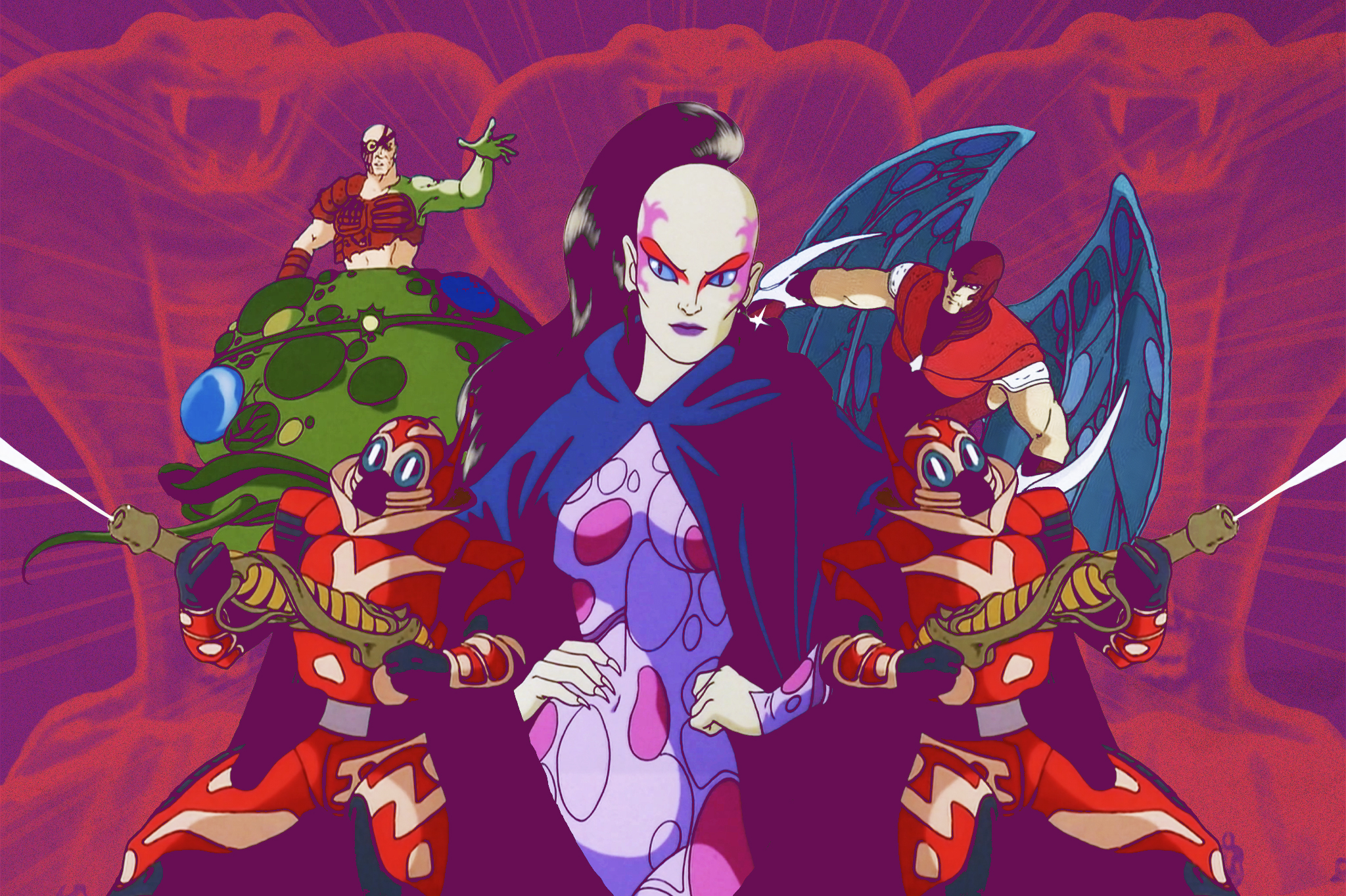
Behold, the Cobra-La Corpus — a comprehensive dissection of G.I. Joe's most insidious adversaries. Considered divisive upon their introduction in 1987's G.I. Joe: The Movie, the consensus around the secretive serpentine sect has evolved. From condemnation to celebration, let this unspooling body of work tell the tale.
"It's like you're in a train station and there is a slow moving freight train going by, and every time a boxcar passes with an open door, you have to throw something inside. If you can throw something good inside, wonderful. But something has to go inside."
Buzz Dixon, story consultant, G.I. Joe: The Movie
It's August 1985 and Buzz Dixon is on a flight to New York City. He has been tasked with throwing something big into a boxcar. Working as story editor for the first season of G.I. Joe: A Real American Hero, he and a team of writers hoisted scripts for 55 half-hour animated adventures onto the freight train of syndicated television. Sometimes as soon as six weeks later, those episodes were done and ready to air — an unheard of turnaround. But this?
In Dixon's lap rests a copy of the script for G.I. Joe: The Movie — and it's not right. If anyone knows what works for G.I. Joe in 1985, it's Dixon. Working under supervising story editor, Howard the Duck creator Steve Gerber, Dixon and a cadre of writers spent a chunk of the last year fleshing out the personalities of over 70 "fully poseable modern army figures." These writers — many of them top-tier creators from 1970s superhero comics, all brought up on Kirby, Lovecraft, Serling, et al. — created something unprecedented: a daily, 20-minute adventure show locked and loaded with rich characterization, go-for-broke vocal performances, dazzling action sequences, and a steadily expanding mythology — a web of character connections that hewed closer to Dynasty than Super Friends.
But it's August 1985 and the world won't see G.I. Joe: A Real American Hero Season 1 for another month. The script in Dixon's lap is out of step and a bridge too far, with ideas ranging from Joes riding armored horses to Cobra taking orders from the disembodied brain of a thousand-year-old ancient astronaut. On the one hand, Dixon didn't write it, so he shoulders none of the blame. But on the other hand, he has no idea where the heads of Griffin-Bacal — the advertising agency whose innovation turned the G.I. Joe toyline from a risky relaunch into a 3.75" behemoth — are at. Whether they love this script or not, Dixon knows it'll be his hands on the cargo when he hears the freight train approaching.
Diehard G.I. Joe fans know where this story is going, because they've seen G.I. Joe: The Movie — and odds are they'll say they don't like it because of Cobra-La.
In a way, the contents of the script that so worried Buzz Dixon didn't matter, because G.I. Joe: The Movie never stood a chance. By the time the movie hit in late 1987, the original generation of G.I. Joe fans were now five years into their fandom. That's an eternity when it comes to kids' franchises, which — if not curated with real intention and integrity — can easily be seen as cash grabs (and maybe rightly so). But the youngsters whose imaginations were captured in 1982 by generic "modern army figures" like Short-Fuze, Zap, and Flash were now in middle — or even high — school. The fact that G.I. Joe kept those fans locked in for so long is itself a marvel. And at that point, no matter how much care was put into it, there was likely little that G.I. Joe: The Movie could have done to compete with punk rock, skateboarding, sports, and/or hormones in the eyes of its aged-up core audience. It was those fans who eventually wrote a story about this movie, saddling G.I. Joe: The Movie with a cursed reputation: silly at best; a franchise-killer at worst.
But there's another story to tell about G.I. Joe: The Movie and the Giger-ian, Lovecraft-ian secret serpent society it introduced — how it came to be, how it's remembered, and how it has persisted. This is the story of G.I. Joe's guardians who, when faced with extreme demands far beyond the ken of storytellers, held on to the franchise's integrity with their swivel-arm battle grip and, in doing so, handed it over to the next generation of G.I. Joe fans — fans now guiding the Joes into the future, with VHS copies of G.I. Joe: The Movie in their rucksacks.
This is the true story of Cobra-La, from embryo to spore to the ecosystem within which G.I. Joe now resides.
NOVEMBER 1984
Joe Bacal and Tom Griffin want to break into movies. Through their partnership with Hasbro, Griffin-Bacal Advertising now manages the public perception of three of the biggest toy brands: My Little Pony (b. 1981), G.I. Joe (b. 1982) and Transformers (b. 1984). It's a no-brainer — especially for the latter two franchises, which have already proven their mettle as animated attention-getters. So in August 1984, Griffin and Bacal call Ron Friedman.
Also, they have to call Ron Friedman. A veteran TV writer with credits stretching back 20 years (from Gilligan's Island to Fantasy Island), Friedman's contract with Sunbow Productions (Griffin-Bacal's animation studio) includes a clause that any feature-length adaptations of Transformers and G.I. Joe have to be at least based on his script. Griffin and Bacal likely don't mind this stipulation, as Friedman knows G.I. Joe. He wrote the 1983 and 1984 mini-series, and has another five-parter already in production for the show's forthcoming first full-length season. So Friedman gets to work generating ideas and outlines for both theatrical feature films — first Transformers, then G.I. Joe.
But when it comes to G.I. Joe, Joe Bacal has a concern that leads to the advertising genius making one major request: G.I. Joe: The Movie needs to be a sci-fi story.
"Joe Bacal is a sci-fi nut," recalled Kirk Bozigian, Brand Manager of G.I. Joe from 1981 to 1985, in an interview with R. Carson Mataxis for 3DJoes. "In creating G.I. Joe: The Movie, he felt that we couldn't do a military movie, we couldn't do a terrorist movie because that's too real, especially for a little kid. And he was probably right about that, but he moved in a totally different direction."
For Bozigian and the team on the toy side, pushing G.I. Joe out of the realm of "modern army figures" and into science fiction feels off. Ninjas and a silver-masked arms dealer are about as weird as they've gone. But under Friedman's pen, the animated Joes have already battled underwater death worms, caught a meteorite with giant nets, run afoul of a mercenary with chameleon powers and a sun allergy, and altered the world's weather patterns with a kit-bashed mega weapon. Friedman has no problem getting weird, and Joe Bacal's given him permission to go even further in this not so "totally different direction" — but the toy team have to join him, whether they want to or not.
MARCH 1985
It all starts with Serpentor. "I think we were starting to head towards fantasy with that guy," Ron Rudat told 3DJoes. As the Research & Development Figure Designer for G.I. Joe, Rudat is responsible for the preliminary sketches of pretty much every figure created and released starting in 1981. Now it's early 1985 and the '86 figures are in production. New ideas have to come from somewhere — like Conan the Barbarian.
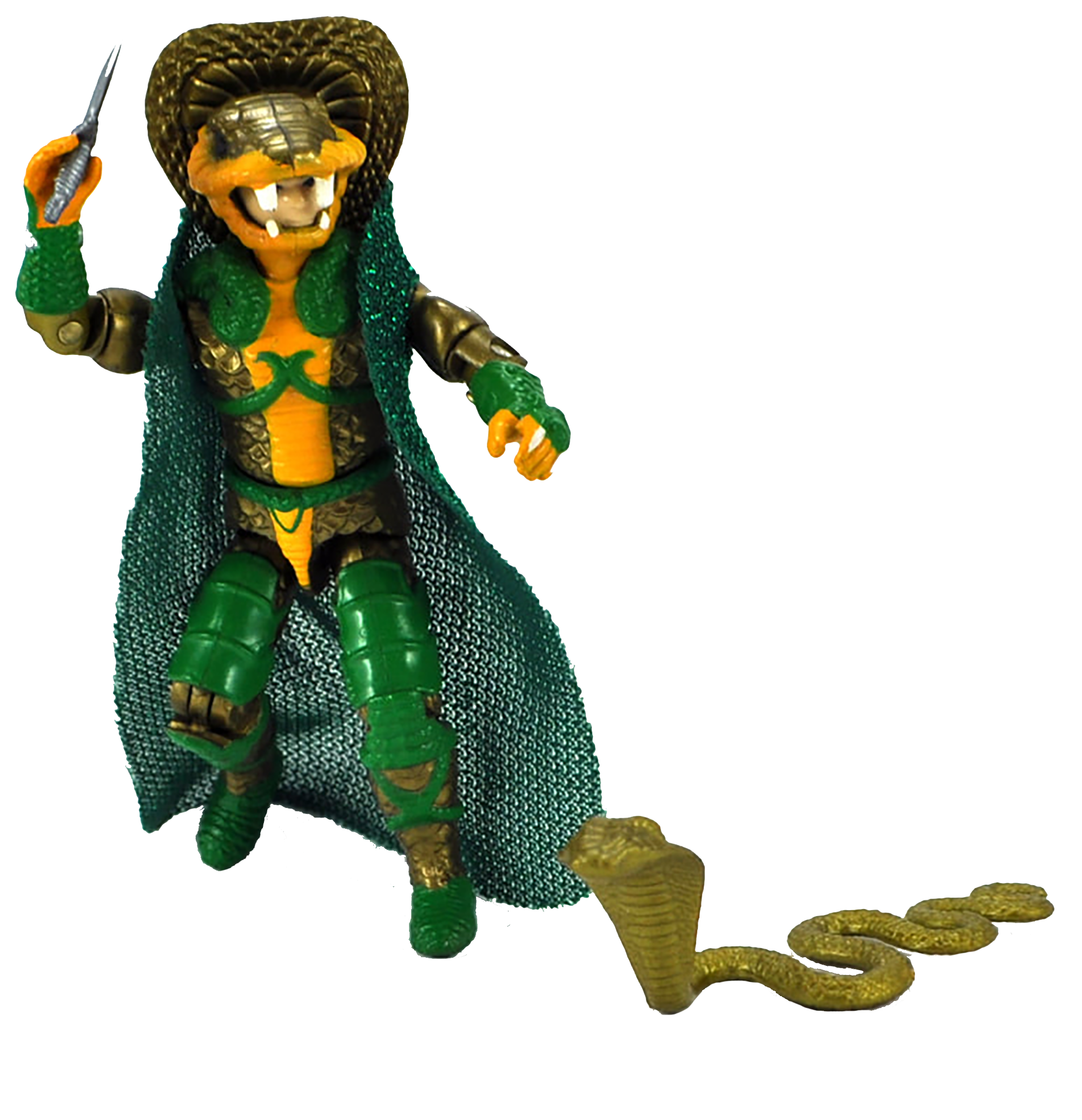
For some reason or another, Rudat is in a sword-and-sorcery mood in March 1985, as seen in his preliminary sketches for the new Cobra emperor: "I probably saw the Conan movie at one point and the main bad guy in there was a snake, and that might've been where I got the idea." Arise, Thulsa Doom, arise:
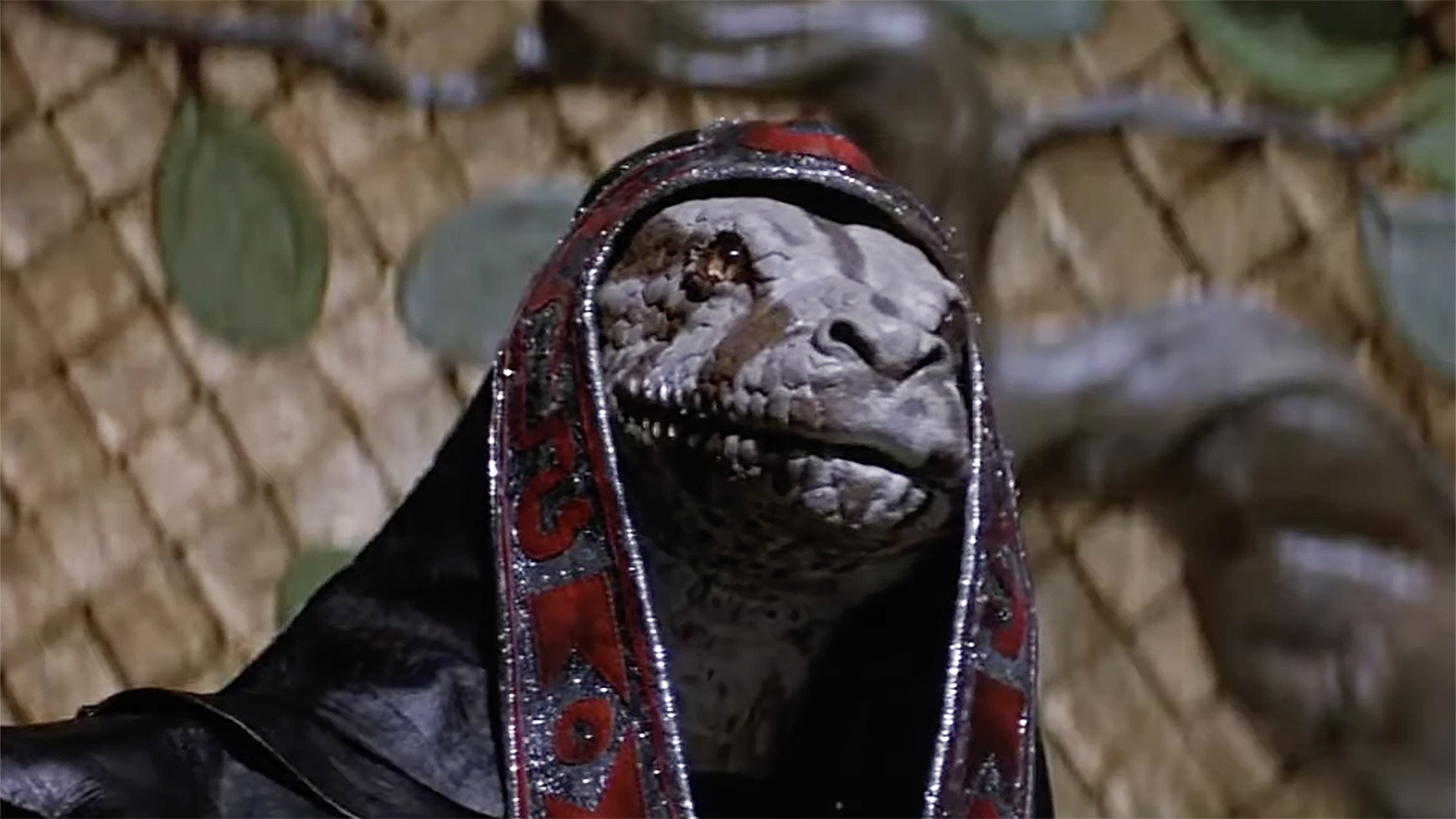
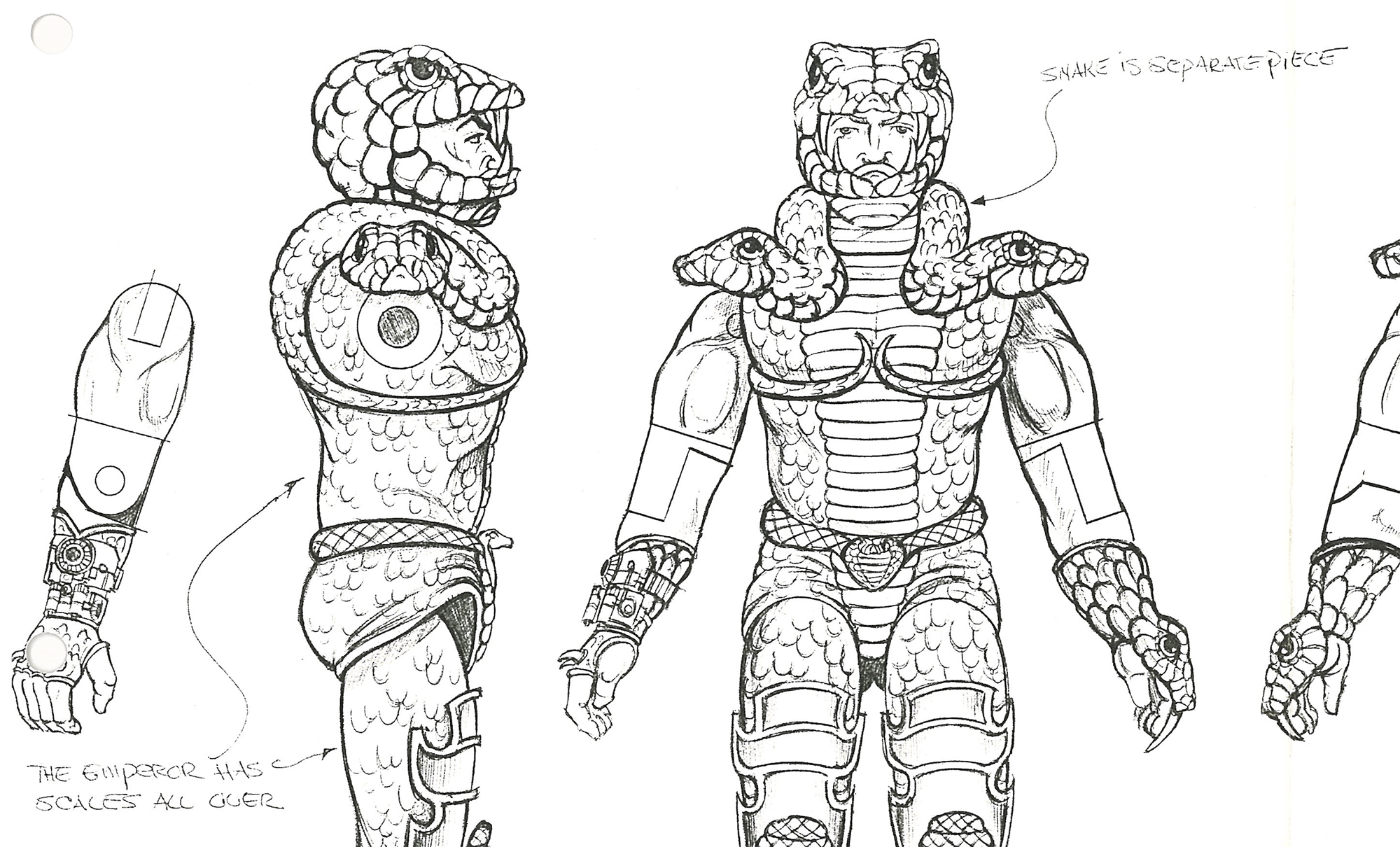
It is unclear if Rudat — who works for Hasbro on the toys — has snakes on the brain because Joe Bacal issued a sci-fi edict for the movie. The toys and movie ultimately have to align, even if they are on different production schedules. Whatever the inspiration, Rudat strikes a nerve with this design. Cobra now has its very own Cobra Emperor, slated for a 1986 release to coincide with the premiere of the just-ordered G.I. Joe Season 2.
Nobody tells Buzz Dixon, the guy now in charge of G.I. Joe Season 2.
MAY 1985
Buzz Dixon is a problem-solver — a great mind to have when dealing with a property serving so many masters, all with different motivations and needs — in an era where cross-country communication often happened at the speed of snail mail.
When Ron Friedman's initial batch of characters and ideas for G.I. Joe: The Movie arrive in the writing staff's mailbox in May 1985, Dixon and his outgoing boss Steve Gerber have plenty of problems to solve. This list was sent to Gerber, Dixon, et al. to make sure none of Friedman's pitches for the movie were dupes of ideas used in the yet-to-air Season 1. As seen in papers obtained by author and G.I. Joe historian Tim Finn from Ron Friedman's estate, the prolific screenwriter certainly ran with the sci-fi mandate.
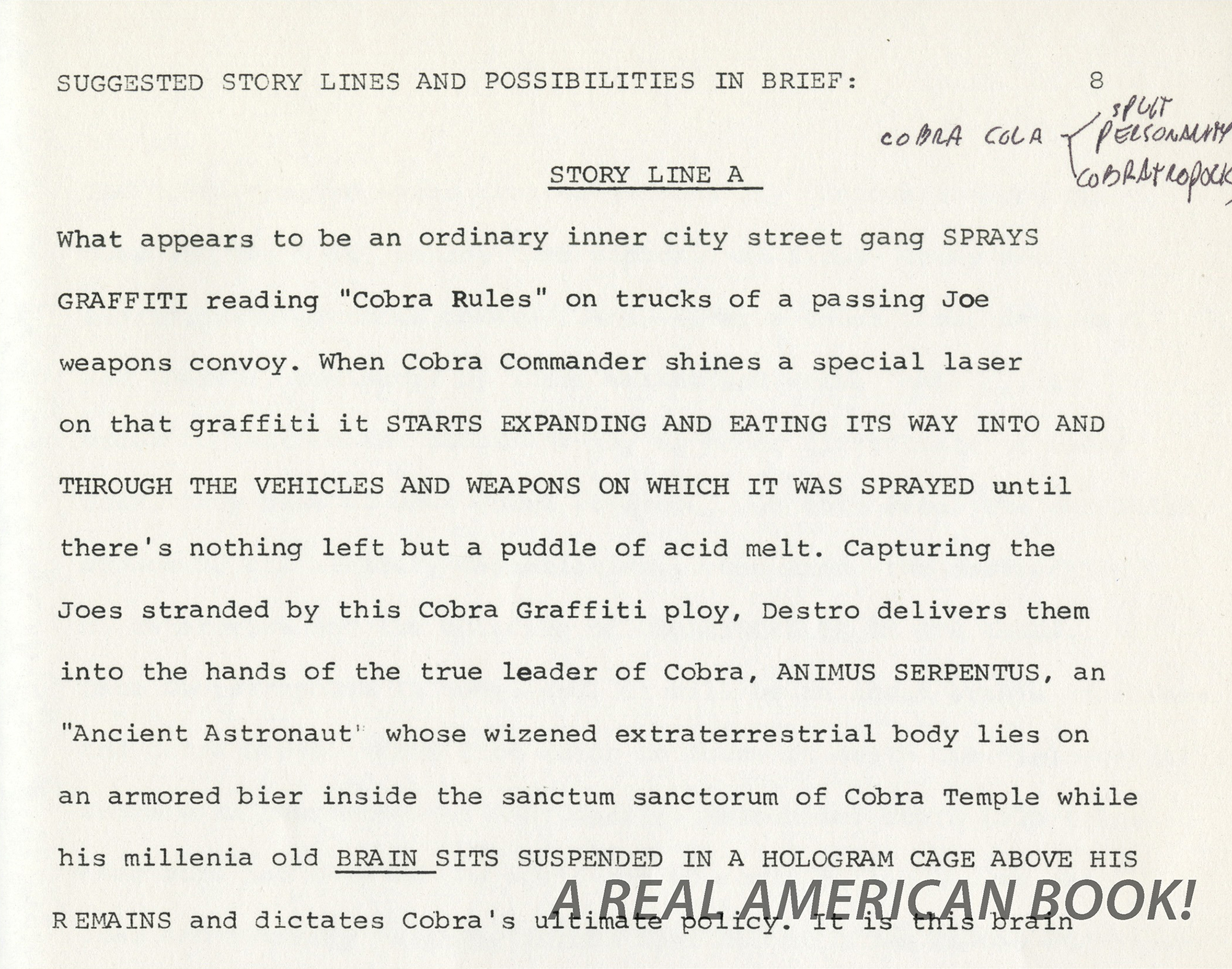
In this initial offloading of ideas, Friedman introduces ANIMUS SERPENTUS, the "true leader of Cobra," an "Ancient Astronaut" whose withered body lies on a wheeled platform, fully separate from the extraterrestrial's "millennia old BRAIN" floating above in a "HOLOGRAM CAGE." Also among Friedman's ideas, as provided to Pop Heist via Finn: a character named Cersei, a denizen of Cobra Island who manipulates minds via perfume and seeks to manipulate Cobra Commander and remove Destro as Cobra's de facto second-in-command.
Eagle-eyed Joe fans have already clocked a repeated idea in Cersei's character description: a woman controlling men's minds is the plot of "Spell of the Siren," a G.I. Joe episode written by Carla Conway and Gerry Conway (the comic writers who introduced a super-powered Carol Danvers as Ms. Marvel in 1977). So, strike that from the list of movie ideas.
Double-checking Friedman's list of movie ideas for dupes is likely one of Gerber's last acts as the man behind the G.I. Joe cartoon. "I just wanted to leave before I got stale," said Gerber in a 1986 chat with Comics Interview. "I felt that I had really done everything with it that I was capable of doing, at that point, and just felt it would be better off in the hands of somebody who was coming to it fresh." Those hands belong to Buzz Dixon, who is ready to pitch a script to kick off Season 2.
"I had come up with an idea for a story I was going to call 'The Most Dangerous Man in the World,' which was going to be my take on the origin of Cobra," Dixon tells Pop Heist. "It was basically about the Karl Marx, Friedrich Nietzsche of Cobra who Cobra Commander had kept locked up because Cobra Commander had gone so far afield from what this guy had espoused. And I did a treatment. I sent it in. It got approved by [executive producers] Tom [Griffin] and Joe [Bacal], and then it went over to Hasbro. And Hasbro sent back a note that said, 'Great. Go to script. Just make sure you include the the Cobra emperor.'"
Oh yeah, him. No one told Dixon about Rudat's Robert E. Howard, sword-and-sorcery-inspired Cobra emperor. Dixon, his primary concern as story editor being making the animated series coherent, is justifiably annoyed. Dixon recalls saying: "'We've spent an entire season establishing Cobra Commander as the supreme commander of Cobra. If you had asked us to, we could have planted little hints that there might have been somebody above him, but we just can't introduce this character without explaining where he comes from.' So [Hasbro] thought about it, and they said, 'Okay, come up with a couple of ideas.'"
Again, problem-solving. Dixon goes too far this time, coming up with two solutions when only one is needed. The first: have Cobra's new mad scientist, Dr. Mindbender, cobble together the new Emperor from the stolen DNA of history's greatest warlords. The second: reveal that Cobra had actually been a front for a secret sect, one that's been manipulating global events for centuries. Hasbro's response to these two different ideas: "Great, do it." Both of them.
A word of advice from Buzz Dixon: "If somebody asks you to come up with a couple of ideas, only come up with the one you want to do."
JULY 1985
Finally, after a spring of miscommunication and clarification, the various branches of the G.I. Joe organization are acting in concert. At the Hasbro offices in Pawtucket, Ron Rudat is designing a cadre of Cobra characters to surround Serpentor — including dozens of designs for an empress and various high priests, all clad in high-fantasy snake armor and elaborate robes.
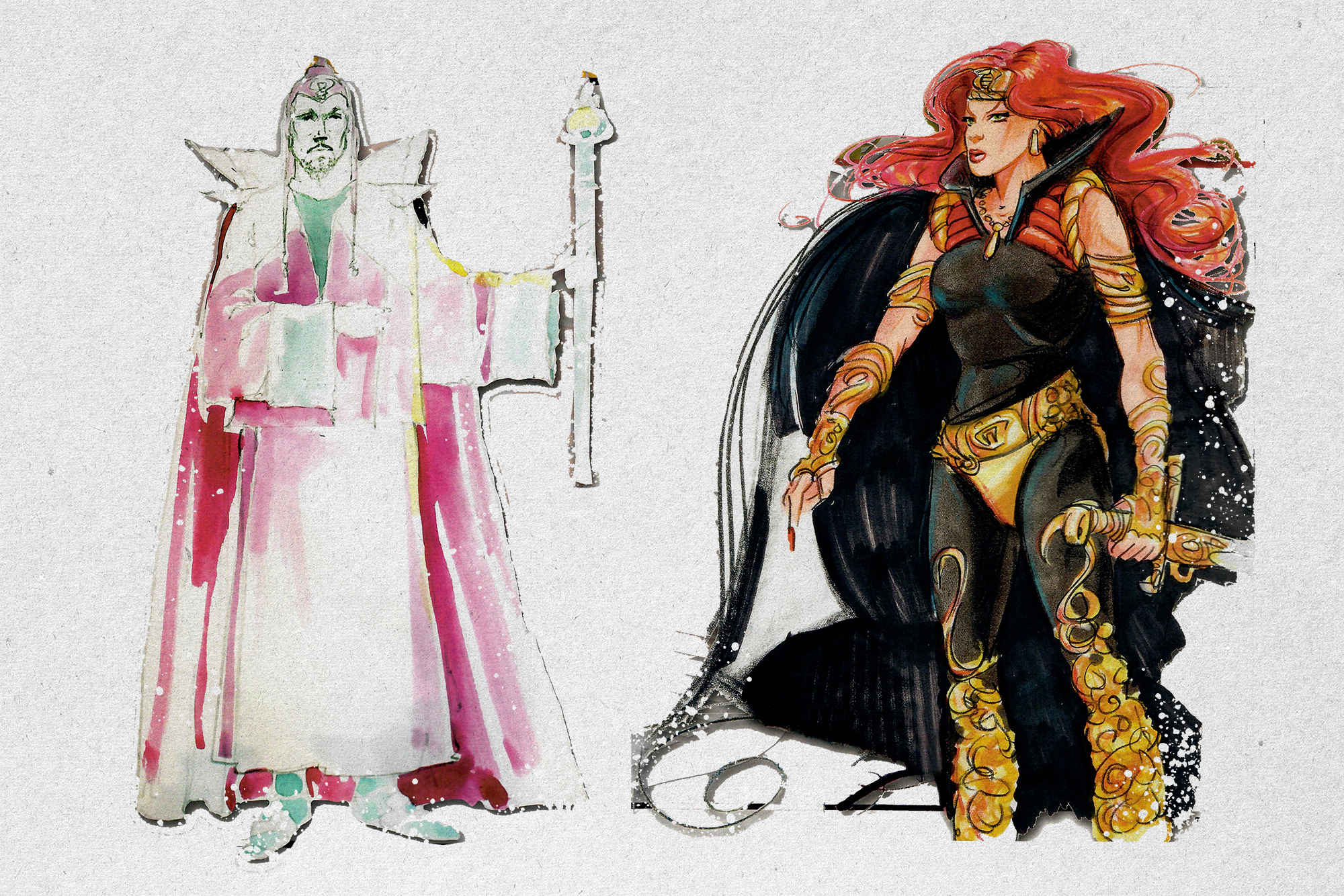
Marketing head Jay Bacal, based in New York City, is in constant cross-country collaboration with Ron Friedman and the writers at Sunbow's offices, located in an office building just across from the UCLA campus.
Numerous outlines, most dated July 1985, remain tucked away in Friedman's personal archives. These outlines are receipts from various brainstorming sessions as characters and plot elements take shape. For instance, the priestess Cersei becomes "Venomena" and, ultimately, "Pythona." One idea: Pythona hypnotizes a new Joe named Kitty Hawk into breaking Serpentor out of captivity; Kitty Hawk was the original name for Lt. Falcon, back when he was intended to be the son of General Hawk, not Duke's half brother. And a new adversary joins arch-villain Animus Serpentus and Cersei / Venomena / Pythona: the flying, shape-shifting Nemesis Enforcer.
While this is very early in the movie's development, some conversation between the Sunbow and Hasbro teams occurs in late 1985 because Rudat turns out at least one character design based on Friedman's script: "NEMESIS."
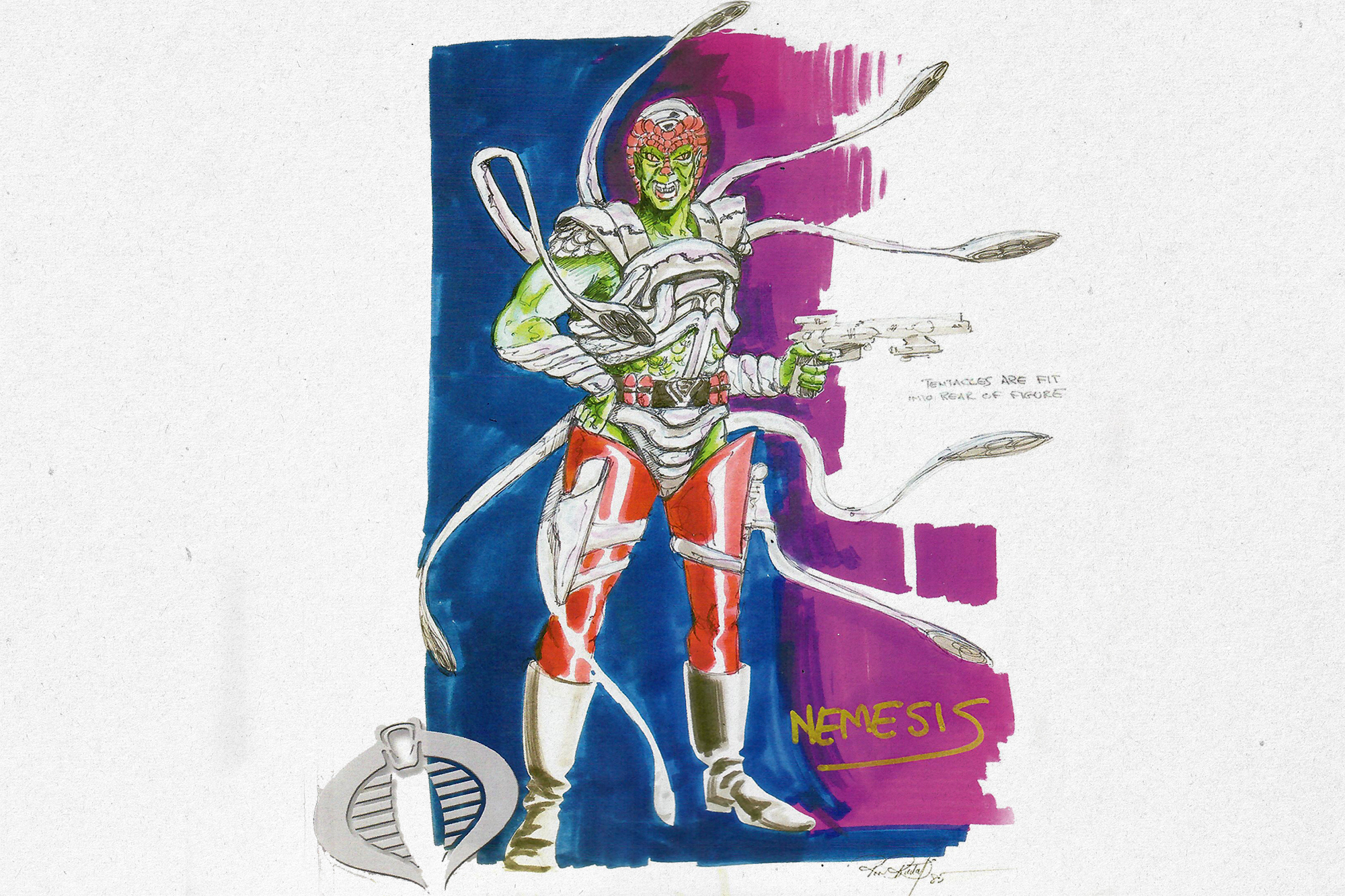
This sketch, dated by Rudat with an "85" in the bottom-right corner, looks nothing like the Nemesis Enforcer we'll see on screen (because he hasn't been designed yet) and it explains the tentacles that have long confused toy collectors (they're part of Nemesis' shape-shifting powers).
All of this ultimately leads to the first full script for G.I. Joe: The Movie, by Ron Friedman ... and suddenly Buzz Dixon is summoned to New York.
AUGUST 1985
It's August 1985 and Buzz Dixon is on a flight to New York City. As Dixon tells Pop Heist, "When I get there, they said, 'What did you think of the script?' And I said, 'Well, to be brutally honest, I think we'd be better off putting it aside and just starting brand new, afresh.' And they all breathed a sigh of relief, and they said, 'Good, that's what we were thinking, too.' So no offense to Ron, but it just didn't connect with what they needed."
What Sunbow needs is a good movie — at the very least a coherent movie. Buzz has to take the skeleton of this script, this mishmash of ideas, and not only connect it to the season of TV he worked on — one that has yet to air — but he also has to connect it to a season of TV that hasn't even been written yet.
There's an upside: this allows Dixon to do what Hasbro wants with Serpentor and give him both origins. Dixon moves the DNA idea to the unwritten Season 2 premiere, seeding the idea that Cobra's mad scientist Dr. Mindbender was incepted with the scheme to make Serpentor. This will bear fruit in the movie, when it's revealed that the idea comes from a secret society of snake people.
As for the toys, Dixon is told that he has no restrictions regarding the film's sci-fi-coded villains. While Serpentor's figure will hit toy aisles in 1986, there are no plans to make figures for whatever new villains are introduced in the 1987 movie. Serpentor is intended to be one of one.
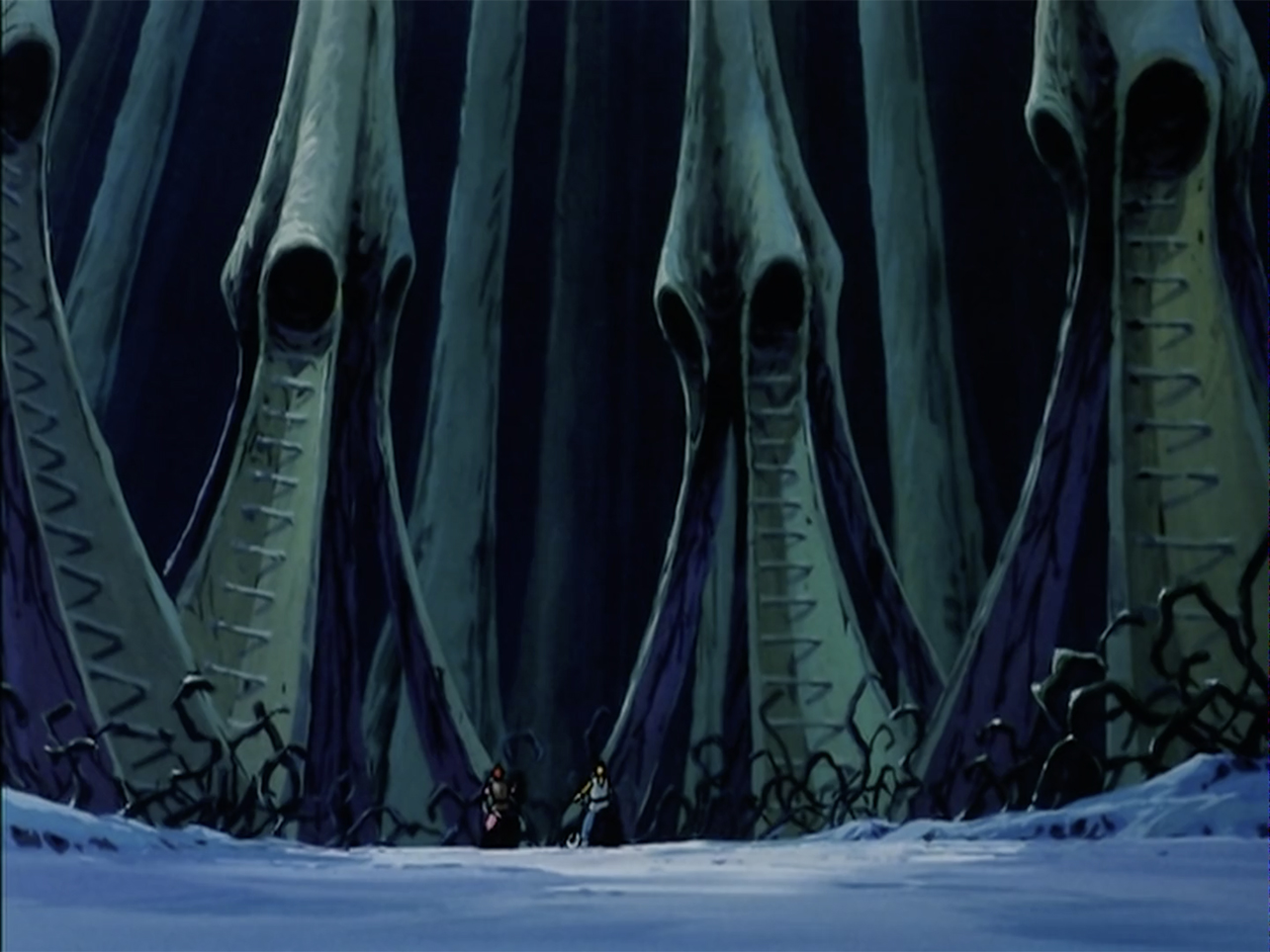
Dixon gets to work reining in Friedman's draft — and it speaks volumes that "ancient secret society of blue-skinned, bug-riding zealots" is reining it in. Dixon sets this enclave in the Himalayas, since — as Dixon tells Pop Heist — it has "been a while since anybody's had a secret base in the Himalayas." Dixon envisions a fully organic society, inspired in part by the hierarchical structure of feudal Japan as well as the works of sci-fi writers Aldous Huxley, Robert Heinlein, and Larry Niven — specifically elements of 1932's Brave New World, 1959's Starship Troopers, and 1966's World of Ptavvs. His reasoning: "Everything else in G.I. Joe is really high tech. Let's do the opposite. Let's do something completely organic, completely biological."
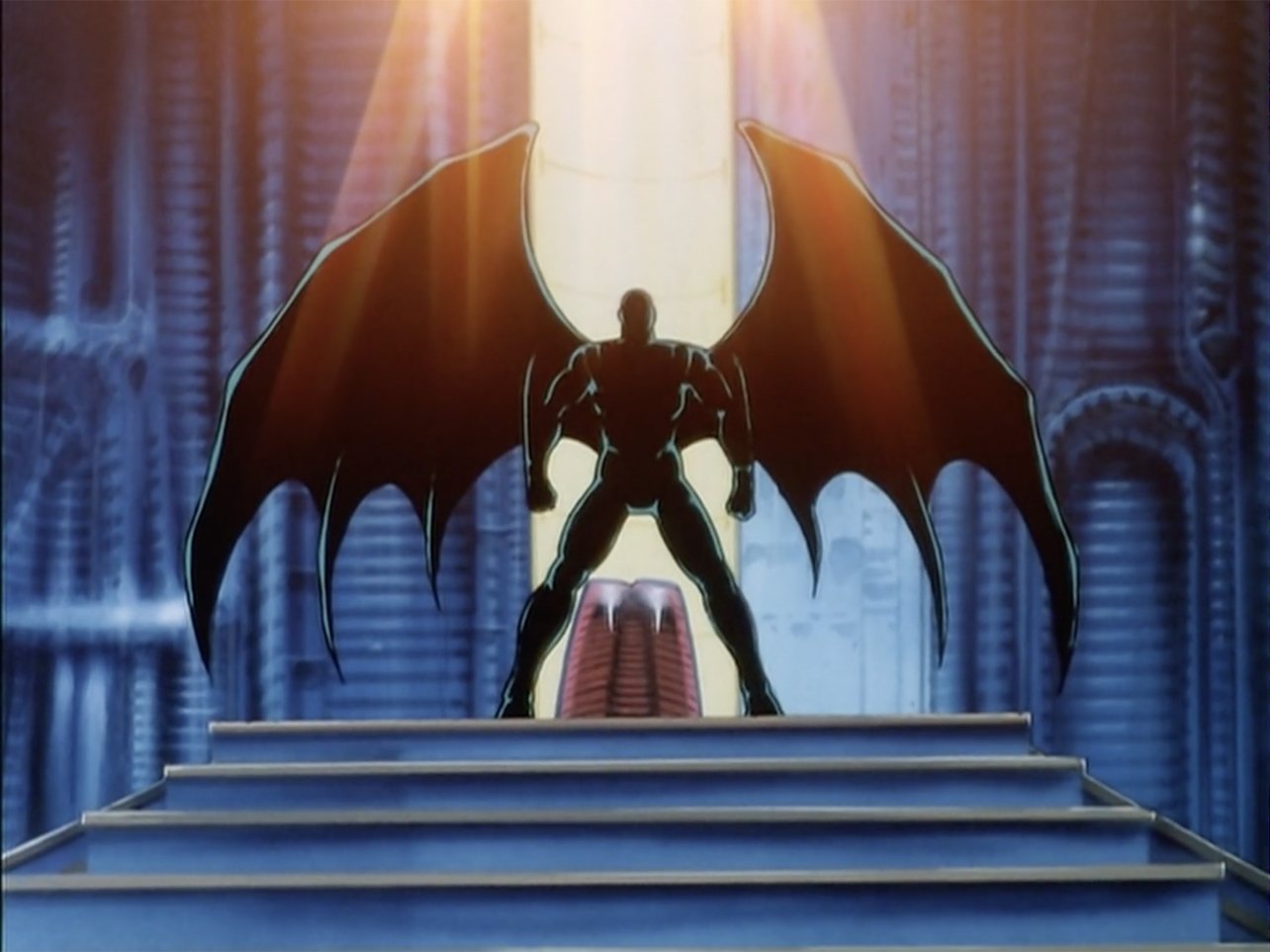
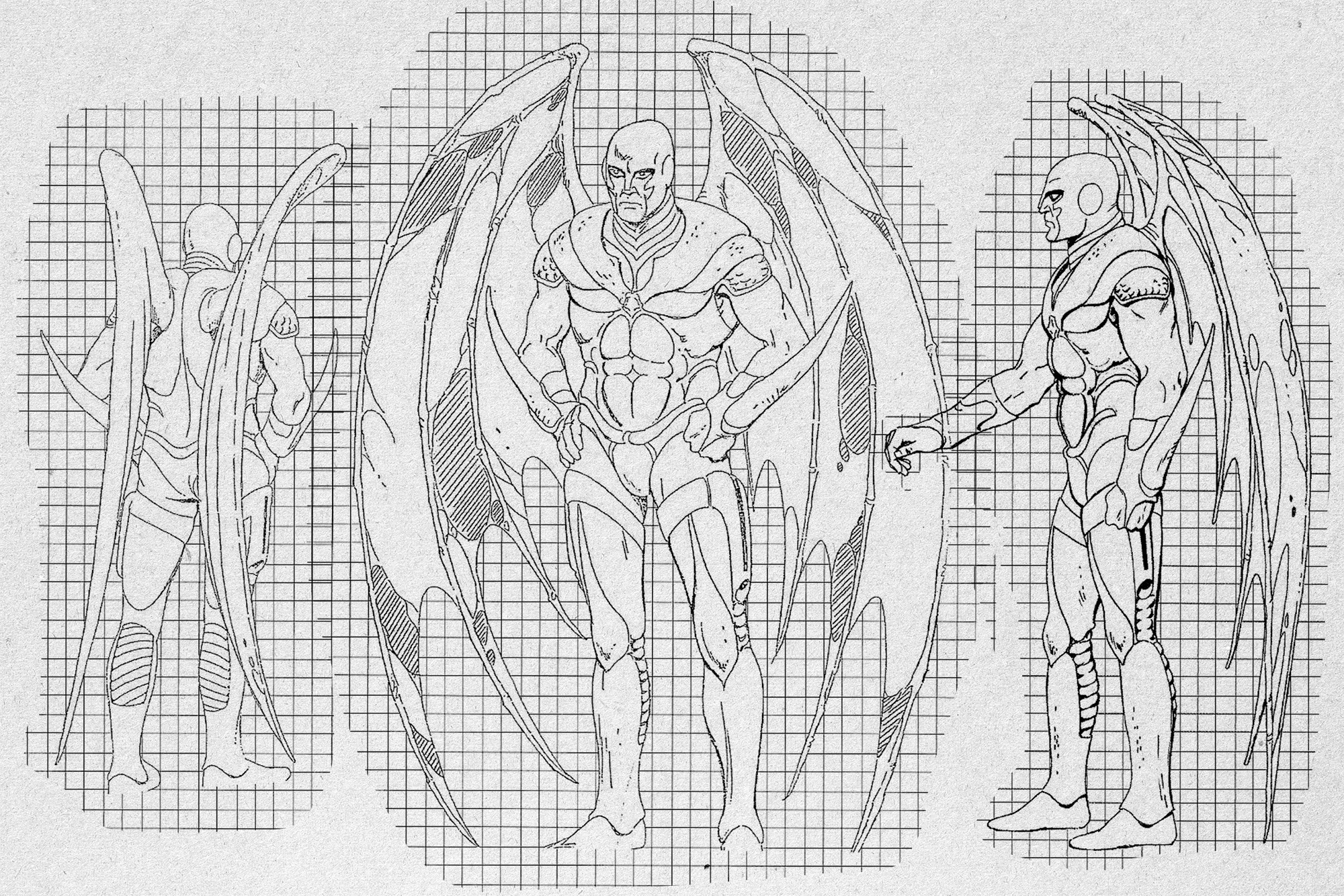
As for the villains, it's immediately determined that Nemesis Enforcer will remain Nemesis Enforcer: "Everybody agreed that was a cool looking character, and we thought he'd be a good addition to the movie." Instead of being a shapeshifter, though, he maintains his most intimidating form, replete with bat wings and muscles.
Animus Serpentus — the ancient astronaut with the withered body and levitating brain — is molded into Golobulus, a corpulent despot (hence the "glob" part of his name). "He was envisioned as this kind of Charles Laughton, Nero type figure — this huge, fat, seemingly flabby guy who's always carried around on a litter and he's being fed mice and things like that. He's just typical, you know, degenerate Roman Emperor stuff."
And then there's the witch priestess formerly known as Cersei and Venomena. The name Pythona sticks, but her role shifts from passive to active. "I wanted to get the movie off to a fast start, and I wanted to lay at least one of the plot lines out early so that the audience would know what's at stake," Dixon tells Pop Heist. "So I figured we've gotta have a character who is outlandish, but in a good way, who is going to catch people's attention, who represents a kind of threat we have not seen before in G.I. Joe."
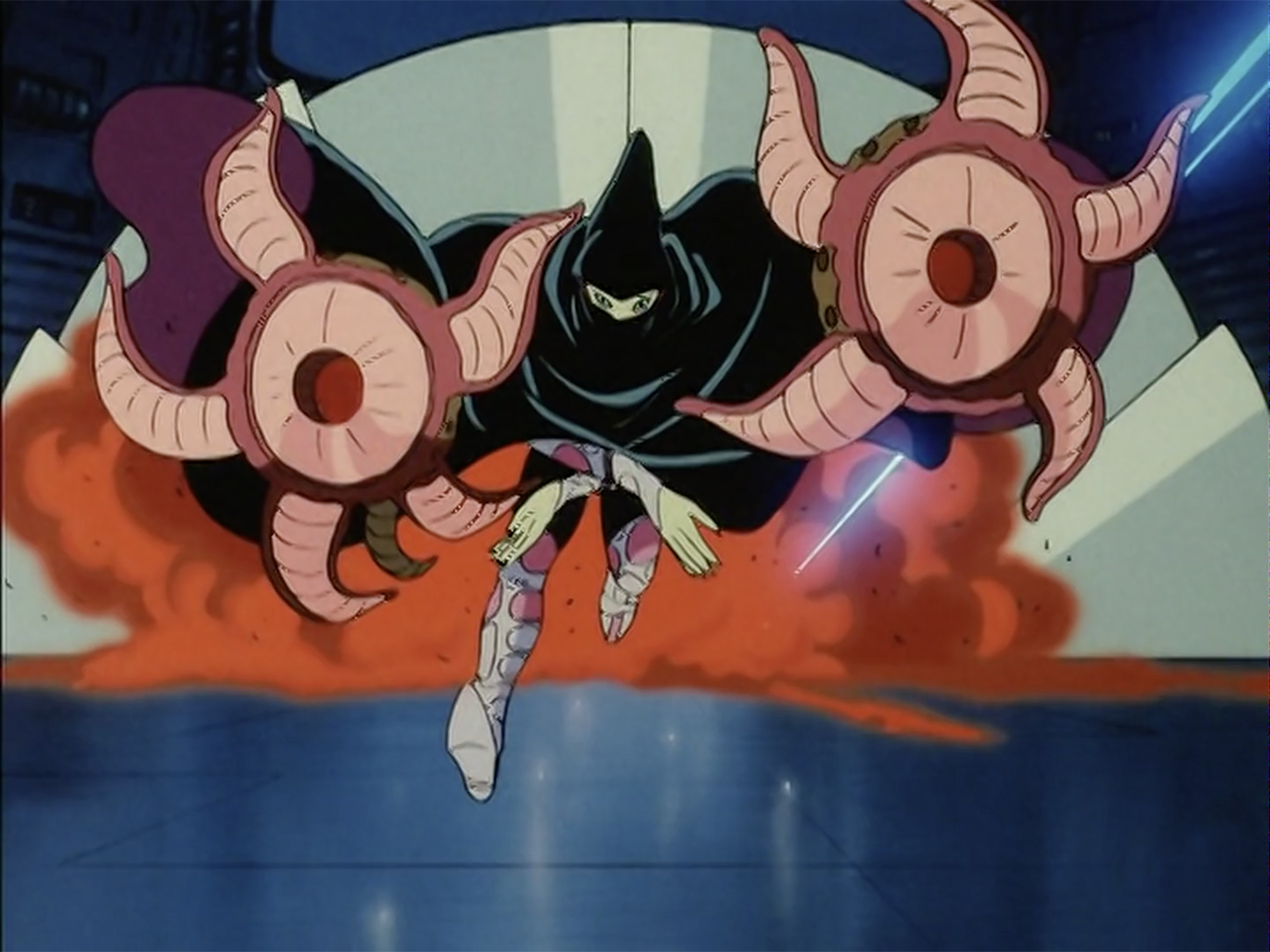
In the film's opening scene, she tears into a Cobra Terror Drome and cuts a swath through Cobra's forces using the most bizarre weapons imaginable: a four-headed electric eel, suffocating spores, face-hugging starfish — "The acid from the fingernails, I swiped that from Alien to give her something to do besides shooting a gun."
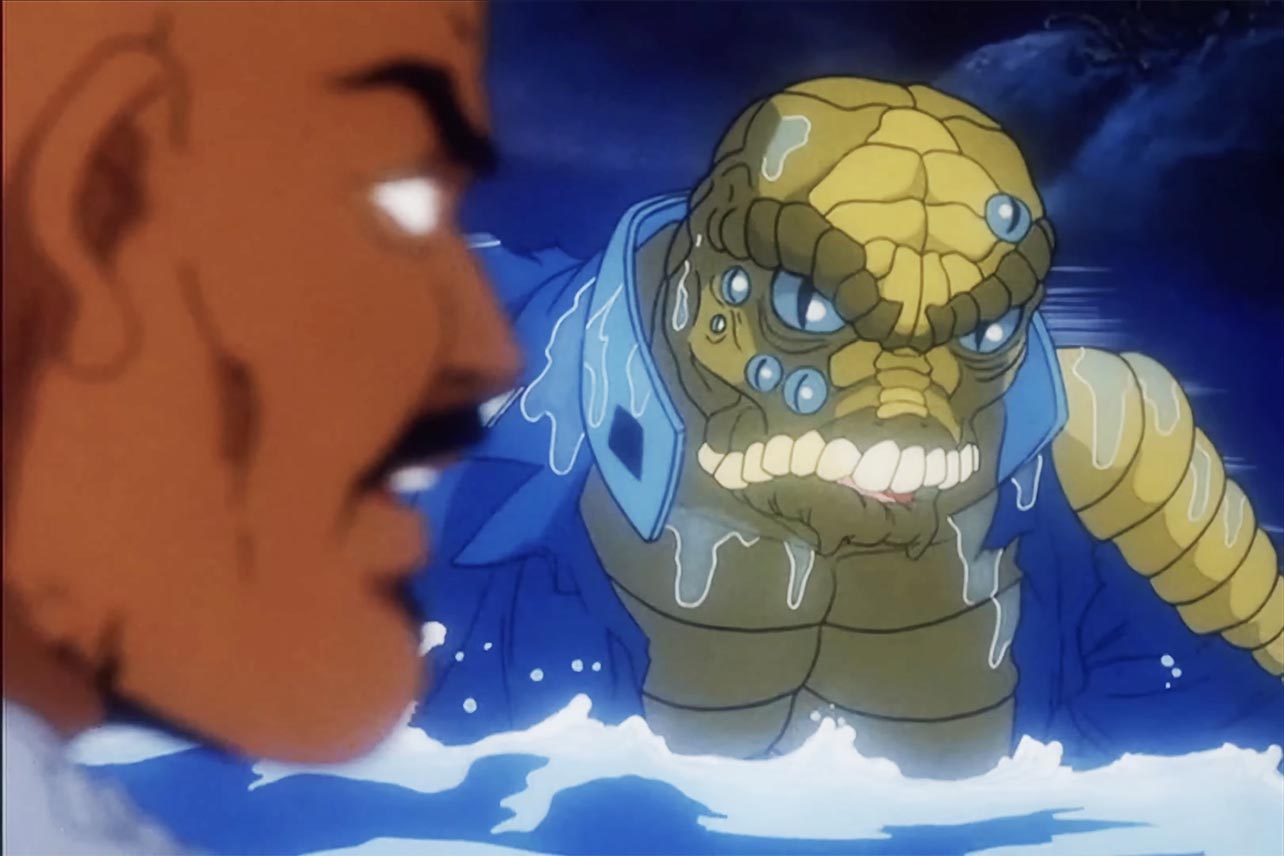
The tendrils of this new organic evil even snake backwards, reshaping the franchise's premier villain: Cobra Commander. As initially conceived of for the toy's file card by G.I. Joe creative mastermind Larry Hama, Cobra Commander (real name: unknown) is a sadistic and fascistic global terrorist — "probably the most dangerous man alive!" And through Cobra Commander's continued development in the monthly Marvel comic, Hama expounds upon the character with his trademark cheeky yet sharply satirical style, revealing him to be a family man and used car salesman, one disillusioned with the "American dream" who turns to con artistry, pyramid schemes, and cult leader tactics to build an insurgent empire called Cobra.
Neither Hama nor Dixon are aware of what the other is doing — intentionally. Hama writes a character's dossier, snippets of which are used on the toy's file card, and the full dossier is sent to the cartoon's writers. Those dossiers are added to the show's bible, but that's where the synergy stops. Details like Cobra Commander's totally normal true face or his son, a ninja named Billy, never make their way to animation. Sunbow's Cobra Commander is more or less an enigma, his only defining trait being — in a diversion from the comics — a horrifying visage that must be hidden behind a mask. This new society, one built on organic monstrosities, gives Dixon an idea.
"That's where I got the idea of how we were going to mutate Cobra Commander," says Dixon. "We had made allusions in the past, on the few times people would see him with his mask off, they would always go, you know, [winces]." So Dixon uses the movie as an opportunity to give this Cobra Commander an origin. He was once a citizen of this secret society, a scientist who was horribly disfigured in a spore accident. "We couldn't do anything explicitly gruesome, but I thought if you've got a bunch of eyeballs all over your face, that ought to produce a few nightmares." Dubbed Cobra Commander, he was chosen by Golobulus to — quoting Dixon's finished draft — "go into the world, raise a mighty army, and destroy the so-called 'civilization' which had driven us into exile."
Now, what to name this weird new society, that has such freaks in it? The name is considered by many to be the movie's most notorious transgression, but you have to understand where Buzz Dixon was coming from. He knows Hasbro's legal department is shrewd, as he'd just watched the naming process for this Cobra Emperor character. Name after name was scratched out until they settled on "King Cobra." The largest venomous snake on Earth. Perfect name ... except King Cobra also happened to be the name of Anheuser-Busch's then-new malt liquor. ("Don't let the smooth taste fool ya!") "When they changed his name to King Cobra I kept my mouth shut because I'm going, 'Yeah, I really want to have a character in this show named after a malt liquor.' But they caught that at the last moment."
But they caught that at the last moment.
Needing a name for this draft, Dixon goes with Cobra-La, a baldly ridiculous riff on Shangri-La, a mystical mountain civilization from James Hilton's 1933 novel Lost Horizon. If King Cobra didn't get past legal, there is no way Cobra-La will — but it does. Everyone above Dixon loves the name. "I said, 'No, no, it's a placeholder name. Don't use that. Please don't use that.' And they said, 'Nah, we love it.'" Thus Cobra-La is established.
Dixon's final draft is turned in on February 26, 1986. Look at what Buzz was asked to do: not only was he tasked with fact checking all of Ron Friedman's ideas, he started working on Season 2 while having Serpentor dropped on him out of nowhere, and then was told to make a movie he did not write work. And he does it, appeasing the guys who want to sell toys, and all of the writers who created a very specific universe.
"I was just having fun trying to make it the best cinema I could, utilizing all of the anime techniques I had evolved into my style... [Hayao] Miyazaki and other directors got a chance to simulate 3D in 2D, so I would study that over and over again, seeing how they did it so we could replicate that in domestic shows that I was working on."
Larry Houston, storyboard director, G.I. Joe: The Movie
If you grew up loving cartoons in the '80s, you owe a lot of thanks to Larry Houston. Starting in the art department of Filmation's Tarzan/Lone Ranger/Zorro Adventure Hour in 1980, Houston began a streak of work as a storyboard artist and director that is — to undersell it — astonishing. Spider-Man and His Amazing Friends to G.I. Joe and Jem, to The Real Ghostbusters and C.O.P.S., to Teenage Mutant Ninja Turtles and arguably his most impactful work: bringing X-Men: The Animated Series to life, establishing its characters and tone, shaping its unprecedented storytelling style, and defining the X-Men for an entire generation (or two … or three).
Houston came from the world of Spider-Man and His Amazing Friends, where staging was rarely more complicated than "X character on right, Y character on left." By infusing his work with anime innovation, Houston brought complex choreography and dynamic camera work to the churn of daily adventure cartoons. And in late 1985, Houston is given the chance to storyboard sequences for a real motion picture: Transformers: The Movie.
Up until this point, Houston's only worked on G.I. Joe under director / producer Don Jurwich, who encouraged storyboard artists to add their own flair to the storytelling. Within Sunbow's kingdom, The Transformers falls under the jurisdiction of Nelson Shin — and Shin's creative process differs greatly from Jurwich's collaborative style.
"I'm a very collaborative director. I like to take the script and improve on it, and add to it to make it better," Houston tells Pop Heist. "When I read the script for the Transformers movie, there were parts I wanted to change. And the director, Nelson Shin, I talked to him about it. He said, 'No, no, no, just follow script. Follow the script.' So I handed it back to him, and said, 'I'll work for G.I. Joe,' and that's all." Houston waits and, two months later, Dixon's final draft of G.I. Joe: The Movie is in his hands.
"That was a lucky choice I made."
MARCH 1986
With a finalized script chucked onto the freight train, it now falls to the film's visual artists to figure out exactly what a reclusive snake cult that shuns modernity and worships the organic actually looks like. This is a job for Russ Heath, already a living legend in 1986 thanks to his breadth of comic work. Heath got his professional start post-World War II drawing western comics for Timely (aka the company that would be Marvel Comics), and moved over to DC Comics in the mid-'50s on G.I. Combat and Our Army at War. Clearly Heath's passion for the military made him the perfect person to translate this new iteration of G.I. Joe into animation — but Cobra-La presents Heath with a chance to really cut loose.
Heath takes the organic cue and runs with it, covering Nemesis Enforcer in scales and various carapaces, with tusk-like elbow spikes and large, leathery, bat wings.
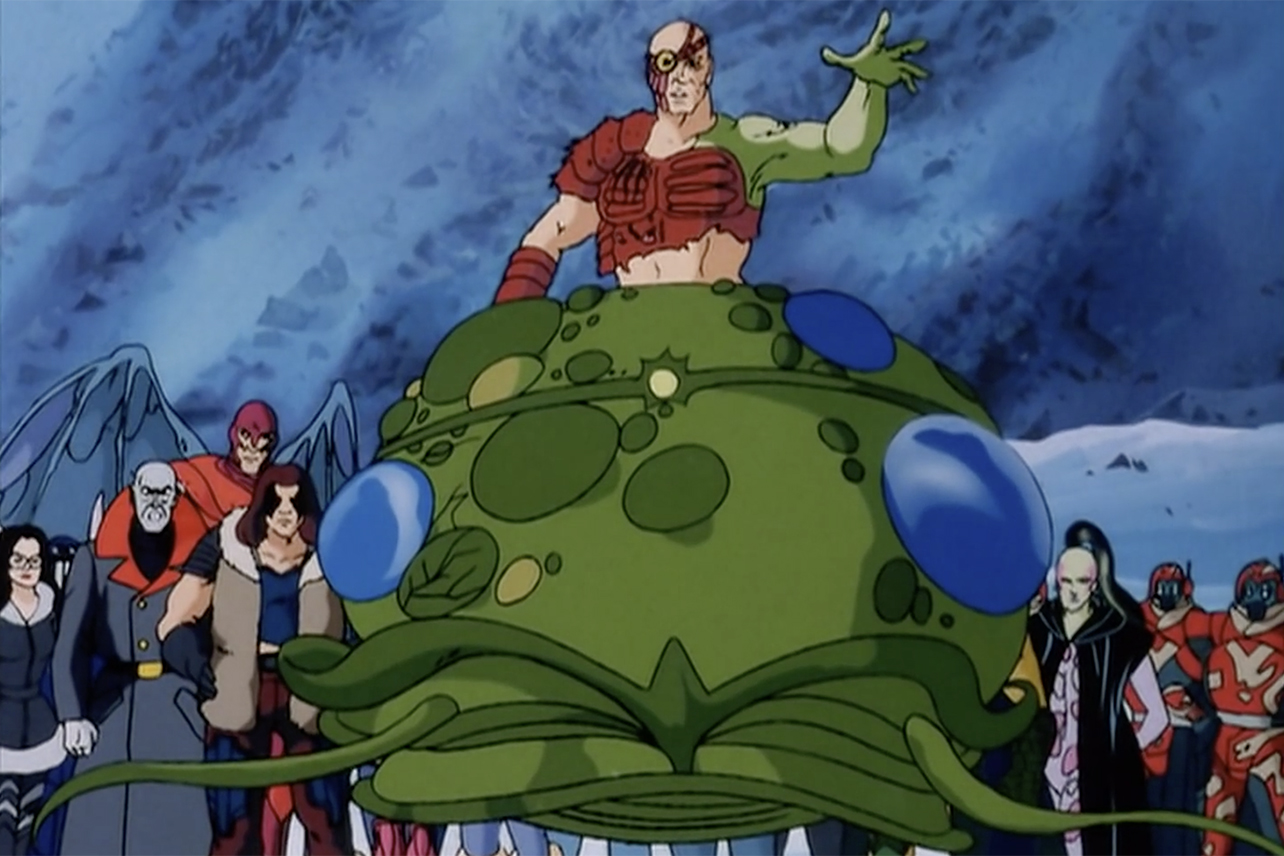
Heath goes in a different direction for Golobulus: from rotund to ripped. The Cobra-La leader gets totally jacked and is adorned with crustacean armor and a wormlike eyepatch with, in a possible nod to H.R. Giger's facehugger, phalanges gripping his chin. Dixon's original idea, for Golobulus to be carried around by servants on a litter, evolves into a giant floating pod which hides his lower half, which is just a straight-up snake.
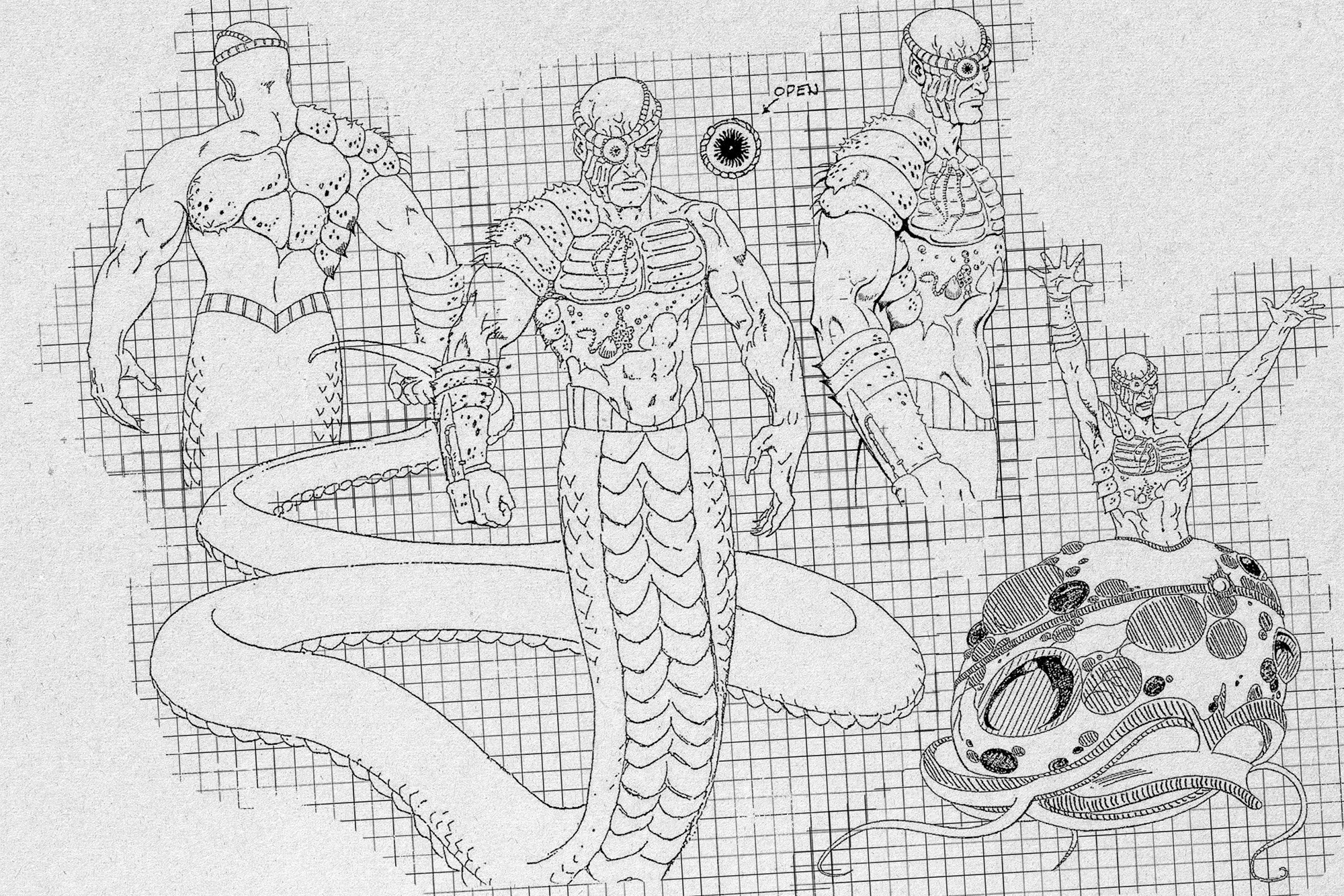
Considering the speed with which the production is happening, Dixon doesn't see what Heath has done to Golobulus until it's too late. "If they had given me five minutes, I would have come up with a better character name, because he obviously doesn't look like a glob. But in any case, they came up with this character design, and I thought, 'Okay, well, you know, it's not bad. We'll run with that.'"
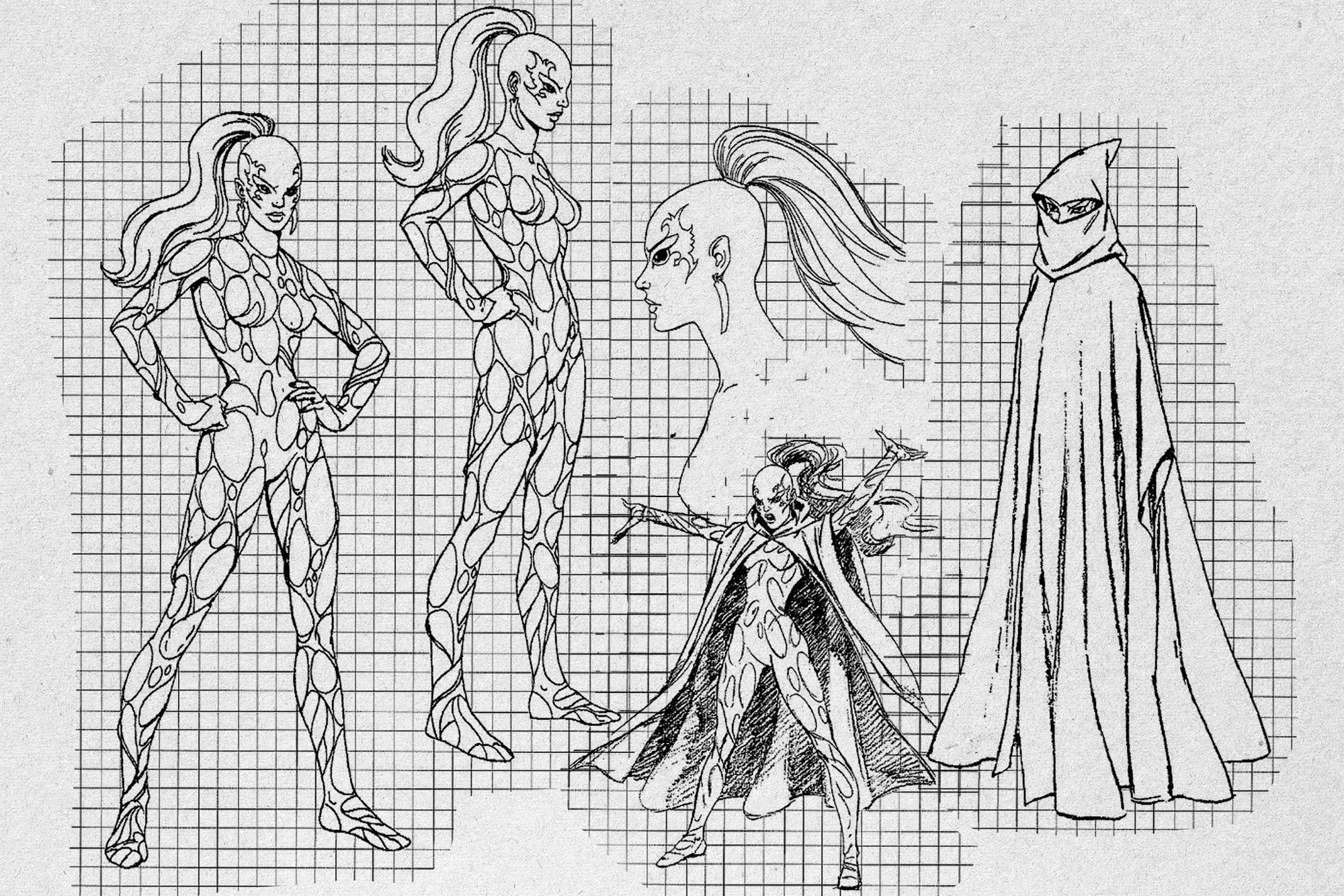
Then, Pythona. Dixon wants her to have a "sleek female form," describing her as the "sexy, beautiful, exotic and deadly, High Priestess of Cobra-La" in his script. Heath's design definitely exudes all four traits: her cat-like eyes and vertical-slit pupils, her otherwise bald head adorned with a flowing ponytail, her sharp facial markings (be they makeup, tattoos, or natural coloration).
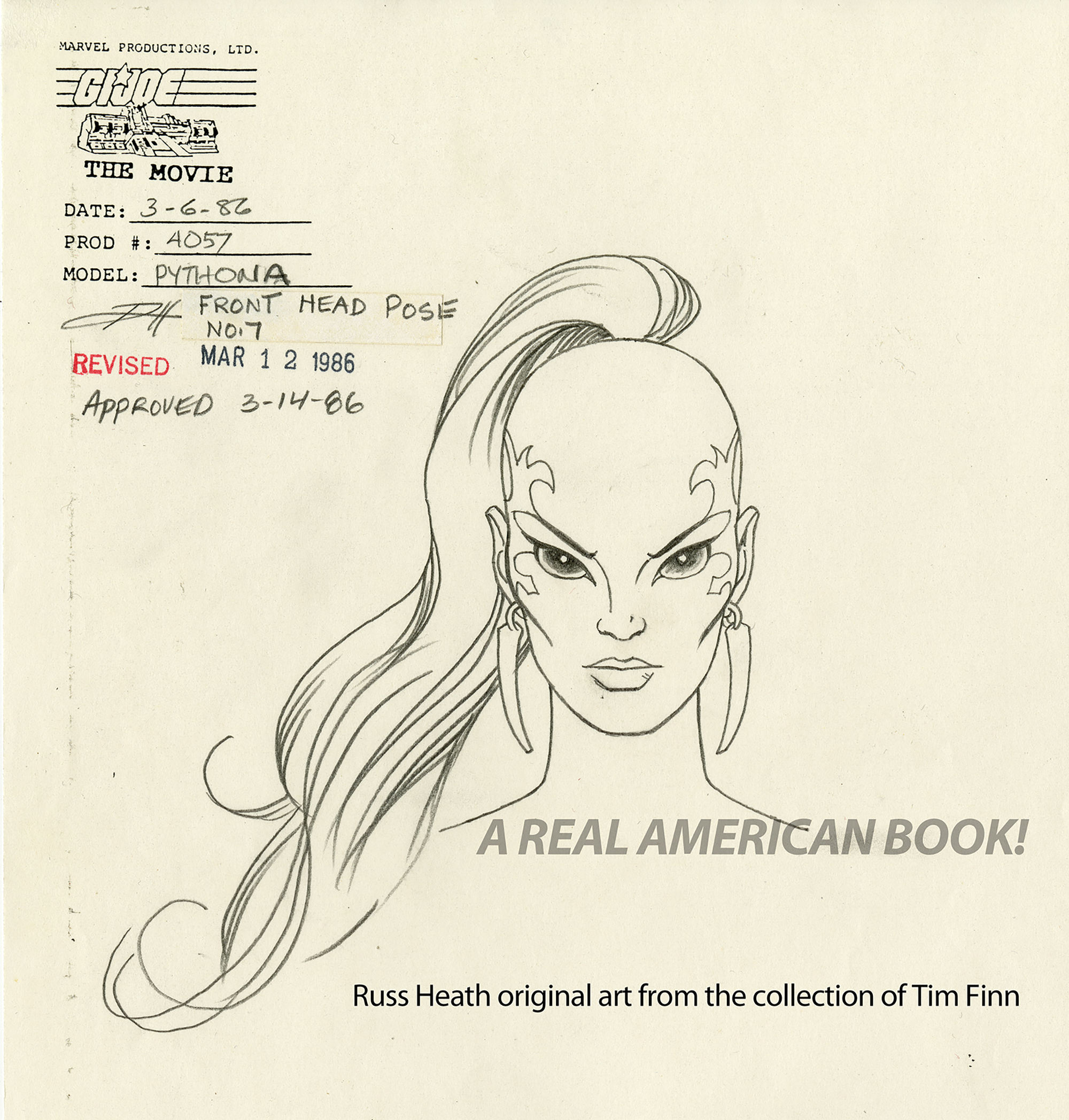
Then there's her full-body jumpsuit with veiny membranes stretched across her curvaceous body, almost giving the illusion of horrific yet alluring nudity. Top it off with a cloak and hood, one designed to frame her eyes in the most alien way imaginable, and you see an instant icon — or not, if you're Buzz Dixon.
"My initial reaction wasn't, 'Yes, they got it.' But I looked at it and went, 'Well, you know we got to get rolling on this thing. I can live with this.'"
Then, incoming storyboard director Larry Houston, with Jurwich as his sherpa, is led to the kingdom of Cobra-La. "When I read the whole script, I was like, 'Okay, they're going in a new direction.'" But Houston, in a collaborative environment, is not worried. "You just try and take the the approved script, because this is a script that the toy company approved, and go with it and see how we can make it better and better." And when scenes are doled out between the film's four storyboard directors — Houston, Boyd Kirkland, Will Meugniot, and Frank Paur — Houston lands two of the most pivotal moments of the film: the opening credits and the opening scene — Pythona's introductory raid on the Cobra Terror Drome.
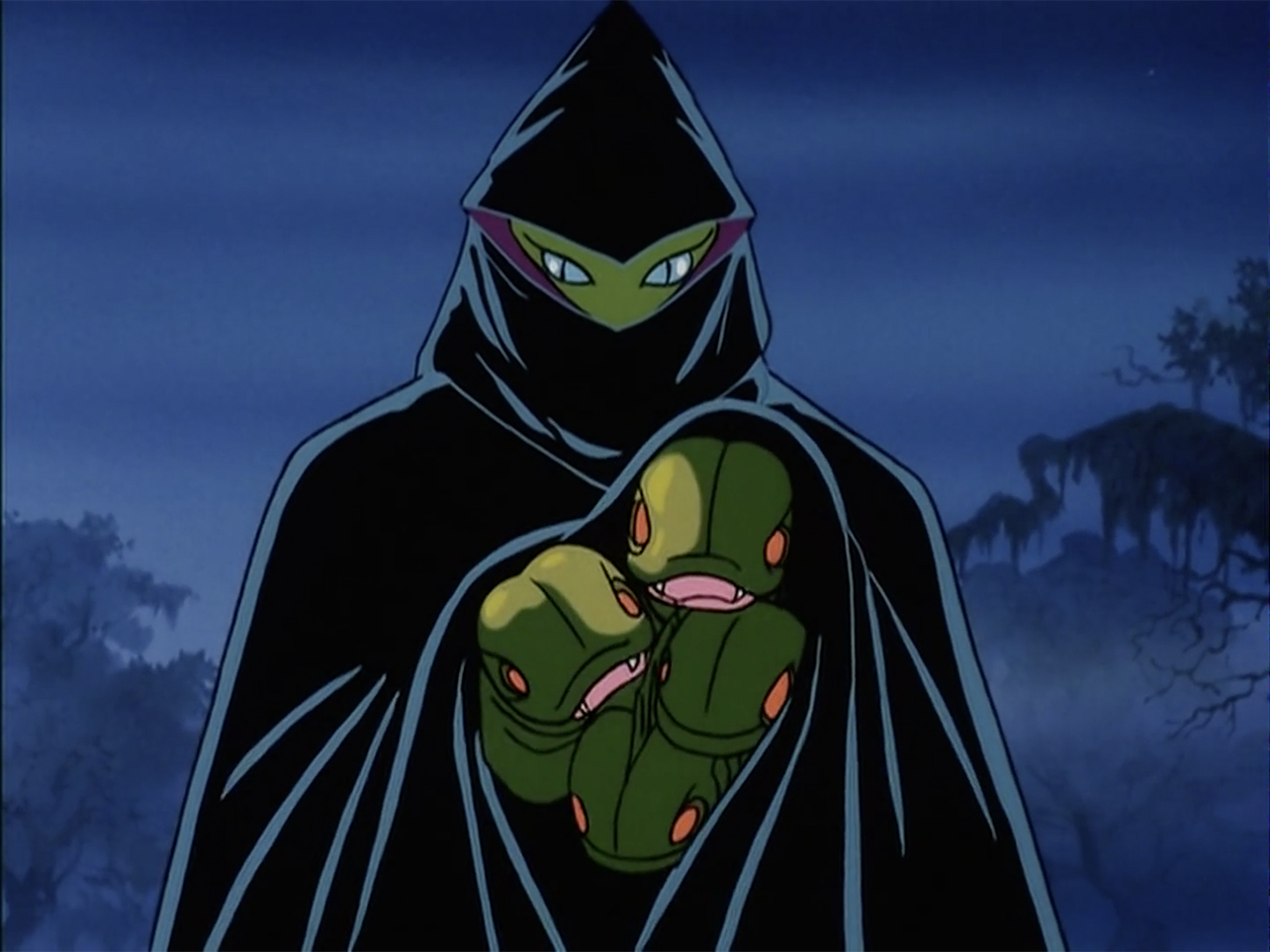
"I just let my imagination guide me," Houston recalls to Pop Heist. "When I'm working on a storyboard like that, I have no idea what I'm going to draw. It just comes to me. When I put my pencil to paper, I started drawing claws coming in [through the metal door]."
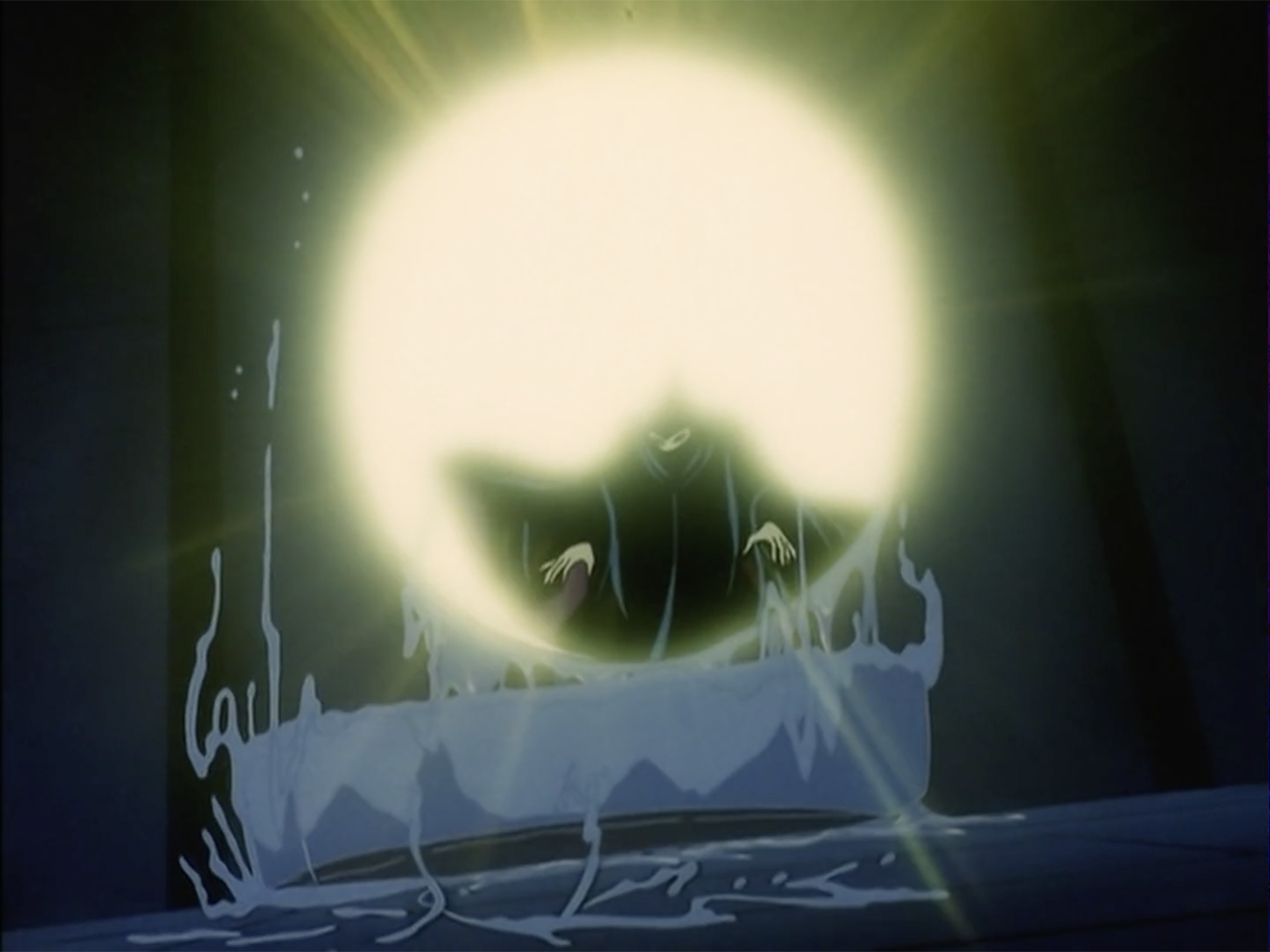
"The platform she's standing on is reminiscent of Empire Strikes Back, Darth Vader's up here, the bad guys are down here."
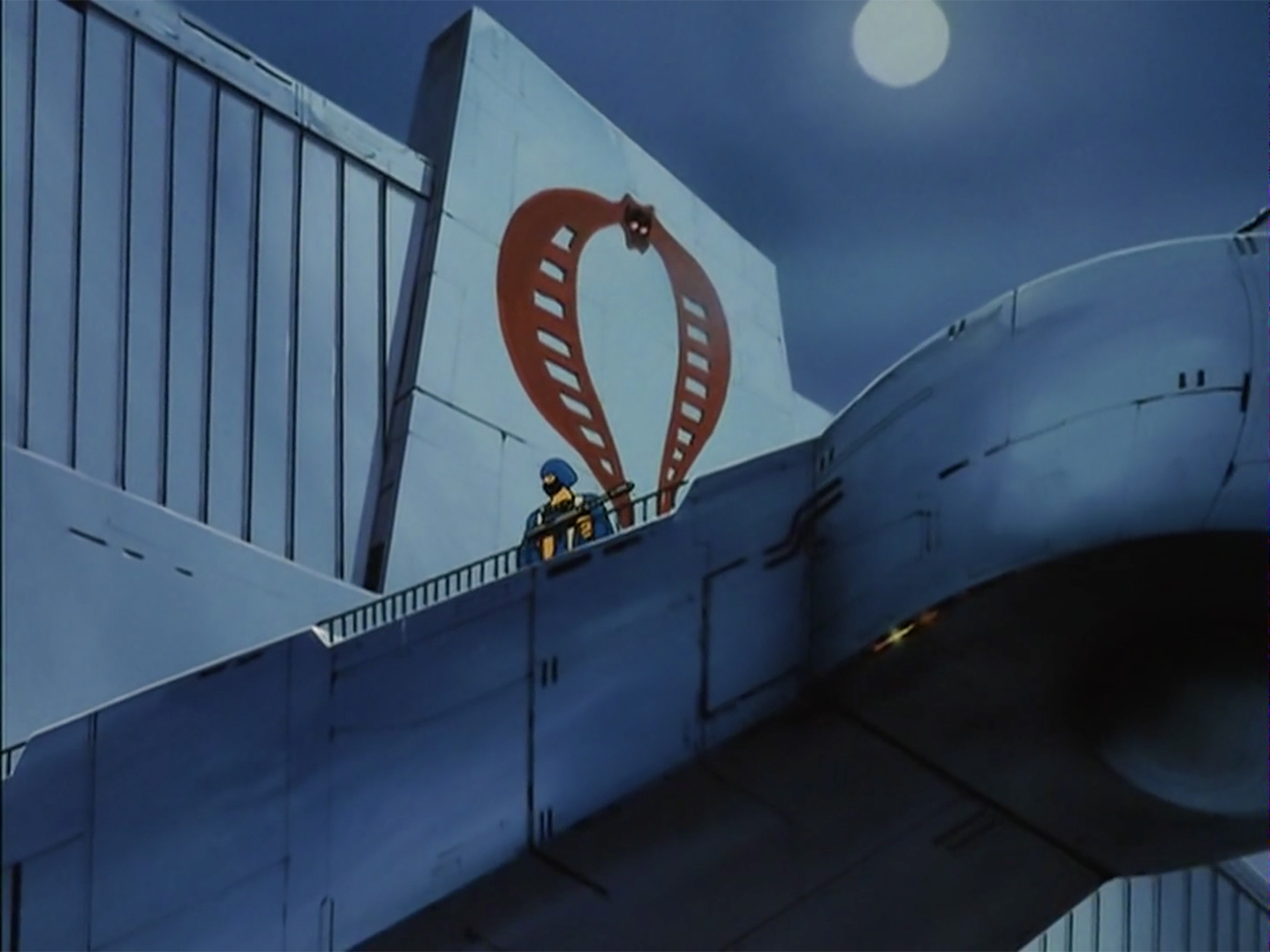
"At that point in my directing and storyboarding, a lot of it was instinctive."
Ultimately, Pythona — and the entire concept of Cobra-La — is introduced in the most brutal way imaginable, in what is quite possibly the most violent set piece of the entire animated series. G.I. Joe, let alone G.I. Joe fans, have never seen anything like this before.
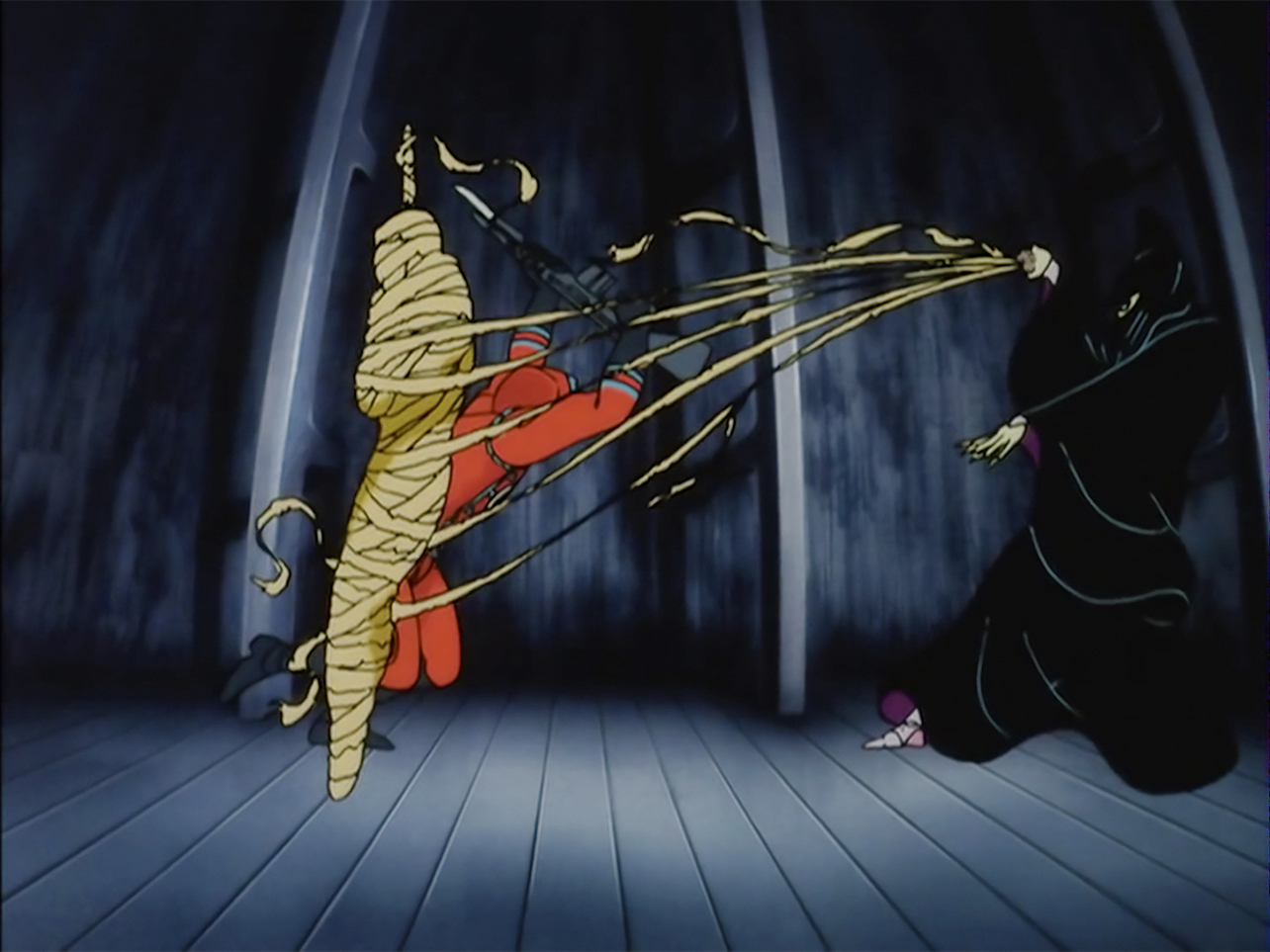
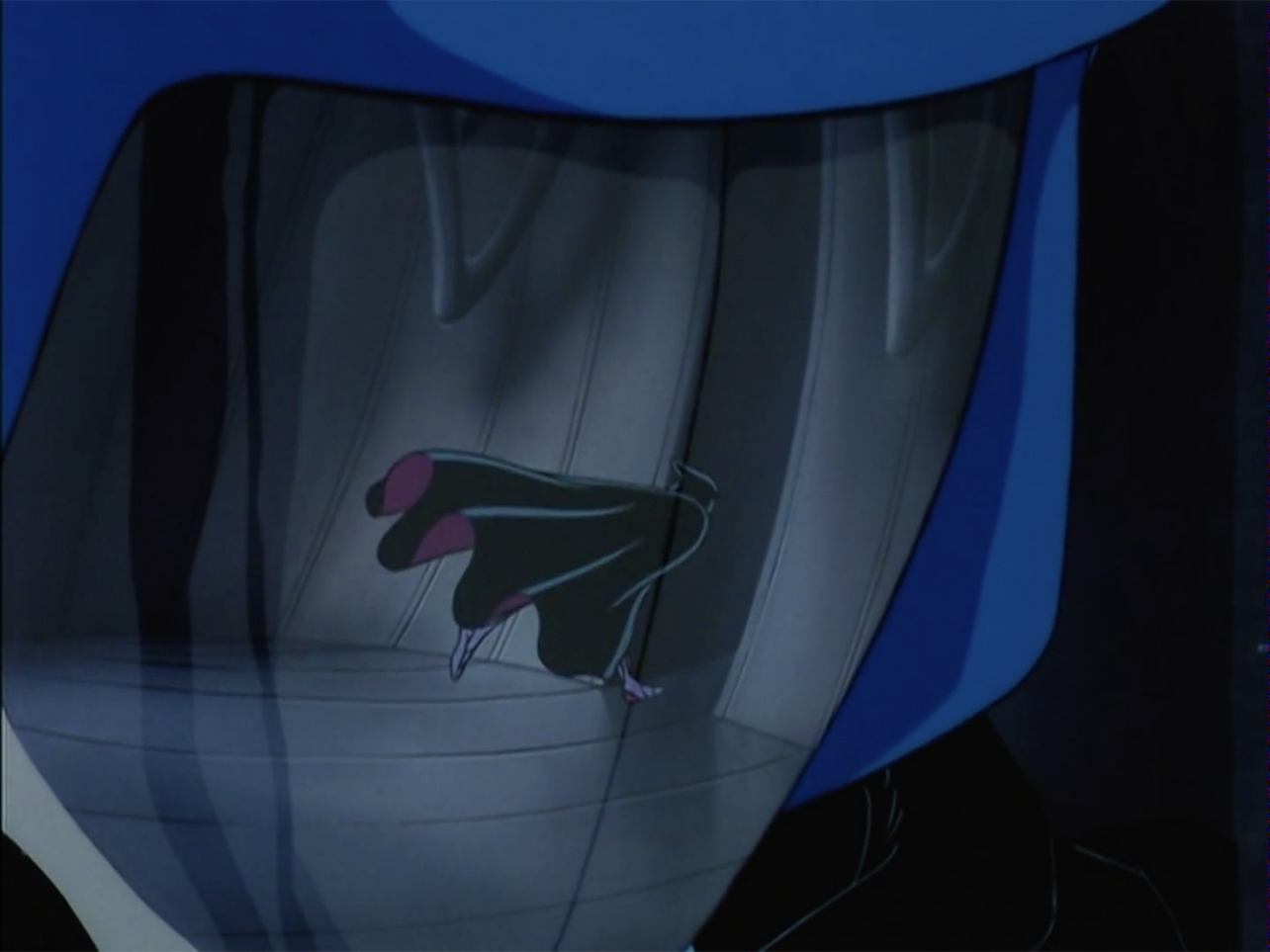
"The way that she's attacking, this isn't military in G.I. Joe," says Kristian Allen, co-host of Audible Interlude: A G.I. Joe Podcast. "The series had crossed over into what could be considered silly sci-fi and some scary sci-fi. But this with Pythona was very much rooted in, to me, scary sci-fi. We want you to take this seriously because she's unstoppable."
As storyboards are being developed, recording sessions for G.I. Joe: The Movie begin in March 1986. The Joe team snags a living legend for Golobulus: two-time Oscar nominee Burgess Meredith. Known for playing the Penguin on TV in Batman (1966) and boxing trainer Mickey in Rocky (1976), Meredith brought his unmistakable gruffness to Golobulus. This is a character imagined as a disembodied brain, written as a gluttonous despot, illustrated as a totally shredded crustacean Mr. Clean, and then voiced by a 5'6" tall octogenarian. All of this creates a disconnect between Golobulus' voice and image that makes him feel more menacing than any other Cobra villain.
For Pythona, however, the Sunbow team goes to a stalwart character actor, a veteran voice actor named Jennifer Darling. "I heard her voice, and I immediately knew that's Booey Bubblehead [from Galaxy High]. That's Madame O from Bionic Six," says Allen. "You didn't need a celebrity voice because you had Jennifer Darling, that iconic voice. I can't honestly imagine anyone else doing the voice. It's like Chris Latta as Cobra Commander. That gravelly yet very feminine voice just so fit her. And I love that they didn't have to go the celebrity voice route for her, just proof that you need a good voice actor and that's it."

For Nemesis Enforcer, the film employs another iconic voice actor: Peter Cullen — the voice of Optimus Prime. Of course, Nemesis is functionally mute, only vocalizing in grunts and shrieks. But none of those voices or noises are the most recognizable audio cue from Cobra-La. That would be the Cobra-La battle cry, which adds a trill to the usual "Cobra" refrain — and this is another example of a half-realized idea being hoisted onto a moving freight train.
The introduction of Cobra-La, and the decision to stick with that regrettable name, provided the opportunity for another battle cry — and Buzz Dixon knew exactly what he wanted to do and how he could turn what could be a boilerplate cheer into something eerie and intimidating ... as long as the voice actors could pull it off.
"I had that battle cry; I was trying to emulate the Bedouin women from Lawrence of Arabia" — and you can hear what Dixon was going for in the battle cries of the otherwise nameless and faceless Royal Guards when they swarm the Joes like cicadas. And then ... "Dick Gautier, wonderful actor, did a great job as Serpentor," Dixon tells Pop Heist. "His voice was four octaves too low for that. So he does it, 'Cobra, la, la, la, la' — no, no. I begged him during the recording session. I said, 'Give me five minutes. I'll come up with a better battle cry.' And they said, 'No, we like it, go ahead.'" And the rest is, regrettably, history.
Over on the other coast, Hasbro is deep in production on the 1987 toyline. Production actually began five months earlier in October 1985. Rudat and fellow designer Mark Pennington turn in designs for movie characters Jinx and Falcon in Jan. and Feb. 1986, weeks before Dixon turns in his finished movie script. Then, much to Dixon's surprise, Hasbro seems to take notice of Cobra-La (how could you miss them?) and reverses their initial decision. There will be Cobra-La toys after all.
SUMMER 1986
A memo dated July 25, 1986 from design director Greg Berndtson, provided to Pop Heist by R. Carson Mataxis (3DJoes), heralds the arrival of the "Cobra Action Team," a three-pack featuring characters "of importance as they will appear in the G.I. Joe movie currently being planned." The "Action Team" will bear the Cobra-La name in a memo from August 28, 1986.
The summer is a busy one for Hasbro's designers. Mark Pennington turns in designs for the Royal Guard's figure and weapons (June 27, 1986), Golobulus' serpent tail and laser rifle (dated July 10, 1986), and Nemesis Enforcer's figure and attachments (July 14, 1986).
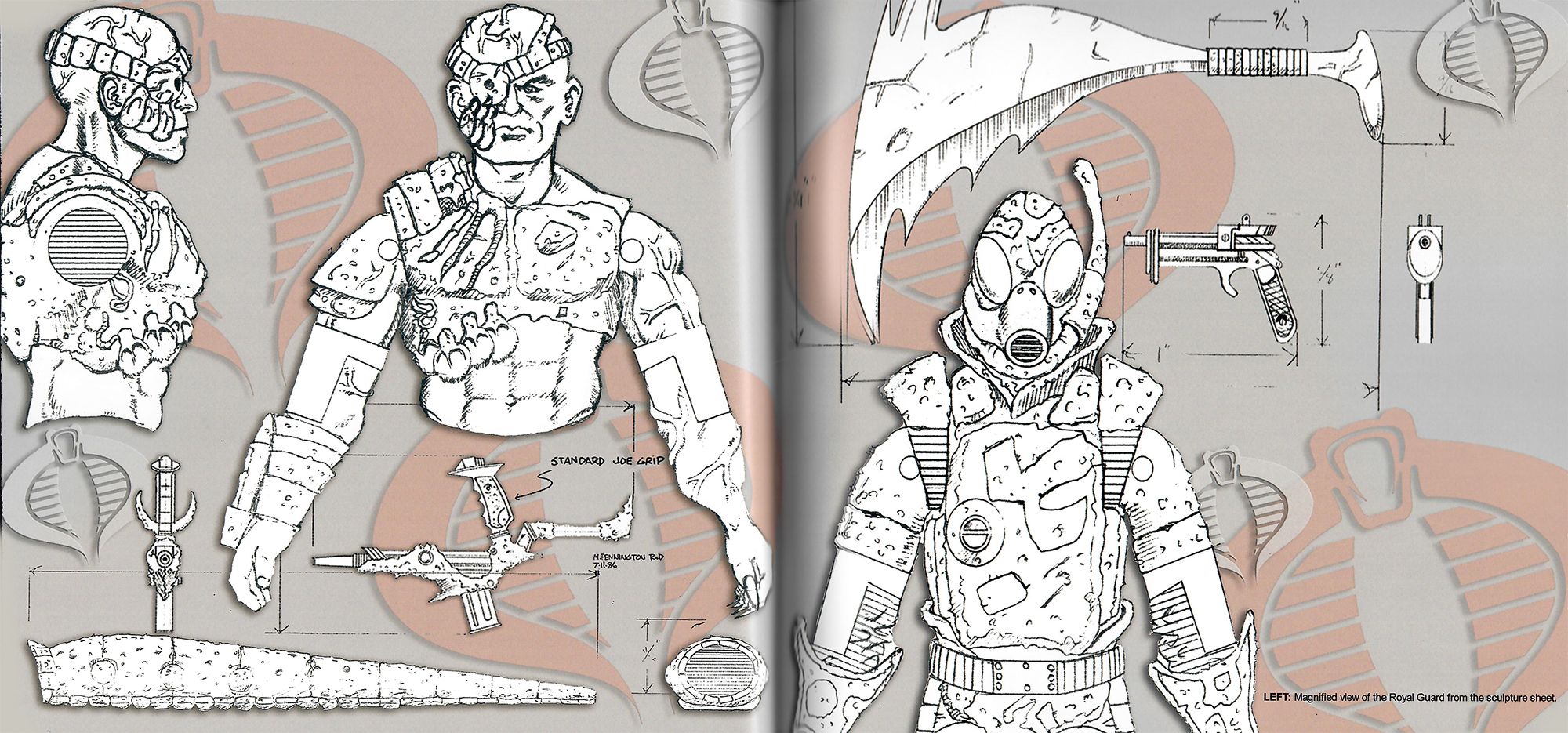
The design process includes painted concept art from Dave Dorman showing Golobulus, Nemesis Enforcer, and the Royal Guard — and all of this art is recognizable as being taken from a surprising source: Russ Heath's movie designs.
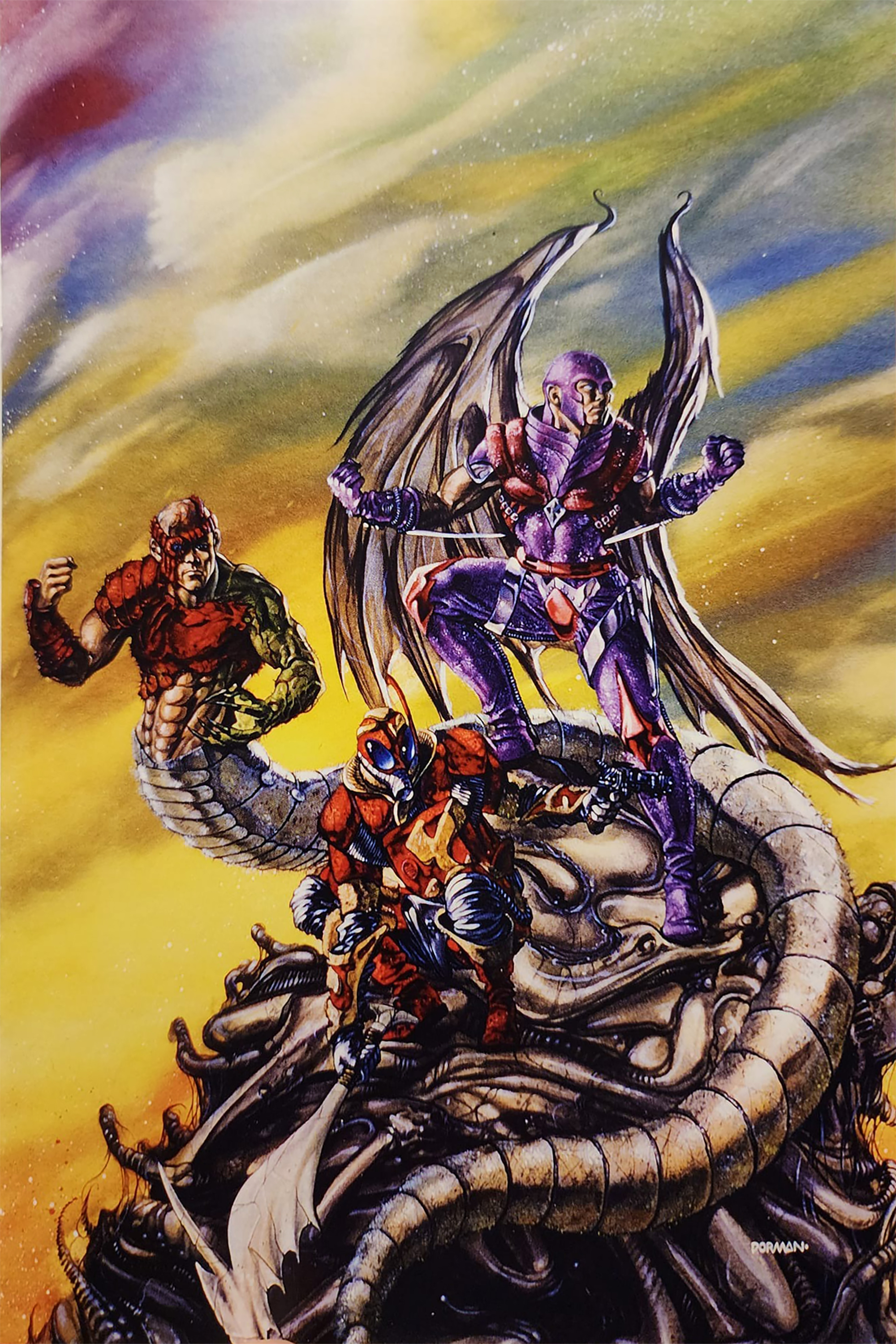
This makes the "Cobra-La Action Team" quite possibly the only figures in the A Real American Hero toyline to use designs that did not originate within Hasbro. Those three figures are based on Russ Heath's designs for the movie, making them a striking anomaly within the line (and rightfully so).
Moving into the fall, Bill Merklein sculpts Golobulus; Peter Twist sculpts Nemesis in October 1986, adding the bat wings from the movie design and — inexplicably — keeping the tentacles from Rudat's initial design; those tentacles are likely the only physical artifact of Ron Friedman's original script.
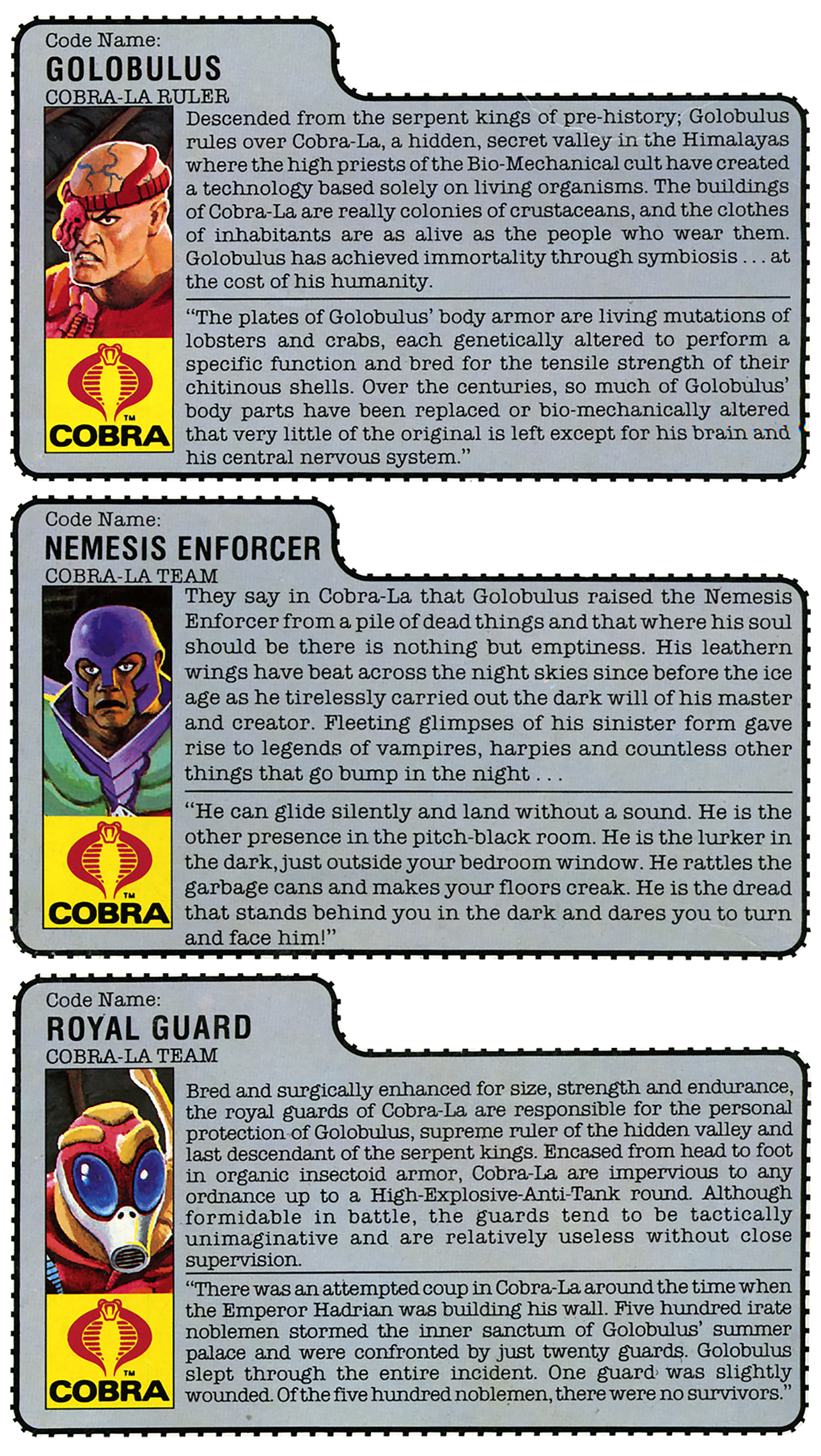
With the toys ready to go, it now falls to Larry Hama to write the file cards for the Cobra-La characters — but the workflow is reversed. Normally Hama works with a design to create a dossier, and then that dossier is added to the Sunbow cartoon's bible. This time, though, Hama has to write dossiers for characters who are already in the process of being animated. That explains why Hama's write-ups are full of detail but light on specifics, as if he's expounding extemporaneously on a one-line description of each character.
There's just one character missing from all this: Pythona — literally the lead character of the movie (chronologically). This may seem shocking since, a year prior, Ron Rudat actually worked up a few dozen designs for an action figure that modern archivists now identify as "Pythona." Those 1985 designs should be put into a new context, though, one that is completely severed from the development of Pythona as we know her in G.I. Joe: The Movie.
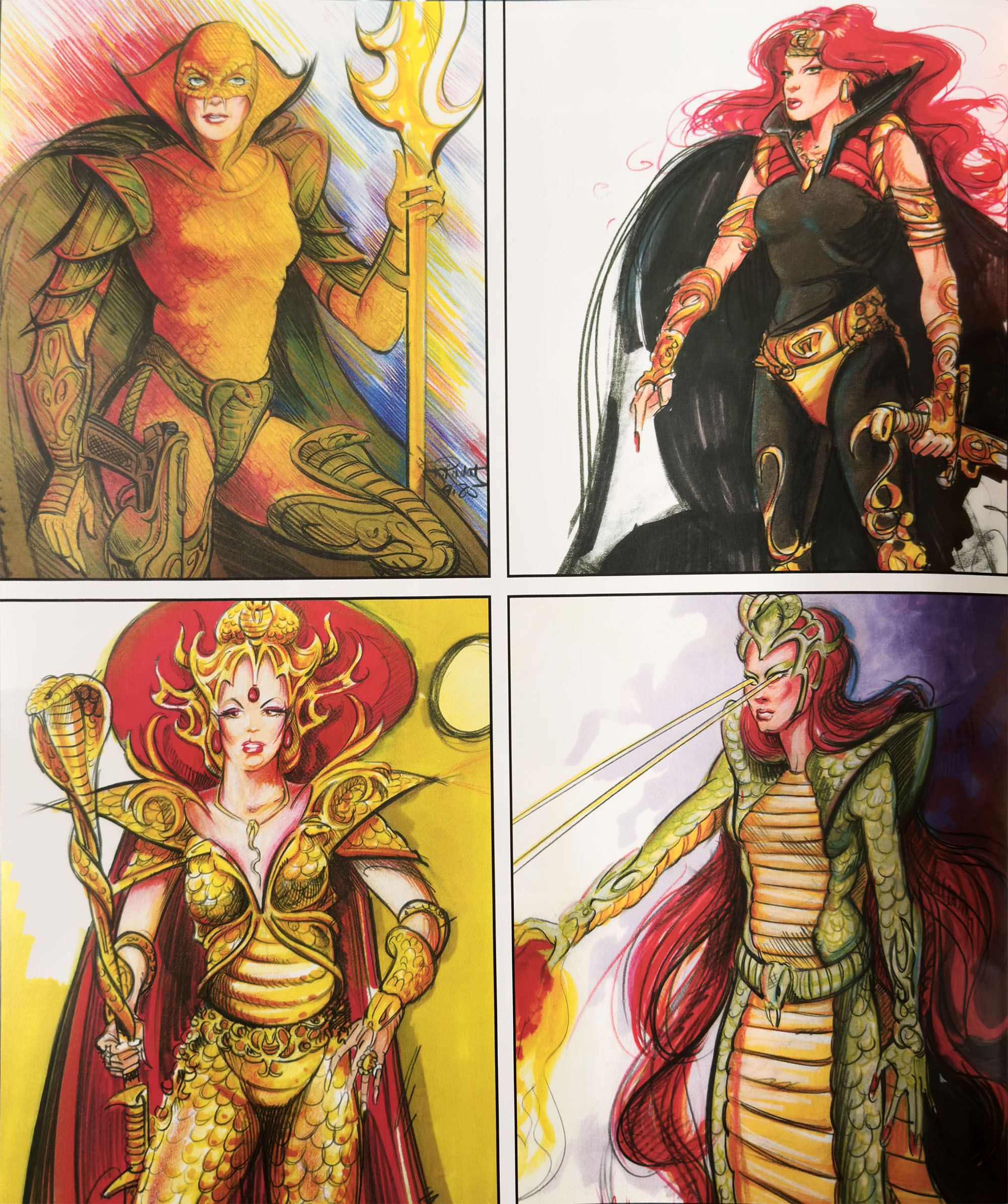
In mid-1985, Ron Friedman created a female villain with mind control powers who he eventually named Pythona. Then Buzz Dixon turned Friedman's passive Pythona into an active threat whose ferocity kicks off the entire movie, and then Russ Heath designed that Pythona. Also in mid-1985, Ron Rudat designed a Queen Cobra to go with his King Cobra. If you're looking for a reason as to why Ron Rudat's "Pythona" looks nothing like the one we see onscreen, it's probably because they're two different characters entirely.
As for her toy, there are a few explanations as to why Pythona was left out of the line, especially when she could have (arguably should have) taken the place of the Royal Guard in the Cobra-La Action Team three-pack. There's the less obvious and less cynical reason: cost. Pythona would require a dramatic new body sculpt and a soft goods cloak. Note that the Royal Guards figures were released sans capes; their design still looks complete without it, whereas Pythona would literally appear to be naked without her cloak.
Then there's the most obvious, most likely, and most cynical reason: the dubious maxim that boys won't play with girl toys. Now, compared to literally every one of its rivals, G.I. Joe is actually progressive in this area. Without fail, the line has released one female figure per year from 1982 to 1987 (Scarlett, Cover Girl, Baroness, Lady Jaye, Zarana, and Jinx). Masters of the Universe released three; M.A.S.K. released two, Transformers released zero. It actually would not be surprising to see Pythona in the toy aisle — but maybe Jinx was the one and only female figure Hasbro can get behind for 1987.
And kids — boys — do notice that Pythona is excluded from the toyline. "I definitely wanted her as a toy," says Joshua Williamson, writer of Skybound's current G.I. Joe comic. "I thought she was so cool, the claws, all the stuff she was doing, running down the hallway and throwing stuff at people. It was such a rad action sequence." Williamson doesn't get to play with Pythona as a kid, but as an adult ... ?
1987
In a twist of fate that's transcended into '80s kid lore, the debacle of 1986's Transformers: The Movie — specifically the murder of Optimus Prime and the nationwide freakout that caused — tanked the film's box office performance and also G.I. Joe's big screen debut. This relegated G.I. Joe to forever being a video rental — because your average family can not afford to buy a VHS tape in 1987.
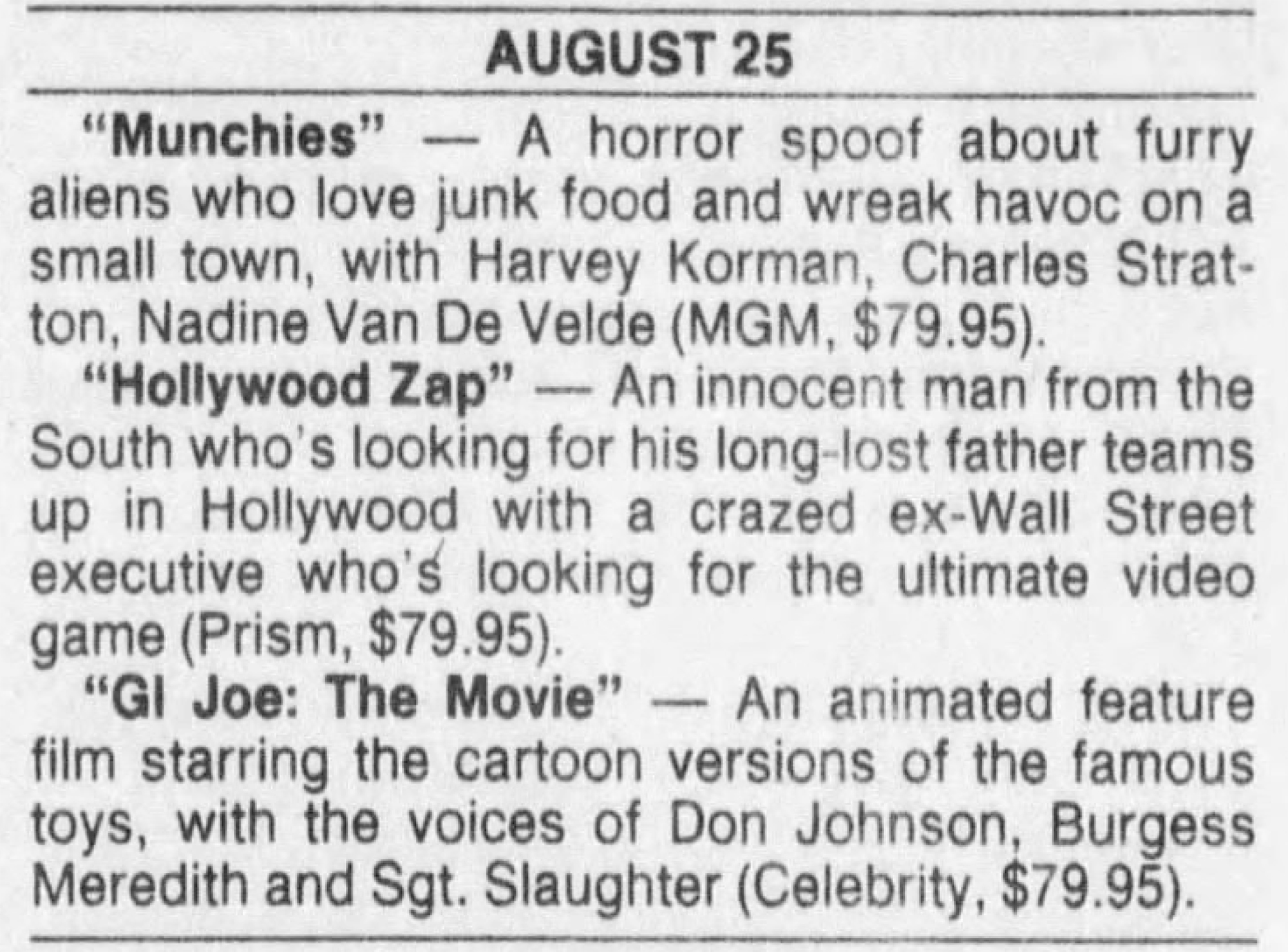
On August 25, 1987, G.I. Joe: The Movie is released on VHS, retailing for $79.95 (or $233, adjusted for inflation). Since most kids aren't combing newspapers for lists of new VHS releases, especially VHS tapes they can never buy, the majority of G.I. Joe fans likely first learn about the movie's existence via commercials for TV premieres, which occur in the first week of September 1987
"There was just a commercial on, I believe it was WGNX Channel 46 here in Atlanta," says Noel Wood, co-host of Audible Interlude: A G.I. Joe Podcast. "I had no idea that this was a thing that existed until that commercial." G.I. Joe: The Movie premieres on WGNX Channel 46 on Sunday, Sept. 13 at 4 p.m.
As mind-blowing as the commercials are, the fact that the movie's premiering on TV isn't lost on its audience. "Even at that point, I was a little mad that it wasn't in the theater," says Dave West of Audible Interlude and Needless Things. "Transformers was in the theater. Why isn't G.I. Joe a movie movie?"
Then there are the kids who missed the commercials altogether and first saw the movie in video rental stores. "I remember going to our local VHS rental place and getting the VHS of G.I. Joe: The Movie, and not really realizing that it did not release in theaters," says Allen. "Then we rented it, and then it became, okay, let's rent this pretty frequently."
There is one way to skirt that hefty price tag: park yourself in front of the TV and be ready to hit "record" on the VCR. "When this first aired, I of course, recorded it on VHS and paused as the commercials came up on each time," says Wood. "So I had a VHS copy that I watched a lot when I was a kid."
Even though the film isn't released in theaters, it still becomes a communal experience for some — like Joshua Williamson. "I have this really weird Mandela effect because I swear I saw G.I. Joe in the theaters — and I know it was never released in theaters," Williamson tells Pop Heist. "I must have seen it at a YMCA or something like that. I know I saw it with a group of kids, and I loved it. I was really into G.I. Joe at the time and it was so different. It was so just like, what are we watching here?"
Going into the movie completely cold, Cobra-La is — for some — a thrilling addition to the mythos. "I was so excited by all of it," says West. "I thought it was creepy and terrifying and just very dramatic. I was a kid. I didn't have frame of reference for Lovecraft or Giger. I just knew it was creepy, insect, organic stuff, and that freaked me out."
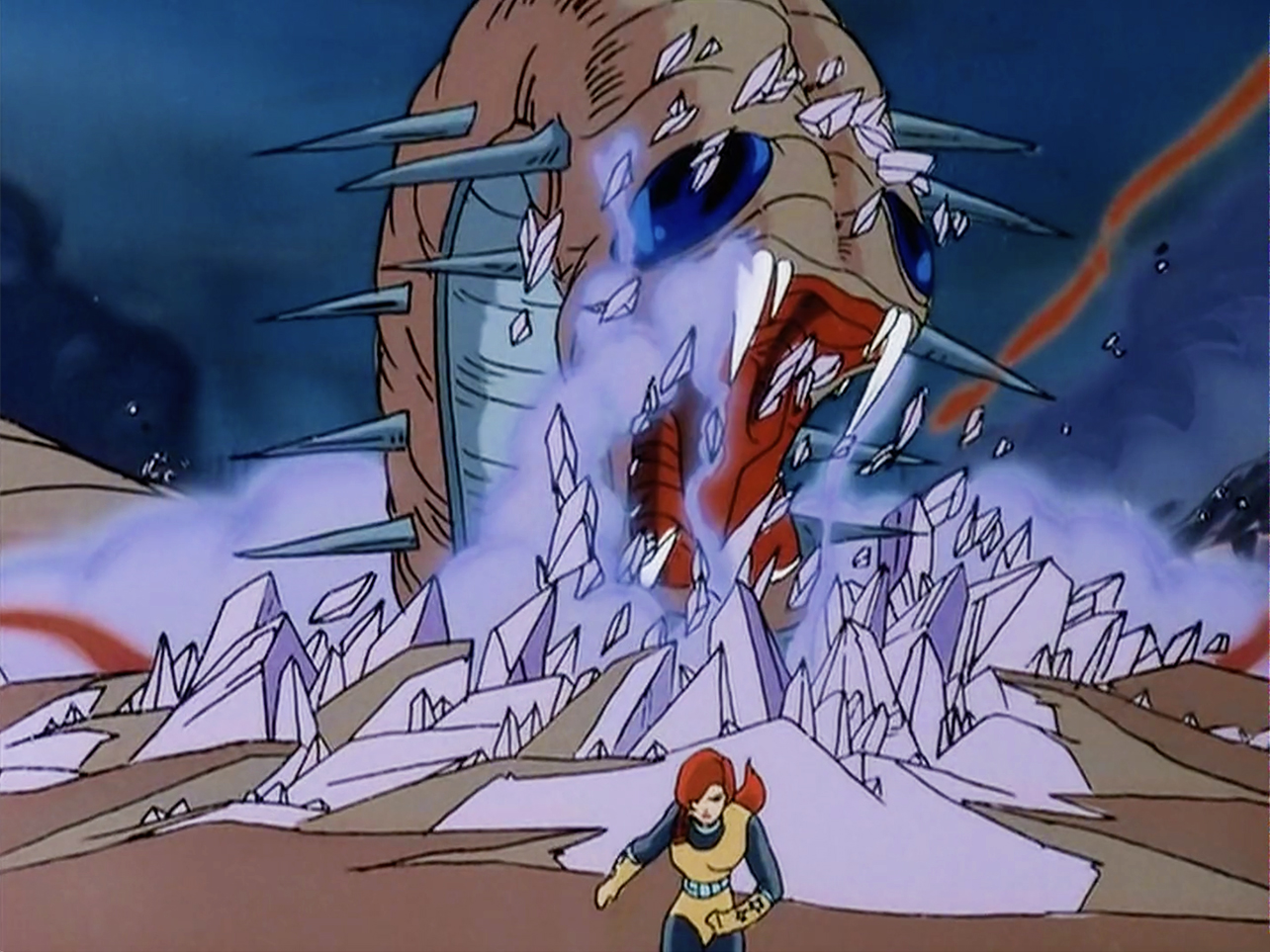
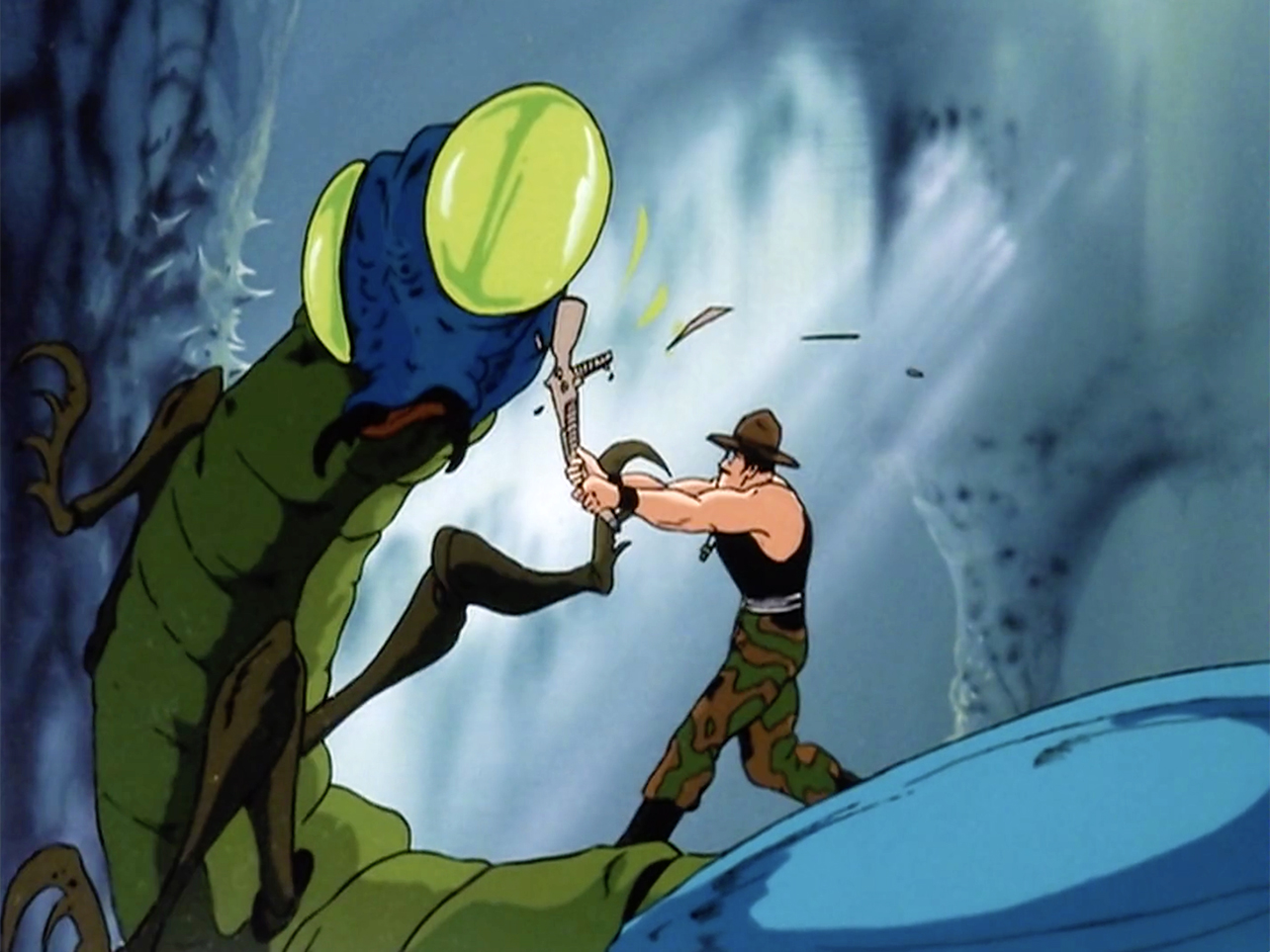
Reminder: Cobra-La came about as an edict from the head of a PR firm who thought that 90 minutes of terrorism would be too much for kids to handle.
But as surprising as Cobra-La likely is to kids who pick up a VHS tape in the video rental section of a grocery store, the G.I. Joe cartoon series actually built up to it.
When you view the Sunbow animated series in airdate order, 95 episodes capped off with the movie, Cobra-La is a totally logical place for the franchise to go. Right before the movie, there are three forward-looking episodes: "Sins of Our Fathers," where it's revealed that underneath Destro's castle is a huge dragon worm; "In the Presence of Mine Enemies," which has Dr. Mindbender's crazy genetic monsters; and lastly "Into Your Tent I Will Silently Creep," where Cobra Commander goes against Serpentor by founding a splinter group called the Coil. In retrospect, there's a ramp up towards an inflection point for Cobra, the trial of Cobra Commander, and a serpent society in the Himalayas who uses organic weaponry.
"I am glad you read it that way," says Buzz Dixon, who co-wrote "Sins of Our Fathers" and "Into Your Tent..." with Steve Gerber and Michael Charles Hill, respectively. "I will take credit for it, but the truth is, any idea that could stand on its own two feet for more than 30 seconds got turned into an episode." Still, the existence of these episodes — and many more with equally implausible plots — should put to rest the notion that Cobra-La is too far out there for G.I. Joe.
"There were aspects of Cobra-La as a kid, as unpopular as it was, that I really enjoyed," says Kristian Allen. "I thought it was so new and exciting, and they were infinitely better than what the toys were."
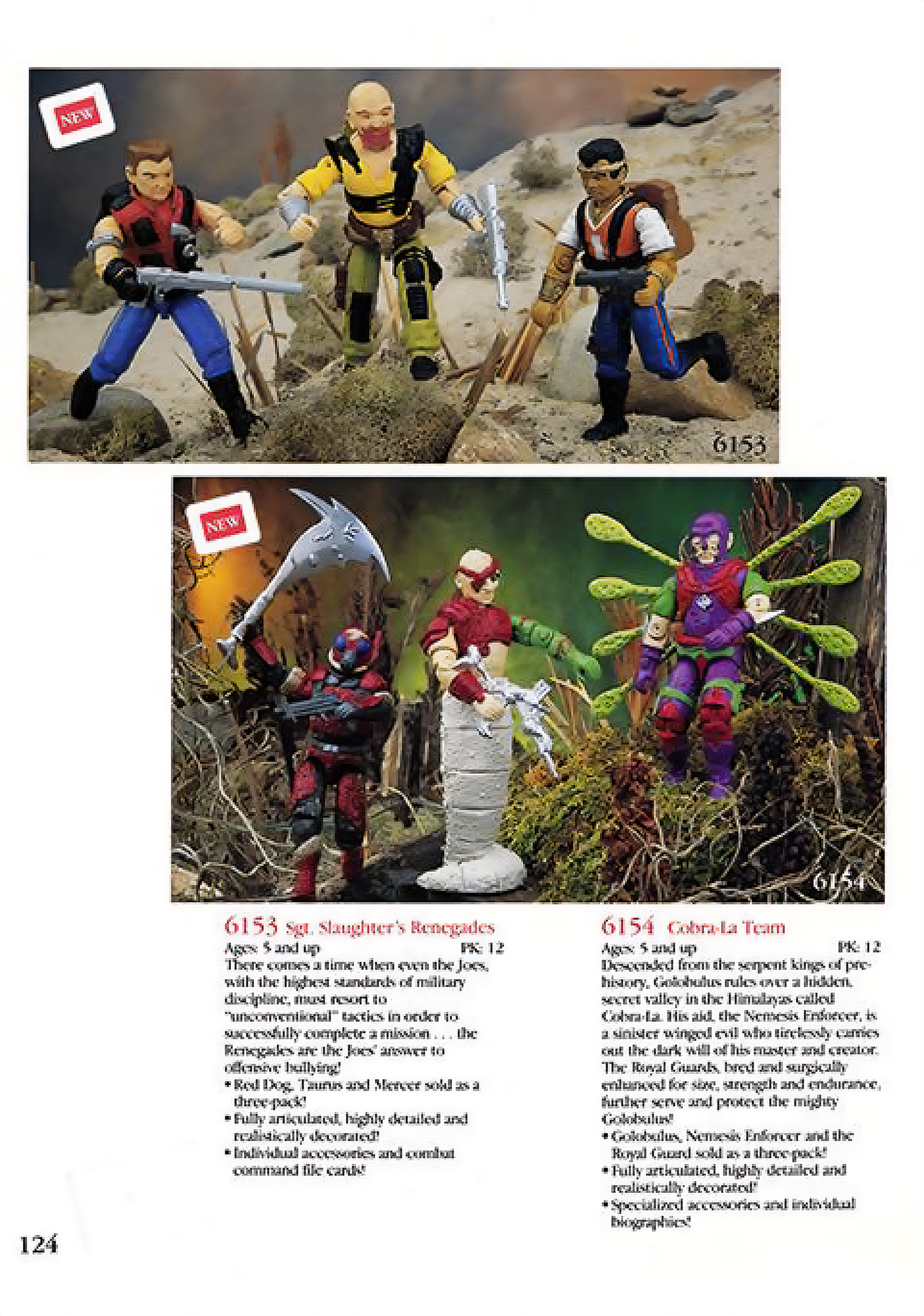
The first figures from the 1987 line — among them Law & Order, Crazylegs, and Psyche-Out —hit stores in March. More members from the movie's Rawhides unit arrive in April (Jinx, Lt. Falcon, and Chuckles). But the movie tie-in 3-packs, Cobra-La and Sgt. Slaughter's Renegades, aren't unleashed until late August 1987, coincidentally or intentionally tied to the very week of the film's home video release.
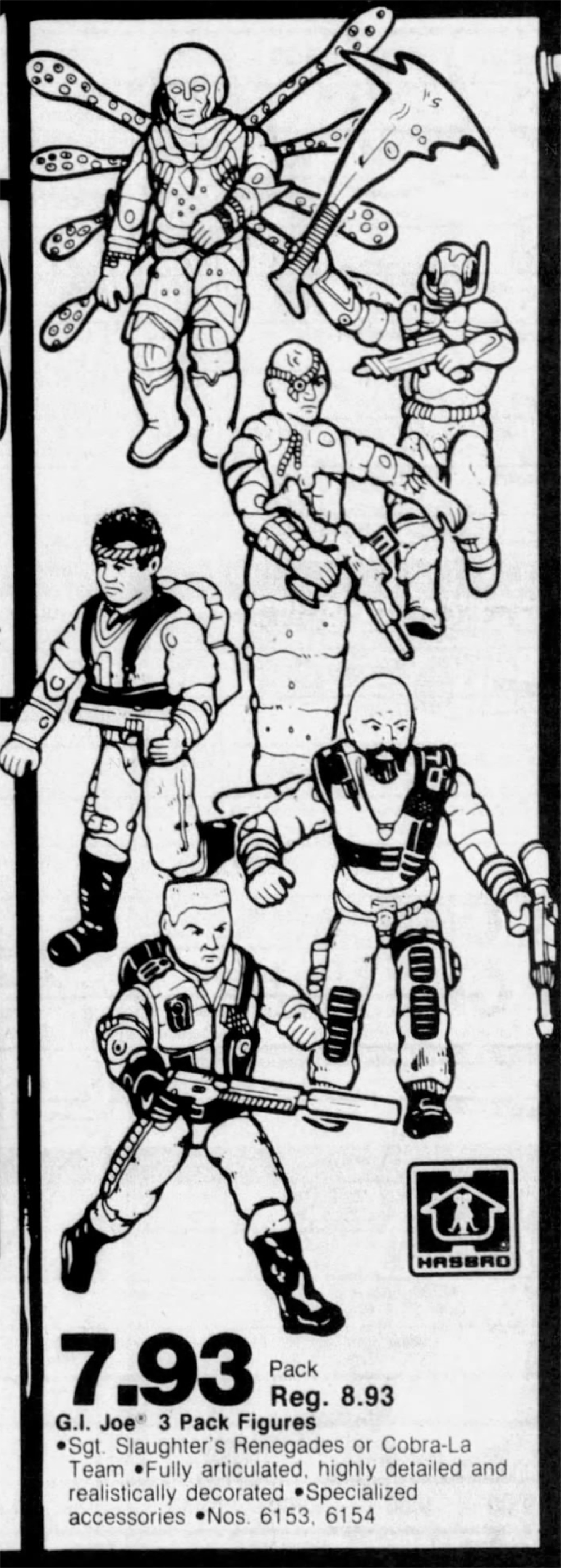
The Cobra-La figures do stand out. Nemesis Enforcer's tentacles and wings, Golobulus' bendable snake tail, the Royal Guard's insectoid design — the Cobra-La 3-pack looks appropriately bizarre but it doesn't exactly capture the menace of the characters. Nemesis Enforcer, a giant in the film, is the same size as every other figure and his furry wings lean way more towards rodent than bat in design. Golobulus' tail proves difficult to bend and pose, rendering him unable to stand upright; he never gets the iconic floating pod that he spends most of the movie in. Everything is just slightly off, and not in an intentional, unnerving way.
Even the film's release date is off. The movie was clearly released on VHS on August 25, 1987, as advertised in newspapers across the country, but that inexplicably changes to April 20 at some point (maybe because the film becomes the kind of movie that Gen Xers watch in their dorms on a certain day). The film's anniversary is still — incorrectly — celebrated on April 20.
The rollout of G.I. Joe: The Movie isn't executed with military precision. The audience finds it in waves over the next few years, stumbling across it in Blockbusters or in the cartoon's syndicated rotation, where it airs as a weeklong event with interstitials hosted by the real Sgt. Slaughter.
With the kingdom of Cobra-La now a fully-realized part of the movie and toyline, there's still one more domain that they've yet to conquer: the Marvel comics. But the comics have a defense system unlike anything else in the franchise: his name is Larry Hama.
"Once upon a time, there were TV commercials for G.I. Joe comics. They were generated by an ad agency at the clip of four a year. Whatever was shown in the commercial had to be in the comic. I got stuck with Serpentor, Tomax, Xamot and a host of silly characters. I did my best to make them work because it was a matter of doing the job. If you have a squad of losers, you still have to go out on patrol. I drew the line at Cobra-La and a few others. There are no plans for future commercials."
Larry Hama, G.I. Joe: A Real American Hero #100, March 1990
For the first five years of Marvel's partnership with Hasbro, Hama played the game and worked every character and concept into the monthly comic. Then came the "Cobra-La Action Team." Hama wrote about his feelings for Cobra-La in response to a letter in 1990's G.I. Joe: A Real American Hero #100 (above). And that's that. And, if the letters page represented 100% of the fandom, everyone was happy with this decision.
1988
We have to turn to the letters pages of Marvel's G.I. Joe: A Real American Hero for an approximate real-time reaction to the movie's decompressed release. The first mention of Cobra-La arrives in #85 (Dec. 1988):
One thing that I do find unrealistic is the Cobra-La team. I am eternally grateful that the Cobra-La have not been introduced into the G.I. JOE comic book. Adding Cobra-La would destroy the realism you have created.
Jeff Minicucci, Toronto, Ontario
Then again, in issue #93 (Aug. 1989), a double whammy:
I have seen the new Cobra-La Team. Larry, don't even try to explain this one.
Corey Stinson, Ferry, IL
Maybe we can blame the toy company. They've made some very lame characters over the years. The Zartan siblings? Tomax and Xamot? BattleForce 2000? Serpentor? Sgt. Slaughter? Cobra-La?
Mitch Grady, Stanton, NE
Mind you, these complaints decrying the lack of "realism" aren't limited to Cobra-La. Every letters page is itself a one-sided battle for "realism" waged by fans who change the definition of "realism" every month, all while Larry Hama and the creative team continue to write a comic with a freedom fighting clown, a one-eyed ninja teen, grape-soda-chugging bikers, and just so much brainwashing.
The writing is scrawled on the wall for the denizens of Cobra-La as soon as the movie hits and the concept is not met with uproarious acceptance by the letter-writing contingent of the fandom. After all, nearly everyone in charge of the franchise — except Joe Bacal — already does not like the idea. Thus begins the dismantling of Cobra-La and the movie's legacy.
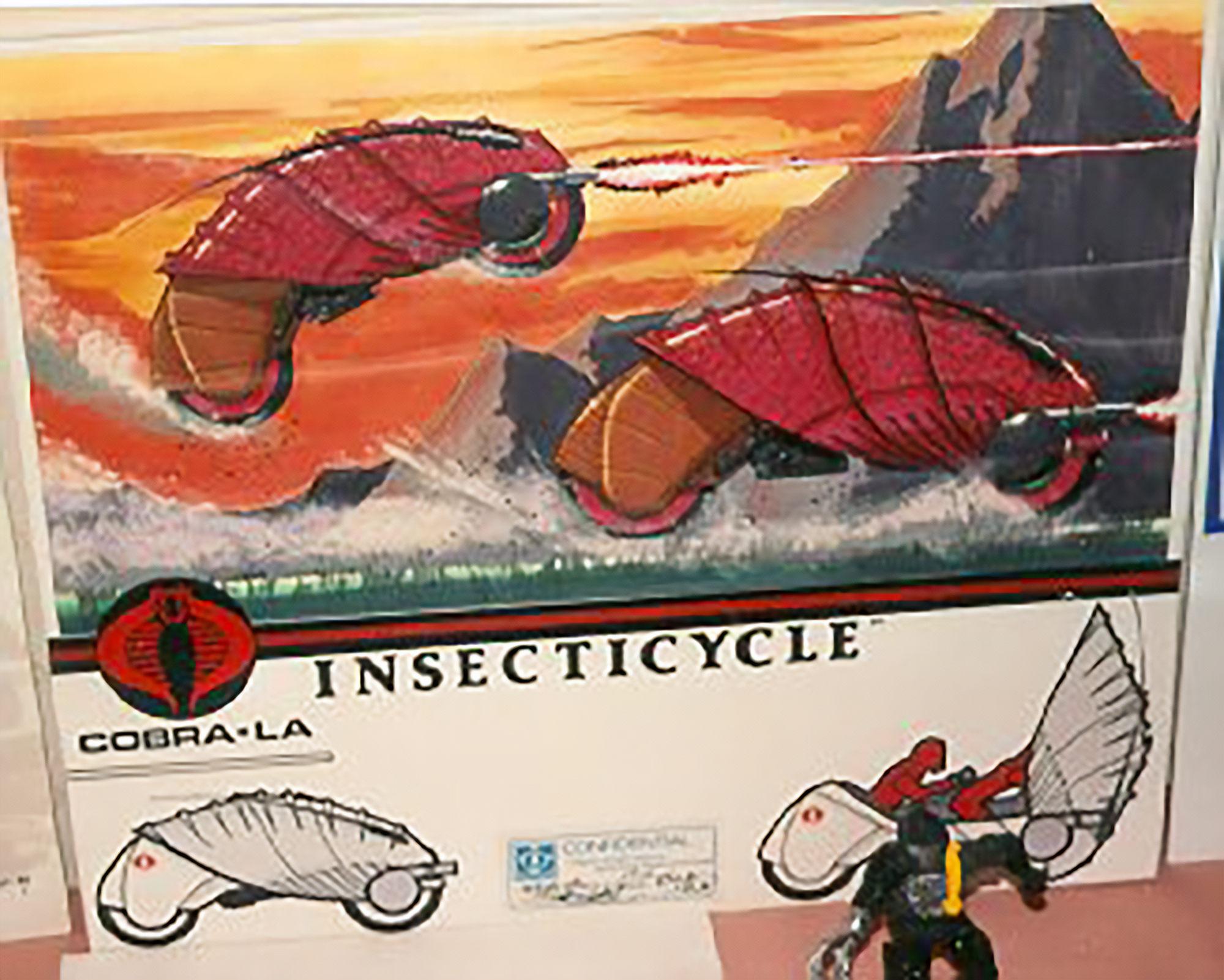
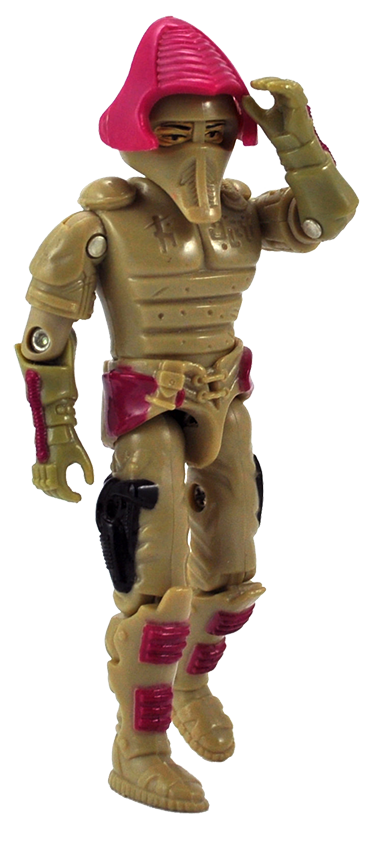
The toys: Plans for a 1988 Cobra-La vehicle, the Insecticycle, are scrapped. The vehicle's driver is repurposed, named "Nullifier," and paired with one Destro's vehicles, the A.G.P.
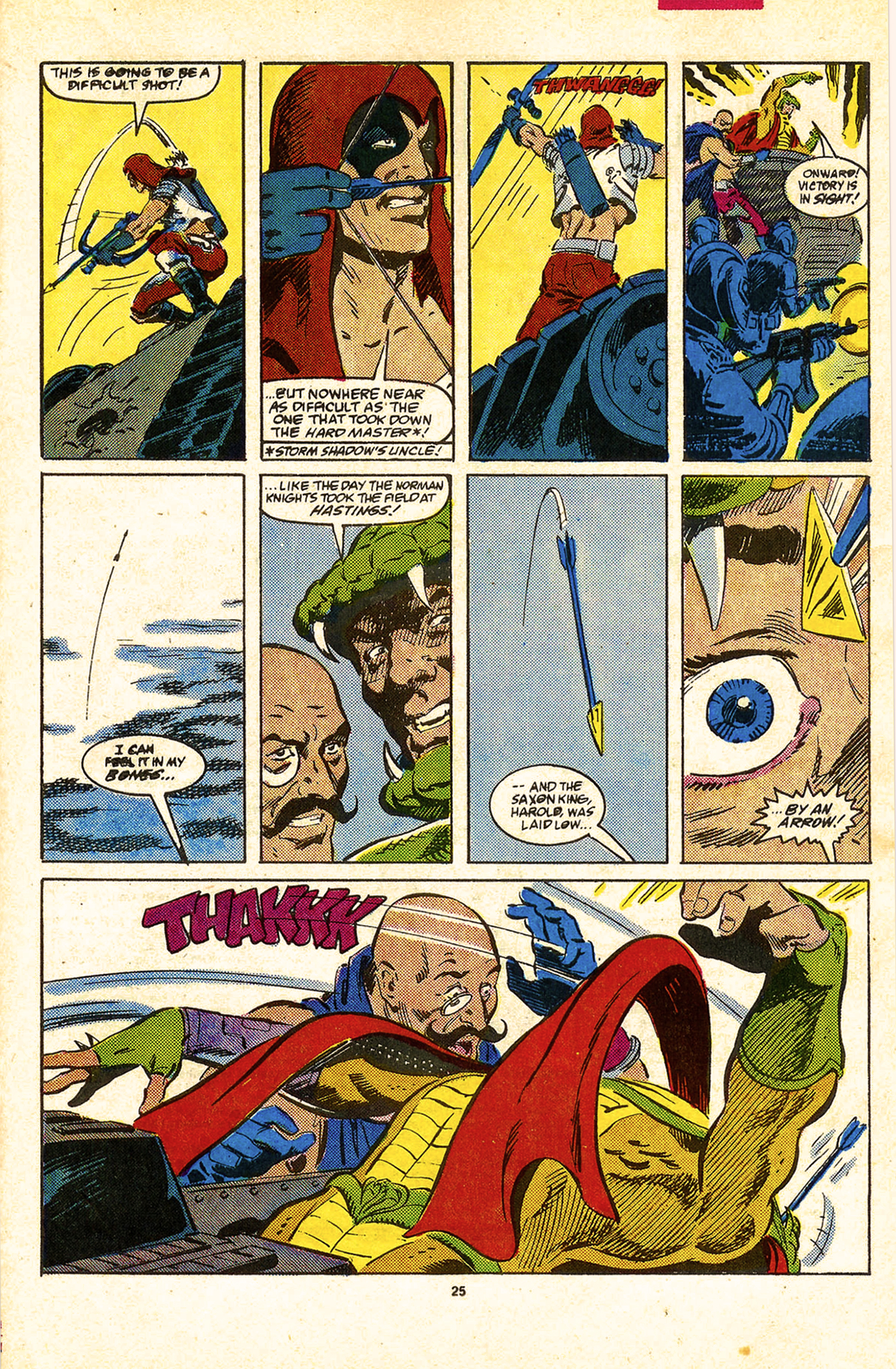
The comics: After begrudgingly introducing him in G.I. Joe #49, Larry Hama writes Serpentor out of the book in May 1988 when he is unceremoniously killed by Zartan in G.I. Joe #76. Cobra-La never appears in Hama's Marvel comic.
The cartoon: Sunbow's plans for Season 3 are scrapped when rival animation company DIC makes a bid for the franchise at a cheaper cost to Hasbro. DIC's debut miniseries, 1989's 5-part "Operation Dragonfire," jettisons all of Cobra-La and reverses Cobra Commander's transformation into a literal snake, a major moment from the motion picture.
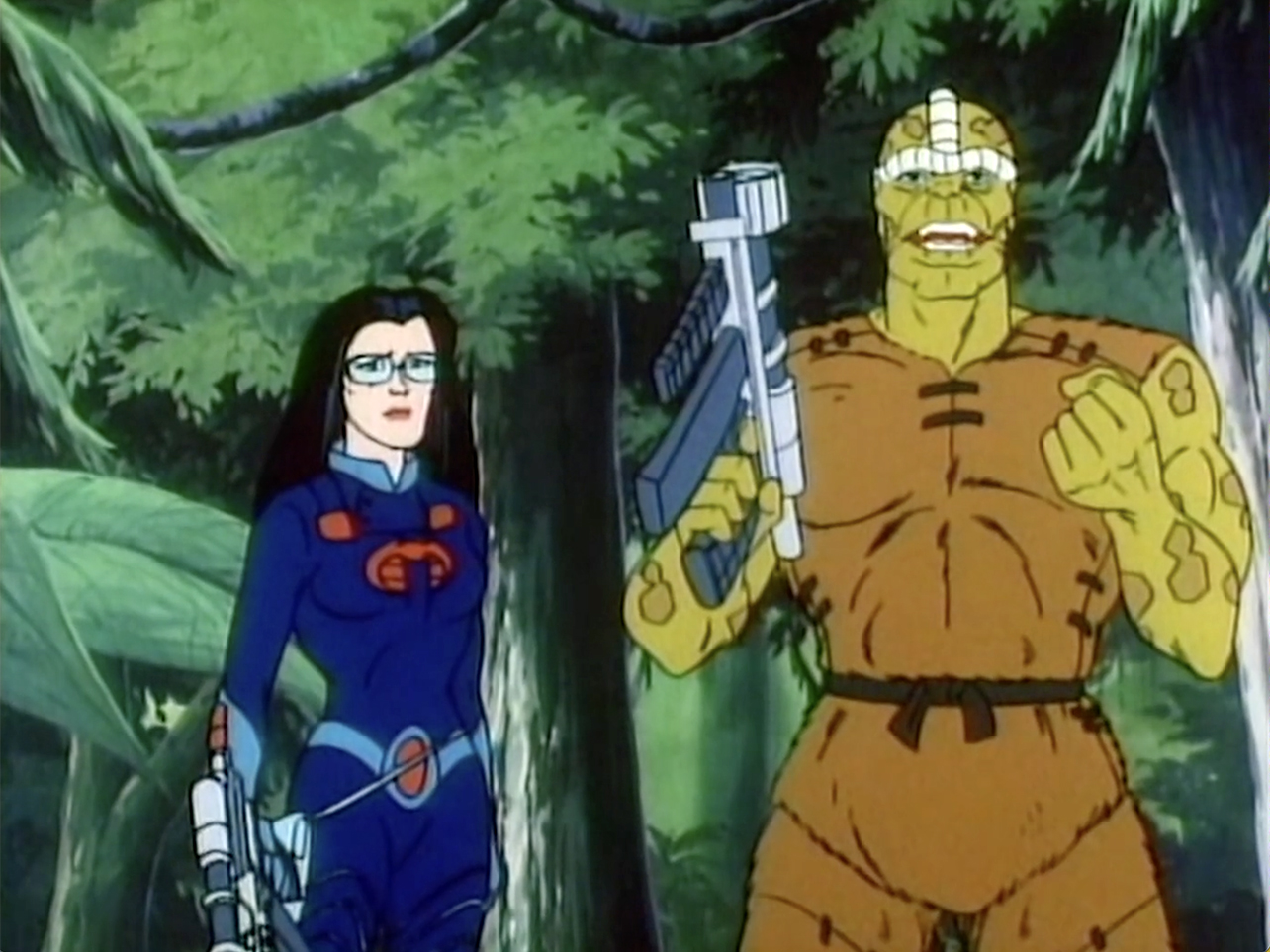
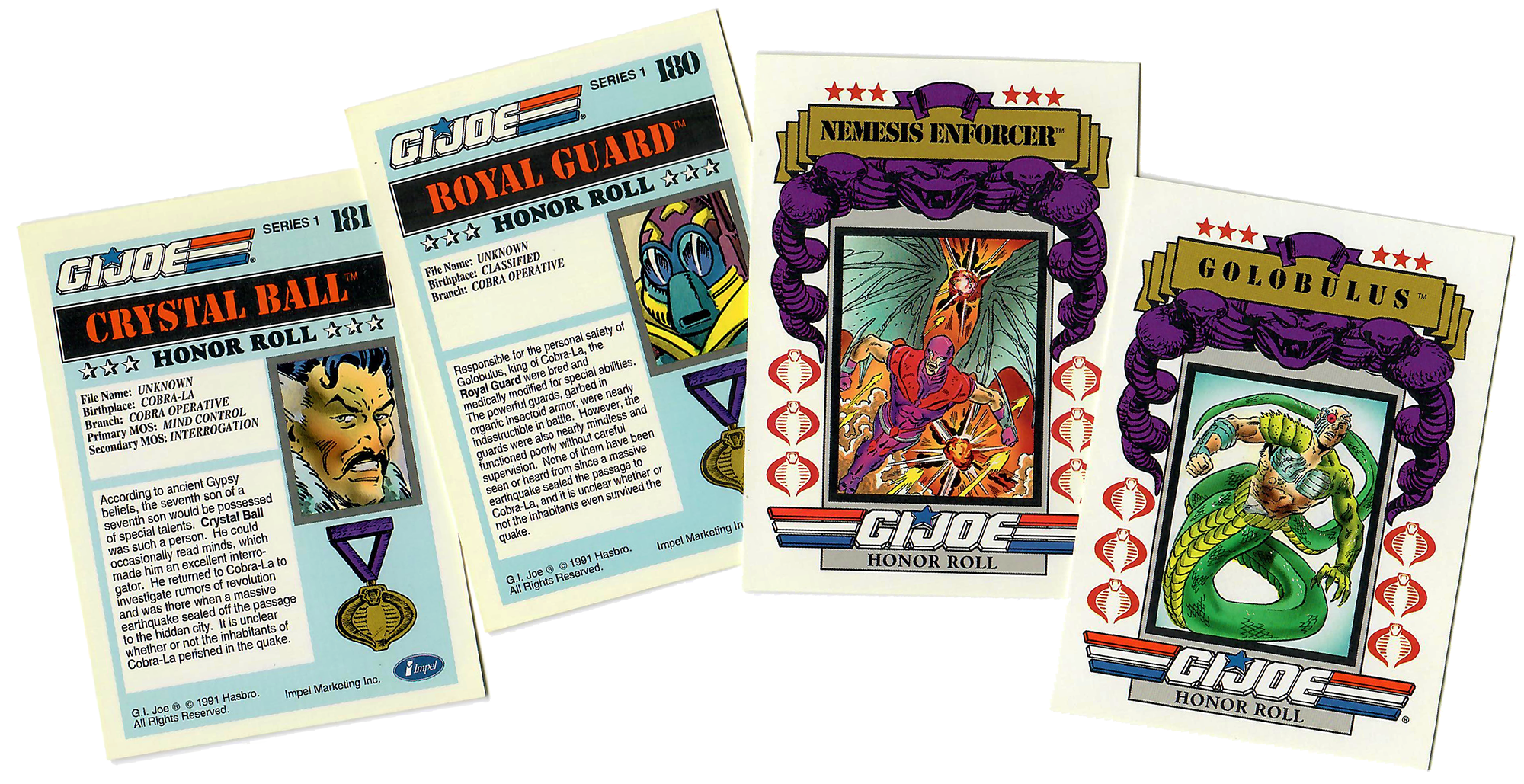
And, oddly enough, the trading cards: Impel's 1991 trading card set includes cards for Golobulus, Nemesis Enforcer, and the Royal Guard, cementing all of their fates by including mention of "a massive earthquake" that "sealed off the passageway to Cobra-La," leaving it "unclear whether or not the inhabitants perished in the quake." For some reason, Crystal Ball — a 1987 addition to Cobra's human ranks — catches a stray here and ends up lost in the same earthquake.
The only place where Cobra-La makes any kind of impact after the movie's release is in the U.K. A prequel story to the movie is published in November 1988 in Action Force Monthly #6. Written by Mike Collins with art by Robin Smith, the short story includes a one-page hallucination from Serpentor wherein Pythona speaks to him.
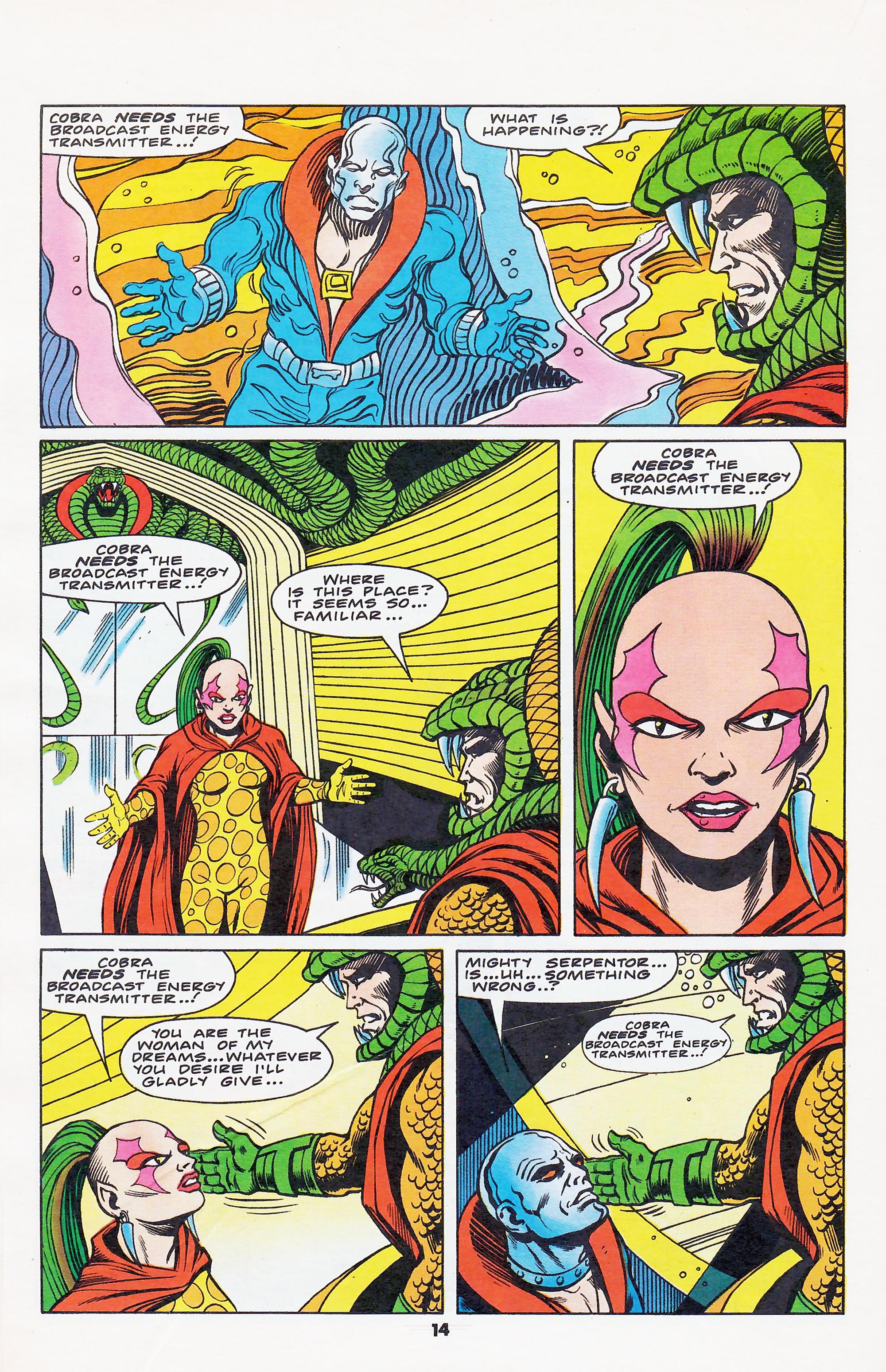
This is Pythona's first comic book appearance, and will remain her only one for almost 20 years. This story is never followed up on.
THE 1990s
Despite getting routinely dragged in the letters pages, the movie does not actually hurt G.I. Joe's popularity. The G.I. Joe comic remains on stands until 1994, providing seven years of column space for anti-Cobra-La sentiment. And as revealed in 3DJoes' interview with Vinnie D'Alleva, G.I. Joe's brand manager from 1990 to 1994, the toyline's sales remain more or less steady from '87 to '89, averaging 131 million units sold each year. The arrival and explosion in popularity of Teenage Mutant Ninja Turtles tank Joe sales in 1990 (down to 65 million), but the brand claws its way out of oblivion and back up to 100 million units sold in 1992. Compare this to what happens to Transformers after the movie's performance in 1986. The animated series ends in 1987; the 1988 season never airs in America. The toyline ends in 1990. The comic concludes in 1991. G.I. Joe toughs it out through this slump; it takes the combined might of TMNT, X-Men, and Power Rangers to kill the toyline in 1994.
Cobra-La becomes a bit of weird, ironic, Gen X trivia ("Remember when they turned Cobra Commander into a literal snake?") as the all-grown-up OG fans continue to discover the movie. "I think it was summer of '91 when I was a sophomore in college," says Brian Flynn, Super7 founder, to Pop Heist. "I saw it on VHS, one of those college afternoons, rent something weird from Blockbuster kind of thing. Like, 'There's a G.I. Joe movie? No way. All right, whatever. It's pretty cool.' You're in college and you're dealing with irony."
For some, enjoying it ironically becomes the only way to engage with the movie. "In my video store days, we had it on VHS and that was one that got popped in the VCR a lot," says Wood. But with the rise of the internet, the original fans of '80s Joe — the famously ironic and sarcastic Generation X, those who were older kids and teens in 1987 — write the tale of Cobra-La.
G.I. Joe: The Movie is bad.
Cobra-La sucked.
Period.
"When I was in college, I had a friend who was a hardcore G.I. Joe fan," says Williamson. "We were getting into these huge arguments where he did not like the movie, he hated Cobra-La, all of that stuff... When he saw the movie, it broke some of the mythology he believed in."
Even the kids who liked Cobra-La go through an apathetic phase. "I don't think I ever distinctly disliked Cobra-La. I was more disappointed that that was it, that it never went anywhere," says West. "And that was part of why I went through my not liking the movie phase, is that residual disappointment, that that's all we got."
THE 2000s
G.I. Joe's boots hit the ground in the '00s — hard. After seven years of retirement, G.I. Joe: A Real American Hero returned to comic shelves with a new #1 issue — released by new Image Comics imprint Devil's Due Publishing in October 2001. There's no getting around the timing.
There was no room for fantasy, or even levity, anymore. The realest American heroes of the '80s were coincidentally brought back at the dawn of the ongoing war on terror. These early '00s comics hew much closer to reality as the franchise becomes increasingly grounded. G.I. Joe is now a military action/thriller/intrigue franchise.
This is the atmosphere within which writer/artist Tim Seeley wants to do the unthinkable: unearth Cobra-La after two decades of dormancy. Unlike the most vocal of his peers, both professional and personal, Seeley is staunchly pro-Cobra-La — no irony added. "When I was a kid, Cobra-La was the thing I loved about G.I. Joe because it was horror stuff," Seeley tells Pop Heist. "It was Lovecraft, basically."
Devil's Due founder and then G.I. Joe writer Josh Blaylock is not having it. "No one likes Cobra-La" is a mantra to everyone involved with the franchise — and Seeley soon learns why. "We'd go to conventions, and then it was like, 'Oh, they do hate Cobra-La.' They absolutely did," recalls Seeley. But he remains undeterred, so much so that he becomes known as the "Cobra-La guy." That's why it isn't surprising when Seeley finally gets his wish in 2007's G.I. Joe vs. the Transformers: Black Horizon, finally giving Pythona, Nemesis Immortal (née Enforcer), Golobulus, and the Royal Guard their due. "It took me years to get it going."
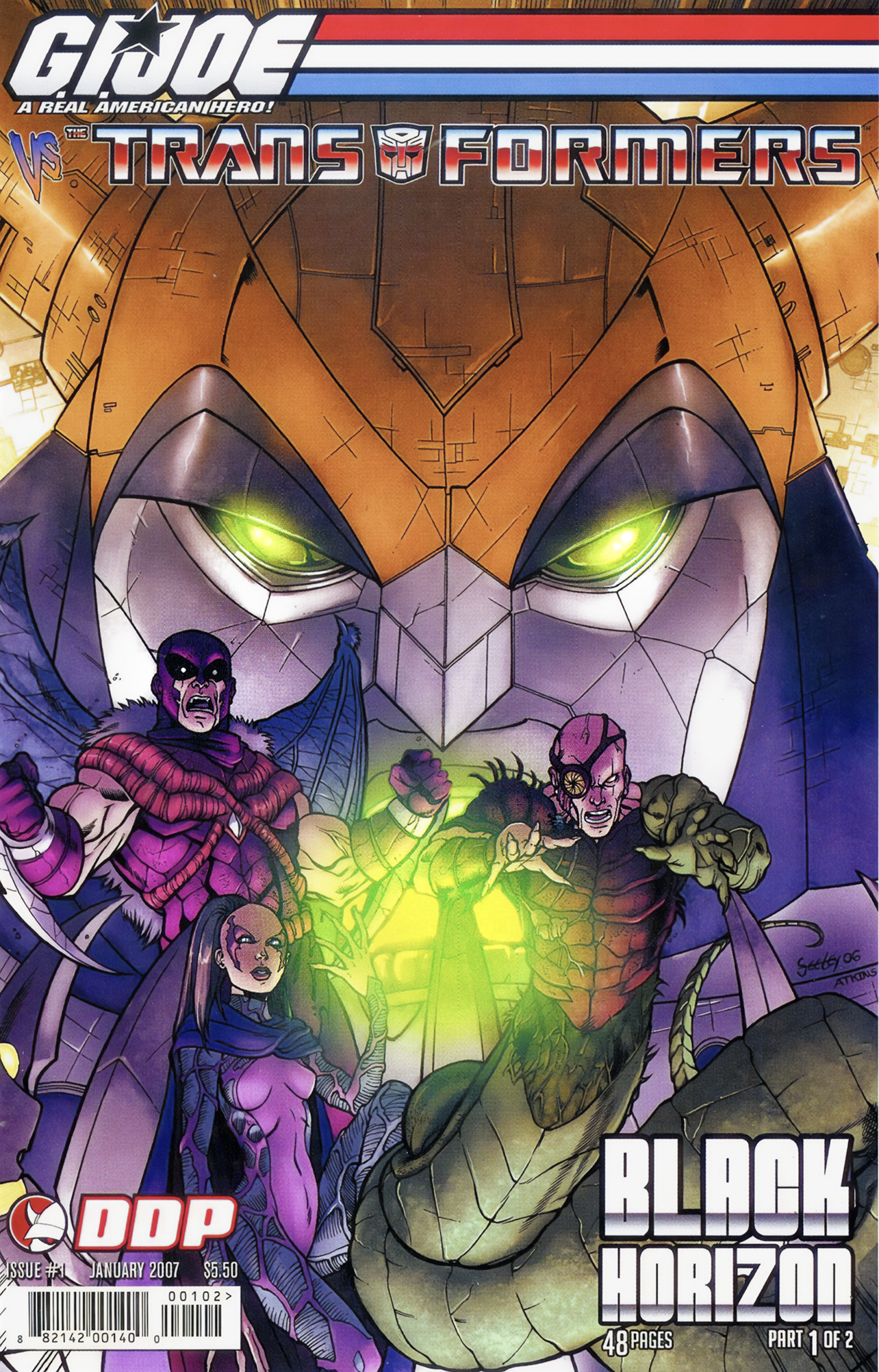
Sidenote: In the intervening years, Hasbro lets their trademark on "Nemesis Enforcer" lapse and they are unable to renew it, thus the character now being Nemesis Immortal.
Even more surprisingly, Hasbro makes a pitstop in Cobra-La for the line's 25th anniversary, releasing a two-pack featuring Lt. Falcon and Nemesis Immortal. The release comes with a comic starring the two featured characters, written by Larry Hama himself.
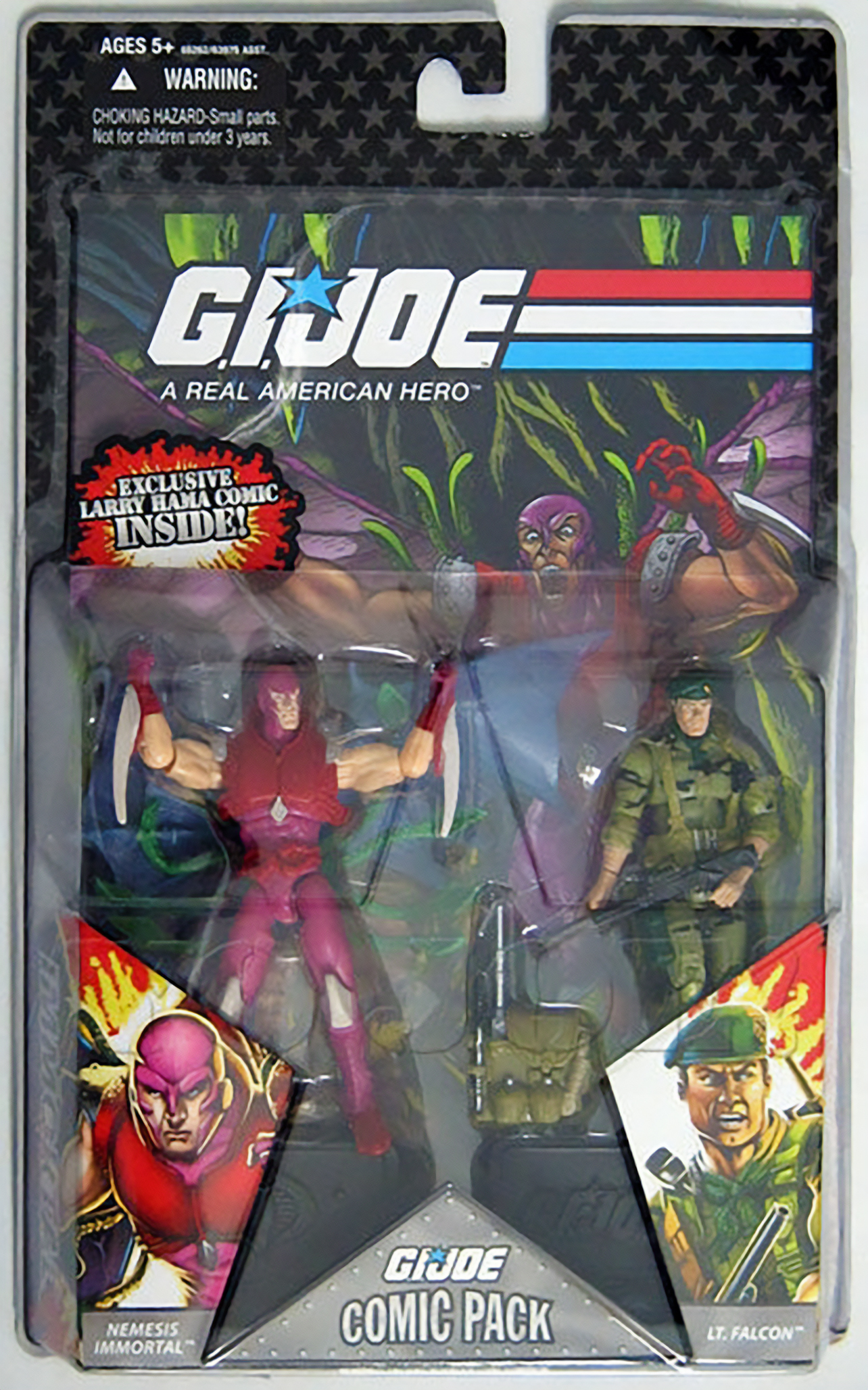
After drawing the line at Cobra-La in 1987, Larry Hama finally writes a comic with a Cobra-La character. Hama does make sure to get a dig in on the name (Falcon: "What's the use of being head of the elite guard if your outfit's got a sissy name like Cobra-La?"), and the issue takes place void of any context or continuity; there's even a footnote directing readers to "Battle of Cobra-La Part II," a story that does not exist.
This quick hit of nostalgia in 2007 and 2008 does not, however, mean the fandom is ready to embrace Cobra-La. "People were excited because I had not [brought Cobra-La back] in the main series," recalls Seeley. "At the Joe cons, I remember people being like, 'All right, you gave Seeley his thing and he did it here — and that's fine, because he's not messing with the main shit.'"
THE 2010s
Cobra-La vanished from existence until Pythona gets her first action figure. Sort of. Technically, yes, Pythona enters action figure canon in 2016, 29 years after her debut, but with a lot of caveats. First, the figure is done in the style of the 25th anniversary line, sans O-ring, meaning she doesn't seamlessly fit in with the Cobra-La three-pack. Second, while Pythona has a new head, hands, and torso, the rest of her is cobbled together from five other figures — including three different Scarletts. And third, she is only available to members of the Official G.I. Joe Collectors' Club, making her one of the rarest figures in the line; this Pythona can fetch up to $250 on eBay.
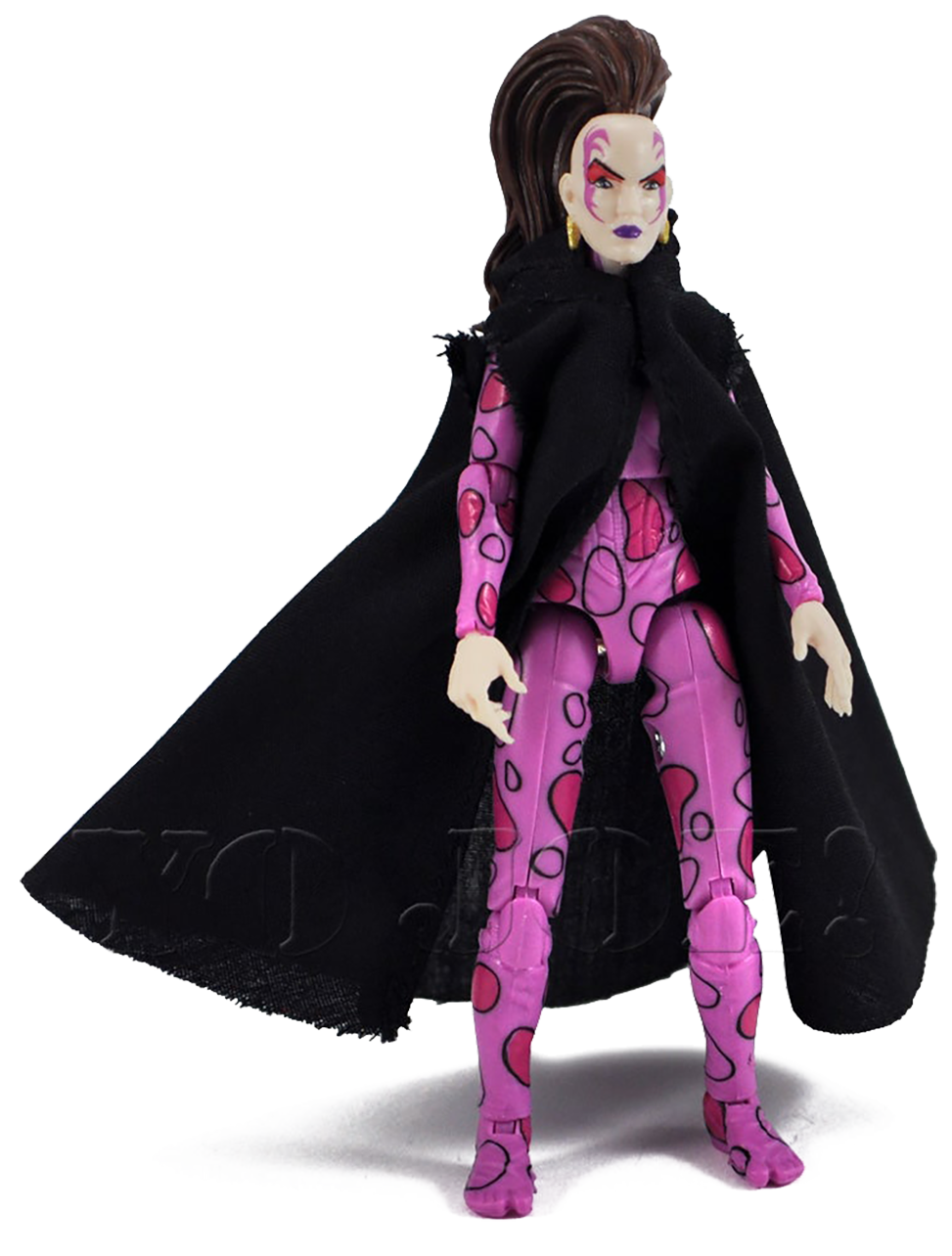
This Pythona clearly isn't made because fans want Pythona; she is made because she's never been made before. She ticks a box on a wishlist. And, as Brian Flynn of Super7 said, repaint figures like this "don't look like how you want them to look."
Then in 2018, writer/artist Tommy Lee Edwards follows the same path that Tim Seeley trod up the Himalayas eleven years prior. Edwards begins work on a new miniseries for IDW Publishing, the bearer of the comics license since 2008. "I grew up on G.I. Joe, and adored the 1987 movie," writes Edwards in an email to Pop Heist. "I saw it back then, introduced it to my kids 25 years later, and always imagined how epic a followup could be." With Davide Gianfelice on art, Edwards began crafting a story focused on Duke, survivor of having a snake thrown into his heart, and the rest of Cobra-La. The premise:
Our story picks up two years after the events depicted in G.I. JOE: THE MOVIE. Lt. Falcon is ordered to abandon his revenge-fueled quest to destroy what’s left of Serpentor and his Cobra-La troops to instead protect the daughter of an infamous jewel thief who holds the key to Cobra’s resurrection. Meanwhile, Destro, Baroness, Major Bludd, Firefly, and a handful of rogue loyalists plan to reclaim Cobra’s once glorious destiny by embracing dark magic and making Cobra Commander human again.
The story kicks off in March 2019 with a four-page prologue published in G.I. Joe Yearbook 2019. Set nine months after the events of G.I. Joe: The Movie, the story begins inside Duke's nightmare of Golobulus, Serpentor, and the Cobra-La monsters. Scarlett calls Falcon, who's thrown himself into hunting down Serpentor. And elsewhere, Pythona descends below the ruins of Cobra-La, finding Nemesis Immortal's remains, and plucking the jewel from his chest (thus slyly spinning a story out of a piece of his design).
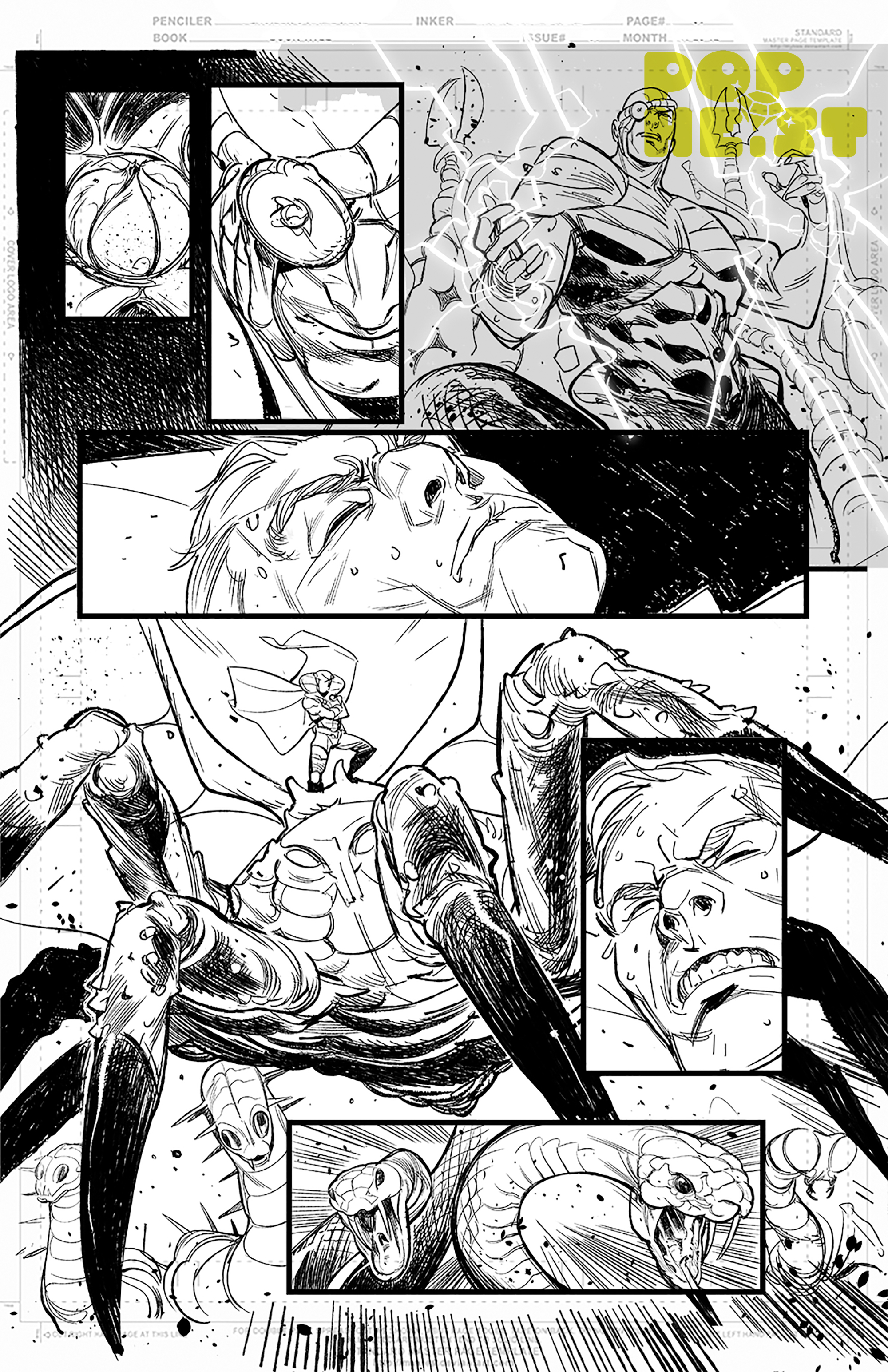
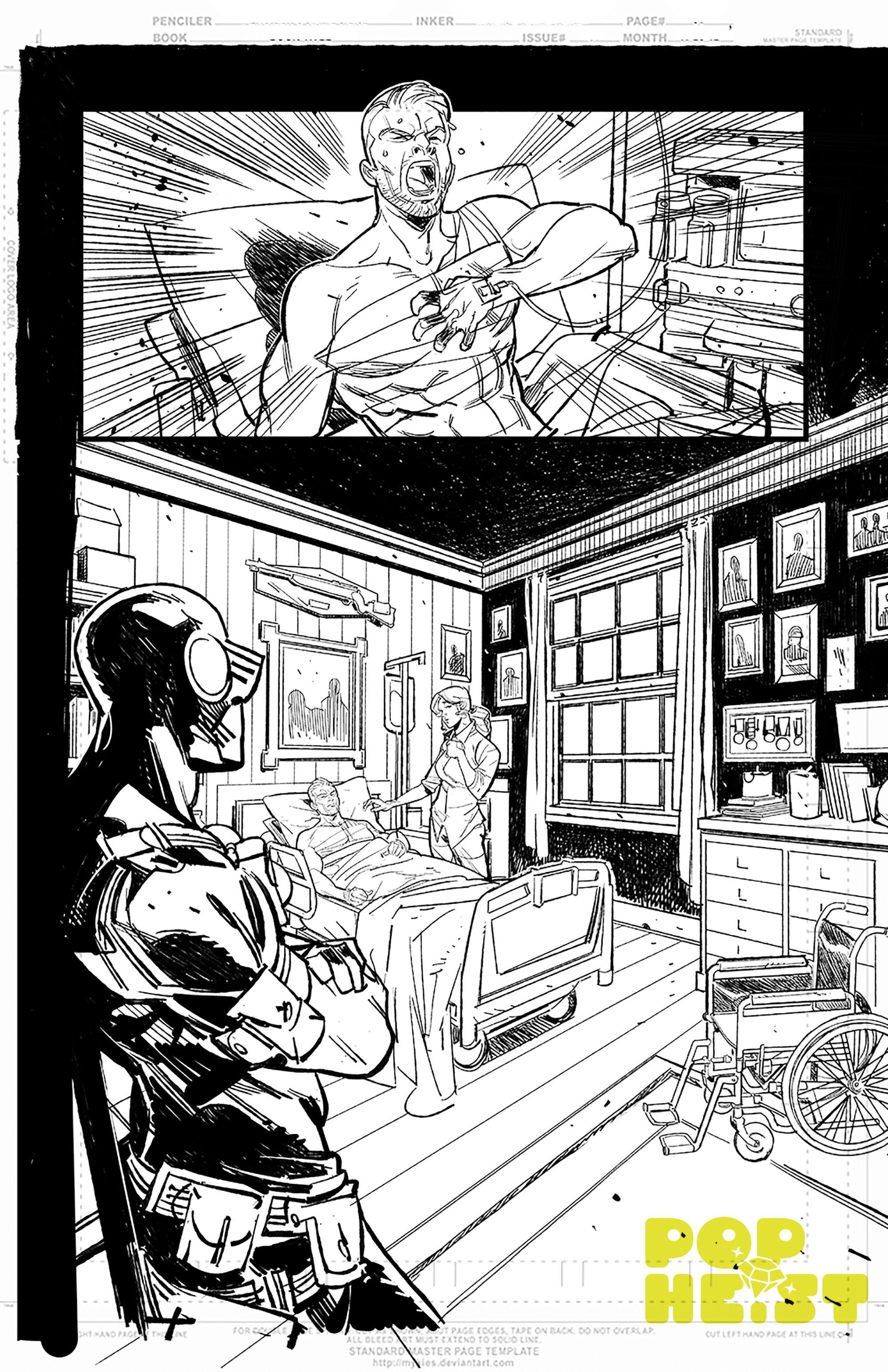
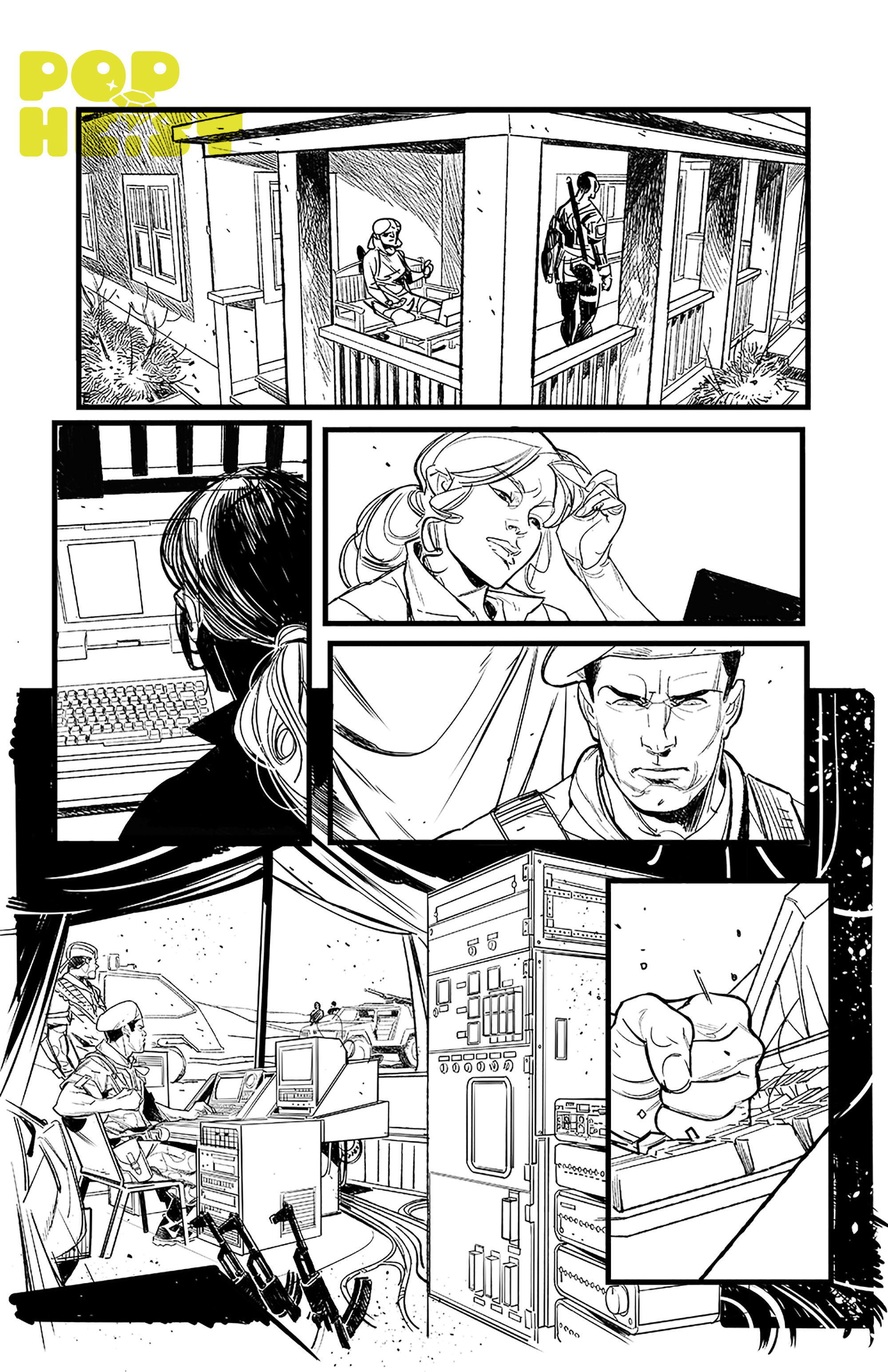
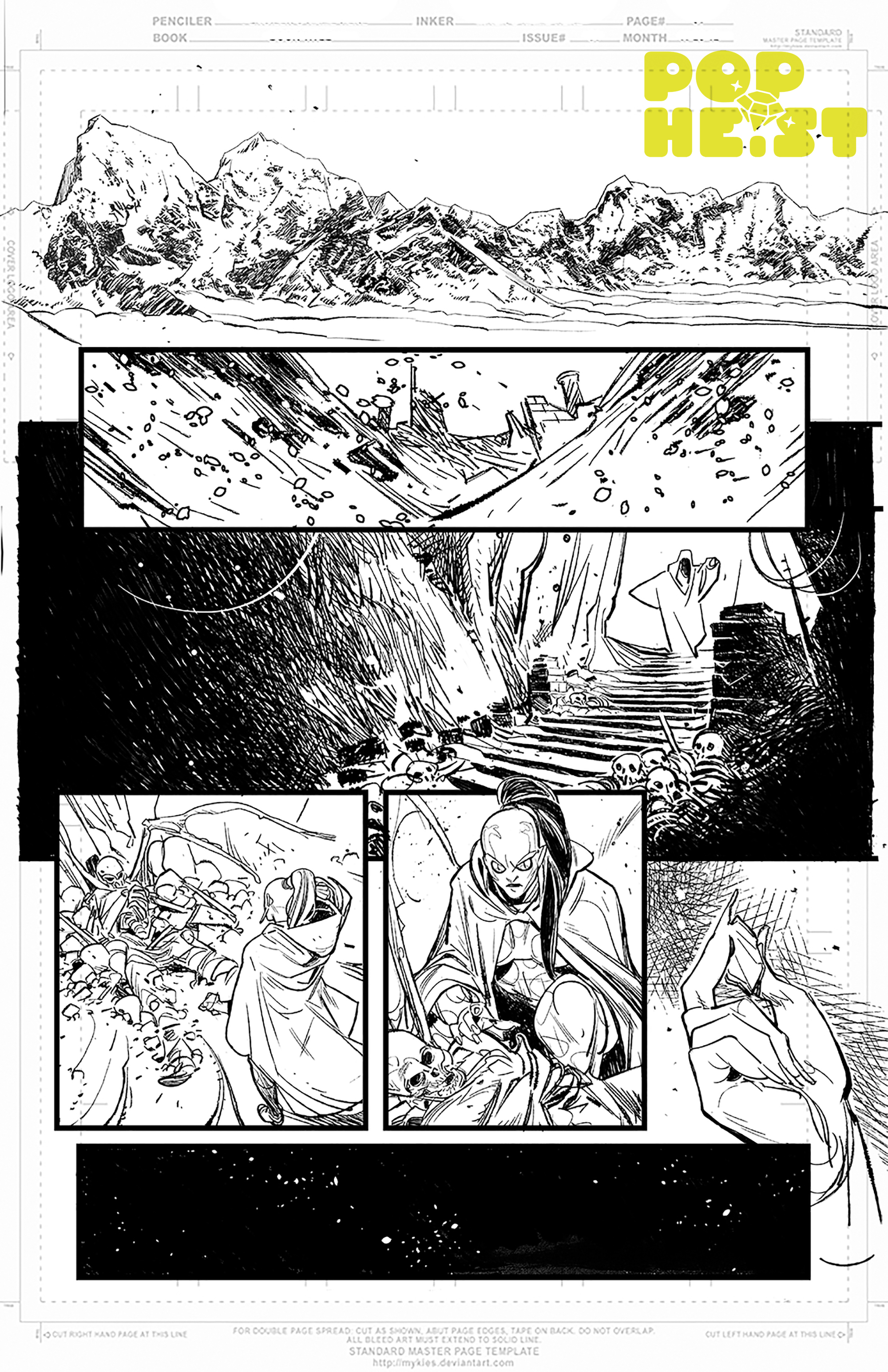
The story ends with, "TO BE CONTINUED IN G.I. Joe: INFINITE COBRA."
Except there will be no miniseries.
"I was extremely passionate about this INFINITE COBRA project," writes Edwards. "Unfortunately, a new person calling the shots up at Hasbro killed the entire project with one email. They said the story was 'too retro,' and that they wanted to focus only on moving G.I. Joe into the future."
This is clearly the modus operandi for Hasbro moving into 2020. There is the launch of the new, 1:12 scale G.I. Joe: Classified Series action figure line which pushes the line's aesthetics further towards modern military gear. These designs are developed in tandem with G.I. Joe: Operation Blackout, a third-person shooter game released in October 2020. On top of that, the third live-action feature film, Snake Eyes: G.I. Joe Origins wraps filming in February 2020, eyeing a release in October 2020. But 2020 happened. Released while its audience is in the grips of a global pandemic, both the initial wave of Classified figures and the video game receive middling reviews. Snake Eyes is pushed to a summer 2021 theatrical-only release, opens to mixed reviews, and proceeds to bomb at the box office.
That was G.I. Joe's attempt to "move into the future." Perhaps unbeknownst to Hasbro, there is a man on the inside plotting Cobra-La's return.
THE 2020S
"I saw the movie at the same age and this movie blew my mind. I was like, this is the coolest thing in the world. Snake people, crab armor, let's go, right?"
Lenny Panzica, G.I. Joe Classified Series
Lenny Panzica knows he has to wait it out. The co-creator and former lead designer of the Classified line wants to dive into the weirder, more esoteric corners of the franchise, but he knows that he has to start grounded with a tinge of sci-fi. "I always wanted to get to Pythona," Panzica tells Pop Heist. "I think I drew her the first year of the line. I did the input for her because I wanted to make her."
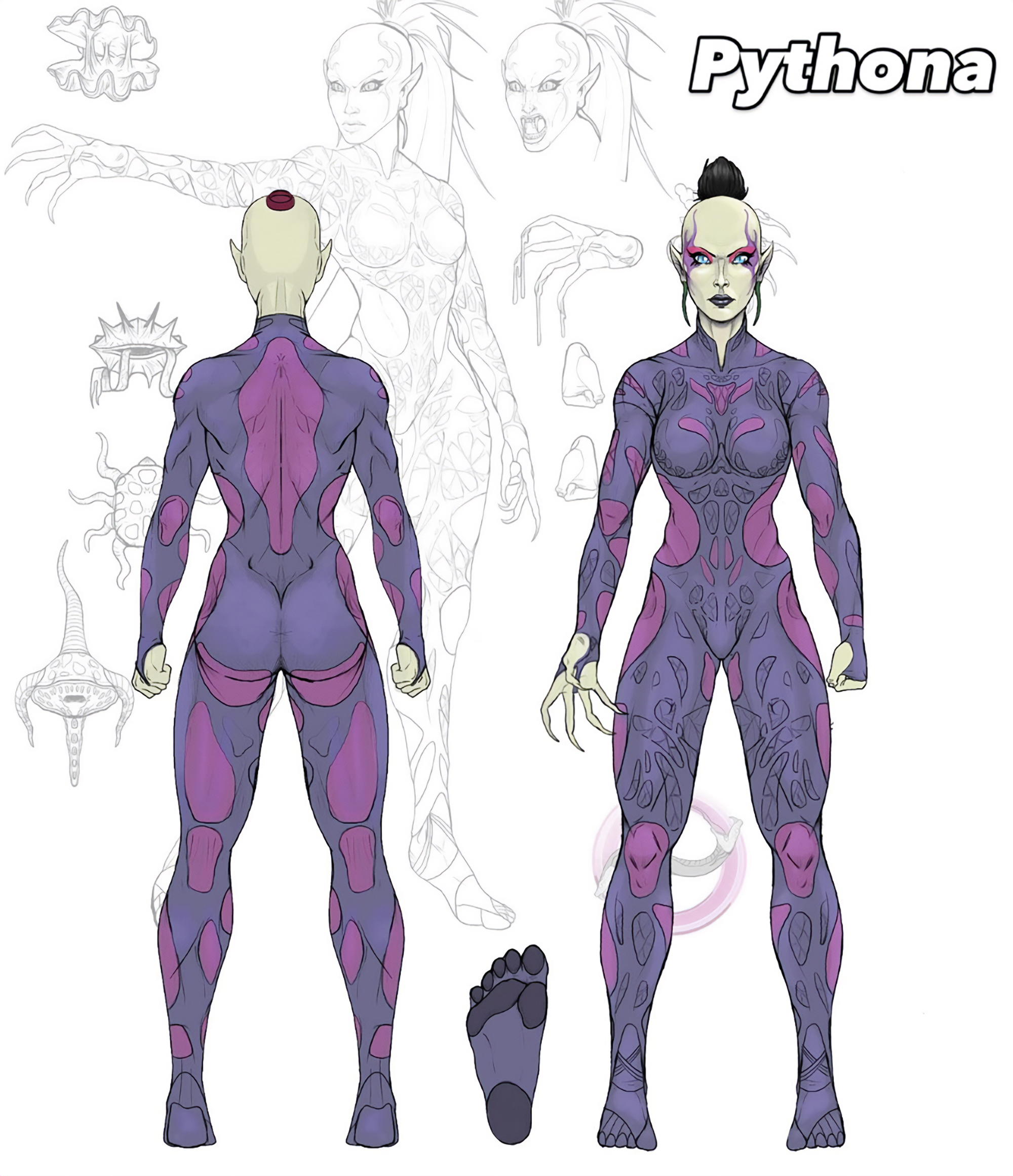
"I remember drawing her right at around the time my daughter was born. I was just drawing in the backyard and I was like, 'Pythona would be an awesome Classified figure.'" But Pythona will have to wait.
Panzica isn't alone in his desire to resurrect Cobra-La. Robert Kirkman, the comics auteur behind The Walking Dead and Invincible, is also a longtime fan of G.I. Joe's weirdos. And Kirkman is able to do something about that with the creation of the Energon Universe. After IDW loses their G.I. Joe license at the end of 2022, Kirkman's Skybound Entertainment secretly scoops it up and begins plotting the creation of a new universe.
The Energon Universe's Big Bang occurs on June 14, 2023 with the release of Void Rivals #1. It's already a big deal, what with it being a new comic and a new concept from Robert Kirkman, the biggest name in modern comics. But it's the last page that blows minds: the reveal that this concept includes Jetfire, an Autobot, a Transformer. A new Hasbro shared universe, Trojan Horsed into comic shops via Kirkman's sci-fi concept. G.I. Joe will follow soon.
Enter: Joshua Williamson, the man tasked with drafting a new version of Joe in late 2022. Upon connecting with Kirkman, he's surprised to learn that they agree on quite possibly the most controversial topic in G.I. Joe. "Robert really likes Cobra-La stuff, and he really likes the movie." The new mantra for the minds behind Joe: "We all think this is cool, and I'll show you why we think it's cool."
Williamson, building on ideas laid out by Buzz Dixon 35 years prior, weaves Cobra-La into the core mythology of this new — still unannounced — shared universe. One pillar of the Energon Universe is Transformers, a franchise that eclipsed Joe in popularity in the 21st century thanks to a $5.4 billion film franchise. The other pillar, arguably, is the robots' spiritual opposites: Cobra-La.
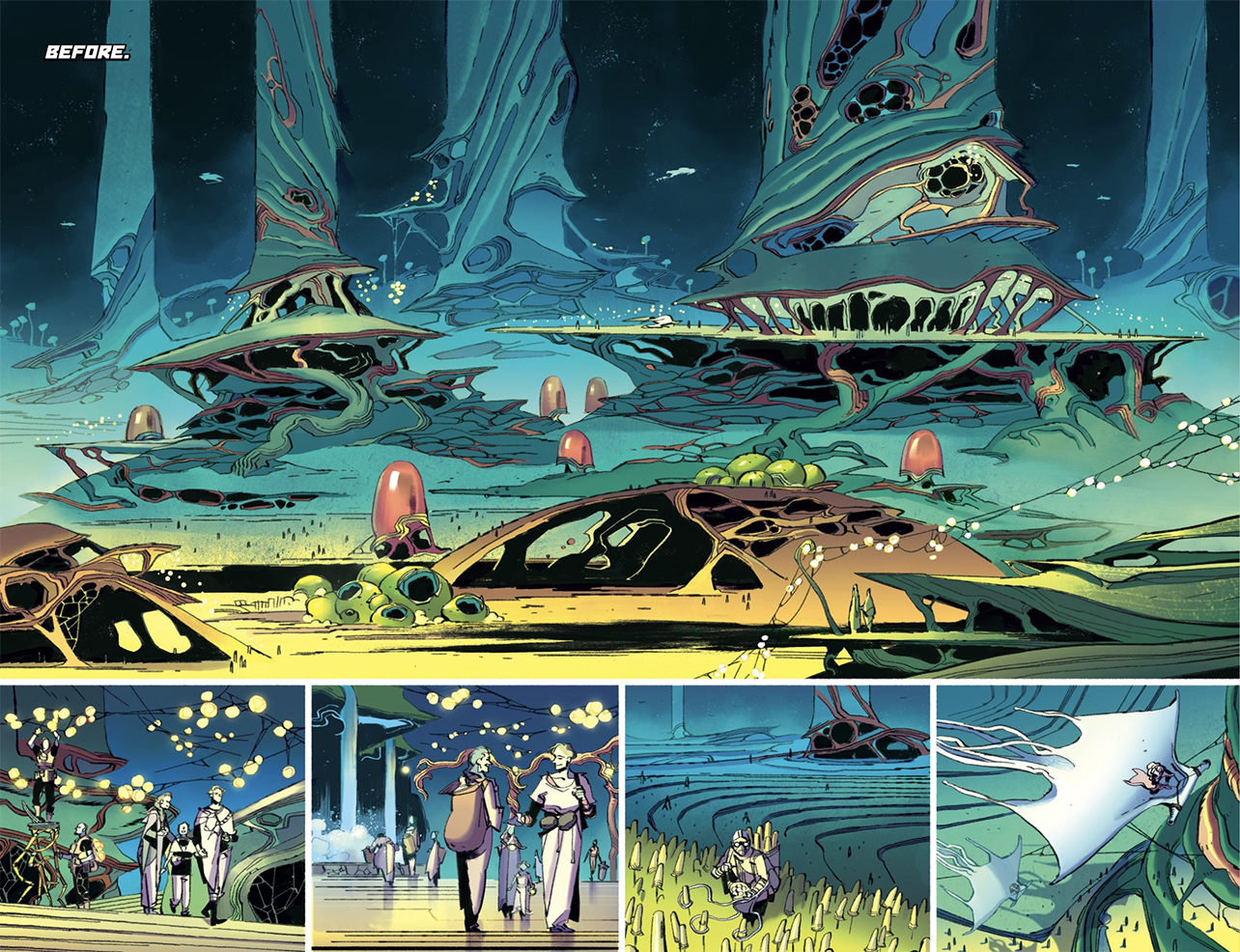
Williamson: "I started doing research on what Cobra-La was going to look like, and Andrea [Milana] did all these amazing designs. Everything's organic. The ships are organic. You see the seeds of that in issue #1, where Cobra Commander is like, I like metal, this is a true weapon. Flesh is weak and vulnerable. Metal is hard and not vulnerable."
The Joes enter the fray with two character-focused miniseries: Duke launches on Dec. 27, 2023, and Cobra Commander on Jan. 17, 2024. And Cobra-La is there at the start; Cobra Commander #1, the second issue published in this new G.I. Joe mythology, includes the most detailed look at Cobra-La society that we've seen to date, complete with appearances from Golobulus, Pythona, and — of course — Cobra Commander, here reimagined as a human, an outsider, brought into this hidden kingdom and horrifically scarred. Needless to say, this too was a surprise — and a major, major gamble. "We kept it secret, that Cobra-La was going to be in it, until Cobra Commander #1 came out," says Williamson.
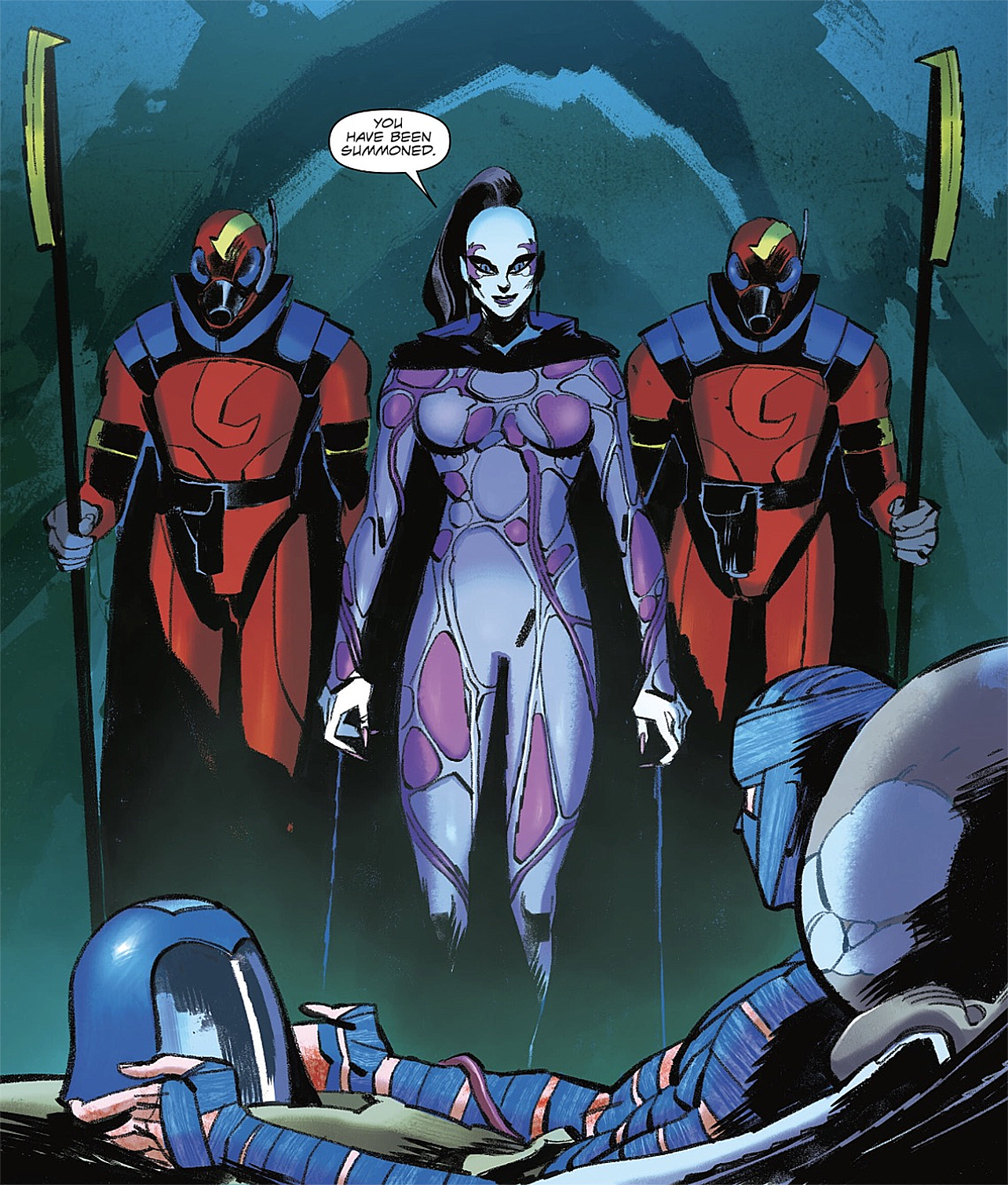
The gamble pays off.
"We absolutely loved it," says West. "That is what cemented the Energon Universe for me, the fact that they were swinging that big right out of the gate."
In fact, this high fantasy, body-horror-tinged sci-fi concept ends up being exactly what G.I. Joe needs to unify it with the other sci-fi concepts in this shared universe. "[Cobra-La] is what you need to drop into this series to make G.I. Joe fit and not feel like the odd man out," says Wood.
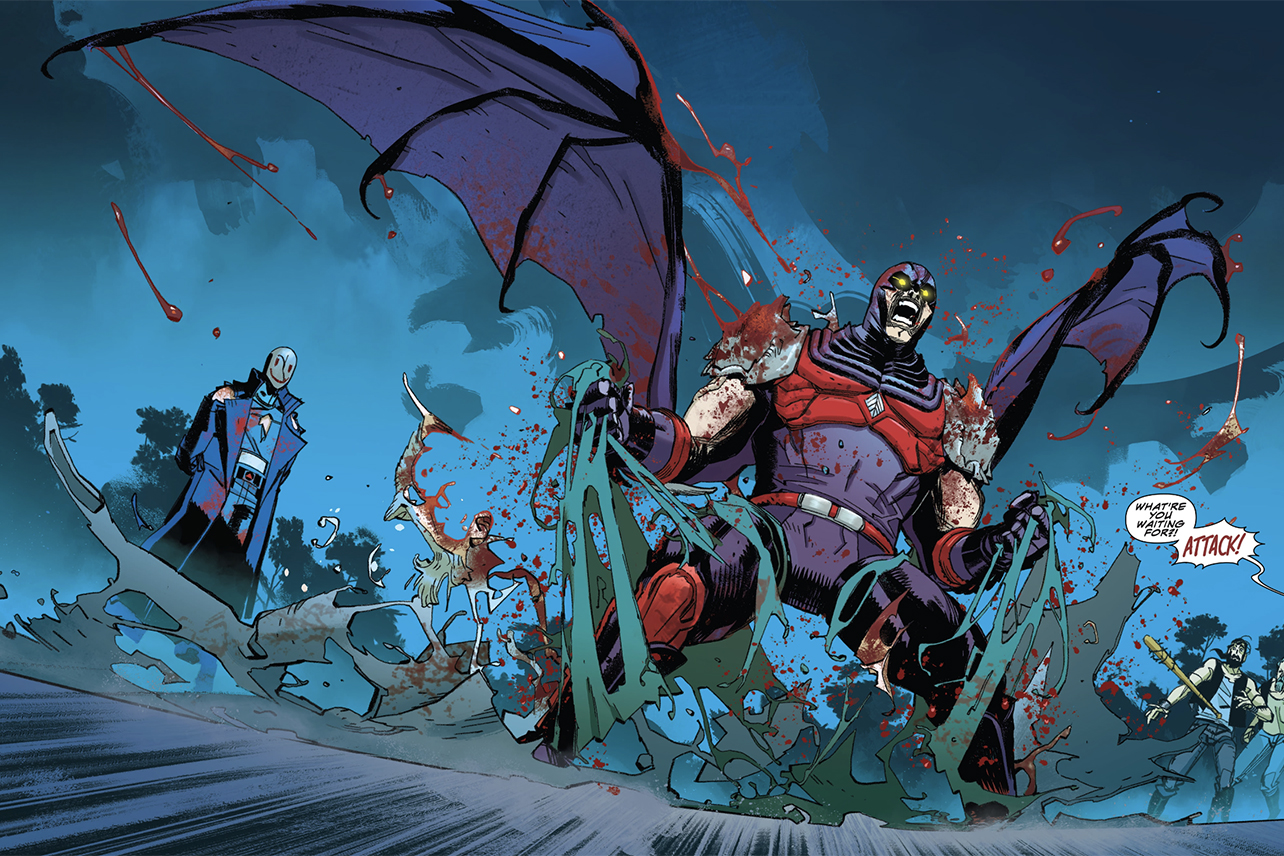
And where were the haters? "When we saw the Cobra-La, I can remember us being like, get ready for the rage baiters," says Allen. "It's gonna go over like a lead balloon because so many people just hate Cobra-La. It's cool to hate it. It didn't really happen."
"It was shockingly well-received," says West.
"It surprised me how many people actually really loved Cobra-La and love those characters," says Williamson.
At the same time, Lenny Panzica is pushing the Classified line further than ever before into strange territory — starting with the release of Serpentor in 2023, and then Nemesis Immortal and (making his action figure debut) the mutated "Once a Man" Cobra Commander. It is only a matter of time before Pythona joins the ranks. And for her design, Panzica turns to a familiar source of inspiration: "Basically, it's like, how would Giger handle a femme fatale ninja from Cobra-La?"
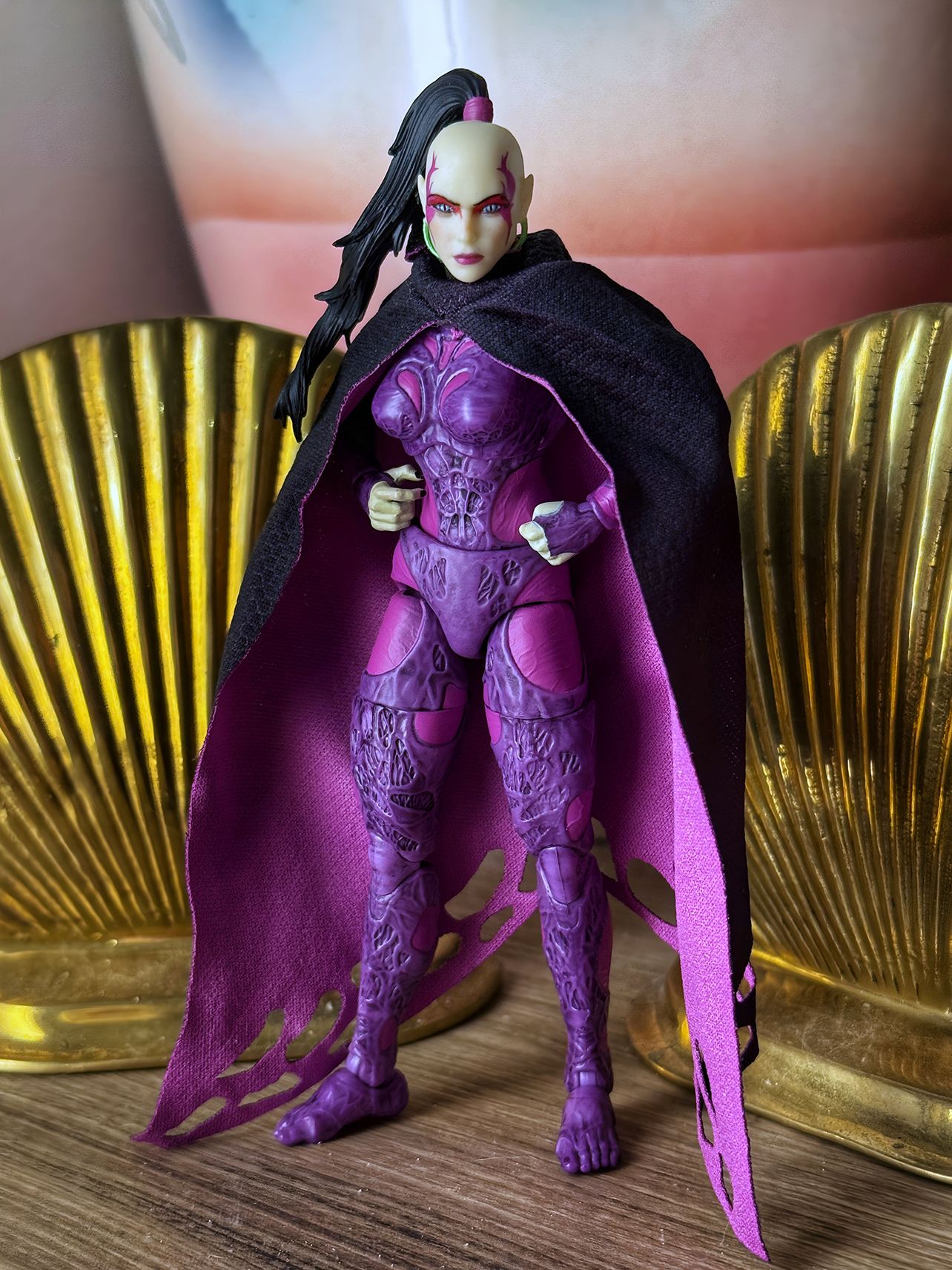
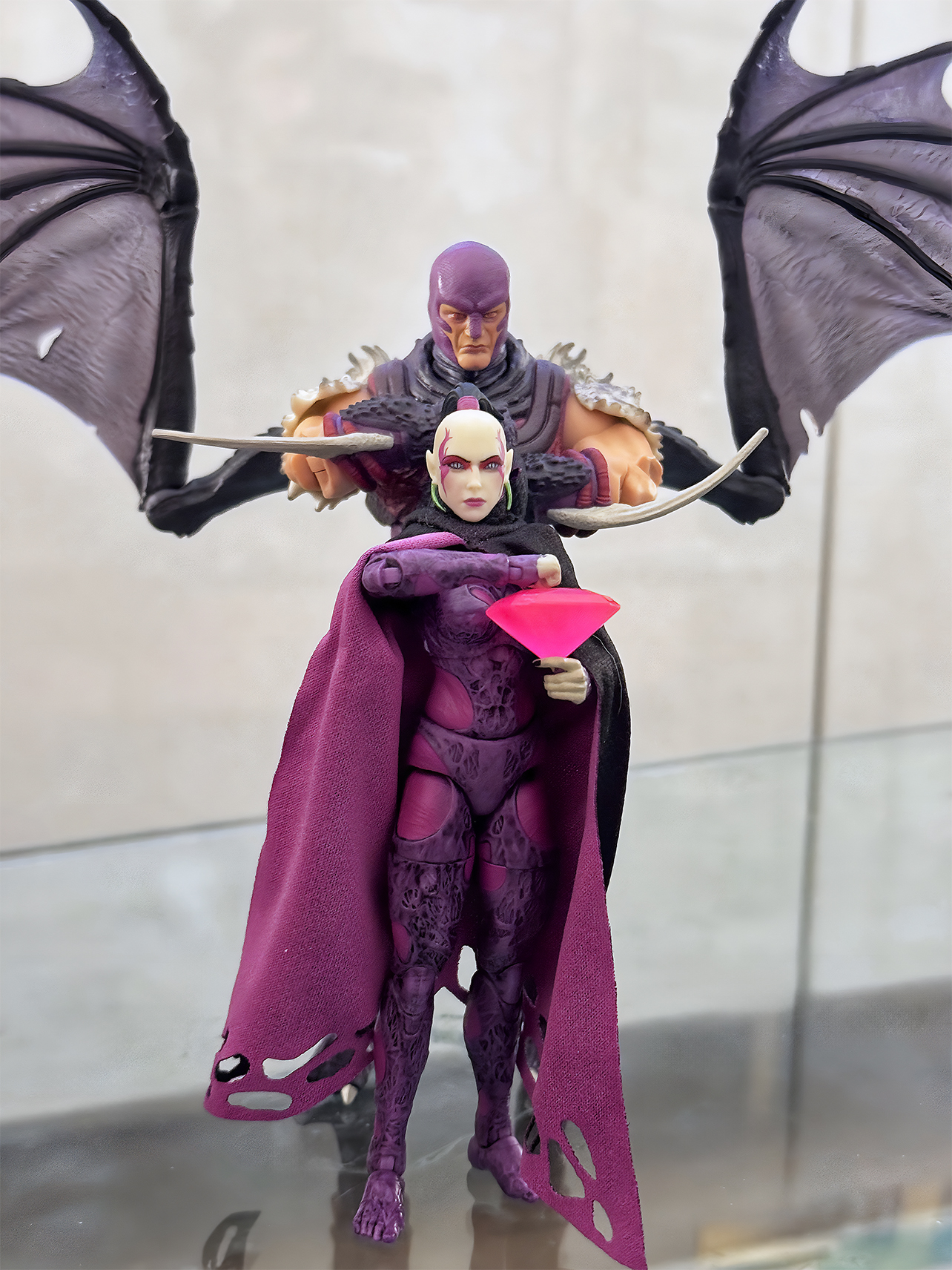
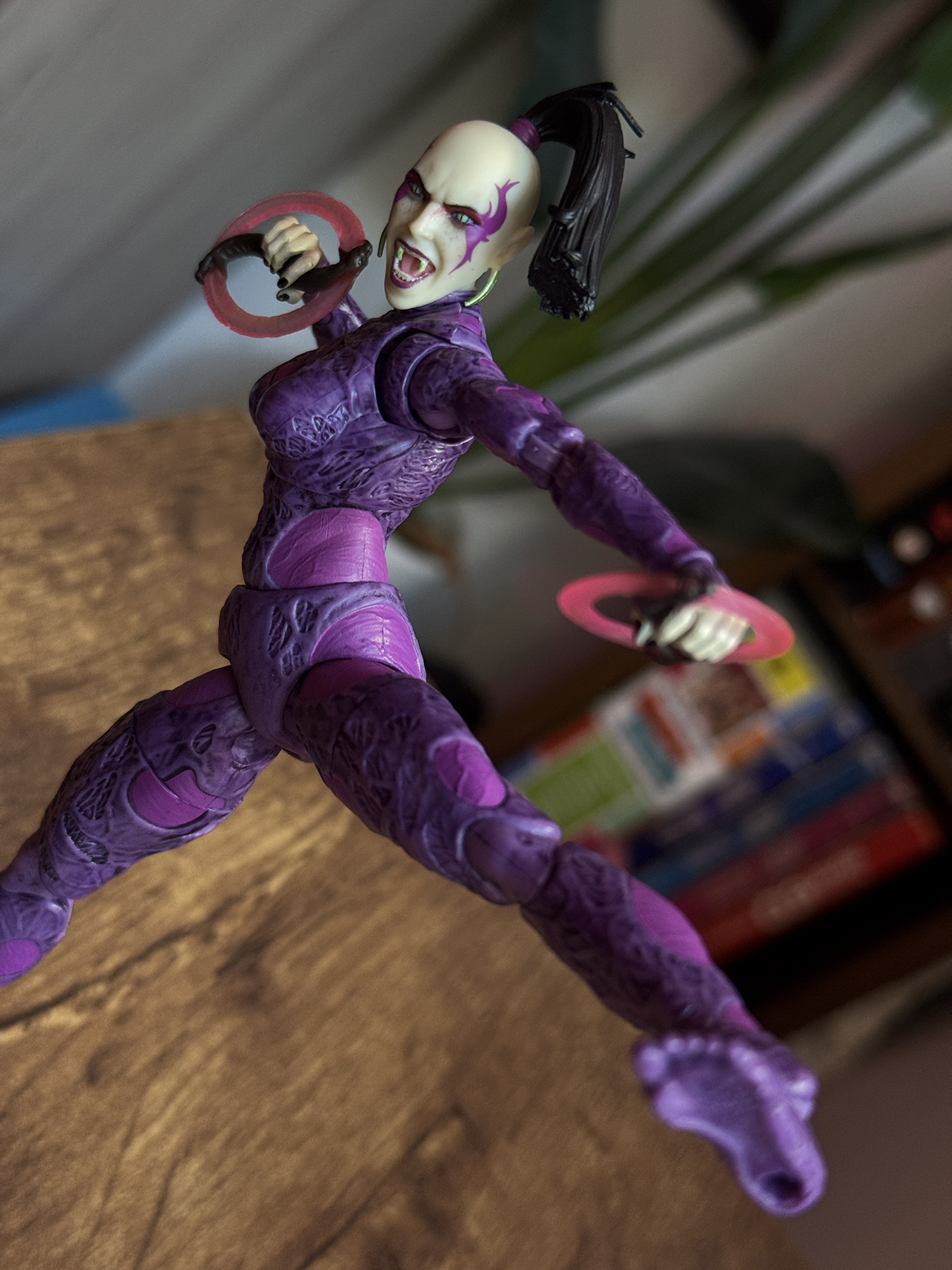
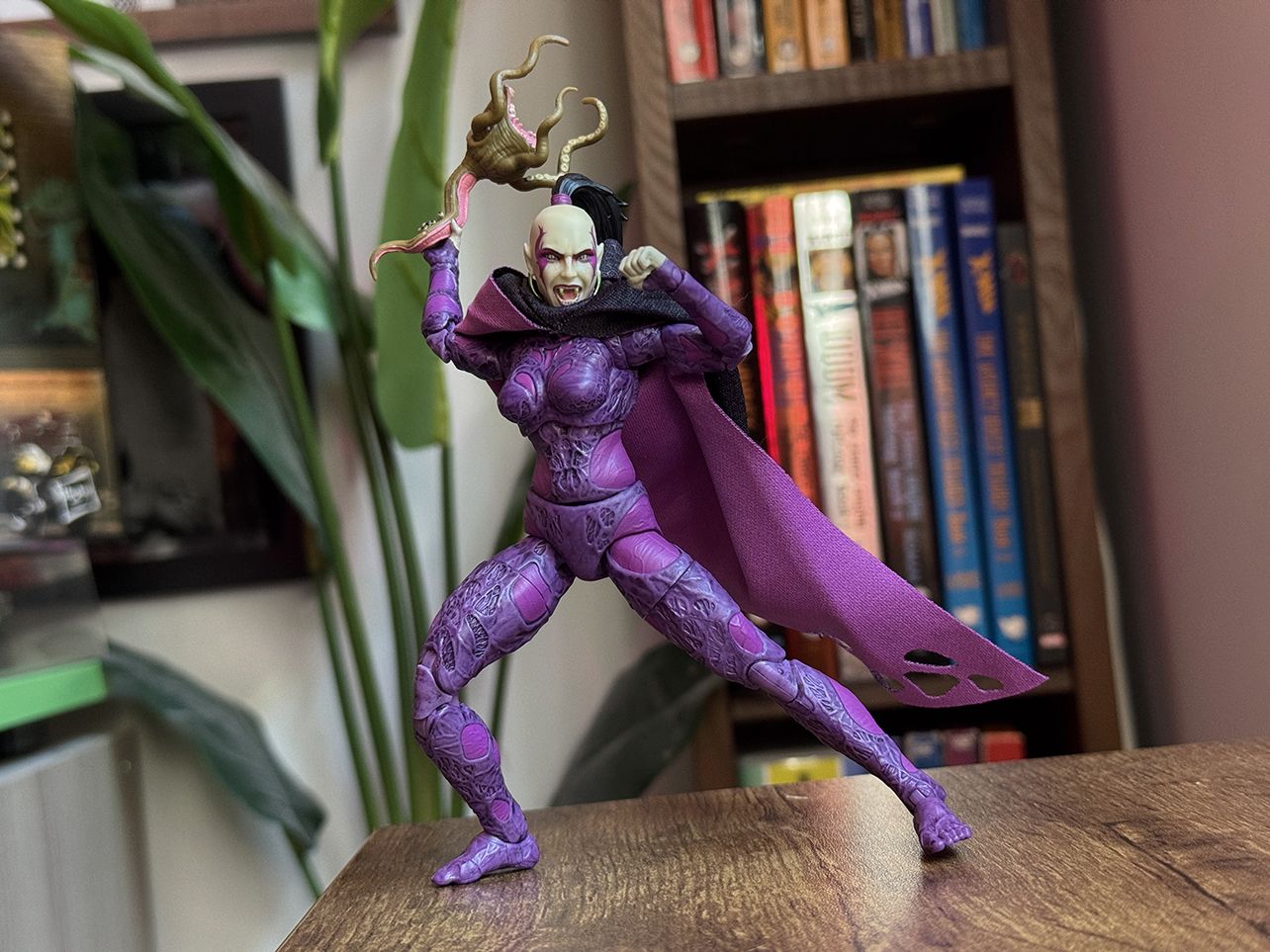
Not to be outdone, but as Pythona joins the cast of Robert Kirkman's Void Rivals (Kirkman specifically requests her), and as Hasbro gears up to release the 1:12 scale Pythona as a 2025 New York Comic-Con exclusive, the mad geniuses of retro-toy preservationists Super7 surprise drop something that a generation of fans waited almost 40 years for: a classic, O-ring Pythona figure.
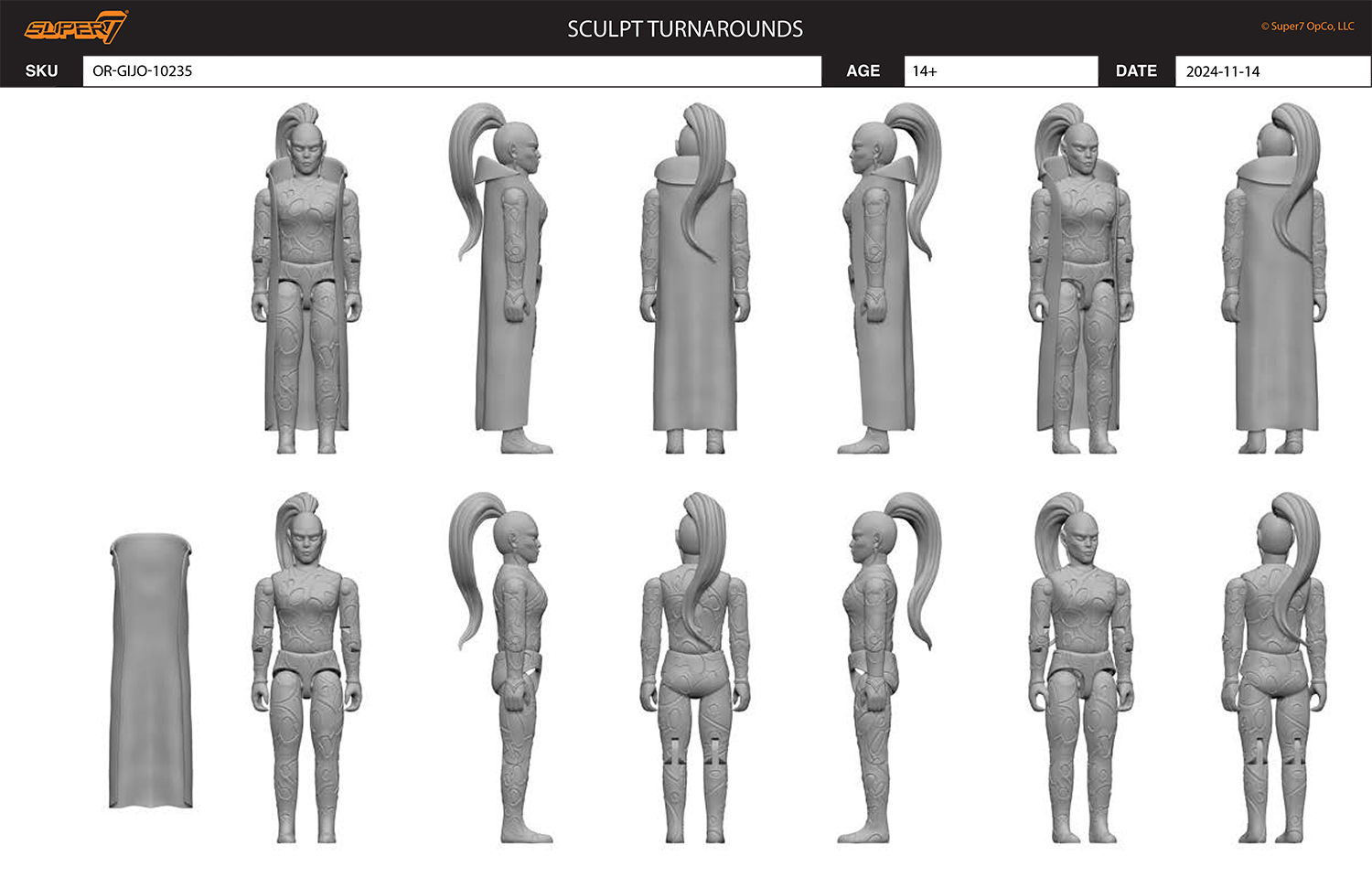
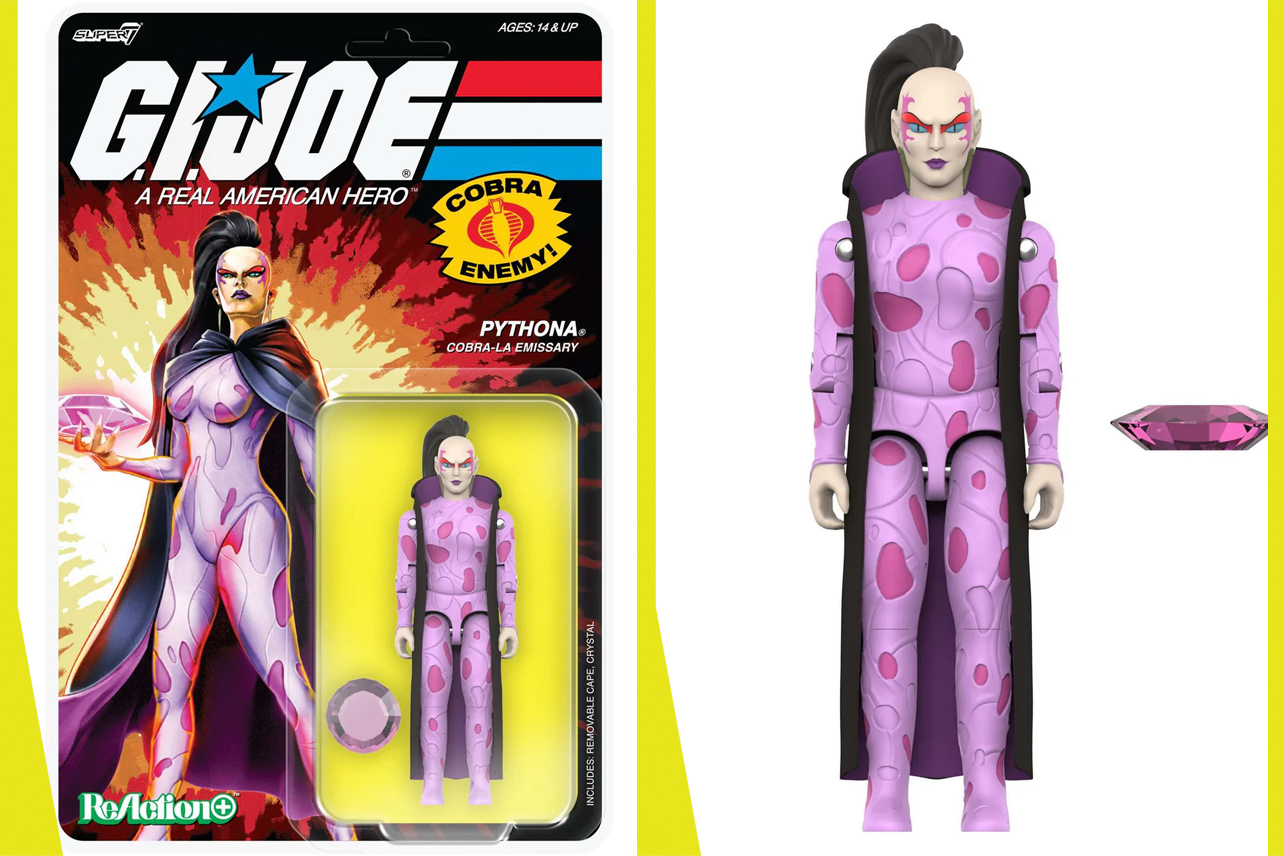
And not just Pythona, but the Royal Guard and "Once a Man" Cobra Commander as well. This was part of Flynn's plan all along, part of Super7's mission to pull nostalgia from your brain and cast it into plastic. "For the most part, we try to stay away from what you already have," says Flynn. "That's why it was like, no, Cobra-La is really important for us."

The reception of Hasbro's Pythona in late 2025 is, as Panzica tells Pop Heist, "very positive." This is a sea change in G.I. Joe fandom. "It was one of those figures where we're going out on a limb... Cobra-La is a sore subject with G.I. Joe." Or, rather, Cobra-La was a sore subject with G.I. Joe. "I think we've unified [Cobra-La] into the Classified aesthetic, which I think makes it digestible for those who weren't so into it when they were a little older than us when we saw the cartoon."
The current wave of comics and toys are not niche artifacts or blips of nostalgia. Cobra-La is being treated — and respected — as an integral part of the franchise. Where it once felt like the death knell of the cartoon, it's now a foundational part of the Energon Universe and an integral part of G.I. Joe lore. But why now?
"I think the movie is being reappraised," says Flynn, whose Cobra-La offerings have all sold out. It's like Star Wars fans and Ewoks, Flynn realizes. "I wasn't in love with Ewoks, but I didn't hate them. Whereas Josh [Herbolsheimer, Super7 VP of Design], who's five years younger than me, six years, was like, 'Ewoks were the coolest thing ever.' I think the thing that's interesting within fandom is that for so many people, it's not okay that somebody had a different experience with the fandom than you did. What are you talking about?"
We're witnessing a generational shift, as the fans who were too young to write fan mail for Cobra-La in 1988 are now leading the franchise into battle. And these fans care about Cobra-La because — as far out of an idea as it was in 1985 — Buzz Dixon, Larry Houston, and everyone involved in making G.I. Joe: The Movie took their jobs seriously and worked hard to create something of worth, something with soul, that would stand the test of time.
This movie was, to those at the tippy-top, just a toy commercial. So Ron Friedman did not have to jot down the name "Animus Serpentus" in his notes, as if that wasn't the most insane name ever conceived. Buzz Dixon did not have to plumb the depths of his own, personal sci-fi fandom for DNA with which to create a secret serpent society. Russ Heath did not have to cloak these characters in unsettling mixtures of membranes, phalanges, muscles, carapaces, and chitin. Larry Houston did not have to have Pythona punch a Crimson Guard in the head so hard that his helmet leaves a crack in the wall, nor did he have to create a blitzkrieg of images that all stand among the best ever conceived for not only the series, but all of '80s animation.
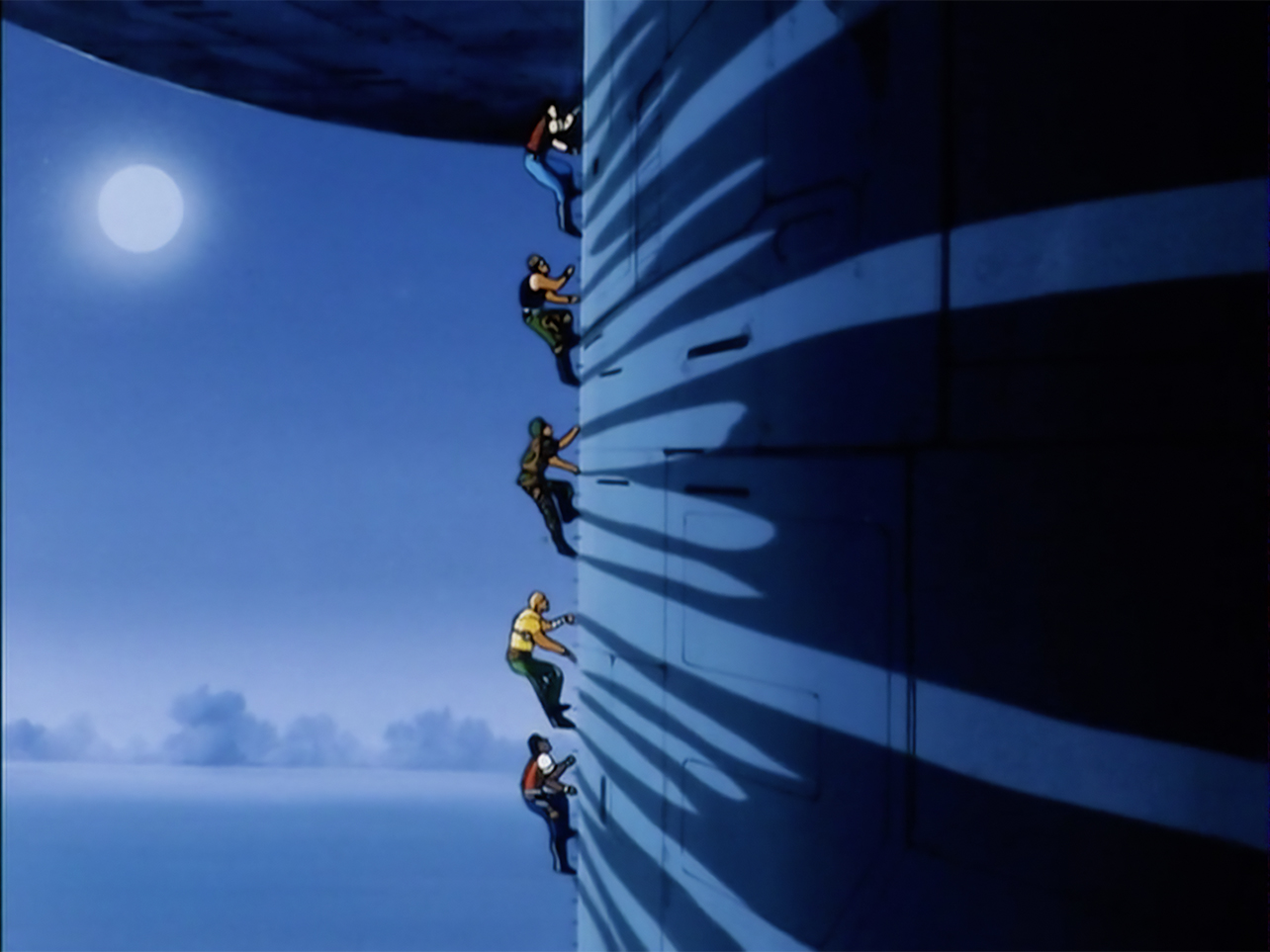
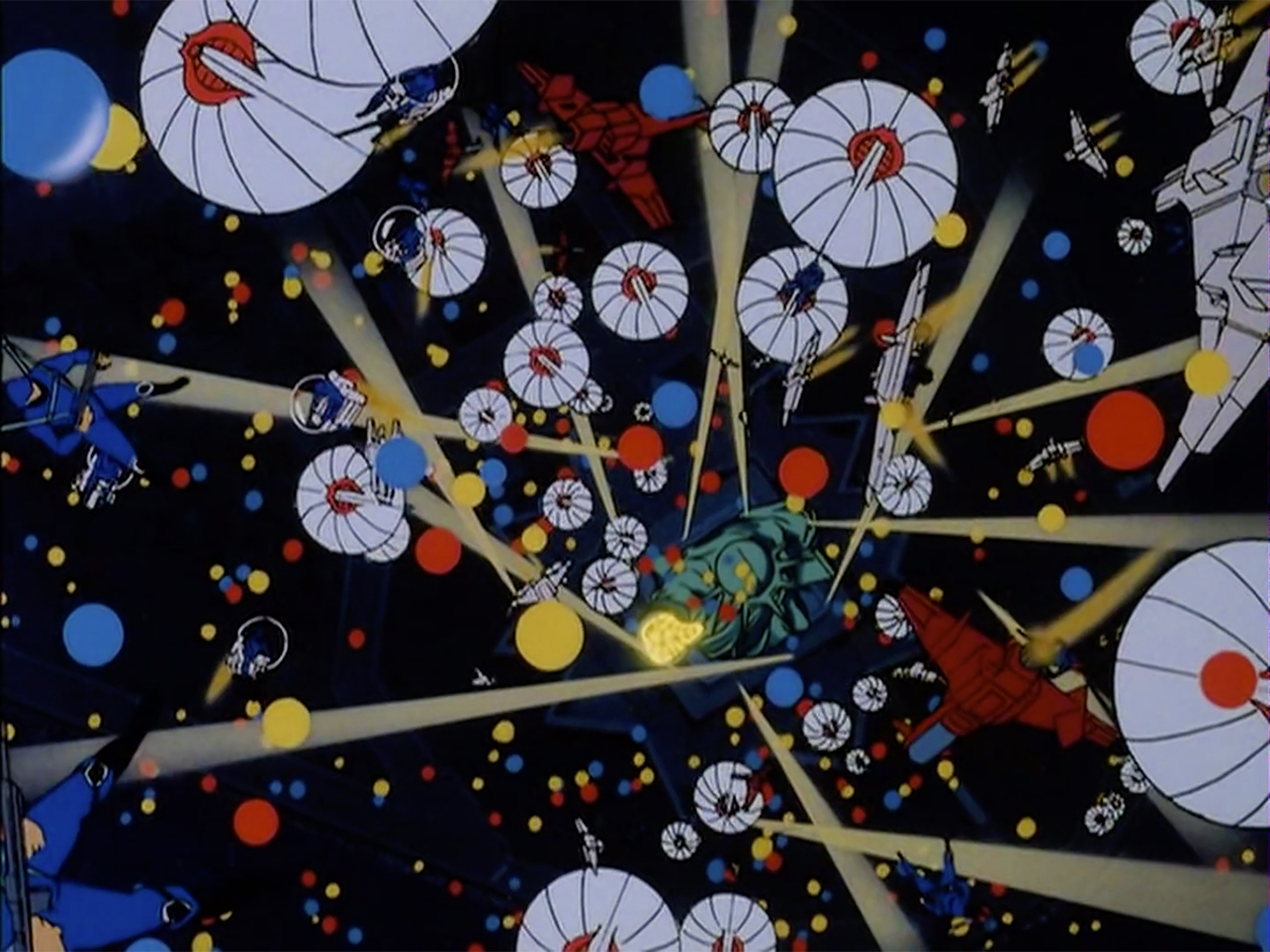
This is what stands out to Joshua Williamson during a screening of the movie in 2022. "The screening was the first time I watched it out of joy, not work, taking notes the whole time. And as I was watching, I was like, 'Man, that's real good. All these character beats work really well, and it's a solid movie.'"
The creators of G.I. Joe: The Movie were given an impossible task: make a sci-fi movie focused on brand new characters. They got the job done, creating a movie that did not tank the franchise. In fact, as we are now witnessing, it created a whole new generation of fans — fans like Lenny Panzica and Joshua Williamson.
"It was my entry point as a kid, just G.I. Joe: The Movie," says Panzica.
And Williamson: "That movie really is kind of the blueprint for what we do on the Joe side of the Energon Universe."
And the beauty of the brand is that there's no one way to interact with it. "I think there was this fear at one point that you have to maintain the integrity of a brand," says Tim Seeley. "What people have come to realize is these are just toy things. They're crazy. There is no 'integrity.' You can have your super serious G.I. Joe stuff, but then you can also have your crazy stuff."
Fans were upset by the "retcon" of Cobra Commander's origin, as if there was only one Cobra Commander in 1987. But that's not the case now, and it was not true then either; there was the Sunbow Cobra Commander, the Marvel Comics Cobra Commander, the filecard Cobra Commander, and then whatever amalgamation or complete do-over that you had in your head when you played with Cobra Commander. The movie did not ruin anything.
This reappraisal is long overdue. It's time to write a new chapter in the corpus of Cobra-La, to correct the record, and put some shine on its reputation. The fans who were there in '82 have had their say, and they largely got to define how Cobra-La and the movie were perceived for almost 40 years. But now the next generation is contributing to the narrative — and shifting it. G.I. Joe: The Movie is an under-appreciated gem, one that adds depth to the franchise, breadth, intrigue and horror. It expands and enriches the mythos.
This love has reached Buzz Dixon, the guy who carried the weight of the movie's reputation for almost 40 years. "I wasn't happy with G.I. Joe: The Movie. But a few years ago, it finally had its official world premiere at the Hollywood Egyptian Theatre, a double feature with the Transformers movie, and I got to see it with fans. And I realized a lot of the stuff I had been cringing at over the decades was stuff that people liked. So I have come around and have made my peace with my past, so to speak, and I'm embracing the movie now — " and Buzz is far from the only one.
EPILOGUE
This started on July 24, 2025 when Hasbro first revealed their Classified Series Pythona figure. At the time, I thought, "Someone should really do a history of Pythona to mark this occasion." Then I realized, I can obviously be that someone, what with my job as editor-in-chief of a pop culture website. Five months of interviews followed and the Pythona history clearly expanded to a very complete history of Cobra-La. It almost extended to the movie as a whole, but I had to draw the line somewhere (I am up for the challenge, though).
But really, this started sometime in 1989 when I was five years old and my parents rented G.I. Joe: The Movie for me, likely from the video rental section of our local Kroger's. I don't remember seeing the movie for the first time, because I definitely saw the movie a dozen times in rapid succession through weekly rentals. I remember my mom even asking if she could just buy the copy at Kroger's (and now I know why she did not follow through). And when the price of a VHS copy dropped to something reasonable, you better believe I wore the tape out.
This movie, to my child brain, felt dangerous and alive in a way that I'd never experienced before. The threat felt real (I often thought about what I'd do in the event of a spore-pocalypse), the new characters were my instant faves, and so many lines of dialogue became part of my personal lexicon ("I don't need to see clear to fracture your rear" "Who ever heard of being shot down by salad?" "The first person to say something about me being bad luck gets a knuckle massage." "An itty, bitty, ditty bag." "Hello hello hello. / Adios adios adios!" "Keep splicin'!").
This movie became G.I. Joe to me, through and through. I never felt any character was short-changed (the dazzling opening credits sequence saw to that), and Cobra Commander's turn as a tragic, reptilian anti-hero shook me every bit as hard as Darth Vader's "No, I am your father" would when I first saw The Empire Strikes Back on VHS rental a year later. I never understood the hate for this movie, nor did I ever agree with its reputation. I hope that, by learning the complete story, that reputation gets reappraised.
The more I learned about this movie, the more I loved it. And I really hope you can say the same.
Thanks to Ben Abernathy, Joshua Williamson, and Shannon Meehan with Skybound Entertainment; Kristian Allen, Dave West, and Noel Wood of Audible Interlude: A G.I. Joe Podcast; comic creators Tommy Lee Edwards and Tim Seeley; G.I. Joe historians Tim Finn (A Real American Book!, The Center Holds with Larry Hama), Dan Klingensmith (Creating G.I. Joe), and R. Carson Mataxis (3DJoes); Brian Flynn and Ashley Anderson at Super7; Lenny Panzica (formerly of Hasbro) and Shadie Williams (PMK); and G.I. Joe designer Mark Pennington.
And thanks to Buzz Dixon and Larry Houston, for igniting my imagination, like a spore hit by the Broadcast Energy Transmitter. But in a good way.
The Cobra-La Corpus
- I: Hasbro’s Lenny Panzica on Bringing Cobra-La to G.I. Joe Classified: “Snake People, Crab Armor, Let’s Go”
- II: "Can I Have Pythona?" — How One Email Changed Skybound's Energon Universe
- III: From Cringe to Canon: G.I. Joe Writer Buzz Dixon Is Finally at Peace With That Movie
- IV: Super7's Brian Flynn is Creating the G.I. Joes You Always Wanted: "Cobra-La Is Really Important for Us"
- V: "Oh, They DO Hate Cobra-La" — How Tim Seeley Gave G.I. Joe's Devils Their Due
- VI: A Better Cinema: Larry Houston Brought Anime to a Real American Hero With G.I. Joe: The Movie
- VII: The Cobra-La Corpus: The Complete History of G.I. Joe’s Weirdest Foes