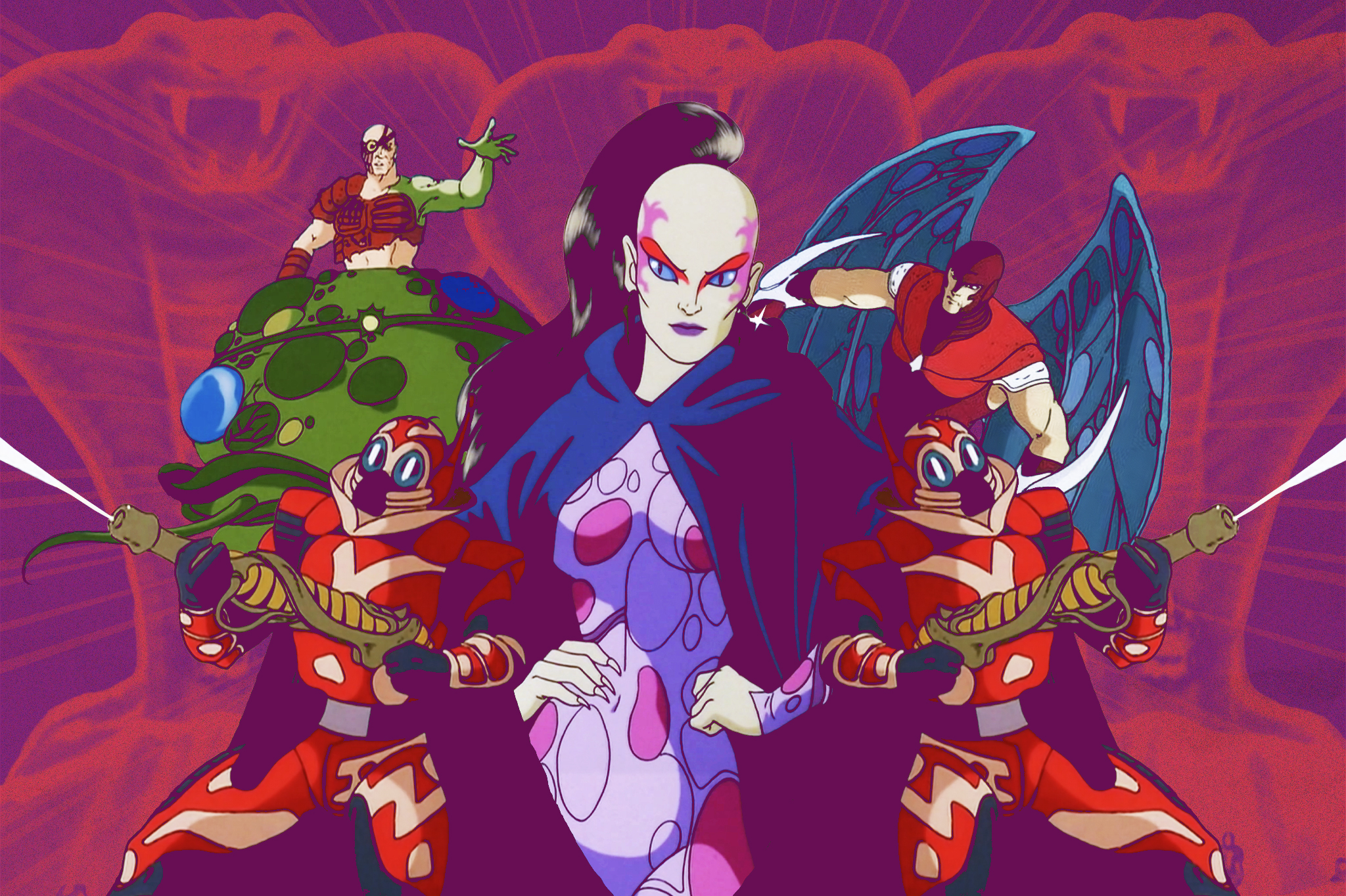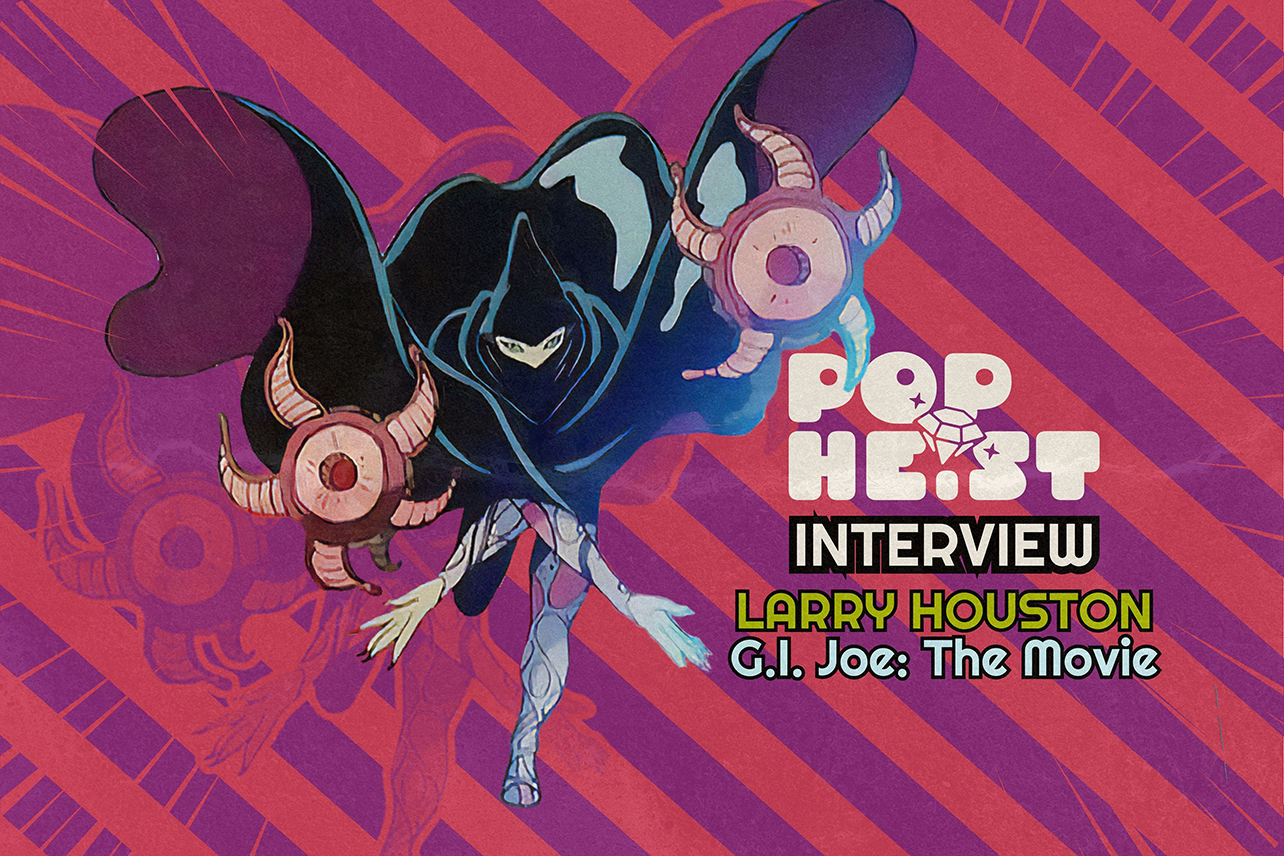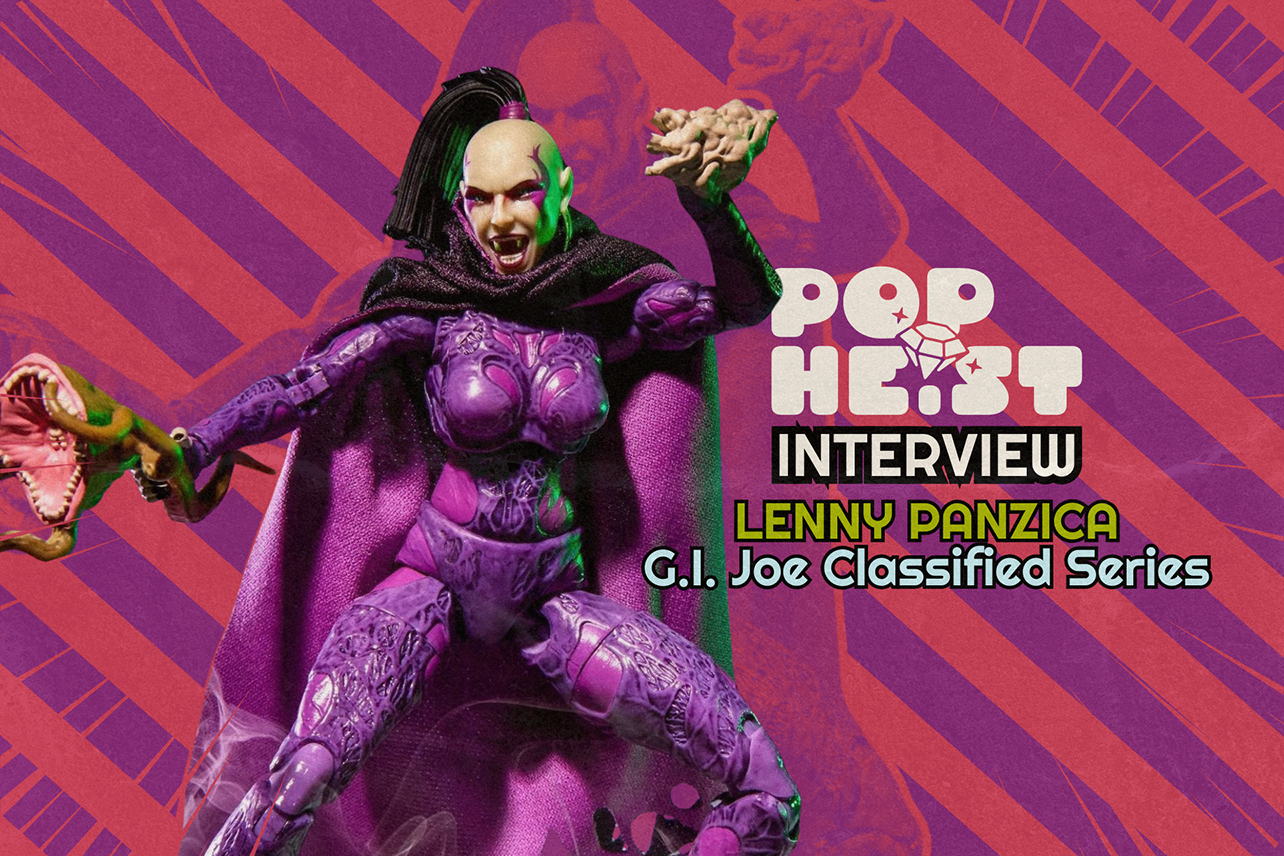


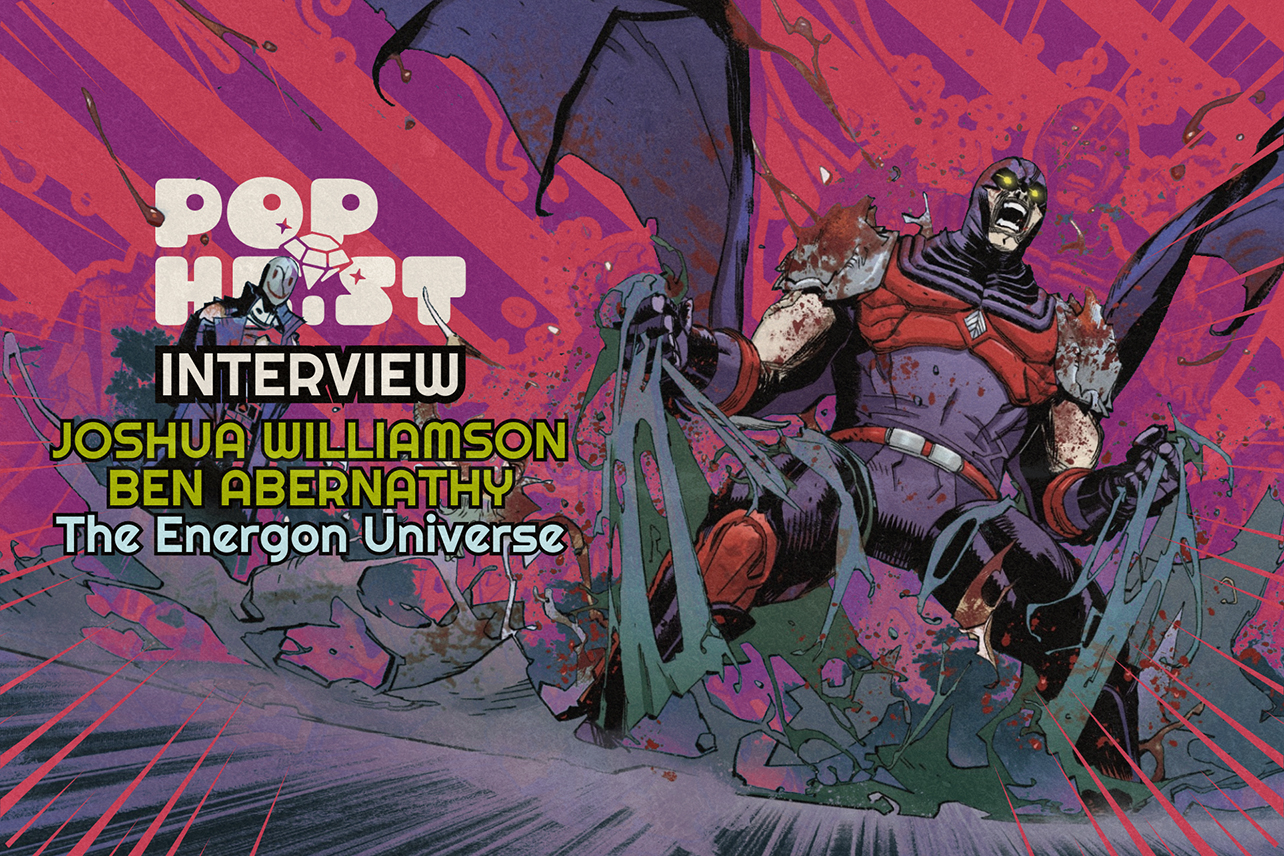
Behold, the Cobra-La Corpus — a comprehensive dissection of G.I. Joe's most insidious adversaries. Considered divisive upon their introduction in 1987's G.I. Joe: The Movie, the consensus around the secretive serpentine sect has evolved. From condemnation to celebration, let this unspooling body of work tell the tale.
We're talking about Cobra-La today likely because of Robert Kirkman. Yes, that Robert Kirkman. The mastermind behind two of the greatest independent comic success stories of all time, The Walking Dead and Invincible — that Robert Kirkman. It's unexpected — not just that a genre innovator like Kirkman would aggressively pursue the comics license for two of pop culture's foundational franchises, but that he would also eagerly jump feet first onto both series' third rails; namely, characters and concepts from 1986's Transformers: The Movie and 1987's G.I. Joe: The Movie.
If you've ever seen Robert Kirkman speak on a panel at a comic convention, however, all of this makes sense. Always an exuberant presence, the guy radiates passion and enthusiasm. You get the sense that Kirkman has no guilty pleasures and enjoys nothing ironically; it's sincerity all the way down. And that guy? That guy wants to write — how did Lenny put it? — an H.R. Giger femme fatale named Pythona.
Kirkman was not the only person who wanted to write Pythona, Golobulus, and the rest. While crafting what would become the Energon Universe in 2023, Kirkman found the like-minded — almost hive-minded — Joshua Williamson. As Williamson explains below, he wanted to incorporate Cobra-La into his Cobra Commander limited series before he knew of Kirkman's affection for it. It was a match made in, well, Cobra-La (which is like heaven, but for an ancient, cold-blooded offshoot of Homo sapiens who are really into mushrooms).
2024's Cobra Commander limited series wasted no time bringing Cobra-La into the fold, incorporating it as a key part of the new G.I. Joe continuity right from the start. How did that happen? And how did Cobra-La's influence spread to the corner of outer space occupied by Robert Kirkman's own Void Rivals? I found out from G.I. Joe scribe Joshua Williamson and Ben Abernathy, editor of Joe, Void Rivals, and Transformers.
This interview has been edited for clarity
Brett White: How did y'all feel about G.I. Joe: The Movie when you first saw it?
Joshua Williamson: I loved it. I have this really weird Mandela effect because I swear I saw G.I. Joe in the theaters — and I know it was never released in theaters, right? But I swear I saw it in theaters. I believe I must have seen it at a YMCA or something like that. I know I saw it with a group of kids, and I loved it. I was really into G.I. Joe at the time and it was so different. It was so just like, what are we watching here?
But the cartoon, in contrast with the comic, was always a bit more weird. If you just watch the cartoon, they had some weird stuff every once in a while. I feel like the movie was just taking that and just amping it up, while also introducing a bunch of new characters. And so as a kid, I really loved it. And I was huge into those characters. I had a Nemesis Enforcer toy. I had a Golobulus toy. But sadly, as you know, I never had a Pythona toy.
Whenever we are putting together scripts to send to artists, I think every one of them always has that [opening] as a link at the beginning to just be like, "This is the vibe we're going for. Just watch this." I was really happy that, when I started talking to Sean Mackiewicz and Robert [Kirkman] about doing G.I. Joe a lifetime ago, I was like, "I want to use these pieces. And they were like, so do we."
Ben Abernathy: I'm probably gonna be a disappointing flip side to that. The Transformers movie was a very challenging time when I was a kid, and so when the G.I. Joe movie came along, I was very reluctant to see it. I was old enough at the time with the Transformers movie to know that, like, "Oh, this is a new wave of toys coming." So I was sort of scared what was going to happen with G.I. Joe, kind of in the same way. I was pleasantly surprised that they didn't kill Duke and things along those lines. But it was really fascinating as a kid to watch, because the Cobra-La stuff was all sort of mind-blowing. There were some wild episodes of the cartoon show, but it wasn't this. I didn't get the opportunity to see the movie with Josh and Skybound when we hosted a screening in LA, but I watched it since, and it actually holds up really well.
Williamson: It was crazy watching it with everybody. I've watched it with friends and stuff like that, but to actually see it in a theater with a bunch of G.I. Joe nerds. The screening was the first time I watched it out of joy, not work, taking notes the whole time. And as I was watching, I was like, "Man, that's real good. All these character beats work really well, and it's a solid movie." And then I was like, "Holy crap. Snake Eyes is barely in that movie." And the moment it was over, Robert leaned over, he goes, "See, you don't need Snake Eyes!"
I feel like the first 10 minutes of that movie is about as perfect G.I. Joe as you get, because you get the Statue of Liberty opening, and then you get Pythona's break-in sequence intercut with the makeshift trial of Cobra Commander. It's character intrigue and action on a level we'd never seen before. What were your takeaways about Pythona specifically, and did you ever want her toy as a kid?
Williamson: I definitely wanted her as a toy. I thought she was so cool, the claws, all the stuff she was doing, running down the hallway and throwing stuff at people. It was such a rad action sequence. That movie really is kind of the blueprint for what we do on the Joe side of the Energon Universe. I was glad I had what I had at the time, but I wanted a toy of her. I didn't know why they didn't make one.
When I was in college, I had a friend who was a hardcore G.I. Joe fan. He was a hardcore comics fan and we were getting these huge arguments where he did not like the movie, he hated Cobra-La, all of that stuff. When I was coming in again, I was surprised when I found out that Robert and Sean were on the same page of, like, let's use this thing that people haven't really used the way we want to use it.
It surprised me how many people actually really loved Cobra-La and love those characters, you know? And so when we started seeing [G.I. Joe] Classified coming around. I was like, "I hope they make her." Once I saw Nemesis Immortal's figure, I was like, "Oh, we're gonna get her. We're gonna get her." Then finally getting to see her and she looks awesome.
I know I read this in some old G.I. Joe letters page, but Larry Hama used to keep track of characters and stories by using the action figures and vehicles.
Williamson: That's really funny. I did this more early on, because we have things so planned out now, but I will go and just stare at the toys sometimes, looking at little things like the guns they have, the accessories they're coming with. On a purely visual level, I start thinking about which characters I want to use and how I want to use them, or what story ideas pop up. Like we have Major Bludd in the book right now, and I was looking at the Major Bludd toy and I saw something on his figure, and I was like, "Oh, yeah, we could play with that too. We could do something with that."
But yeah — from day one, it was like, how do I get Pythona in here? She was such a cool part of that movie. And what we notice now, like, there weren't really a lot of women Cobra characters. It was like two, maybe three if you start building it out. And we wanted to add more.
That movie really is kind of the blueprint for what we do on the Joe side of the Energon Universe.
Joshua Williamson
I gotta say, having Robert Kirkman — one of the biggest comic creators ever — be pro-Cobra-La feels like a big co-sign.
Williamson: Robert really likes Cobra-La stuff, and he really likes the movie. And so I think he was just like, we all think this is cool, and I'll show you why we think it's cool. I think it was two years ago during the Christmas break, I was pretty deep into Cobra Commander at that point. We had already been talking about G.I. Joe, we were building plans but Cobra Commander hadn't started coming out yet. I got an email from Robert, and he was like, basically, "Can I have Pythona?" I was very excited by that, because I knew how Cobra Commander was going to end and I was like, well, we're not going to touch Cobra-La for a bit. She's only in Cobra Commander a little bit, but she's such a cool character. Robert wants to do more with her. And he was like, "Can you find a way for her to get to space?" And I was like, "Yes, all this tracks. They find out about Cybertron. What if she goes to find the origins of these robots and stuff?" And Robert was like, "Make sure she has a couple Royal Guards going with her." He had this whole plan for the Royal Guard. And he was like, "I'm going to give them personalities."
Williamson: We love this property and we all played with these toys, and now we get to, like, legitimately play with them. It's fun because some of these characters haven't had a lot of screen time. Because Cobra-La was barely used, we really want to take them in directions that would be unexpected.
And you did a lot more with Nemesis Immortal in Cobra Commander, the character formerly known as Nemesis Enforcer.
Williamson: I just call him Nemesis a lot of times. The Nemesis that we saw in Cobra Commander, I called him Nemesis Protector because that was his role. He was the bodyguard.
Ben, how hard was it to fold this Cobra-La stuff into Void Rivals, which is otherwise an almost entirely original concept?
Abernathy: Honestly, not hard at all. I hope I'm not speaking out of turn, but when Robert was a kid, he was not necessarily a hardcore comic reader. These cartoons were his hardcore fandom. We credit him as the architect of the Energon Universe, rightly so, and he has a vision across the board for all three titles. And so when the idea came up of Pythona and the Guards going to look for Cybertron in Cobra Commander #5, he already had this plan in mind and how he could juggle them and fit them all in ... and how, you know, of course, it inevitably connects to Skuxxoid, because Skuxxoid is the heart of Void Rivals.
Williamson: He's Robert's favorite character.
Abernathy: Like Josh said, Robert really wanted to give these, Royal Guards personalities. They frequently have their helmets off. There's male and female, and they're very much the sort of Elite Guard that are with Pythona on this journey.
Williamson: It's funny, like, when you look at what Robert has been doing, he's architected and built this universe that he wants to play in with these multiple properties that he loves. Daniel [Warren Johnson] was over here having all this fun with Transformers, and I'm over here having all this fun with G.I. Joe. And I think there were times where Robert was like — and I might be speaking out of turn — but I think Robert was a bit like, "I want to play with those toys too." That's why you get Hot Rod showing up [in Void Rivals]. But also it is important that we do have this connective tissue between the three books and make sure that things are moving through all of them. They're like, and this is a weird way to phrase it, but "light touch crossovers," because you can tell the universes are interconnected, but you don't have to read all three if you don't want to.
We love this property and we all played with these toys, and now we get to, like, legitimately play with them.
Joshua Williamson
What really brings all this together is the thematic mirror of Cobra-La and Cybertron. One is 100% organic and the other is 100% metal. When did y'all notice that?
Williamson: I think I was the first person to bring that idea to the table. I started doing research on what Cobra-La was going to look like, and Andrea [Milana] did all these amazing designs. We kept it secret, that Cobra-La was going to be in it, until Cobra Commander #1 came out.
And in those emails with Skybound, but also with Andrea and talking about the look of it, it was like, oh yeah, it's all organic. Everything's organic. The ships are organic. You see the seeds of that in issue #1, where Cobra Commander is like, I like metal, this is a true weapon. Flesh is weak and vulnerable. Metal is hard and not vulnerable. I started putting that together and that's gonna be a major component. We have many chapters and a big, big plan, but that's definitely going to be a big piece of that conflict. I'm glad we're going in this direction with it,
Abernathy: I don't know if this was part of the plan, since this predates myself joining, but Daniel Warren Johnson sort of dwelled a bit on this, with Optimus Prime in particular, on Earth, how everything is soft and organic, where he steps on the deer.
And all of this is part of the reappraisal of the movie and Cobra-La. It feels like there's a generational shift, where I was very, very young when I saw the movie and I didn't have a baked-in idea of what G.I. Joe was. And now I'm old enough to write a whole piece about Pythona.
Williamson: I think you're right. I think some of it is a generational thing. It's just kind of where you were in your fandom when the movie came out. My friend that was in college, he was a hardcore comics person, so when he saw the movie, it broke some of the mythology he believed in.
There was a time many years ago when we were building Dark Nights: Death Metal for DC, and we had this whole conversation about Lex Luthor and how Lex Luthor was going to become this alien god version of himself. And we're in Long Island at Scott [Snyder]'s house, and like Bob [Harras] and a couple other editors were there with us, [Brian] Bendis wasn't there. And because Bendis was writing Superman at the time, Scott, James [Tynion IV] and I had to call Bendis on the phone and explain this Luthor plot to him. At one point, we're like, "It's like, G.I. Joe: The Movie. He keeps on saying, 'I was a man. I was a man.'" We end up explaining the whole plot of G.I. Joe: The Movie to Bendis on the phone, like, "He becomes a snake and he's losing himself. He's losing control. He's becoming more and more of a snake. And then he slithers away. He's just like, 'I was a man. I was a man.'" We're explaining this, and then it's quiet for a second, and then Brian goes, "... Have you guys been drinking?" We were like, "No, man, trust us." [Laughs]
What's next for the Cobra-La corner of the Energon Universe?
Williamson: There's some more stuff coming with all of these characters. We have this big plan and I look forward to writing Pythona again. She is such a cool character. I look forward to having one of those things where, talking to the artist, just being like, "Two-page spread, she's just fucking stuff up," to let her be cool, not even have to say a word, like those Old Boy moments. She's one of those characters you could totally do that with.
The Cobra-La Corpus
- I: Hasbro’s Lenny Panzica on Bringing Cobra-La to G.I. Joe Classified: “Snake People, Crab Armor, Let’s Go”
- II: "Can I Have Pythona?" — How One Email Changed Skybound's Energon Universe
- III: From Cringe to Canon: G.I. Joe Writer Buzz Dixon Is Finally at Peace With That Movie
- IV: Super7's Brian Flynn is Creating the G.I. Joes You Always Wanted: "Cobra-La Is Really Important for Us"
- V: "Oh, They DO Hate Cobra-La" — How Tim Seeley Gave G.I. Joe's Devils Their Due
- VI: A Better Cinema: Larry Houston Brought Anime to a Real American Hero With G.I. Joe: The Movie
- VII: The Complete History of Cobra-La (COMING SOON)
If you haven't already, consider supporting worker-owned media by subscribing to Pop Heist. We are ad-free and operating outside the algorithm, so all dollars go directly to paying the staff members and writers who make articles like this one possible.