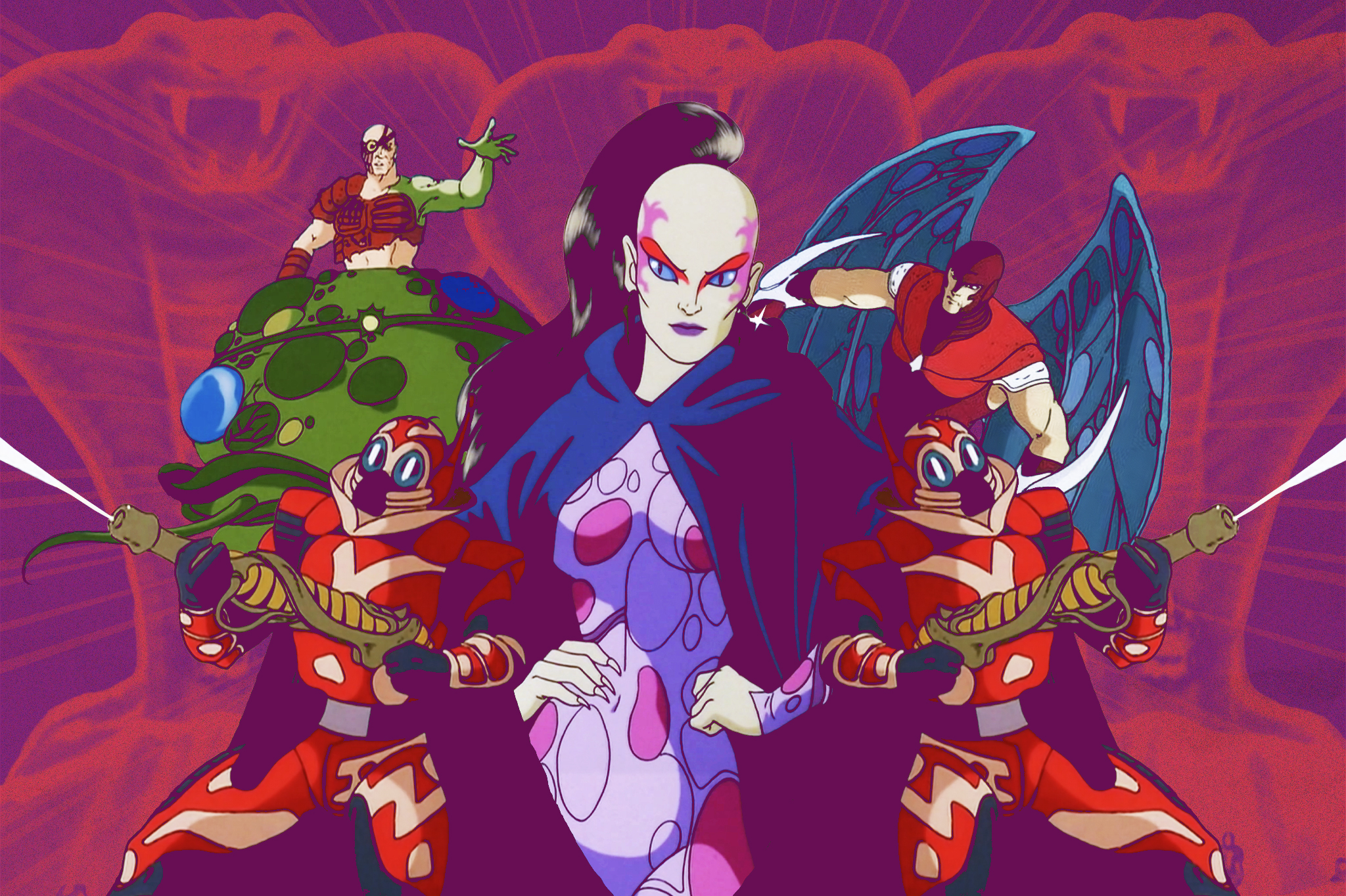


Behold, the Cobra-La Corpus — a comprehensive dissection of G.I. Joe's most insidious adversaries. Considered divisive upon their introduction in 1987's G.I. Joe: The Movie, the consensus around the secretive serpentine sect has evolved. From condemnation to celebration, let this unspooling body of work tell the tale.
After taking off in the '80s and soaring past the borders of "realism" in the '90s, G.I. Joe's boots hit the ground in the '00s — hard. After seven years of retirement, G.I. Joe: A Real American Hero returned to comic shelves with a new #1 issue — released by new Image Comics imprint Devil's Due Publishing in October 2001.
The realest American heroes of the '80s re-enlisted at the dawn of the ongoing war on terror. And while those early '00s comics did include lots of over-the-top camp that Larry Hama honed on his 12-year run, they also hewed much closer to reality. The esoteric and/or extravagant eccentricities that had snaked out of the franchise via Sunbow and DIC (or the influences of He-Man, Teenage Mutant Ninja Turtles, Captain Planet, etc.) were lopped off. G.I. Joe was a military action/thriller/intrigue franchise now, with just the slightest bit of sci-fi tech.
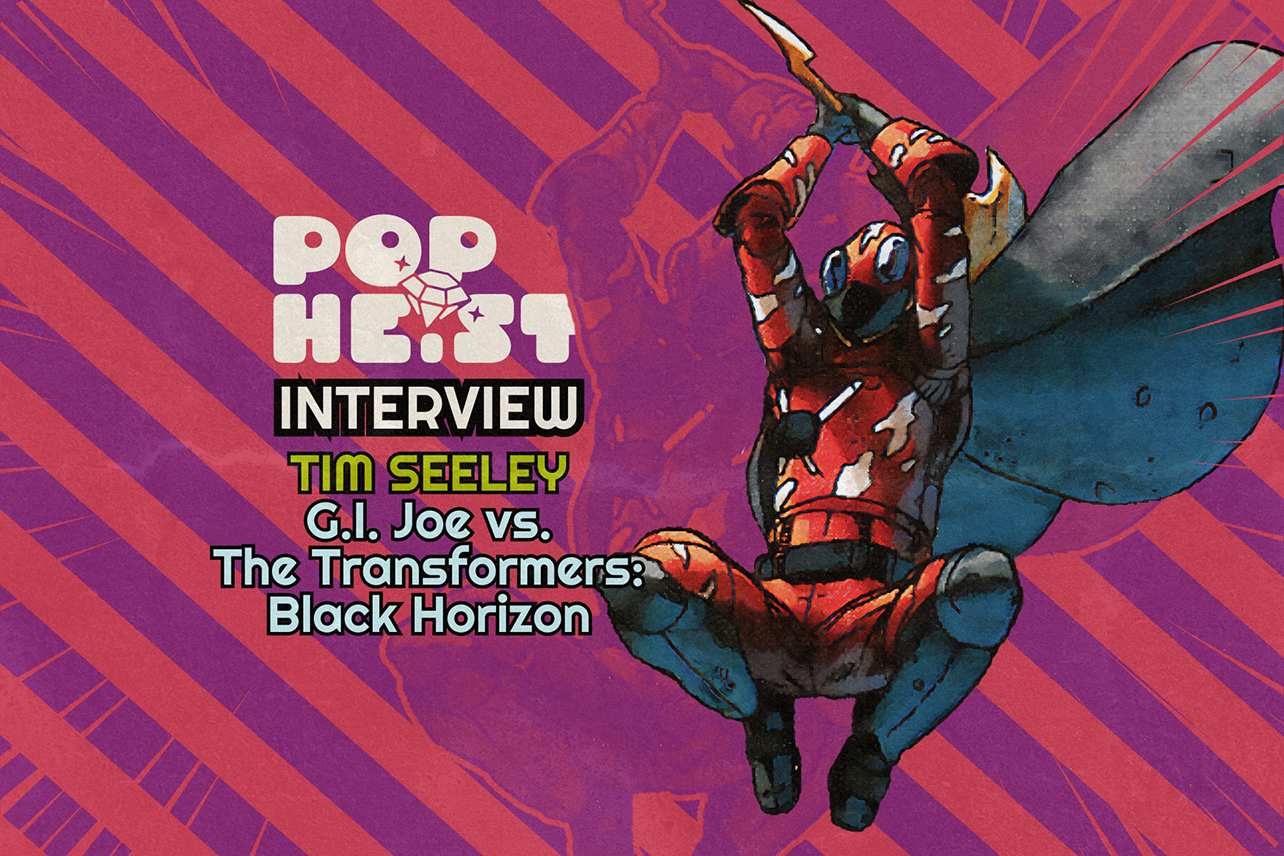
This is the era within which Tim Seeley rode hard for Cobra-La. Seeley made a name for himself at Devil's Due, as an artist on the relaunched G.I. Joe ongoing and as a writer with Hack/Slash, his own horror series. And of course, in the Venn diagram overlap of G.I. Joe and horror lies the realm of Cobra-La. If anyone was going to bring Cobra-La back from exile, it would be Tim Seeley — and that's what happened in the 2007 limited series G.I. Joe vs. the Transformers: Black Horizon.
Not counting the briefest of appearances in Marvel UK's Action Force Monthly #6 from November 1988, the denizens of Cobra-La — Golobulus, Pythona, Nemesis Enforcer, et. al — finally made their mark on the printed page. After nearly 20 years of dormancy (and derision), G.I. Joe's weirdest creations saw the light of day ... for a moment. The time was not right yet — but clearly things have changed since then, hence this whole project. And it just so happened that Seeley was attending the 2025 Twin Cities Con in Minneapolis, mere weeks after my move. Call it fate, as I was able to meet and converse with the man who helped pave the way for the modern G.I. Joe era.
This interview has been edited for clarity and content
Brett White: How were you able to bring Cobra-La back, and into the comics in a significant way for the first time?
Tim Seeley: When I worked at Devil's Due — I was on staff there, so when we were working on the G.I. Joe stuff, I was there every day as kind of like an editor, art director, whatever the hell we were working on. And when I first moved to Chicago to take the job at Devil's Due, one of the first things I told [founder, G.I. Joe writer] Josh [Blaylock] was, "We got to bring back Cobra-La." He's like, "No one wants Cobra-La. No one likes Cobra-La." But, when I was a kid, Cobra-La was the thing I loved about G.I. Joe because it was horror stuff. It was like, you know, Lovecraft, basically.
So Josh was convinced that fans did not like Cobra-La, and I didn't really have a temperature of what the fans were into. I wasn't that hardcore of a G.I. Joe guy. And then we go to conventions, and then it was like, "Oh, they do hate Cobra-La." They absolutely did. But when we started doing the Joe/ Transformers thing — Josh did the first one, and then I drew part of the second one. And then the third and fourth, he wasn't gonna be able to do it and he just said, "Do whatever you want." So the first one, I came up with doing the robot Serpentor, but I knew I was teeing up Cobra-La. So it took me years to get it going.
It seemed like Joe/Transformers, the world we'd established, that's the place where you get away with it, because it was kind of its own world. We had already set up a half Megatron/Serpentor, so there was plenty of room in there. But the the pitch I had was that the entire time for Cobra-La, they were the sort of heralds for Unicron, which makes tons of sense as a way to connect those universes. So when Josh [Williamson] does it now, he fucking owes me! So, I make sure that he knows that.
So the theory I'm working with, after talking to other creators who also always loved Cobra-La, is that what we're seeing now is a generational shift. Twenty years ago when you were trying to get people on board with this part of G.I. Joe, an older generation had the keys to the kingdom. Brian Flynn of Super7 said it's like the Ewok Line: if you were older in '87 you hated Cobra-La because you were like, "These are my military heroes. What is all this snake monster stuff?" But I was born in '84, so when I first saw the movie, I was like, "This is terrifying. This is wild. You're telling me Cobra Commander has been a snake man with multiple eyes this whole time?"
Going completely against the comic in which he's a car salesman. I'm older than you. I'm 48, so I was born '77. When the movie came out, I was 10.
But you grew up more interested in horror than military.
And I had the Cobra-La toys. I didn't have many G.I. Joes. I always got the weird ones. I was never into the military side of it. I tell the story a little bit in a in the back of Cold Slither, but when I was a kid, my little brother was super into to G.I. Joe. My other brother and I were big into He-Man. My dad's brother was in the Navy, and he served. He did all that cool, amazing stuff — he was on a submarine. But there was a picture in our hallway of my uncle in his Gung-Ho [dress uniform], and for me at six, seven, when G.I. Joe first started coming out, my thing was like, "Well ... that's just Uncle Gary," you know what I mean? Like, give me the fucking barbarian guy with the giant sword who rides a tiger. That made more sense to me.
And then the Cobra-La stuff was the shit that I like, weird fantasy stuff, monsters — monsters being the primary thing about it. But I also was attracted to Pythona. I thought she was really hot at age 10 when that movie came out.
Did you notice the lack of a Pythona toy as a 10 year old?
Yeah, I absolutely noticed it. I thought it was weird, and she was the coolest one. She's the one that did shit. I mean, Nemesis Enforcer is a cool idea, but as a character, he doesn't really do much. He just gets beat up by Sergeant Slaughter. But, in that era of toys, you're not getting girl figures.
When G.I. Joe vs. the Transformers: Black Horizon came out, what did fans think about seeing Cobra-La return on the printed page?
People were excited because I had not done it in the main series. At the Joe cons, I remember people being like, "All right, you gave Seeley his thing and he did it here — and that's fine, because he's not messing with the main shit." Because I had made it clear that I was a Cobra-La guy at lots of panels, so Joe fans knew.
"Give me the fucking barbarian guy with the giant sword who rides a tiger. That made more sense to me. And then the Cobra-La stuff was the shit that I like, weird fantasy stuff, monsters."
But you making that known and bringing them back gave people reason to start saying, "Well, I also like this."
And it was also like, if you're going with Transformers in the main series anyway, it gives you a whole lot of freedom. You're forgiven by a whole lot of other shit. And people also hated when Transformers was in Larry [Hama]'s G.I. Joe book, even though I loved that shit. I mean, that was when I came back to G.I. Joe.
Yes, the early '90s Andrew Wildman era, who you got to work with on Black Horizon.
Yeah, exactly — which was why I suggested Andrew. That was the stuff that I was reading. I loved his take on Transformers.
Have you noticed everyone coming around to your way of thinking in the last few years? Have you talked to Kirkman or Williamson about it?
Oh yes. And I complained to them! When Robert got the rights, he and I ended up talking about it. I don't know if this is public knowledge: when [Devil's Due] had the rights to it, Robert wanted to do some G.I. Joe stuff. And he had a pitch for a Snake Eyes mini series, written by Robert, and the pitch was "Snake Eyes on the moon." It was basically Snake Eyes on the moon. It was this crazy action thing, and it ended with this big fight in space, and Hasbro didn't go for it at the time. I don't remember exactly why, but I remember I was the one like, "No. Robert's idea is awesome. We have to do this." It was like 2005 or something. He and I talked about it on the phone, and I was like, "Man, I fought for you, but they just could not go for Snake Eyes on the moon. They didn't understand it." And he goes, I'll always remember what he said, like, "What's to understand, man? It's Snake Eyes on the damn moon!" But he remembered that I stood up for him. So he and I were talking on the phone, right after they got the rights, I just reminded him, you know, "Hey — remember, I fought for you?" And he did remember, and also he gave me credit for using the crazy stuff before ... So Robert knows. Josh probably won't give me no credit!
I think everyone has kind of realized, and with Masters of the Universe it's the same thing, where you can have your cake and eat it too. I think there was this fear at one point that you have to maintain the integrity of a brand or something like that. And then what people have come to realize is these are just toy things. They're crazy. There is no "integrity." You can have your super serious G.I. Joe stuff, but then you can also have your crazy stuff.
The Cobra-La Corpus
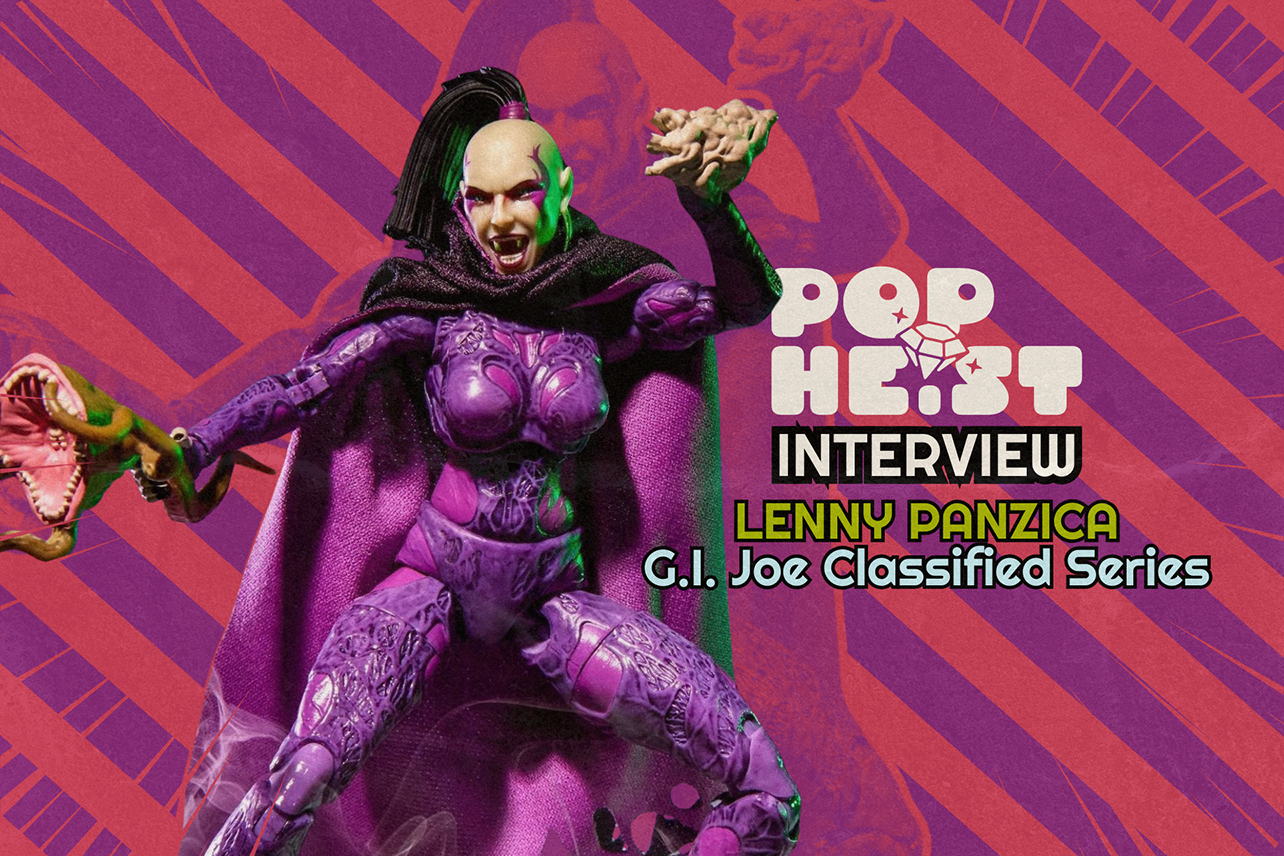
- I: Hasbro’s Lenny Panzica on Bringing Cobra-La to G.I. Joe Classified: “Snake People, Crab Armor, Let’s Go”
- II: "Can I Have Pythona?" — How One Email Changed Skybound's Energon Universe
- III: From Cringe to Canon: G.I. Joe Writer Buzz Dixon Is Finally at Peace With That Movie
- IV: Super7's Brian Flynn is Creating the G.I. Joes You Always Wanted: "Cobra-La Is Really Important for Us"
- V: "Oh, They DO Hate Cobra-La" — How Tim Seeley Gave G.I. Joe's Devils Their Due
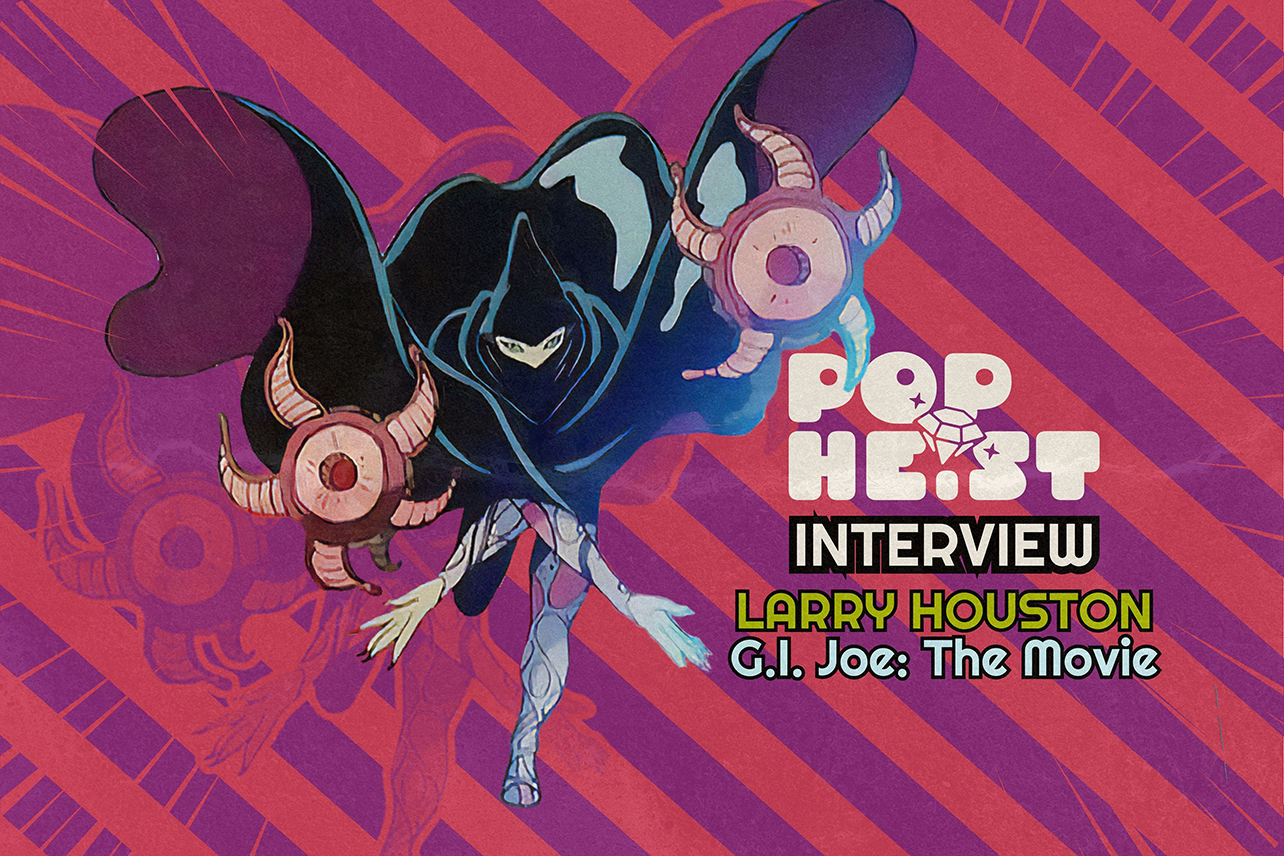
- VI: A Better Cinema: Larry Houston Brought Anime to a Real American Hero With G.I. Joe: The Movie
- VII: The Complete History of Cobra-La (COMING SOON)
If you haven't already, consider supporting worker-owned media by subscribing to Pop Heist. We are ad-free and operating outside the algorithm, so all dollars go directly to paying the staff members and writers who make articles like this one possible.