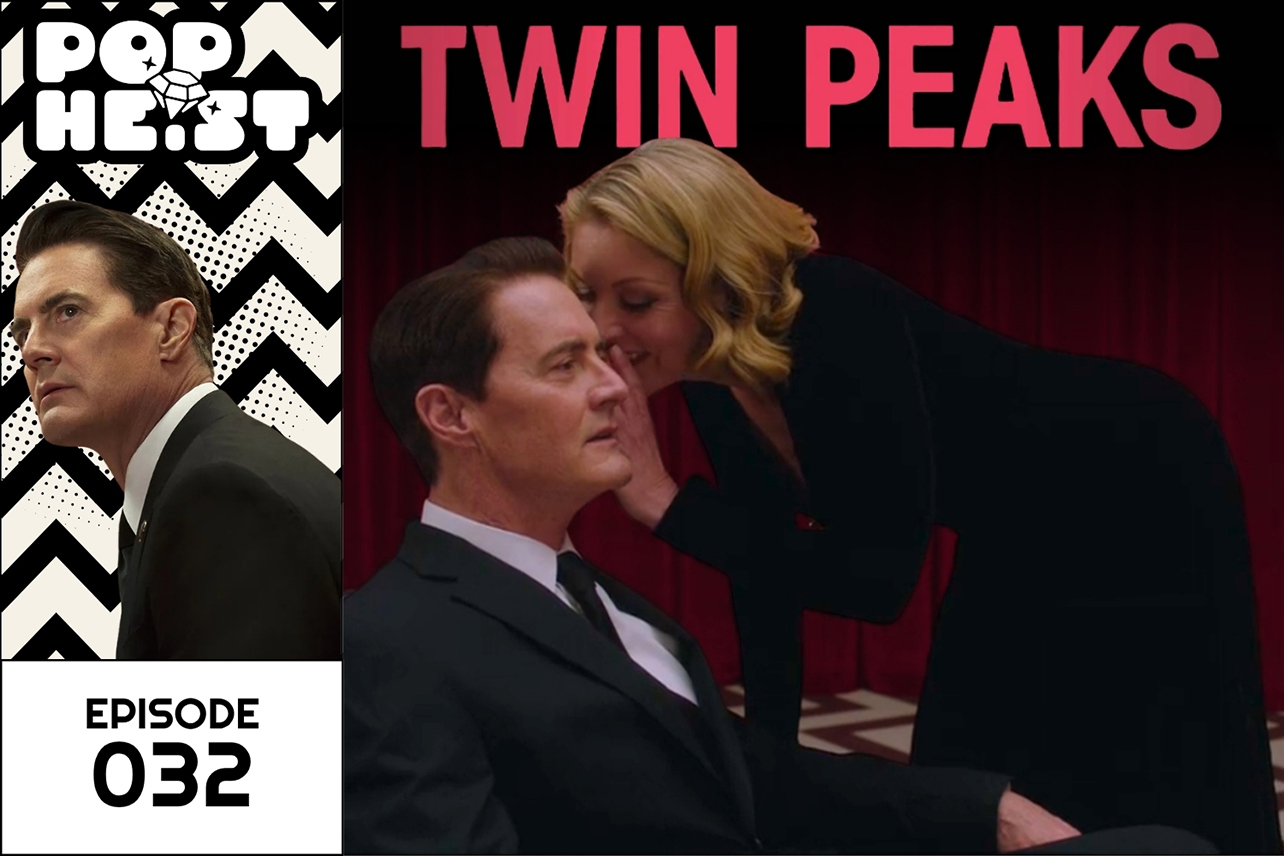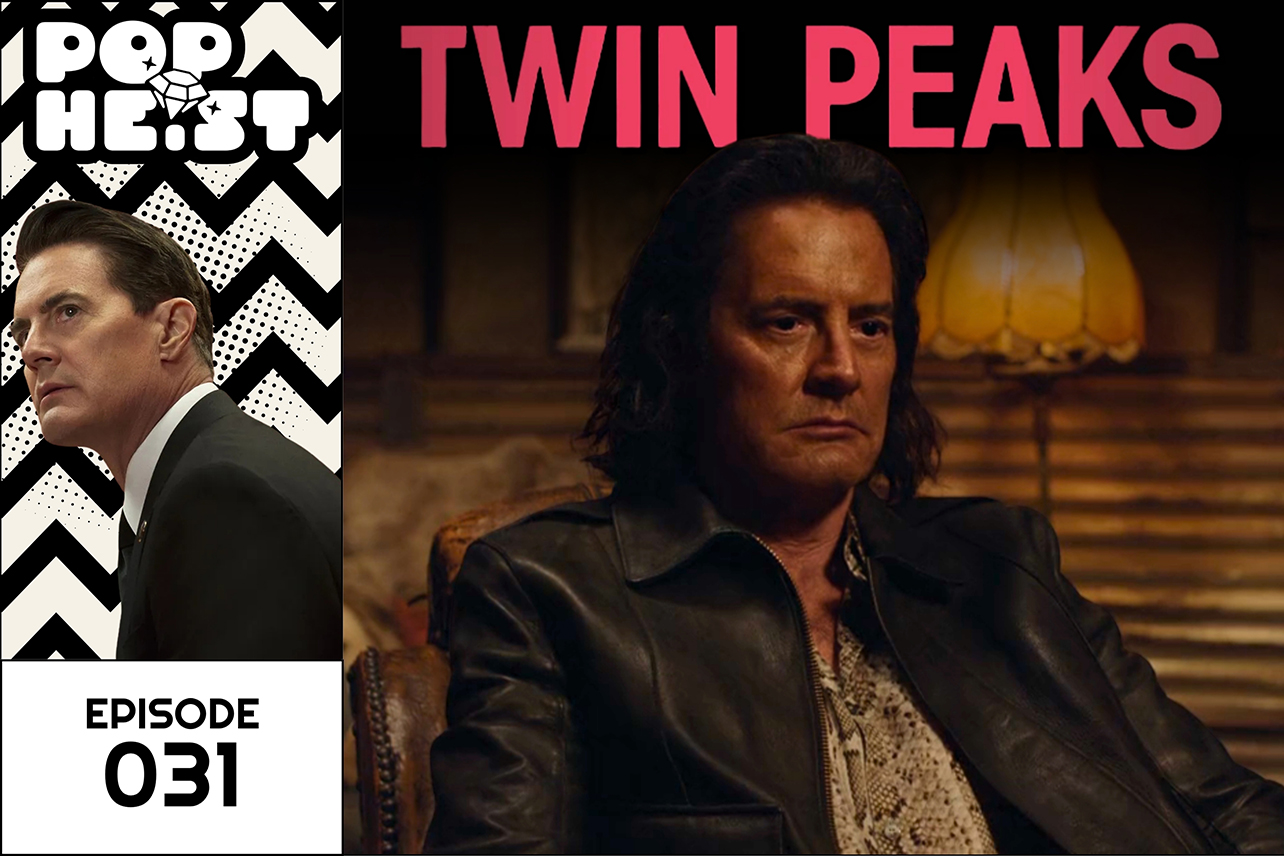


In PRESTIGE PREHISTORY, Pop Heist critic Sean T. Collins takes a look at classic TV shows that paved the way for the New Golden Age of Television — challenging, self-contained series from writers and filmmakers determined to push the medium forward by telling stories their own way.
Twin Peaks Season 2, Episode 7
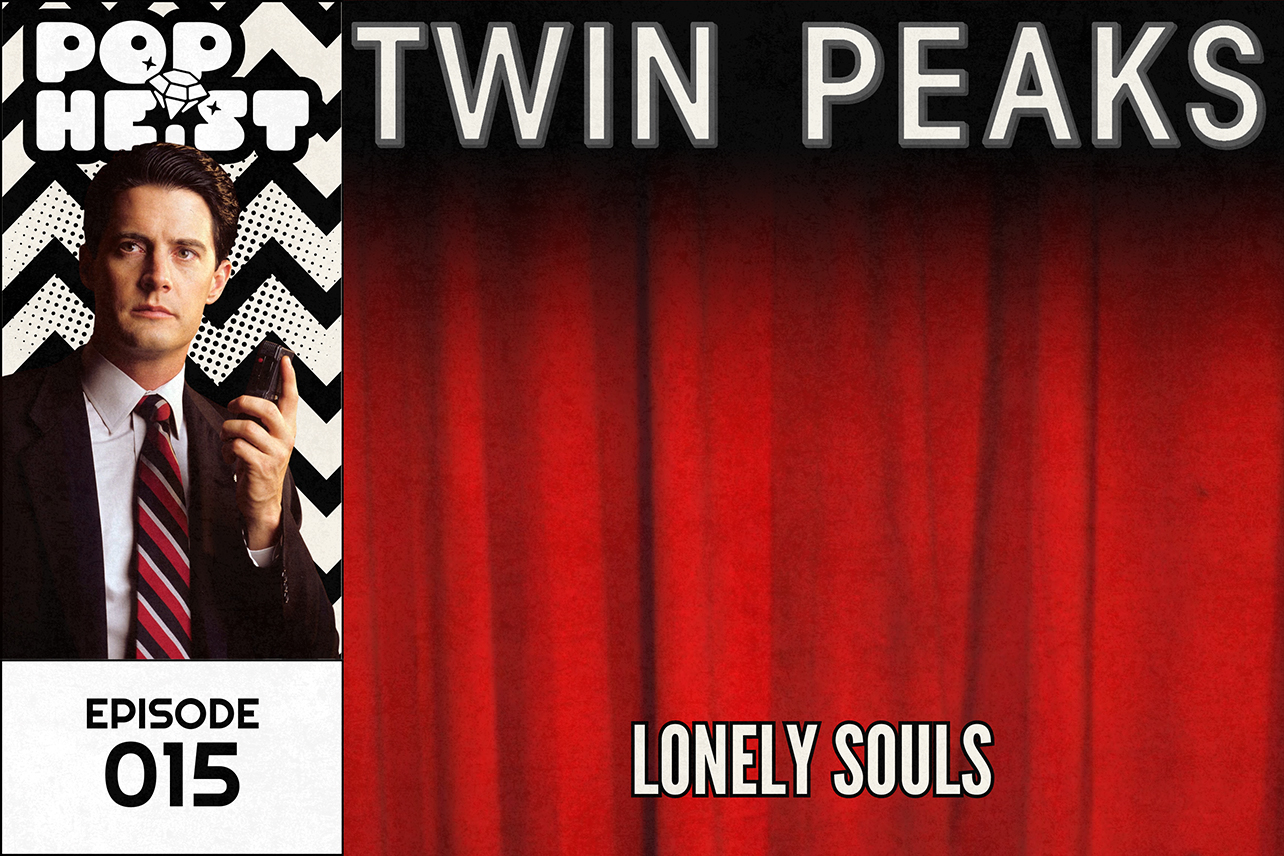
“Episode 14” aka “Lonely Souls”
[NOTE: The pilot episode of Twin Peaks is not numbered; this, the fifteenth episode overall, is officially designated “Episode 14.”]
Original Airdate: November 10, 1990
Writer: Mark Frost
Director: David Lynch
Cast: Kyle MacLachlan, Michael Ontkean, Mädchen Amick, Dana Ashbrook, Richard Beymer, Lara Flynn Boyle, Sherilyn Fenn, Warren Frost, Peggy Lipton, James Marshall, Everett McGill, Jack Nance, Kimmy Robertson, Ray Wise, Joan Chen, Harry Goaz, Michael Horse, Sheryl Lee, Grace Zabriskie, Wendy Robie, Al Strobel, David Lynch, Fumio Yamaguchi, Gary Hershberger, Catherine E. Coulson, Julee Cruise, Carel Struycken, Hank Worden, Frank Silva
WARNING: THE BIGGEST SPOILER IN THE HISTORY OF TELEVISION AHEAD
You want to know who killed Laura Palmer?
Are you sure about that?
All right, then. Here you go. Now you know. Are you happy? Are you happy you know who killed Laura Palmer?
Ray Wise wasn’t. “I was praying it wasn’t going to be me,” the actor told interviewer Brad Dukes in the Twin Peaks oral history Reflections. “The whole idea that Leland would kill his own daughter was extremely distasteful to me. I had just had my own baby daughter in 1987, so that whole idea didn’t sit well with me. I was hoping against hope it wasn’t me.” Now we know Wise’s hopes and prayers were not answered.
After years of sexual assault and abuse, after driving her faster and faster into self-hatred and self-destruction, after concealing his true face from the world for god knows how long:
Who killed Laura Palmer? Her father, Leland Palmer.
There it is. The mystery has been solved, just as ABC network executives commanded.
Are you glad you found out? Are you glad you got what you wanted?
The murder of Maddy Ferguson by her uncle Leland Palmer, possessed by the murderous spirit called Bob, is the scariest scene in the history of television. Period, point blank, end of debate. I’ve watched a lot of frightening TV. It’s a special interest of mine, and in any and every great horror show I’ve watched — The Twilight Zone, The X-Files, Lost (seriously), Hannibal, Channel Zero, The Terror, Too Old to Die Young, Them, Monster, Alien: Earth, It: Welcome to Derry — I have yet to see its equal. In this sequence, the core creative team of writer Mark Frost and director David Lynch are able to blend harrowing and upsetting psychological horror with majestically malevolent supernatural horror, in a way that has only ever been topped by later installments in the Twin Peaks saga itself.
The build-up to Maddy’s murder is intercut with the arrest of Benjamin Horne for Laura’s. In a way, this is a delightful development — a rich asshole and sex creep, who’s already admitted to his furious daughter Audrey that he had a sexual relationship with Laura and who shows up all over her secret diary, who appears to have been implicated by Mike the One-Armed Man, who plotted the murder of Agent Cooper and Catherine Martell and however many others, who oversaw an international human trafficking operation from his department store’s perfume counter, finally getting his. He even attempts to flee in a panic, then repeats “No, no, no!” like a tantrum-throwing child as our heroic lawmen haul him away.
But you can sense that something is off, something is wrong, something is happening. We’re getting all these shots of the Palmer living room, which the camera has already crept across like a stalker when Maddy tells Uncle Leland and Aunt Sarah she plans to go home earlier that day. The turntable spins endlessly, the needle locked in the silent end of the vinyl record’s groove. (It’s Louis Armstrong doing a slightly groovy rendition of “What a Wonderful World.”)
And Sarah Palmer slides down the stairs of her home on her belly, hand extended, clutching the carpeted steps like a revenant. She seems to have been drugged. She calls her husband’s name. She makes it down to the living room.
Wide eyed and awestruck, she beholds a pale horse. Then she passes out.
Leland, meanwhile, checks his look in the mirror. But he is not alone. The face of Leland Palmer smiles into the mirror, and the face of Bob grins back.
In one of the show’s most unnerving shots, Leland turns and walks back into the living room in the foreground, while we watch Bob do a mirror image of the same thing in the reflection behind him.
By the time Leland puts on latex gloves, we know what’s going to happen, even if we don’t want to admit it to ourselves.
Suddenly we can hear Maddy calling for her aunt and uncle. There’s a terrible smell, like something burning. Can they smell it? She descends to the bottom of the stairs, into a blinding white spotlight. She looks across the room, and there, standing where her Uncle Leland stands, is the man from her nightmarish vision.
Maddy screams. She flees back up the steps. Bob gives chase. Both disappear from view. For several excruciating seconds we can only hear their struggle.
Then Maddy is dragged kicking and screaming back down into the living room and beaten to death.
It goes on seemingly forever. It’s ghastly and cruel and truly hard to watch. Slow motion and slowed-down audio of Maddy and Bob’s screams enhance the sense that we — and Maddy — are trapped in some infinite hell.
Throughout her murder, Bob and Leland exchange places. Bob punches her senseless, Leland holds her in his arms. Leland weeps for Laura, Bob clamps his lascivious mouth on Maddy’s chin and neck. The horrible implication is that Leland is conscious but not in control when Bob commits his crimes — that the parasite allows its host to taste the suffering it is creating while wearing his skin.
The even more horrible implication is that Leland has been aware of this all along, but lacked the courage to come forward. Perhaps no one would have believed him. But perhaps Maddy would still be alive.
By the end of the scene we see things as normal people might see them, as opposed to “the gifted and the damned,” like Laura and Maddy. Instead of seeing Bob’s long-haired, denim-clad form, we see Leland, unequivocally possessed by Bob, his breath heaving. He refers to his host in the third person, and he talks to Maddy, whom he’s beaten so badly she can no longer reply. Eventually, he screams at her.
“Leland says…you’re going back…to Missoula…MONTANA!!!”
Then he smashes her head into a framed painting of Missoula on the wall, killing her instantly.
We viewers are not the only people who can tell that something is wrong. As soon as Coop, Harry, Andy, and Hawk return to the station with Ben Horne in cuffs, the Log Lady appears, her telltale wooden companion looming into the extreme foreground of the frame.
“We don’t know what will happen, or when,” she tells Cooper and Harry, “but there are owls in the Roadhouse.”
Cooper, an established psychic sensitive, can feel it too. “Something is happening, isn’t it, Margaret.” He and Harry, who by now it seems has learned not to question Cooper’s investigative techniques, accompany the Log Lady to the town’s nighttime hot spot to follow up on her clairvoyant tip.
There are no owls or anomalies of any kind to speak of when the trio show up and sit down. Donna and James are there, reconnecting now that Maddy is on her way out of town. Bobby Briggs is there too, smoking away the sorrows of the shitty life he signed himself and (primarily) Shelley up for when he had the bright idea of letting Leo Johnson recuperate at home. On stage is the same ethereal singer we saw way back in the pilot.
But as Cooper watches her perform in front of the Bang Bang Bar’s familiar red curtains, they fade away. In their place stands the Giant from Cooper’s dreams.
“It is happening again,” he says gently. “It is happening again.”
Then, to the sound of a record endlessly skipping, Maddy Ferguson is murdered.
When we rejoin the Roadhouse, the Giant fades away, leaving Cooper uncertain. Bobby Briggs suddenly looks stricken, as though he too can feel something terrible has happened. Donna bursts out into unexplained, uncontrollable tears, sobbing in James’s arms.
Over at the bar, a familiar figure turns and sees Agent Cooper. It’s the elderly room service waiter who brought him his glass of warm milk the night he was shot, the night he first saw the Giant. The waiter gets up and hobbles over to the table where Dale, Harry, and Margaret are sitting. He reaches out and puts his hand on Coop’s shoulder.
“I’m so sorry,” he says.
We fade from one last closeup on Agent Cooper to the red curtains. The credits roll over a freeze-frame of his face, his eyes asking a question with a horrible answer.
–
Other things happen in this episode too. Audrey confronts Ben about his ownership of One-Eyed Jack’s, her secret identity as the “new girl” he came on to, and his relationship with Laura, who briefly worked there. It’s her tip to Coop that gives the cops what they need to make the arrest.
Bobby and Shelley realize how difficult it will be to make ends meet on the meager insurance money they receive for Leo’s home care. Shelley has to quit her job at the Double R, though Norma assures her she’s welcome back anytime.
Drooling and spitting up, Leo begins repeating the phrase “new shoes” in a high-pitched child’s voice. Bobby and his old pal Mike interpret this as a clue, and find a microcassette like the ones Laura recorded for Dr. Jacoby hidden in his boot.
Mr. Tojamura, who’s on the verge of signing into Ben’s Ghostwood project when he is arrested, reveals himself to be none other than Catherine Martell in an ethnically dubious disguise. He — sorry, she — does this by breaking into Pete’s — sorry, her — house, confessing his/her attraction to the friendly fisherman, and planting one right on his kisser. It’s so problematic and so adorable, especially when Pete can’t stop laughing with joy while telling her how terrible she looks.
Nadine, who still thinks everyone’s in high scool, crushes a milkshake glass with one bare hand. Coop’s supervisor, Gordon Cole, leaves town for a classified case in Oregon. A full contingent of Navy sailors occupies the Great Northern, all of them bouncing rubber balls for some reason.
And Harold Smith commits suicide. Apparently too devastated by Donna’s perceived betrayal to go on, he tears up Laura’s secret diary, then hangs himself in his greenhouse. His suicide note reads “J’ai une âme solitaire,” translated by Coop as “I am a lonely soul.”
These are the exact words spoken by that strange little boy in that strange old woman’s house when she put Donna on Harold’s trail to begin with. What did those people know, and how could they possibly have known it?
–
I’ve given some thought to the sublime in cinema — moments when it feels what I’m watching has somehow transcended earthly limitations, visually expressing a feeling so huge that it’s impossible for words to articulate. I realize now that for me, this happens in horror more often than anywhere else. In fact, it may only happen in horror.
It happens when characters are made to confront some symbolic representation of…not death, though that’s part of it, and not evil, though that’s part of it too. They confront the darkness we fear exists at the world’s heart, the terrible void that acts as a megapredator for our tiny souls. They confront the true black.
I think of moments like Chief Brody on the beach, the camera dolly-zooming on him Vertigo style as he sees that the shark he hoped had been killed but knew in his heart had not claim another victim. Father Karras and Father Merrin, chanting “The power of Christ compels you!” at a hovering Regan MacNeil. Wendy Torrance turning a corner and watching an elevator unleash a river of blood. The cops gazing down the hall of Barton Fink’s hotel and seeing a demon in human form amidst a blazing inferno. The end of Mulholland Drive. The end of The Zone of Interest.
And this episode of Twin Peaks. Maddy and Leland and Bob and Sarah in the living room. Coop and Harry and the Log Lady and the Giant and the waiter and Bobby and Donna and James in the Roadhouse. Evil incarnate, drawing out grief from people who don’t even yet know why they’re grieving — only that there’s been some tear in the fabric in the world, one that they can sense but never repair.
When Mark Frost and David Lynch’s credit appeared against the red curtains, I couldn’t hold back anymore. The tears I’d withheld came pouring out. This is one of the most deeply awful and awesome things ever aired on television. I have not forgotten it since I first watched it nearly three decades ago. I will never forget it for as long as I live.
NEXT: "Drive with a Dead Girl"
If you haven't already, consider supporting worker-owned media by subscribing to Pop Heist. We are ad-free and operating outside the algorithm, so all dollars go directly to paying the staff members and writers who make articles like this one possible.