
Masters of the Universe
Writers: Chris Butler, Aaron Nee, Adam Nee, David Callaham (screenplay); Nee, Nee Alex Litvak, Michael Finch (story)
Director: Travis Knight
Cast: Nicholas Galitzine, Camila Mendes, Alison Brie, James Purefoy, Morena Baccarin, Jóhannes Haukur Jóhannesson, Kristen Wiig, Jared Leto, Idris Elba
I had the chance to see Masters of the Universe at a private press screening before the world premiere in Los Angeles. While I missed the spectacle of walking through the recreated gates of Castle Grayskull, there was something special about experiencing the film in a smaller, more intimate setting. For someone who has loved He-Man and the world of Eternia for as long as I can remember, this wasn't just another movie screening — it felt like the culmination of a lifelong fandom.
That said, I should be upfront: I'm biased. He-Man has meant a great deal to me since I was six years old, and this is, in many ways, the live-action movie I've been waiting decades to see. Is it perfect? No. Is it the definitive Masters of the Universe film? Not quite. But it gets far more right than wrong, and the notes it hits are loud, clear, colorful, and heartfelt.
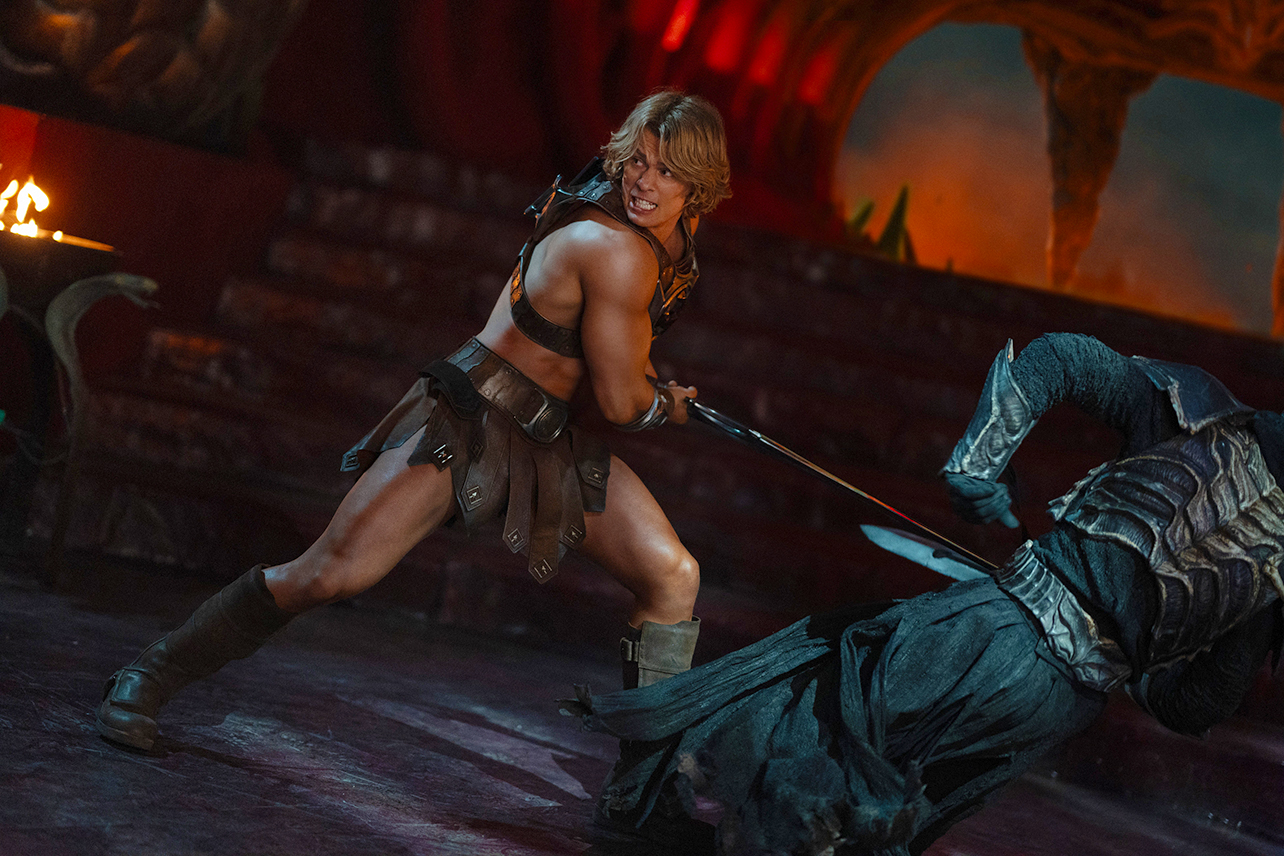
The biggest surprise of the film is Nicholas Galitzine. Relatively unknown when he was first cast, he completely embodies what I've always imagined both Prince Adam and He-Man should be. For most of the movie he's simply Adam Glenn, a young man trying to understand who he is before reclaiming the Sword of Power and the destiny that comes with it. He has an effortless charm and sincerity that makes his journey easy to invest in.
As Adam, he's uncertain but never weak. He knows deep down who he's meant to become, even if he hasn't fully accepted it yet. Once he embraces the Power, Galitzine successfully bridges the gap between the vulnerable young man and the legendary champion of Grayskull.
There are definitely some story elements that require viewers to just roll with them. Adam is sent to Earth as a child by his mother, who herself has ties to Earth, and then we jump forward roughly twenty years. How did he survive? How did he get a job at an HR firm? How did he obtain a Social Security number? The movie never really addresses any of it. Is it weird? Absolutely. Does it matter? Not really. The film wisely focuses on the story it wants to tell rather than getting bogged down in logistical details.
Camila Mendes is also terrific as Teela, once again in the role of Adam's childhood friend and protector. She balances vulnerability, confidence, and enough sass to make every scene she's in more entertaining. Their chemistry feels natural and gives the emotional core of the movie a solid foundation.
Then there's Idris Elba as Duncan, better known as Man-at-Arms. His casting caused debate when it was announced, but as someone who jokingly fan-cast him years ago, I felt incredibly vindicated watching him step into the role. Elba brings intelligence, strength, loyalty, and a surprising amount of sadness to Duncan. This isn't the confident military commander fans might expect. This is a man broken by loss, failure, and years under Skeletor's oppressive rule. His arc of redemption ends up being one of the film's strongest emotional threads.
One thing I think some audiences may misunderstand going in is what kind of story Masters of the Universe is trying to tell. This isn't The Lord of the Rings. It's not attempting to be a sprawling fantasy epic weighed down by mythology and political intrigue. It's much closer in spirit to something like Thor: Ragnarok: colorful, adventurous, funny, and accessible. But beneath all of that spectacle is a simple lesson about heroism.
The movie repeatedly asks what the Power actually means. It's not physical strength alone, but compassion and sacrifice; it's choosing to lead with an open heart instead of a closed fist.
That theme has always been present in He-Man stories, and it's encouraging to see the filmmakers understand it rather than simply turning the character into a generic fantasy warrior.
I'll avoid discussing the real-world baggage surrounding Jared Leto's casting, especially given how noticeably absent he's been from much of the film's promotional campaign. What I can say is that he's phenomenal here.
Frank Langella famously played Skeletor as a Shakespearean tyrant in the 1987 film. Leto takes a completely different approach, leaning into the character's theatricality, vanity, and endless hunger for power. This Skeletor is a drama queen of the highest order, and it works beautifully. He's funny, menacing, selfish, and completely convinced of his own greatness. In other words, he's Skeletor.
Equally enjoyable is Allison Brie as Evil-Lyn. She absolutely devours every scene she's given. Whether she's delivering cutting dialogue or reveling in magical mayhem, Brie brings an infectious energy that makes Evil-Lyn one of the film's standout characters.
The aspect of the film that caught me most off guard was the music because the score is an absolute monster. Composer Daniel Pemberton (who I'm personally rooting for when Oscar noms roll out for Project Hail Mary) and the legendary Queen guitarist Brian May deliver a synth-metal theme that immediately grabbed me from the opening moments. The prologue, in which Adam explains Eternia, Grayskull, and the nature of the Power, is elevated tremendously by the music underneath it. I've been listening to the track "Eternia" on repeat ever since.
The soundtrack feels like a collision of fantasy adventure and heavy metal. At various points it reminded me of Jerry Goldsmith's from the director's cut of Legend, Basil Poledouris' Conan the Barbarian, and the raw energy of Metallica. It's grand, magical, heroic, and surprisingly emotional.
If the movie stumbles anywhere, it's in balancing its humor and drama. The jokes themselves generally work, and the film is funnier than I expected. The problem is that some of the more serious emotional beats — particularly those involving Duncan's guilt and trauma — occasionally clash with the lighter moments surrounding them. The movie eventually finds its footing, but there are stretches where it feels like two slightly different films competing for attention. It's never enough to derail the experience, but it is noticeable.
Visually, this movie is a triumph. Director Travis Knight promised a "riot of color," and that's exactly what he delivers. Rather than sanding down the bright, sometimes outrageous aesthetic of the toys and Filmation cartoon, the film embraces it wholeheartedly. Cringer's vibrant jungle green, Skeletor's unmistakable blue skin, Man-at-Arms' earth-toned armor, and the grandeur of Castle Grayskull all pop from the screen.
More importantly, the world feels tangible. It feels lived-in. It feels like a place rather than a collection of digital backdrops. In an era when so many blockbuster fantasy films look oddly muted and interchangeable, Masters of the Universe proudly embraces its weirdness and its color palette. The result is a world that feels alive.
There are Easter eggs everywhere for longtime fans. References to the classic series, nods to decades of lore, and enough deep-cut moments to make dedicated fans grin from ear to ear, yet none of it overwhelms newcomers. The movie tells a complete story first and rewards longtime fans second.
Was this movie made for the hardcore He-Man faithful? Absolutely.
And that's okay.
Masters of the Universe isn't perfect. The tonal balance occasionally wobbles, some story questions are left hanging, and there is room for future installments to refine the formula. But the heart is there. The wonder is there. Most importantly, the understanding of what makes He-Man special is there.
With pre-credit, mid-credit, and post-credit scenes all pointing toward a larger future, I sincerely hope this is only the beginning. There's still room to grow, room to improve, and room to tell an even better story next time. But for now, after waiting most of my life for a live-action He-Man movie that truly understands the world of Eternia, I walked out of the theater with a smile on my face.
By the Power of Grayskull, they actually did it.
If you haven't already, consider supporting worker-owned media by subscribing to Pop Heist. We are ad-free and operating outside the algorithm, so all dollars go directly to paying the staff members and writers who make articles like this one possible.