

You gotta respect the restraint. There's a lot to respect about Skybound's Energon Universe, but you gotta respect the restraint — especially when it comes to the G.I. Joe corner of said universe.
Compared to fellow ongoings Void Rivals and Transformers, G.I. Joe still feels lean (complimentary) a year into its run. We're 12 issues deep and still dealing with the fallout of the very first clash between G.I. Joe and Cobra, more or less. The storytelling is pared-back in a way that makes every foundational brick laid feel load-bearing. Instead of expanding the scope, adding dozens of characters, rushing through locations and massive reveals, writer Joshua Williamson has treated his painstakingly reimagined Joe-verse like a firearm — one that he's learned how to disassemble and reassemble with his eyes closed before setting foot in a firing range.
With G.I. Joe #13, the first chapter of "Dreadnok War," Williamson takes aim — and bullseye, baby.
SPOILERS AHEAD, BTW.
The premise is, as always with this series, no-frills: Cobra is out of Energon and the components needed to make more of it. The solution: rally the allies that the terrifyingly enigmatic Cobra Commander and imposing Destro have amassed across this ongoing and their respective limited series and go shopping. And that odd Energon signal, the one pulsating like a heartbeat in the middle of the Chihuahuan Desert? The Commander will see to that one himself, thank you.
Let's talk about restraint again, because even as he gears up for the biggest story of the series to date (at least the most heavily-publicized), Williamson is still holding back here to great effect.
The plots of Skybound's G.I. Joe have never been complicated; like the artists Williamson works with on the series, specifically last arc's Andrea Milana and the returning OG artist Tom Reilly, the book is very less-is-more. Why try to confuse readers with a plot full of nonlinear fake outs and layers of impenetrable exposition? G.I. Joe issues are built around action sequences and character dynamics, sparse if you try to describe the issue to a friend but rich with detail as you absorb it, panel by panel.
That's where the opening salvo of "Dreadnok War" succeeds. In the macro sense, this is a classic Sunbow-era G.I. Joe mission: there's a MacGuffin that's been split to pieces and teams of Joes and Snakes have to trot around the globe to find them first. The smile that spread across my face the instant I read CC say, "They will go to these different locations on Earth, find the raw Energon and report back to us." I could hear "and now back to G.I. Joe!"
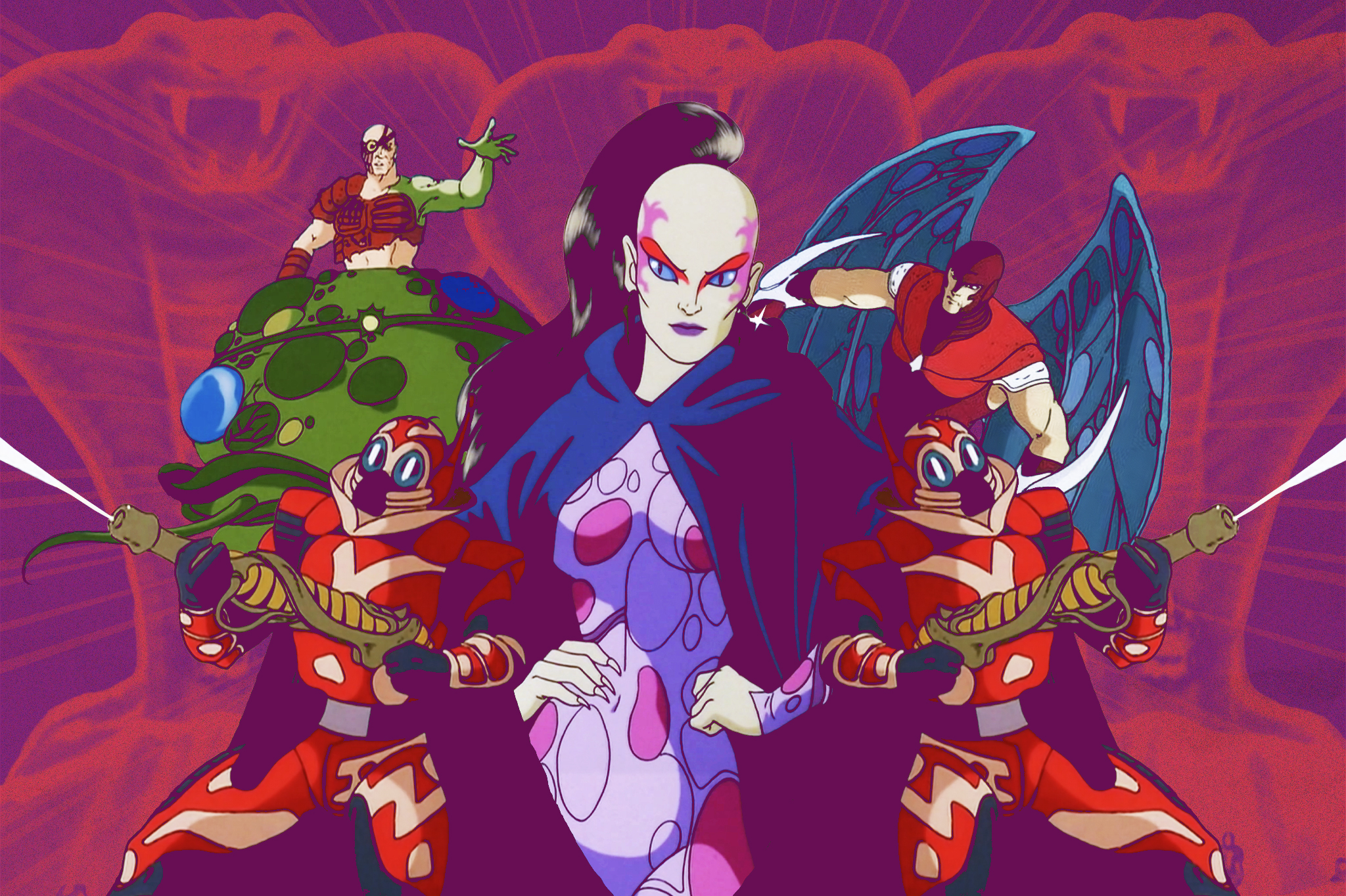
But look at what's going on in the micro sense. Cobra Commander's treating everyone around him as pawns to move around the board — and Ripper, Dreadnok-turned-Viper (is he a Viper? Sure), has witnessed firsthand where Cobra Commander's sociopathic tendencies lead. Plus, this slow burn storytelling has given space to Destro, Major Bludd, and the Crimson Twins to operate independently. We know who they are as individuals, what they're capable of. As Bludd says at the issue's climax, he may be "the new guy" but he "don't like vague orders." These aren't pawns, evidenced by Destro's apparent checkmate on the last page.
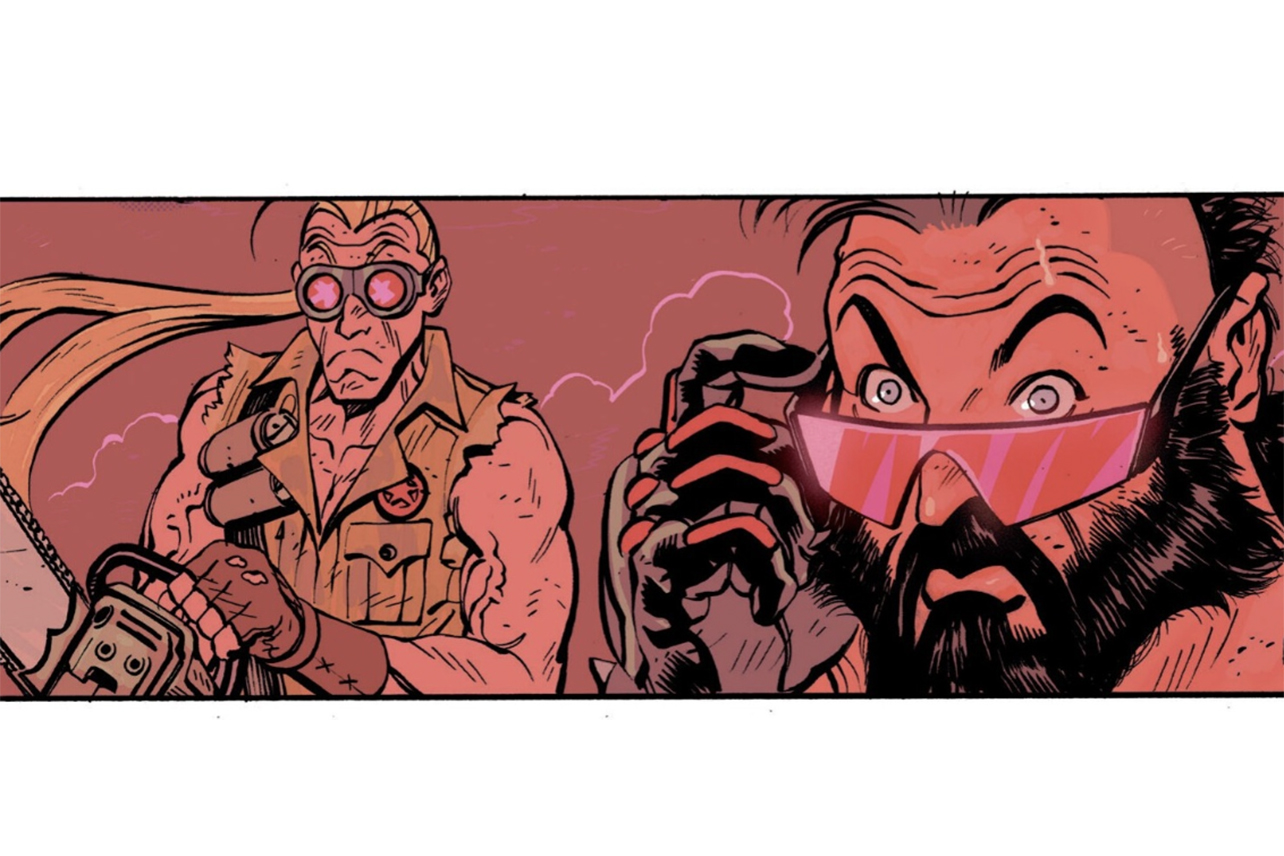
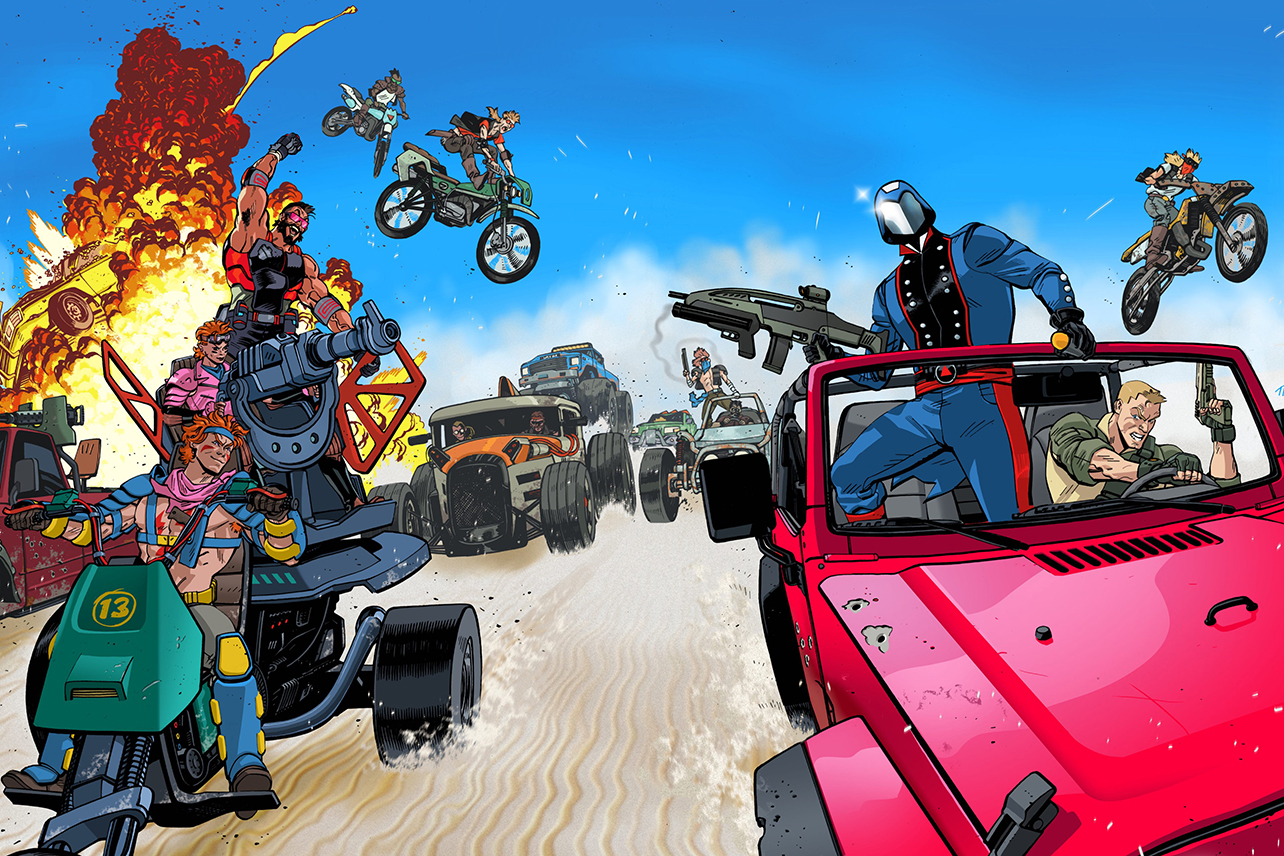
And that's not all! This issue cashes in chips Williamson won back in the Cobra Commander limited series by giving the two big page-turn moments to Ripper and the Dreadnoks. So often treated like third banana (at best) in the Dreadnoks bunch, Ripper gets a standout moment with his heel face uh, I'll say "jaw turn" considering his weapon of choice. He uses his jaws of life, fresh from his 1985 figure, to crush CC's deadly robo-hand, cementing his return to form as a Dreadnok.
And that's! Not! All! There's the whole other half of the equation, the G.I. Joe half. Duke gets pulled away from leave — which he took to visit the grave of his dead friend Tyler Frost, whose death in the hands of Starscream led to pretty much all of this for Duke — in order to investigate that pulsating Energon signal. Of course Duke runs afoul of Cobra Commander, setting up a rematch that turns into an ersatz team-up when Duke realizes that he has to save the snake charmer from Cobra if he wants any closure on Tyler's death.
Not a lot going on plot-wise, right? There's Energon, Cobra wants Energon, and a double-cross (and pair of handcuffs) leaves Duke and Cobra Commander on the run from a bunch of pissed off Dreadnoks while Destro stages a coup at home. Like, you want restraint? Sixty percent of the issue takes place in the desert with three characters making all the moves. But for those of us who have been here from the jump? This one issue pulls in threads from the Duke, Cobra Commander, and Destro limited series and ties them to the dangling plots from the ongoing's first arc.
And all of this is executed with the cinematic and dynamic clarity that artist Tom Reilly and colorist Jordie Bellaire have made the book's M.O. Again, G.I. Joe as a franchise has inclinations towards excess. The way Reilly and Bellaire hold back, with solid line-work, (mostly) realistic proportions, precise staging, and moody palettes — it makes all of their indulgent choices pop. Take the comic-book-y reaction shots complete with speed lines, or the way the coloring shifts to an off-balanced, almost VHS aesthetic the instant the Dreadnoks roll in.
These choices make for a visually dynamic and complex experience without stripping the book of fun for "realism" or cluttering things up with big guns and gritted teeth.
G.I. Joe #13 alone is itself a perfect example of what makes this series, this era, so much fun. It's all killer, no filler. In an era where we're always given more and somehow left wanting even more, G.I. Joe is proving that you can do satisfying, entertaining blockbuster storytelling by holding back, biding time, and picking moments. And when the moment is right? Bang.
G.I. Joe #13 is in stores now. G.I. Joe #14 drops on November 19.
If you haven't already, consider supporting worker-owned media by subscribing to Pop Heist. We are ad-free and operating outside the algorithm, so all dollars go directly to paying the staff members and writers who make articles like this one possible.