
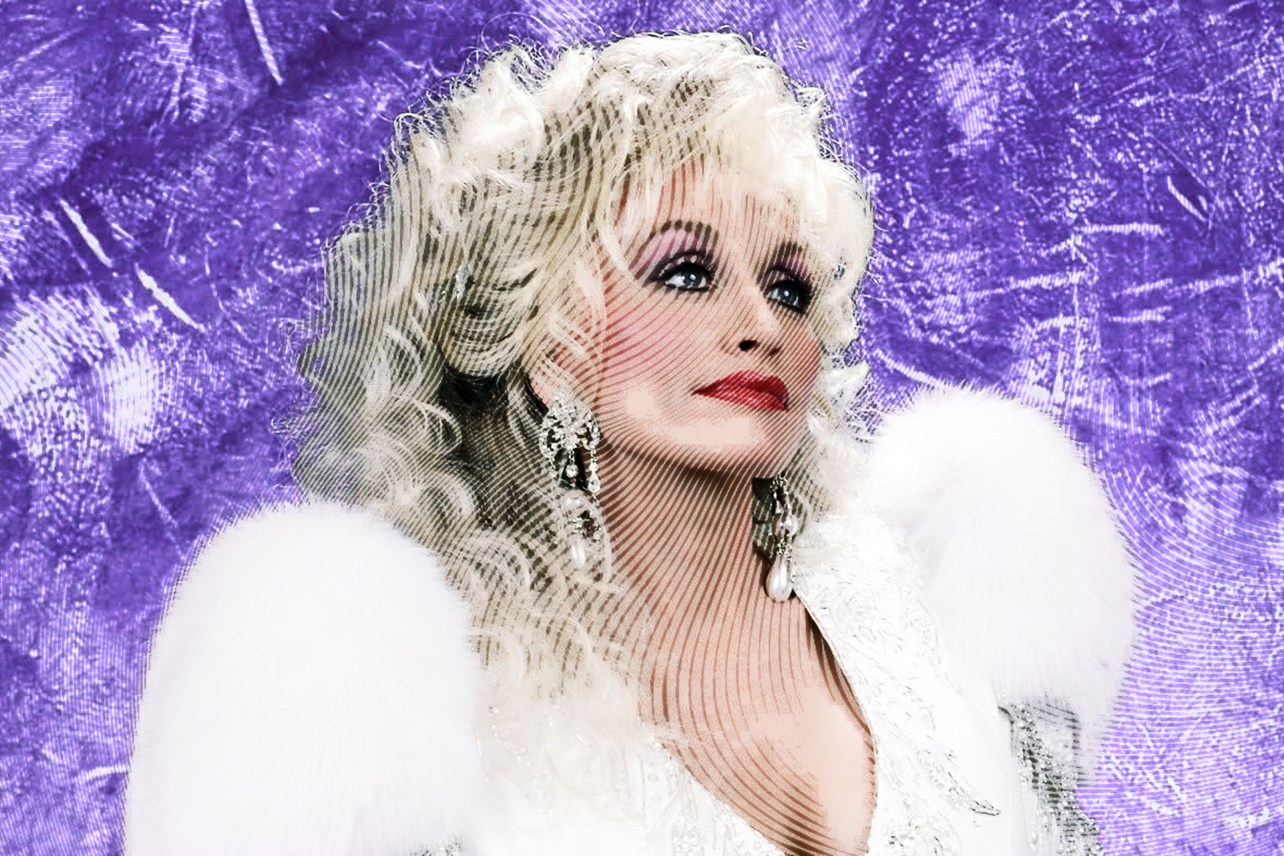
I don't hide the fact I'm from Georgia. It's something I'm proud of even when the complicated stigma of the South as an entity comes with its own baggage. People might assume you're unintelligent and dare I say uncouth. But the South has given the world a plethora of icons and now we mourn for one of the south's greatest losses: Dolly Parton.
Dolly Parton was never simply a country singer to me. She was part of the cultural landscape, one of those figures who seemed to exist everywhere at once: on the radio when I was growing up, on television, in movies, in jokes about Southern women and big hair, and in the general mythology of what it meant to be from the South.
Her passing was announced today, leaving this world at the age of 80, and a career so expansive that it is difficult to know where a retrospective should begin, much less where it should end.
For many Southerners, losing Dolly feels strangely personal. She belonged to everybody, but she also belonged to a particular place: the Appalachian South of Tennessee and the broader Southern world of church music, family stories, poverty, humor, hard work, and music passed from one generation to the next.
Parton was born in 1946 in Pittman Center, Tennessee, the fourth of 12 children. Her family lived in the Great Smoky Mountains, where money was scarce but music was abundant. She had told stories of her mother singing old ballads and religious songs, while her grandfather was a fiddling preacher, and those sounds became part of the musical vocabulary Parton would eventually carry into Nashville and then far beyond it.
She began performing as a child, appearing on the Grand Ole Opry at 13, and moved to Nashville after graduating high school in 1964. Her early career included songwriting success and, beginning in 1967, a partnership with country star Porter Wagoner that introduced her to a national audience.
The songs, however, were always the center of it.
"Coat of Many Colors," "Jolene," "Joshua," "The Bargain Store," and "I Will Always Love You" — the latter finding a rebirth after being covered by Whitney Houston — established Parton as one of the great storytellers in American music. Her songs could contain an entire emotional life within a few minutes, moving through poverty, jealousy, desire, loneliness, work, family and heartbreak with a directness that made even highly specific Southern stories feel universal.
For women in particular, Parton's songwriting offered something significant. Alongside Loretta Lynn and Tammy Wynette, Parton helped reshape the possibilities for women in country music, writing from the perspective of women whose lives were often treated as background characters in popular culture. Her songs allowed women to be angry, ambitious, sexual, exhausted, funny, poor, heartbroken, and complicated.
Generations of women heard themselves in Dolly Parton. Then there was everything else she became.
Parton's career gradually expanded beyond the boundaries of country music until she became one of those rare entertainers whose name required no explanation. She recorded pop music, starred in 9 to 5 — also provided the title track, which earned her her first Oscar nomination — and Steel Magnolias, established Dollywood, wrote for Broadway and became a familiar presence on television. She appeared on The Muppet Show, The Simpsons, and Pee-wee's Playhouse, among countless other programs.
There is something wonderfully strange about that list. Dolly Parton could exist in almost any American cultural universe and remain completely herself.
And she used that enormous cultural reach for things that had nothing to do with entertainment.
Parton's philanthropy became almost another career. The Imagination Library, inspired in part by her father Robert Lee Parton's inability to read and write, grew into an international literacy program that has distributed hundreds of millions of free books to children. She created scholarships and educational programs through the Dollywood Foundation, supported medical institutions and repeatedly directed money toward communities facing disasters. After the 2016 wildfires devastated parts of East Tennessee, her My People Fund provided millions of dollars in direct assistance to families who had lost their homes.
Her generosity also extended into public health in a way that became one of the most surprising footnotes in modern scientific history. In 2020, Parton donated $1 million to Vanderbilt University Medical Center for COVID-19 research, a gift made in honor of her friend and Vanderbilt professor Naji Abumrad. The money supported early research that became part of the work connected to Moderna's COVID-19 vaccine. Years later, Parton would receive the Moderna vaccine herself at Vanderbilt, joking that she was getting "a dose of her own medicine."
Her relationship with the LGBTQ+ community was another important part of her cultural legacy. Parton consistently expressed support for gay people and marriage equality, and her music, humor and persona became particularly beloved within queer communities. She understood something about the power of allowing people to be flamboyant, sentimental, glamorous, funny, and entirely themselves. That made her a particularly natural cultural ally for people who had spent generations being told they were too much of something.
Dolly understood the power of her own image, too. The hair was enormous, the clothes were rhinestone-covered and the jokes about her appearance were practically part of the costume. Parton knew exactly how people saw her, and she had the confidence to turn that perception into part of her performance. Beneath the humor was a formidable songwriter, businesswoman, and performer who understood audiences and knew how to build something that could last.
She also understood where she came from.
Parton's relationship with the South was never merely an aesthetic. Appalachia remained central to her stories, her music and her public identity, and she carried those roots into rooms where people might never have encountered them otherwise. “Coat of Many Colors,” inspired by her childhood poverty, became a song about dignity and family; her career turned Appalachian storytelling into something that could travel around the world without losing its sense of place.
Her accomplishments can be measured in records, awards, movies, businesses and millions of books, but those measurements still leave something out. Dolly Parton gave generations of women an image of a woman who could write her own songs, build her own career, make her own money, embrace her femininity, laugh at herself, and occupy as much space as she wanted.
For those of us raised in the South, there is another part of her legacy that is harder to quantify as Dolly made Southernness feel expansive.
She came from the mountains and went everywhere, carrying Appalachian music and storytelling into country, pop culture, Hollywood, children's entertainment and the wider American imagination. She could sing a devastating ballad, make children laugh on television, appear as a cartoon version of herself and then walk back onto a country stage without having to explain how any of it belonged together.
It belonged together because she did.
Dolly Parton spent more than six decades showing America what could happen when somebody took everything she came from — the music, the poverty, the humor, the femininity, the ambition, the contradictions and the enormous hair — and made something unmistakably her own.
She was Dolly.
And for generations of Americans, particularly those of us from the South, that name was enough.