

Tender Loving Care
Writer/Director: Mike Leigh
Cast: Kate O’Flynn, Alice Bailey Johnson, Marion Bailey, Paul Jesson
Mike Leigh has been making movies in some form since 1971 when he wrote and directed Bleak Moments for BBC Films. He continued to make great films like Meantime and Life is Sweet, but it was his fourth feature film, Naked, that really put him on the international stage. Once there, Leigh continued to do what he does best — provide guideposts for his actors to hit, while also capturing the small moments and improvisation from the performers. That gift, to include the seemingly mundane to enrich his stories, continues throughout his final film, Tender Loving Care. Featuring Widow’s Bay Emmy winner Kate O’Flynn in one of the leading roles, Tender Loving Care is a charming film that follows two London social workers and reminds us that disappointment in life is inevitable, but there are those that try their damndest to make it better.
Opening on an elderly mute man who's been hospitalized, Tender Loving Care introduces Rosie (Alice Bailey Johnson), a social worker whose mission is to help this gentleman find some lodging. Being a social worker is often a thankless job; those who need help the most often refuse or receive it unwillingly. Even though she may realize that whatever housing the government would provide might prove inadequate, she goes through the motions anyway. At the end of her days, she often returns home to her flat, pours a glass of wine, and fantasizes over her next romantic fling, this time the fireman.
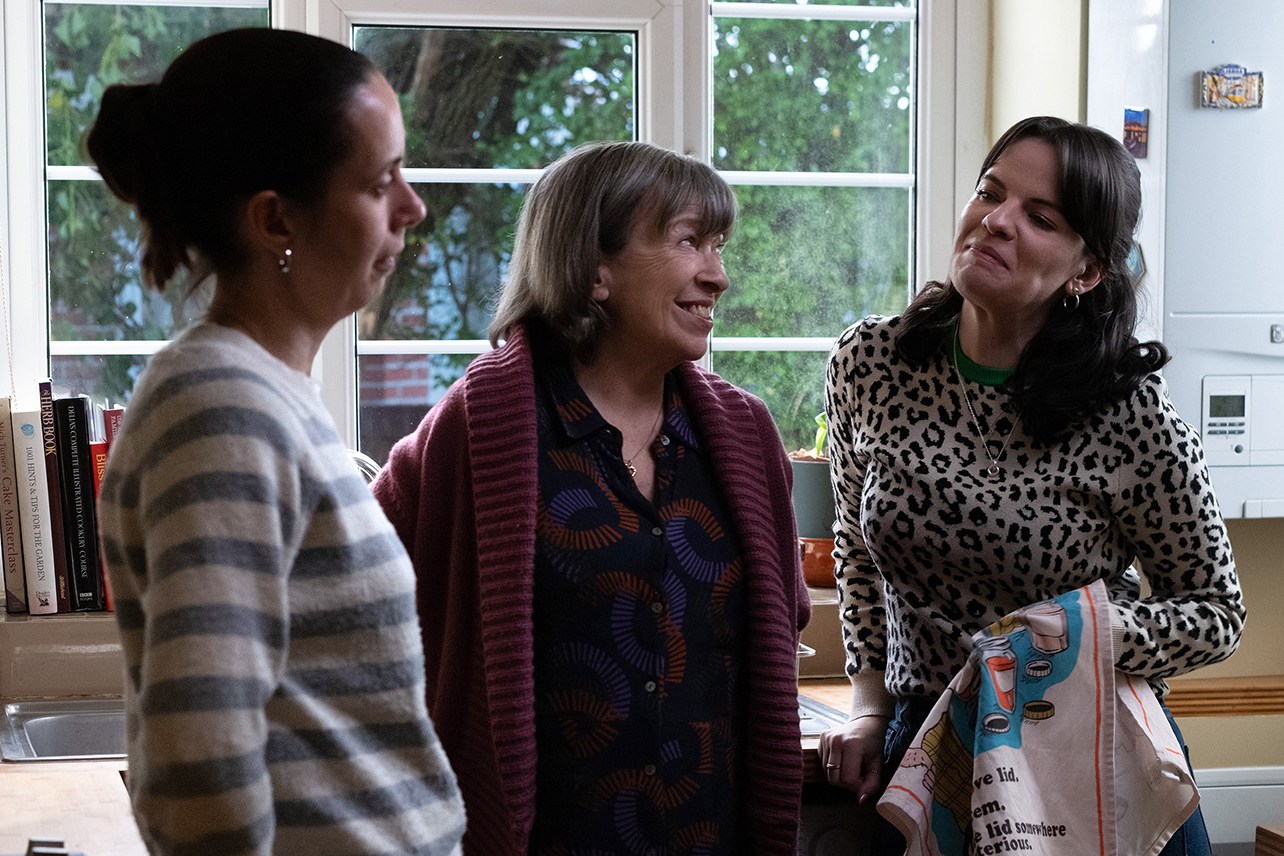
Then Rosie welcomes her friend Amy (O’Flynn) to move back in with her following a disappointing breakup. Leigh’s films often leave relationships as some kind of discovery, perhaps most memorably in Secrets & Lies, so it's easy to mistake Amy and Rosie’s relationship as being sisters. They convey a very close relationship and when Amy visits her parents, she’ll often invite Rosie as well. Although Amy is also a social worker, her job normally sees her working with children and teenagers, those who are struggling in foster care or facing some form of neglect at home. One sequence sees Amy speaking with a mother who’s trying to regain custody of her son, but the mother’s living situation is unsuitable to raise children. The mother yells and screams about her unjust treatment and how Amy isn’t on her side. It’s a harrowing job and when one of Amy’s peers complains of feeling burnt out, it's easy to imagine why that might be.
Each of these particular cases is only referenced once in Tender Loving Care. We aren’t privy to whether the lady actually wins back her son or if the homeless man eventually finds the shelter he needs. It’s a reflection of life as a social worker — one minute you're a vital lifeline to a person, only the next to not know them at all.
Amy leans on Rosie as her support person because she feels she’ll disappoint her parents with her recent relationship woes. Since Amy was with her boyfriend for five years and she’s in her early ‘40s, time might be running out to have the picture perfect family. For their part her parents, Birdie (Marion Bailey) and Geoff (Paul Jesson), really only want their daughter to be happy. While they certainly would love the opportunity to be grandparents, that’s something out of their control. Perhaps it's difficult for them to understand the modern dating scene as they’ve been married for many years. They banter with each other easily — Birdie keeping Geoff in check, while Geoff always keeps the laughs coming. Birdie acknowledges how special her relationship is as one of the funniest scenes in the movie finds the three women at a restaurant celebrating Geoff, as the scene switches to check in with Geoff doing something mundane.
Birdie and Geoff’s marriage is as solid as they come, until it isn’t. When Geoff starts developing signs of dementia, the world becomes a little off-kilter. Birdie worries that she won’t be capable of taking care of her husband now that his memories are fading. Rosie and Amy have helped countless other people face insurmountable odds, but how do they begin to support Birdie through this most troubling of times?
Tender Loving Care doesn’t present some kind of magic answer to anyone's problems. It’s but a snapshot of a moment of time that these two social workers have lived through. Nothing more and nothing less. For audiences expecting some kind of grand closure or gracefully tied up storylines, that might be a disappointing development. But hey, that’s life. Leigh’s final film contains all the grace and spirit that has been prevalent in his films for the last fifty years. Which is to say, Tender Loving Care is a lovely closing to a career that has provided so much empathy for even the most mundane moments.