

Fjord
Writer/Director: Cristian Mungiu
Cast: Sebastian Stan, Renate Reinsve, Vanessa Ceban
Who gets to decide how we raise our children?
That’s the central conflict of Fjord, the new film from director Cristian Mungiu, that won the Palme d’Or at Cannes. Fjord introduces us to an evangelical family whose beliefs would be categorized as stricter than many. When they move to a new country, they find that their style of discipline isn’t accepted. In fact, some might even categorize it as abuse. Fjord asks audiences to consider how much punishment is acceptable and whether some individuals might consider that excessive. It’s a riveting conversation starter pitting conservative beliefs against the safety of children.
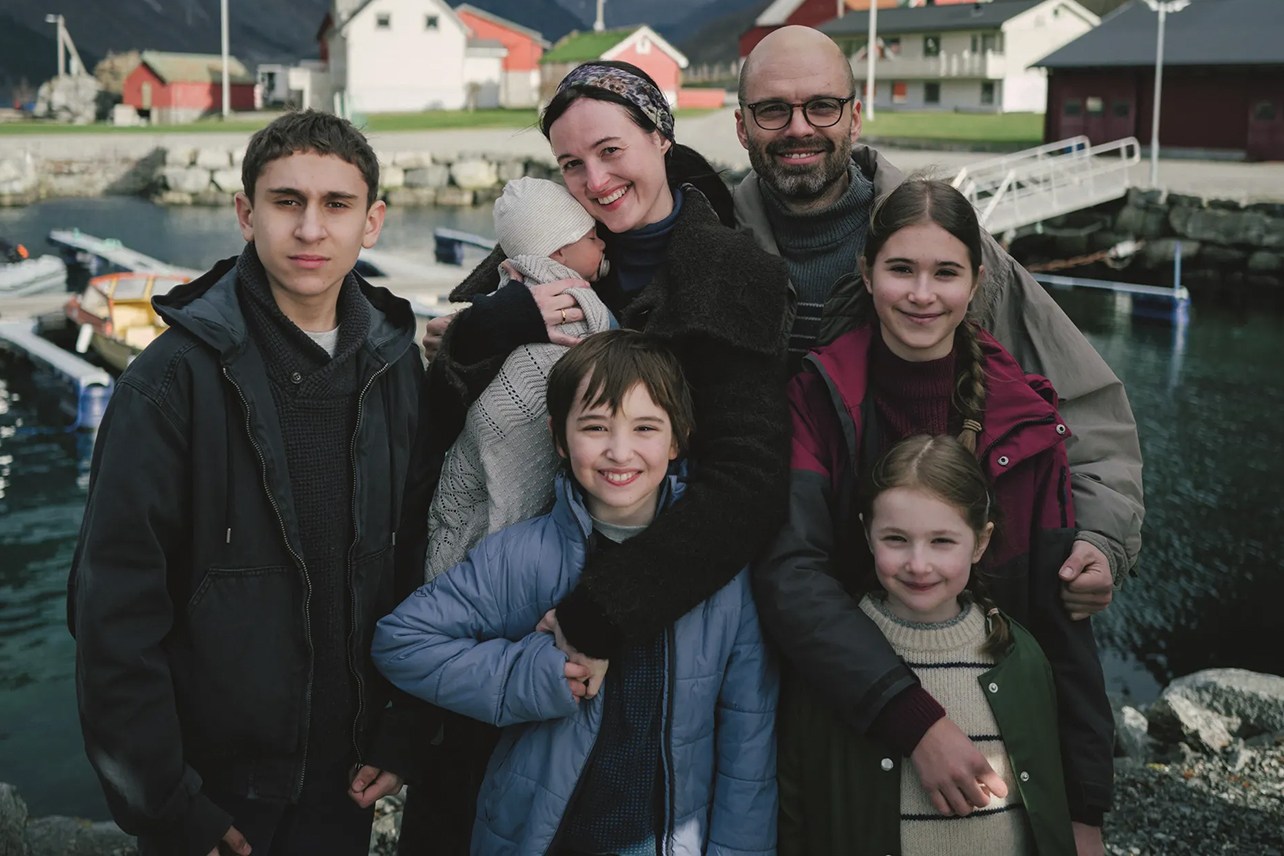
Having moved from Romania to Norway, the Gheorghui family find themselves struggling to fit in. Mihai (Sebastian Stan) and Lisbet (Renate Reinsve) try their best in their new community, becoming fast friends with their neighbors while also taking up jobs locally. The children have a little more difficulty engaging with their peers — likely due to their religious upbringing. They have been denied such luxuries like tablets, YouTube, and the like, making them disconnected from others. While the neighbors and teachers have reservations about their upbringing, especially when it comes to the separation between school and religion, they mostly watch from afar.
That all changes dramatically when the eldest daughter, Ella (Vanessa Ceban), shows up to school with bruises on her neck and shoulders. A few of the teachers start voicing their concerns and before long child protective services have been informed. When Ella and her brother are questioned about the punishment they receive at home, the teachers are appalled and frightened for the children. Child services quickly secures the two older children and then confronts Lisbet for her other three children, including her infant.
Quickly running out of options, Mihai and Lisbet not only turn to their church, but also legal council to help them get their children back. Meanwhile the stigma of having their children taken away for possible abuse, makes the community turn their backs completely on the Gheorghui family. Mihai then takes the nuclear option: enlisting the support of fanatical conservatives around the world.
There is no winner in Fjord. While conservatives will celebrate that the Gheorghui family are essentially the protagonists, proving that some forms of physical discipline might be acceptable to raise children, it's much more nuanced than that. Mungiu’s script does heavy damage to the necessity of child protective services and categorically questions their reach, but the Gheorghui family doesn’t get off easy either. What kind of punishment is acceptable in parenting? With the rise of gentle parenting, which emphasizes respect and empathy but above all the avoidance of physical discipline, the way the Gheorghui family disciplines their children might as well be barbaric. Is a slap on the bum still acceptable in 2026? The answer to that might be different depending on who you ask.
While Renate Reinsve has become a bit of a Cannes Film Festival mainstay given her appearance in many of the highest profile films in recent years, Fjord works because of the commitment of Sebastian Stan. American audiences have come to know Stan over the years due his appearance in many Marvel features as the Winter Soldier, but Fjord allows Stan to tap into his Romanian heritage and give a really captivating performance. His character, Mihai, is trapped in a hard place. What lengths does he need to go to in order to secure his children's return?
Surprisingly, Fjord turns into a courtroom drama near the end of it. While there aren’t any grand revelations like fellow Palme d’Or winner Anatomy of a Fall, it does contain one of the funniest lines in the movie — one in which a witness complains that the children didn’t have mobile phones. Again, depending on your definition of parenting maybe you find that unacceptable.
Fjord has been built to field the most divisive of opinions. Whether you accept the narrative as presented, that even conservative families should have the ability to parent their children as they see fit, will go a long way towards one's enjoyment of the movie. Beyond that argument is a really compelling feature about a family struggling against government action, using whatever means necessary to get their children back. Wherever you sit on this issue, Fjord asks audiences to be aware of how they raise their own family, and those questions have no easy answers.