

Disclosure Day
Writer: David Koepp, Steven Spielberg
Director: Steven Spielberg
Cast: Emily Blunt, Josh O'Connor, Colin Firth, Eve Hewson, Colman Domingo
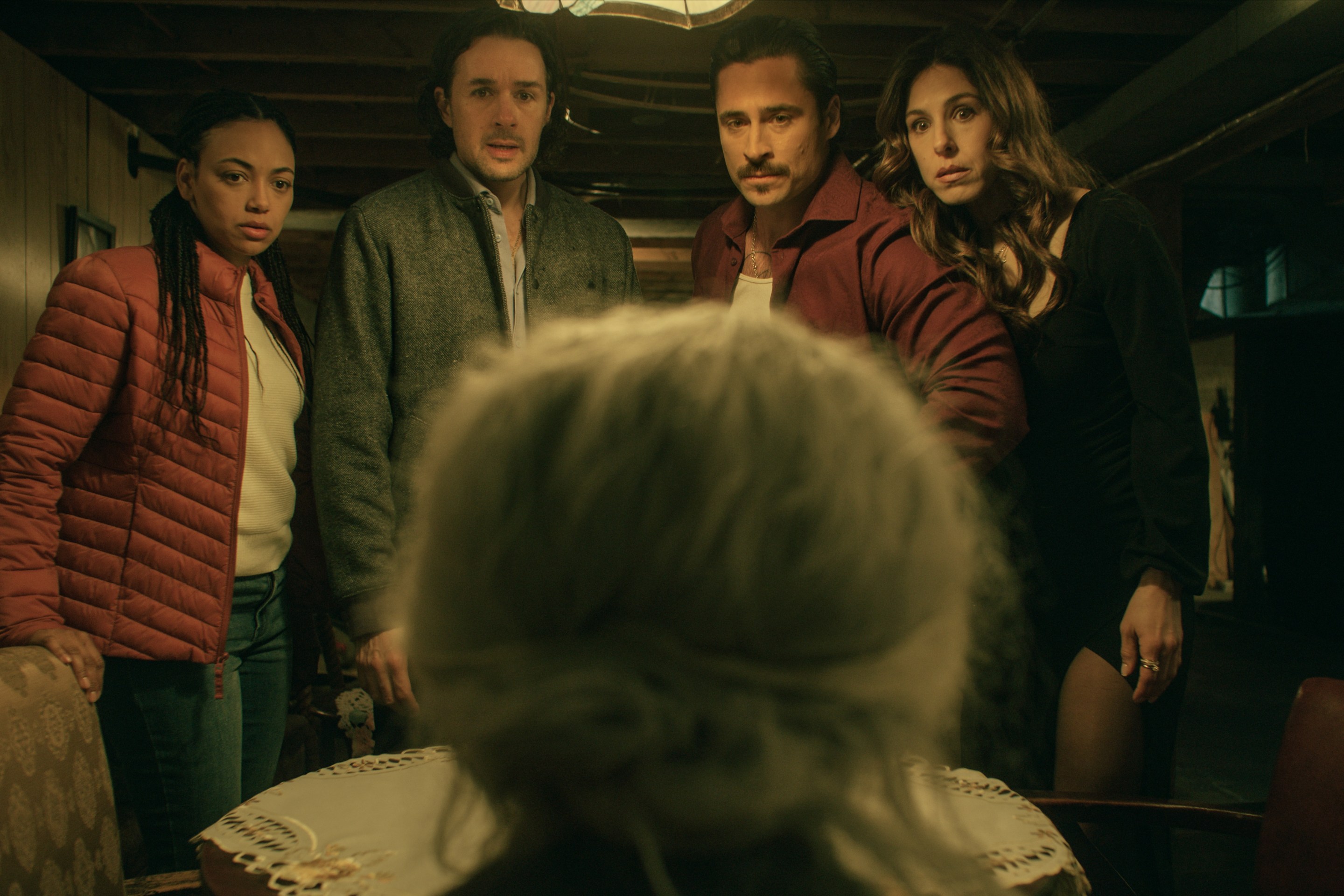
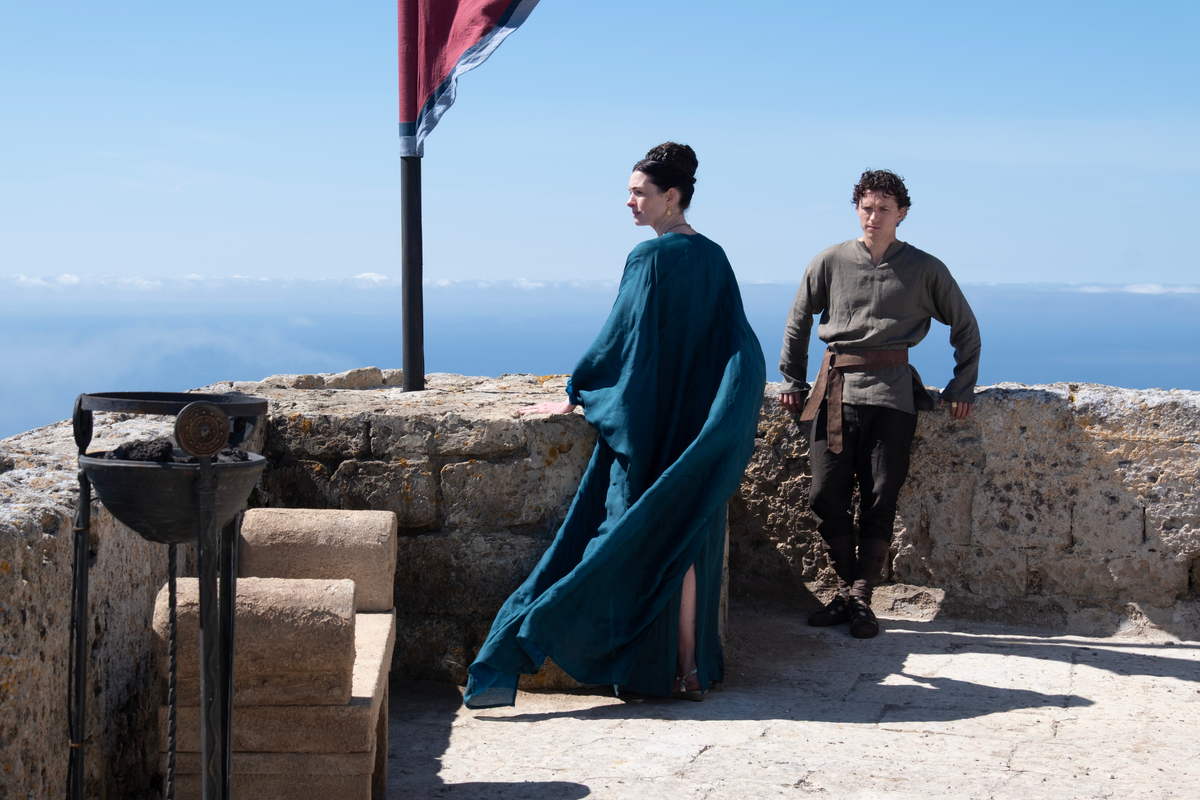
Emily Blunt has a face for tears, and Josh O’Connor for doubt; between the two of them, they make a portrait of undecided and anguished people at the center of Disclosure Day, Steven Spielberg’s latest. Whether their co-leading performances are enough to hold the movie together is another matter entirely, when so much of the movie demands they be kept apart for reasons that can be chalked up to plot maintenance, but which, on further reflection, amount to tiresome bullshit. If your two chief actors’ chemistry is as good as Blunt and O’Connor’s, then giving them more screen time together than less would seem to be a good idea. Wouldn’t it?
Spielberg says “no,” and the negative response forces Disclosure Day to meander for far too long, an instance of wheel spinning so tedious that not even a chase sequence where O’Connor drives an SUV through a farmhouse eases the doldrums. Maybe blame David Koepp instead of Spielberg; the latter’s working off the former’s screenplay, after all. But Spielberg came up with the story, and thus with the notion of investing in the separation between Margaret Fairchild (Blunt), a Kansas City TV meteorologist who spontaneously develops psychic capabilities, and Daniel Kellner (O’Connor), a cybersecurity wonk and whistleblowing on the run from his former employers: Wardex, a shadowy corporation run by Noah Scanlon (Colin Firth), a smarmy prick made smarmier by his suffocating Britishness. (No matter the year, time, or geopolitical climate, casting an Englishman to play an authoritarian dandy is a cheap and effective formula for antagonism.)
We learn in the film’s opener that Kellner has stolen Scanlon’s prized MacGuffin, a lithe handheld device that inspires fear in Scanlon the moment Kellner brandishes it at him. We don’t learn much of anything else, which is fine, because Spielberg has a mystery to unspool and a handful of thrilling set pieces to usher us through; we just know Kellner’s got his hands on proof of whatever Scanlon and Wardex have hidden from the public for decades and then some, and, look, it’s aliens.
Disclosure Day makes no effort at hiding the revelation in its trailers. It’s therefore not at all important that we in the audience are primed to interpret the meaning of Kellner’s jumpy furtiveness; he’s a bundle of nerves, he’s on the run from clandestine spooks, said spooks have roped in his girlfriend, Jane (Eve Hewson), despite her knowing exactly less than nothing about the nature of his vocation. What else could he be carrying other than proof of extraterrestrial life? That’s not the movie’s problem. Nor is the duration viewers endure before Blunt and O’Connor finally get to act as a duo, because Disclosure Day’s problems are many. It’s not just that the movie’s two most interesting components don’t interact with one another for an unreasonable stretch of time, or that Firth’s role hovers dangerously close to “cartoon villain” territory, or that Koepp and Spielberg collectively botch their calculus about the modern human condition; rather, it’s all of the above.
The “stuff” of the movie is empathy as a survival trait—an “evolutionary advantage,” says Hugo (Colman Domingo), a Wardex renegade and Kellner’s guide. Conceptually, this is Spielbergian as well as academic; empathy as the key to humanity thriving plays into his predilections as a filmmaker and bears ample scientific study. Right now in our age of selfishness, a lesson in empathy is desperately needed. Spielberg being one of our great empathetic directors, Disclosure Day feels like fertile ground for him and for the lesson, but for the fact that the movie perceives the moment of its debut through the rosiest tinted glasses. Grant that Spielberg and Koepp’s science fiction plot is a fairy tale at heart: the allusions to Disney princess tropes, bona fide animal magnetism most of all, reveal a film engaged in fantasy more than in science. Also grant that genre is a big old umbrella, and there’s plenty of room for both under its canopy. But also also grant that there is fantasy, and there is fanciful, and Disclosure Day is the second one.
In the early afternoon of January 6th, 2021, a protest of upwards of 80,000 of Donald Trump’s supporters winnowed down into a mob of 10,000 at the Capitol grounds, when their distaste for their dear leader’s defeat in the 2020 presidential election turned into rancor and then into an insurrection; cameras caught the scene on video and in photos, hard evidence of the perpetrators’ crimes against the nation. And yet in 2026, there is a cottage industry of J6 disinformation driven by people who may or may not buy their own spin, but who profit off of it all the same, despite the hard evidence. Dennis Feitosa still sits down with precious white boy YouTube debaters like Dean Withers and insists on talking points about the placement of FBI officials in the crowd on that day, as if any of that matters or alters the record.
With all that in mind, it’s difficult to picture the entire world accepting the existence of alien life when confirmation of such is presented to them. Disclosure Day wants us all to believe in mankind’s better angels; it’s the root of the movie’s empathy motif. Spielberg, bless him, believes fervently that if only we try, we can all see ourselves in other people, and he literalizes that in reflective surfaces: Margaret “reads” a man through a hospital room window, Blunt’s face imprinted on the back of his head as she stares at him. It’s an elegantly simple way of communicating Disclosure Day’s theme, and an ideal we should all aspire to. But in 2026, the payoff to the theme comes off as terribly naive, because we patently cannot agree as a collective that bad people are doing bad things when said bad people are caught out doing said bad things.
Maybe this elides the film’s purpose as an expression of Spielberg’s personal hope; likely he means to inspire moviegoers to get in touch with their empathy and wield it as arms against boutique pessimism. That’s parable for you. And maybe years from now, if we’ve moved out of our current sociopolitical mess, or at least are on the road to a better place than one run by pedophiles, their pathetic cronies, and billionaire troglodytes, we’ll look back on Disclosure Day as an example of cinema of optimism. For now, the film’s utter guilelessness, however handsomely constructed, is like salt to a wound–though nothing stings more than counting minutes until Blunt at last shares the frame with O’Connor.
If you haven't already, consider supporting worker-owned media by subscribing to Pop Heist. We are ad-free and operating outside the algorithm, so all dollars go directly to paying the staff members and writers who make articles like this one possible.