

Skip to Content
Member Exclusive

‘Twin Peaks’ Season 3 Premiere Recap: Meanwhile

“My log has a message for you.”

Doppelganger Dale Cooper
Photo: Showtime

Twin Peaks Season 3, Episode 1: “Part 1”
Tagline: “My log has a message for you.”
Airdate: May 21, 2017
Writers: Mark Frost & David Lynch
Director: David Lynch
Cast: Kyle MacLachlan, Jane Adams, Melissa Bailey, Richard Beymer, Michael Bisping, Brent Briscoe, Bailey Chase, Catherine Coulson, Kathleen Deming, Erica Eynon, Harry Goaz, George Griffith, Cornelia Guest, Michael Horse, Ashley Judd, David Patrick Kelly, Nicole LaLiberte, Sheryl Lee, Matthew Lillard, Max Perlich, Kimmy Robertson, Benjamin Rosenfield, Carel Strukycken, Russ Tamblyn, Redford Westwood, Madeline Zima
In Memory of: Catherine Coulson


By the time Twin Peaks’ third season began filming, Bob was dead. Frank Silva, the set dresser turned actor whose chance appearance behind Laura Palmer’s bed and in Sarah Palmer’s living room mirror inspired the demonic character and so much else that followed, died of AIDS-related causes after a period of homelessness in 1995. 

Jack Nance, who prior to portraying Pete Martell played the eponymous character in David Lynch’s landmark debut Eraserhead, died the following year. Don S. Davis, the saintly Air Force officer Major Garland Briggs, died in 2008; Frances Bay, the grandmotherly Black Lodge spirit known as Mrs. Tremond (or Mrs. Chalfont), in 2011; David Bowie, the spacetime-warping FBI Special Agent Philip Jeffries (among other achievements), in 2016.

Warren Frost, the kindly Will “Doc” Hayward (and real-life father of co-creator Mark Frost); Miguel Ferrer, the pugnacious pacifist FBI forensics expert Albert Rosenfield; and Catherine E. Coulson, the sphinx-like Margaret “The Log Lady” Lanterman, all died after completing their work on Season 3 but prior to its debut. It was Ferrer’s final live-action role. It was Coulson’s as well: She died of cancer four days after finishing filming.

Harry Dean Stanton, who reprised his Fire Walk With Me role, trailer park owner Carl Rodd, in the third season, died two weeks after it finished airing.

David Lynch died in 2025.

Laura Palmer died in 1989.

“I’ll see you again in 25 years,” she said in a dream inside a dream. 

Meanwhile.


The differences are established right away. The opening title sequence, with its familiar sight of a chirping bird and whirring saws, is gone. After woozy shots of the black-and-white floor and the red curtains, there’s a cold-open flashback set in the Black Lodge, with Laura Palmer telling Dale Cooper she’d see him again in 25 years. We fade to mist over the pines, then to the walls of Twin Peak High School, where the screaming girl runs through the courtyard as she did in the pilot, in slow motion. The camera pushes in to the trophy case, zeroing in on Laura’s homecoming photo. When the title of the show appears and Angelo Badalamenti’s theme finally hits, it’s over Laura’s face.

Photo: Showtime

This opening alone establishes three things. First, the Black Lodge is no longer a side dish, it’s the main attraction, with the Red Room’s zig-zag flooring and billowing crimson drapery the first things you see. Second, we will be diving deep into memory here, into what happened 25 years ago and what happened in between. Third, Laura Palmer is at the center of it all.

After the credits roll — like every episode in Season 3, this one is written by series co-creators Mark Frost and David Lynch, with Lynch directing — we’re back in…well, it’s not clear if we are in the Black Lodge anymore, because we’ve never seen it look anything like this. It’s black and white, it’s much less sparsely furnished, and the only supernatural denizen is the benevolent Giant, with no sign of the strange trickster god called the Man from Another Place, also known as the Arm. 

With the Giant, who looks much older, is FBI Special Agent Dale Cooper, looking like exactly what he is: a man who has aged 25 years since the last time we saw him. The Giant gives him a series of cryptic clues: a scratch on a phonograph, the warning “It is in our house now, it all cannot be said aloud now,” the number 430, and the names Richard and Linda. Coop is to remember all these things, the Giant says, but there’s still no sign of him getting out of…wherever he is.

Photo: Showtime

After this, we’re back on terra firma — for the most part. The action bounces from New York City, home of an eccentric billionaire’s supernatural science experiment; to Buckhorn, South Dakota, where a high school principal is implicated in at least two horrific murders; to parts unknown, where a fellow who looks like someone we know pays a visit to some associates; to that place both wonderful and strange, Twin Peaks, where we catch up on the lives of a small handful of residents. 

Starting there is easiest, since of the four settings, Twin Peaks actually has the least going on. Dr. Jacoby now lives in a trailer in the woods, where he receives a large shipment of shovels, for what I’m sure are very Dr. Jacoby reasons. Benjamin Horne has a new secretary, Beverly (Ashley Judd), but his brother Jerry remains very much the same impish character. Now a grizzled graybeard and hardcore stoner, Jerry has left the hotel end of Horne Industries to set up an extremely profitable legal-weed business. His cavalier attitude seems to sit poorly with Ben, who’s no longer the womanizing dirtbag he used to be. Apparently, his change of heart near the end of Season 2 actually stuck.

We learn a lot from our encounter with the friendly local cops. There are two Sheriff Trumans (Sheriffs Truman?) now, we hear, neither of whom is around at the moment. Lucy and Deputy Andy are now married, as the triumphantly huge placard reading LUCY BRENNAN on her desk makes immediately clear. Hawk is now the deputy chief, and seems firmly in charge in the Sheriff(s)’s absence. 

Photo: Showtime

Then Hawk gets a phone call from a familiar face, but seeing her again doesn’t bring the happy feeling of familiarity we get from the other old cast members. Age shows on everyone’s faces; illness shows on the face of Margaret Lanterman, the Log Lady. Her hair has fallen out, and she’s breathing through a tube in her nose. The implication that she has cancer, as serious as the cancer that was then killing the actor who plays her, is unmissable. 

The lady, or rather her log, has a simple message for Hawk: Something important that has to do with Dale Cooper is missing, and Hawk’s indigenous heritage is the key to finding it. Hawk immediately puts his crack team — okay, fine, Andy and Lucy — to work in going through the files pertaining to Coop’s time in Twin Peaks. But they can’t ask the man himself: He’s been missing for 25 years, since before Lucy’s baby boy Wally was born. (Congrats to the happy couple!) This means that sometime after he smashed his head into that mirror and was tended to by Sheriff Harry Truman and Doc Hayward, he vanished.

Photo: Showtime

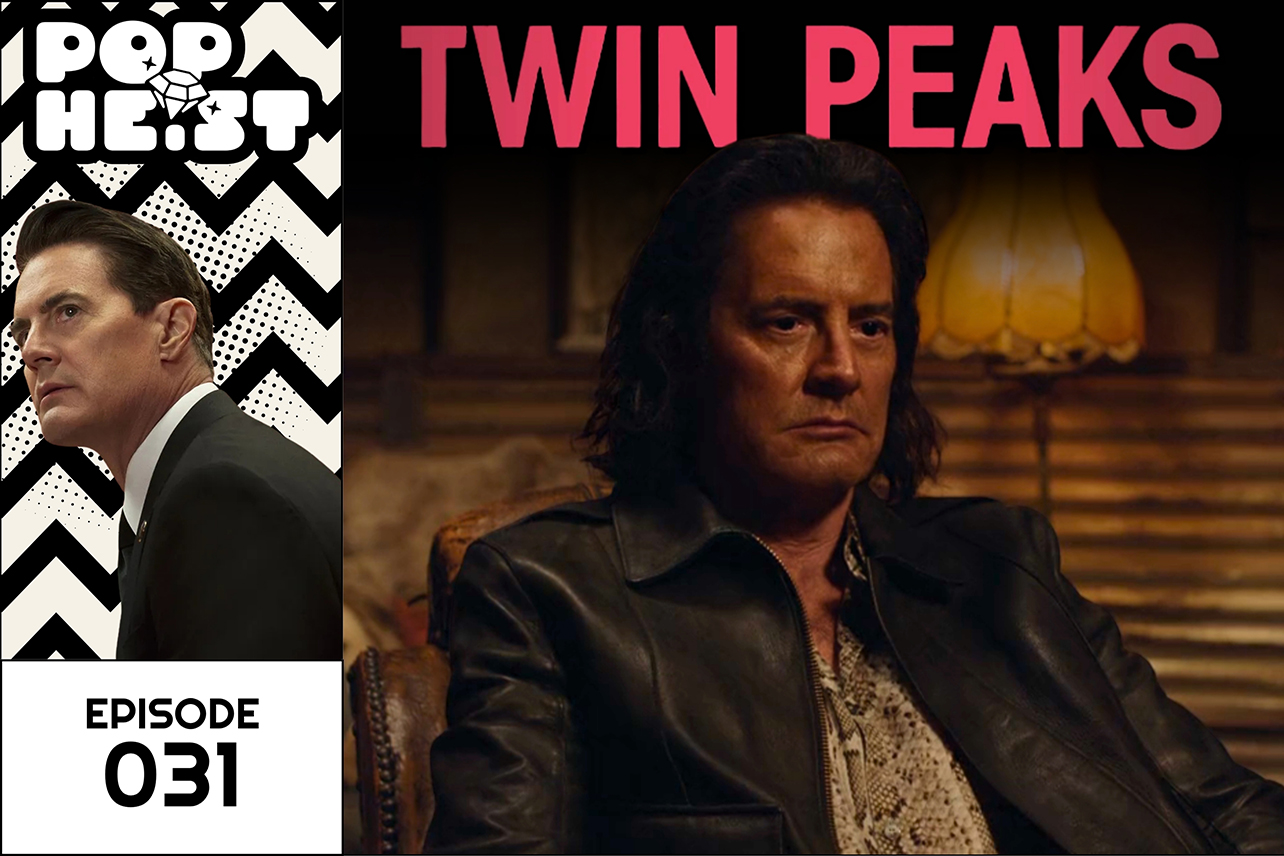
Cooper, or whatever it was that emerged from Glastonbury Grove in Cooper’s form, may not have been seen by anyone in the Sheriff’s Department or the FBI for the past two-plus decades, but clearly he’s been busy. We see him emerge into the night from the door of a Mercedes, dressed in leather, sporting long black hair styled into a quasi-mullet. He does not smile. His irises are pitch black. He is not the Cooper we used to know, if indeed he was ever really Cooper at all.

His friends, apparently, call him “Mr. C.” We meet some of these colorful individuals when he stops by the run-down home of the grizzled Otis (Redford Westwood) and Buella (Kathleen Deming), effortlessly knocking the shit out of their shotgun-toting security guard in the process.

Photo: Showtime

Seated comfortably in a home with the decor, warmth, and family members of a Texas Chain Saw Massacre or a Deliverance, Mr. C retrieves two younger and more well-put-together people who apparently work for or with him, Ray (George Griffith) and Darya (Nicole LaLiberte). They leave, I can’t imagine for anywhere good.

For an actual murder-mystery plot of the sort that kickstarted the whole Twin Peaks thing to begin with, we turn to Buckhorn. This is also where we find much of the awkward, drawn-out cringe comedy that characterizes the original run, involving regular people with irredeemably odd ways of interacting with the world. 

When a ditzy dog owner, Marjorie (Melissa Bailey), discovers a bad smell emanating from a neighbor’s apartment, she calls the cops. Hijinks ensue, thanks both to her and her paranoid building manager, Hank (Max Perlich), a criminal who wrongly suspects he’s been set up. 

Eventually the police find the apartment’s owner, Ruth Davenport (Mary Stofle), dead in her bed…but not all of her. Oh, her head is in there alright, but it’s been separated from the rest of her body, which is missing. In its place is the body of a heavyset man, itself with no head. 

This leaves the cops, including medical examiner Constance (the great Jane Adams), at a loss: They’ve got a known victim with no body, and a John Doe with no head. What they also have, however, are tons and tons of fingerprints in Ruth’s apartment, all belonging to Buckhorn High School principal Bill Hastings (the great Matthew Lillard). When Detective Macklay (Brent Briscoe), Bill’s old high school buddy, arrests him from his happy home, Bill blusters confidently in front of his wife, asking her to call his lawyer.

Photo: Showtime

The interrogation room is a different story. Hastings transparently lies over and over about whether or not he knew Ruth well or ever visited her home, and grows increasingly agitated as he watches and hears his friend taking notes on discrepancies in his alibi. But the way he says “Please tell me what’s going on!”, almost literally begging for some clue as to why he was brought in, and his devastated reaction to finding out Ruth was murdered, indicates he’s as shocked as anyone. Lillard is so good here, so fragile and so terrified, that discussions as to his talent could begin and end with this scene alone.

Of course, Leland Palmer reacted the same way when he heard his daughter Laura died. You never know about people, is what I’m saying. Certainly the hunk of human flesh they find in the trunk of Bill’s car would seem to indicate they have their man.

Photo: Showtime

New York City, however, is where the real heart of this episode may be found, which means for the first time in a major Lynch project, we see Gotham through David Lynch’s eyes. It’s a city of gold, its streets are rivers of headlights, its skyscrapers pour light into the night. 

Somewhere in that city is a building with a floor that’s empty except for the following things: a large glass box, a series of computers and machines wired to it, an array of cameras trained on it, a human being to watch it, a sofa and end tables and lamps for him to use while he watches, and a security guard outside this locked chamber to make sure no one else enters.

Photo: Showtime

The observer is Sam (Benjamin Rosenfield), a handsome guy who took this weird job to help pay his way through college. He has attracted the attention of a well put-together young woman named Tracey (Madeline Zima, who with Rosenfield proves Lynch hasn’t missed a step in the “casting preposterously good-looking people” department). She brings him coffee, only to be thwarted by the guard…until one night where he and everyone else working the building other than Sam are mysteriously absent.

Sam sneaks Tracey into the room and explains what he does: He stares at the box and waits for something to appear, at the behest of an anonymous billionaire. His predecessor saw something, he says, but he hasn’t seen anything. So gee whiz, I guess there’d be no harm in taking advantage of the privacy and having sex on the sofa, right?

Photo: Showtime

Tracey strips naked as Sam watches, his desire for her radiating from him in nearly visible waves. The two embrace passionately. The box behind them darkens, then blackens. In the midst is a ghostly female entity, its face a glitching eyeless maw. When the young lovers finally notice, they recoil in horror as the creature slams itself into the glass, then launches itself through, flying through the air and pouncing on them in a shot we see through its own eyes.

Photo: Showtime

Then it tears them to pieces, in a series of shots where all you can see is its chattering, glitching face and the bodies of the lovers, spraying gouts of blood.

There’s a degree to which this scene is a “This ain’t your father’s Twin Peaks” marker laid down by Frost and Lynch. Having migrated from the broadcast network ABC to the cable network Showtime, the two enjoy much more creative freedom and fewer censorship constraints. (Lynch did have to threaten to drop the whole thing to get that kind of creative control out of Showtime, but it worked out in the end.) 

There’s outright nudity.There’s Fangoria-level gore.There’s an experimentally filmed entity that hearkens back to Lynch’s short art films, or his feature debut, Eraserhead. There’s yet another massive dose of Lynch’s surrealist supernatural-horror stuff, which became his default mode following Twin Peaks and appeared in Fire Walk With Me, Lost Highway, Mulholland Drive, and Inland Empire

All this seems as important to me as opening on the Red Room and Laura’s portrait. It’s a setting of priorities, an establishment of what’s to come. This is a show that can be explicit with its aims and in its means of executing them now in a way it never could be before. It can titillate and terrify. It can channel the harrowing spirit of Fire Walk With Me, right there on your TV. Twin Peaks can become the purest version of itself. This episode asks us to join it and make those switches in tones, those dream-logic leaps, along with it. It has one message: fire walk with me.

If you haven't already, consider supporting worker-owned media by subscribing to Pop Heist. We are ad-free and operating outside the algorithm, so all dollars go directly to paying the staff members and writers who make articles like this one possible.

Stay in touch

Sign up for our free newsletter