
Look, I'm going to be blunt as I can be here: I was a weird kid. My mother will tell you this. My brother will tell you this. I'm sure some of my high school, or even friends from middle school (shoutout to Marcus, Lew, Joe, and Casey), they'll even say the same thing. I was drawn toward the darker corners of things: haunted houses, monsters, villains, old fairy tales with teeth in them. Before I was a comic book nerd, I was a King Arthur and Greek myth nerd so, those sorts of stories were already embedded in my marrow by the time I was in high school. The things that frightened me fascinated me. I could be genuinely scared by something and still want to watch it again.
Tim Curry understood that impulse.
Tim Curry passed away this week. For a certain generation, Curry became one of the great architects of screen villainy. His performances had an almost theatrical electricity to them. The instant he appeared, the atmosphere changed. His villains felt as though they had arrived from some larger, stranger world and had brought their own rules with them.
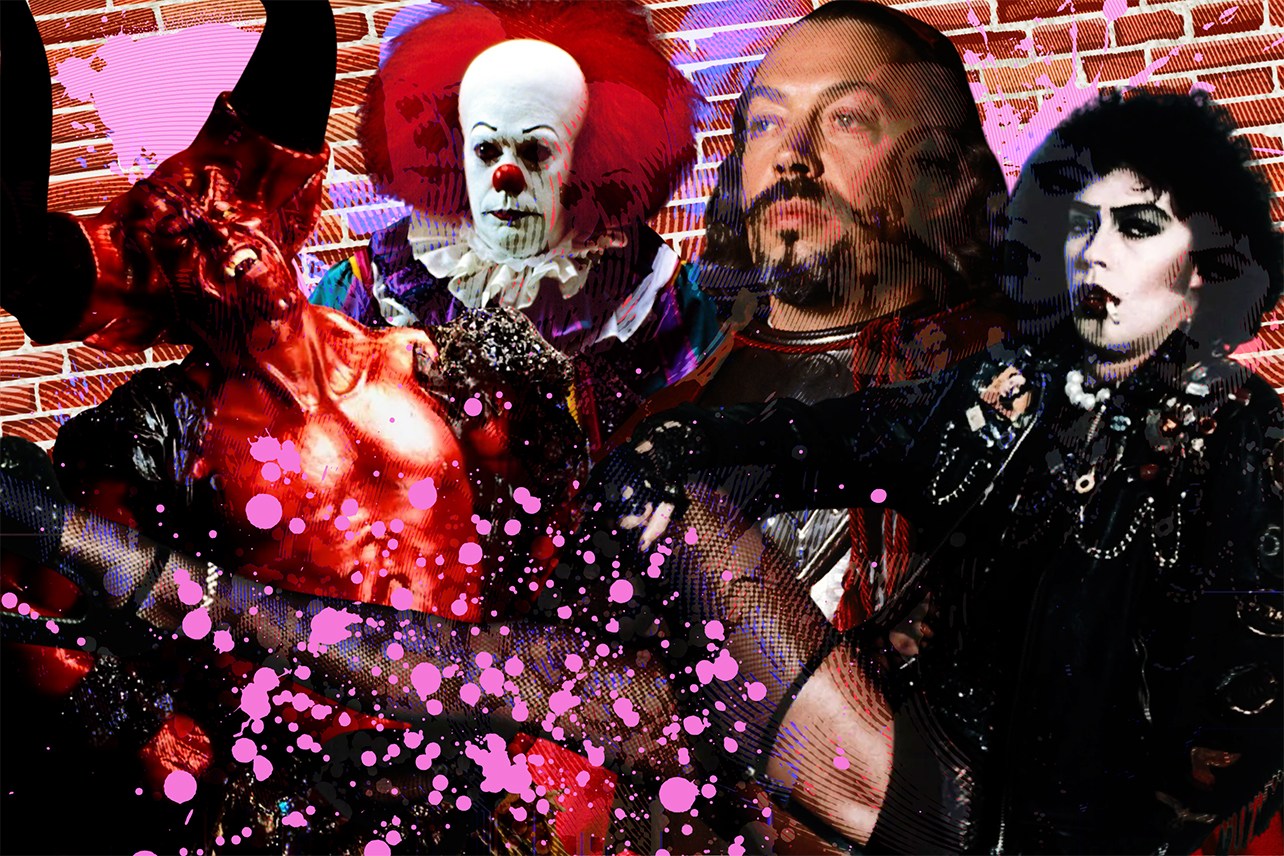
I remember watching Legend whenever it happened to be on TBS, often at the most random hours, and becoming completely absorbed by Darkness. The visual design is extraordinary: the horns, the makeup, the enormous physical presence, the blackness of the costume against Ridley Scott's fantastical world. Then Curry speaks.
That voice.
It is one of the great instruments of his career. Deep and resonant, with a sly musicality, Curry could make a line sound seductive, ancient, amused, or genuinely threatening. As Darkness, his voice gives the character a sense of history and intelligence. He sounds like a creature who has existed forever and has developed an exquisite understanding of human weakness. For a theater major who has always been obsessed with magic, that was irresistible.
Curry knew how to conjure a character.
You can see the same instinct in his Captain Hook on Fox's Peter Pan and the Pirates (anybody else remember that one?). Hook is inherently theatrical, and Curry took that quality and sent it into the stratosphere. The performance is flamboyant, physical and deliciously excessive. He understood the scale of the fantasy. Children watching it could feel the actor's joy in playing the villain.
Then there was Cardinal Richelieu in Disney's The Three Musketeers. It's another performance I think deserves more attention. Curry is completely locked into the pleasures of villainy. He is menacing, funny, imperious and wonderfully willing to chew through every available piece of scenery. The movie gives him a broad swashbuckling playground, and he fills it with personality. His Richelieu feels like someone who knows exactly how much fun it is to be the bad guy.
Then there is Rocky Horror.
I'm pretty sure like a lot of people in my generation, I encountered The Rocky Horror Picture Show far too young. I understood very little of what I was watching, yet I understood immediately that Tim Curry was doing something extraordinary. Frank-N-Furter was glamorous, outrageous, but dangerous and completely commanding. Curry seemed to understand performance as a kind of spell. He could hold an audience through sheer presence.
While we've only heard snippets of Curry's take on Joker for Batman: The Animated Series, it's an ultimate case of "what if?" While Mark Hamill ultimately became the definitive voice of that particular version of the character, with a legacy that will forever be synonymous with the Clown Prince. Curry's involvement still makes perfect sense. His voice, his timing and his instinct for theatrical menace were tailor-made for the role.
Speaking of clowns…there was Pennywise.
For many people, especially those who encountered the 1990 It miniseries as children, Tim Curry's Pennywise became something close to a cultural ghost story. The clown could be funny for a second, then deeply unsettling, then suddenly terrifying. Curry understood the particular horror of a villain who seems to be enjoying the performance. His smile, his physicality and especially his voice made Pennywise feel alive in a way that lodged permanently in people's memories.
That may be Curry's greatest gift as a villain actor: he made villainy feel like theater.
Every entrance had intention. Every voice had texture, every gesture seemed designed for the back row. He brought that sensibility to fantasy, horror, comedy, children's television, animation, and musical theater. He could make a villain frightening enough to stay with a child for decades while giving that same child a reason to keep watching.
For weird kids like me, that mattered.
Tim Curry showed us that the dark side could be fascinating. It could be flamboyant, funny, beautiful, grotesque, mysterious and enormous. He gave villains the grandeur of stage magic.
And once you had seen Tim Curry turn the darkness into a performance, you never quite forgot the trick.