
The Magic Faraway Tree
Writer: Simon Farnaby; based on The Faraway Tree by Enid Blyton
Director: Ben Gregor
Cast: Andrew Garfield, Claire Foy, Nonso Anozie, Nicola Coughlan, Jessica Gunning, Jennifer Saunders, Rebecca Ferguson
Nobody warns you how hard it is to be a parent; nobody thinks twice about how hard it is to be a child; and nobody especially enjoys revisiting the long-dormant dreams they had as children once they’ve grown enough to raise their own. Being a human, in short, sucks, because being human means keeping the hopes and fancies of our youths under lock and key as we age, not because we want to but because reality browbeats us into it: the reality of work, economy, and modernity, which at present is warped around devices that arrest our attention just to boil our brains into mush.
The Magic Faraway Tree doesn’t confront these concerns in such brutal terms, though nonetheless it does, in fact, confront them; Ben Gregor, directing from a script by Simon Farnaby that adapts author Enid Blyton’s The Faraway Tree books, seems well-attuned to universal sensations of our stultifying times, and meets the brief set by the production with a full-bore charm offensive. If any contemporary fantasy adventure film can be best qualified as “whimsical,” it’s this one, a throwback to Millennial childhood classics from the Amblin Entertainment catalogue, as well as — if sensible heads prevail — a worthy, and much needed, replacement for said generation’s misplaced and shameful devotion to the Harry Potter media empire. (As prickly and unpleasant a person as she was, Blyton still remains preferable to J.K. Rowling.)
We start with the Thompson family: Tim (Andrew Garfield) and Polly (Claire Foy), and their three kids, Beth (Delilah Bennett-Cardy), Joe (Phoenix Laroche), and Fran (Billie Gadson). Each of the Thompson brood is either in technology’s thrall — Joe, for instance, has a semi-crippling video game habit — or too dissatisfied to even speak, being Fran, the youngest and thus the chief candidate for The Magic Faraway Tree’s protagonist. When Polly loses her cushy but thunderously dull job designing fancy-pants refrigerators for a faceless tech company, she and Tim relocate to the countryside, where Beth and Joe go through WiFi withdrawal and Fran connects with the confederacy of fae folk who occupy the woods surrounding the Thompsons’ new home.
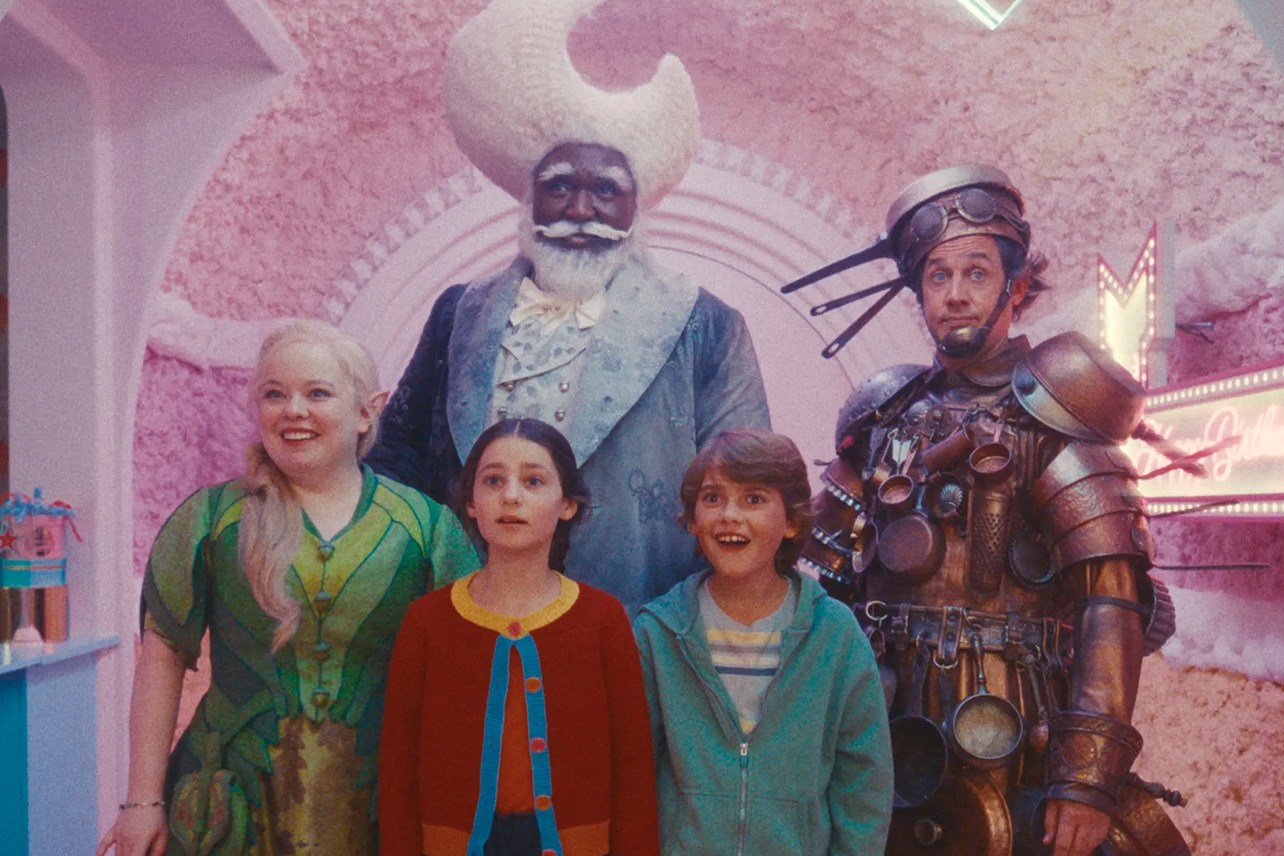
From here, The Magic Faraway Tree uses fantasy as an escape from the real world, as is classic to the genre, and as glue to repair fractures in the Thompson family, both as a unit and as individuals. Nothing chills one’s veins quite like the abrupt realization that you’re at risk of being unable to support your kids; as problems go, this one ranks higher by a country mile than a lack of internet access, though what Beth is subtextually upset over isn’t being denied her TikTok time but rather her social circle, which is a big deal. In the midst of this unrest, Fran takes a jaunt into the forest and befriends Silky (Nicola Coughlan), a fairy, who invites Fran into her home, nestled within — brace yourselves — the Magic Faraway Tree, a space she shares with a bunch of other whimsy-maxxed characters (or, as we say in the real world, roommates): the Saucepan Man (Dustin Demri-Burns), so called because he’s dragooned in a saucepan suit of armor; Dame Washalot (Jessica Gunning), shouldering the thankless task of doing everybody’s laundry; the Angry Pixie (Hiran Abeysekera) and Mr. Watzisname (Oliver Chris), whose names mean what they both say on the tin; and especially Moonface (Nonso Anozie), two parts dapper and one part pompous, and critically, the narrator of the movie’s opening lines.
“The magic of childhood is always forgot; but this is the story of one who did not,” Anozie rhymes in sotto voce. Moonface is established immediately as snooty, with a deep distrust of humans, for reasons we don’t appreciate until later in the film; for the most part, Gregor leans on Silky and Fran as his co-leads, a delight given Coughlan’s irresistible charm. The challenge laid out for Gregor and The Magic Faraway Tree lies in that whole “family” element, which begets the film’s ensemble, which itself introduces a mandate that all in the cast have moments to shine. How to pull off that juggling act when your top billing includes actors like Garfield and Foy, who are, in keeping with children’s fantasy, sidelined in the real world as the kids go on adventures in the fantasy world? There, at least, Gregor has an easier time finding space for Coughlin and Anozie.
Remarkably, he finds that space for Garfield and Foy, too, as well as for Bennett-Cardy and Laroche, playing the secondary sibling roles to Gadson. Everybody in The Magic Faraway Tree’s cast matters, carrying out arcs where they meaningfully express their characters’ growth and partake in driving the plot. Even Rebecca Ferguson, showing up in the third act as Dame Snap — an antagonist apparently influenced as much by Roald Dahl as by femdom — leaves an impression with minimal screen time, though it’s more important that the primary child cast gel so well with the secondary fantasy character cast as to become inseparable.
That The Magic Faraway Tree’s sets and backgrounds, which seem to be predominantly practical with VFX touch-ups, nearly live and breathe on their own is a great help; the transporting nature of the work done bringing the Tree, and every other fantastical realm the characters visit besides, to life performs essential heavy lifting for the film as a genre exercise. But the balance met among each of the cast members is, in a way, more special than the craft work (though the quality of that work can’t be overemphasized). If The Magic Faraway Tree is about familial togetherness and healing, then the melding of its actors into a cohesive whole inspires greater awe than any fae magic ever could.