

Carrie
Showrunner: Mike Flanagan
Cast: Summer H. Howell, Samantha Sloyan, Siena Agudong, Alison Thornton, Joel Oulette, Josie Totah, Arthur Conti, Thalia Dudek, Amber Midthunder, Matthew Lillard
SPOILER-FREE REVIEW
Mike Flanagan’s Carrie arrives with an almost impossible assignment: take one of Stephen King’s most recognizable stories, one that has already been adapted multiple times, and find something new to say without sanding away what made it endure in the first place. His answer is an eight-episode television series that expands King’s debut novel into something more sprawling, more contemporary, and — at its best — surprisingly perceptive about what it means to be a teenager in an age when cruelty no longer ends when the school bell rings.
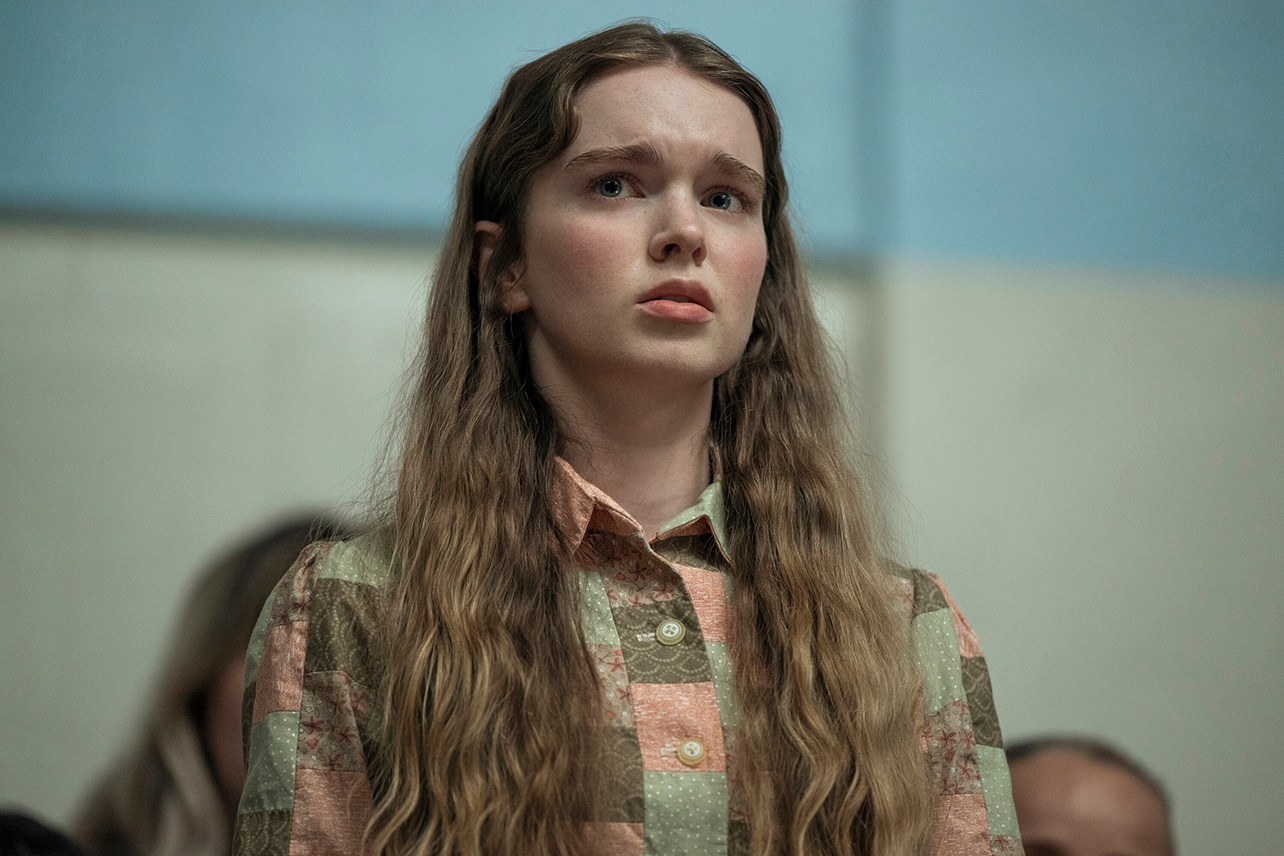
Based on King’s iconic 1974 novel, Carrie follows Carrie White (Summer H. Howell), a socially isolated high school student raised under the suffocating protection of her deeply religious mother, Margaret (Samantha Sloyan). After her father’s sudden death forces Carrie further into the world outside their home, she finds herself caught in the familiar machinery of teenage cruelty: humiliation, gossip, social hierarchies, and bullying. The difference this time is that the machinery has been upgraded: everything can be recorded, shared and replayed.
That may be the smartest element of Flanagan’s reinvention.
There has always been something cyclical about Carrie. In some respects, King was writing the original Mean Girls: the outsider, the social queen, the humiliation, the punishment, and the complicated realization that cruelty is rarely as simple as identifying one villain. Flanagan understands that connection and brings it into the present without simply turning Carrie into a technology-themed update.
The original story understood that high school could feel like a closed ecosystem. Flanagan recognizes that smartphones and social media have fundamentally changed the boundaries of that ecosystem. Kids used to be able to leave school and, at least theoretically, escape the people tormenting them. Now the hallway follows you home. The embarrassing photograph, the cruel comment or the humiliating video can continue circulating long after everyone has gone to bed.
The series gets considerable mileage out of that idea, and it gives the story a reason to exist again beyond simple nostalgia.
Where things become more complicated is the decision to stretch Carrie into eight episodes. Flanagan uses the additional space to broaden the perspective considerably. This isn't exclusively Carrie's story. The narrative moves between Carrie, Margaret, and various classmates, friends and antagonists, giving each character a relationship to Carrie and, more importantly, a version of events that helps explain how the tragedy develops.
That approach can be fascinating, particularly because it complicates the familiar good-versus-evil framework. It also means there is considerably more padding than you might expect from a story whose basic shape is already well known. The series is almost as long as the audiobook of King's novel, which puts the expansion into perspective. There is material here that genuinely enriches the story, but there is also material that feels like Flanagan making sure we understand something we already understood.
That has always been my biggest issue with Flanagan. He's an excellent storyteller, but subtlety isn't necessarily his strongest suit. His work frequently wants to take an intriguing mystery, pull it apart, examine every component and then give you a dissertation about what it all means. Sometimes that works beautifully. Sometimes you just want him to stop talking.
Carrie occasionally falls into that trap. The more perspectives we get, the more the series explains the emotional and thematic machinery behind the characters. There is value in that, but horror often benefits from leaving a little room for uncertainty. Flanagan sometimes seems uncomfortable with that empty space.
Still, there are moments when the expanded structure pays off. Because we spend more time with these characters, the eventual tragedy carries a different weight. The series isn't simply asking whether Carrie will become a monster. It is interested in the much more uncomfortable question of how a monster is made, and whether that distinction even matters once everyone has contributed something to the outcome. And if you think you know exactly how Carrie ends, Flanagan isn't necessarily interested in letting you settle comfortably into that expectation. The broad contours may be familiar, but the journey there has been rearranged enough to keep the series moving.
Howell gives Carrie the necessary vulnerability without reducing her to a victim, while Sloyan's Margaret brings a familiar character into sharper focus. Their relationship remains the emotional center of the series, and the show's willingness to spend more time inside that relationship is one of the better arguments for expanding King's story.
Ultimately, Carrie doesn't completely escape the shadow of the adaptations that came before it. That's probably impossible. Flanagan is an interesting filmmaker and a very good storyteller, but he has a tendency to reach for the profound and then keep explaining until some of the mystery disappears. Carrie is no different. But when Flanagan focuses on the uneasy space between victim and perpetrator, kindness and cruelty, and adolescence and monstrosity, the series finds something worthwhile to say.
It may not be the definitive version of Carrie, but it is an intriguing one — and, fittingly, a story about cruelty that understands just how much more difficult it is to escape it now.
Carrie premieres October 7, exclusively on Amazon Prime.