

How to Make a Killing
Writer/Director: John Patton Ford
Cast: Glen Powell, Margaret Qualley, Jessica Henwick, Bill Camp, Zach Woods, Topher Grace, Ed Harris
Glen Powell may have a movie star’s good looks, but they haven’t availed him much for as long as Hollywood’s tried to make him one. Maybe it’s true that movie stars don’t, or can’t, exist anymore; maybe jamming a square peg into a round hole is no kind of way to raise an actor into an icon. Either way, the industry’s impressive but Sisyphean attempts at convincing the American moviegoing public that Powell is indeed that rarest of things in post-2010s studio filmmaking, a bona fide star, aren’t paying off. He’s good. He’s also a man out of time. Just as the studio system balks at greenlighting projects based not on preexisting IP but original ideas, so too is it incapable of fashioning authentic stardom.
How to Make a Killing, marking Powell’s 10th role in roughly half as many years, offers the best proof to date of Powell’s gifts as an actor and shortcomings as a star. He’s good, but indistinct; he can play the lead in a thriller that hinges on intergenerational murder, but he can neither supplement its pulse nor give it one just by showing up on set. Maybe A24 thinks that casting a handsome sweetie pie in a loose modernized update on Robert Hamer’s Kind Hearts and Coronets is enough of a sell, though had the studio any sense, they’d have done more to connect the movie to Emily the Criminal, director John Patton Ford’s stellar 2022 debut. Likewise How to Make a Killing, Emily the Criminal focuses on a righteously spurned protagonist who, if the title isn’t a giveaway, does a whole lot of crime, partly to keep afloat and partly because working within the system doesn’t work; it invests in its star, too, being Aubrey Plaza, who effortlessly glues together Ford’s sharp interrogations of millennial economic disillusionment with her performance.
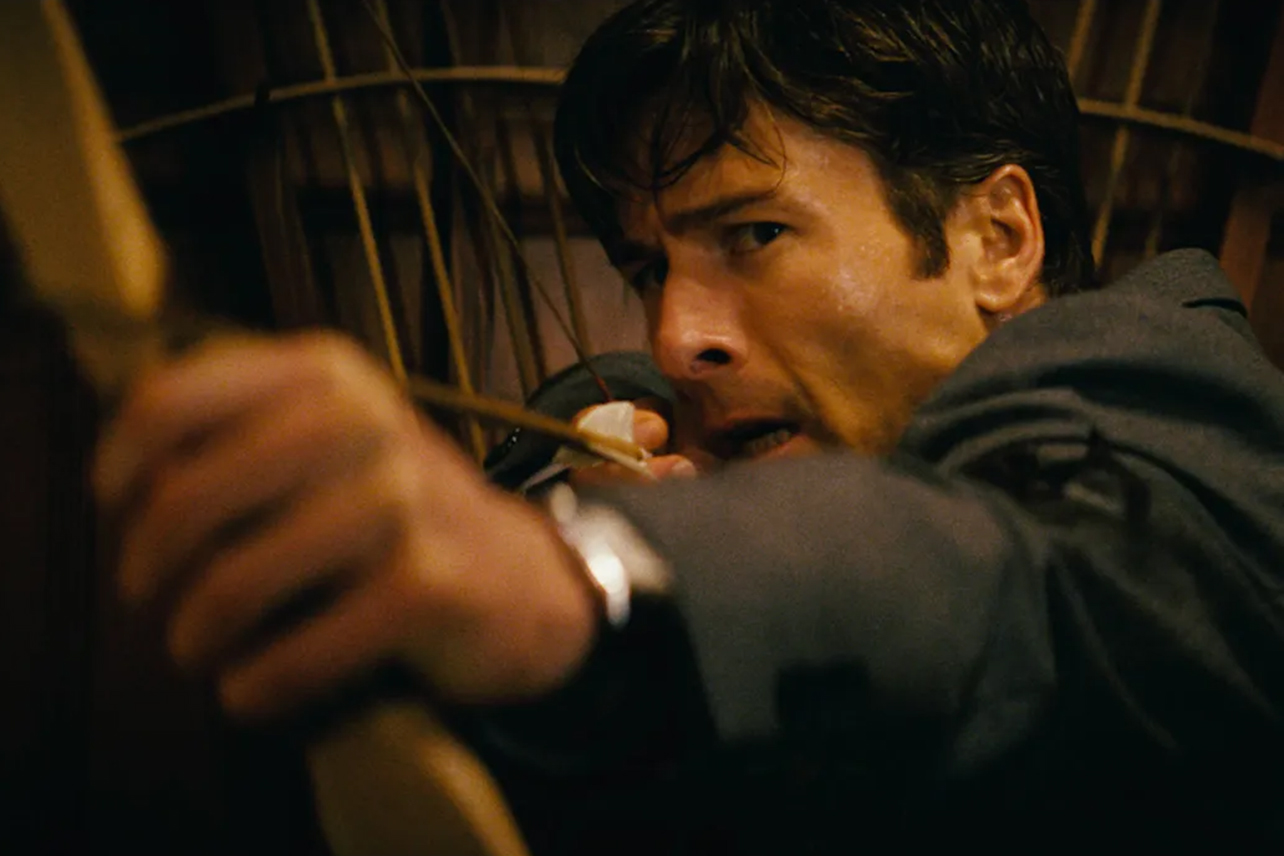
Powell leaves no such impression on How to Make a Killing. As Becket Redfellow, son of the disowned heiress to the Redfellow family fortune, valued somewhere in the range of “can’t be fully displayed on a calculator,” he’s made of charming smirks, wistful gazes, and clever banter, the last of these being reserved mostly for Father Morris (Adrian Lukas), the priest offering him spiritual comfort on death row as he waits for the hour of his execution. Whatever vitriol Becket claims to hold in his conversations with the priest is missing in Powell’s body language and facial expressions; he’s too hung up on playing Becket as a run of the mill smooth talker to hint at any trace of anger simmering beneath his happy-go-lucky exterior. It’s a pleasure watching him dazzle supporting characters with his disarming smile and down to earth manner, but the portrait lacks a necessary edge. There is no danger in Becket. There is only “aw, shucks” charisma.
This naturally sucks a lot of air out of the seedier side of Ford’s plot, in which Becket decides to systematically bump off every single person on his family tree who stands between him and his rightful inheritance of obscene wealth. Despite his mother’s banishment from the tribe, Becket maintains a claim to his grandfather Whitelaw’s (Ed Harris) assets, from money to property to enterprises. Kind Hearts and Coronets had a jolly old time with this basic conceit, casting Alec Guinness as each of the eight family members on the chopping block and concocting a handful of extremely silly ways for Dennis Price’s antihero to dispatch them; Ford has no such fun with How to Make a Killing, seemingly taking it on faith that the audience will laugh at stupid rich people dying via poisoned whitening strips.
In fairness, fine, yes, sure, Americans’ opinions on the upper-upper-upper class have soured worse than sun-baked milk over the last few years, and so it stands to reason that the average moviegoer tempted into buying a ticket to How to Make a Killing will derive a measure of schadenfreude from its central promise. But Hamer put greater effort into the deaths of the D’Ascoyne clan in Kind Hearts and Coronets than Ford bothers with in How to Make a Killing, where his wry approach to filming murder most foul betrays the comedy baked into the premise. Both Ford and the movie take themselves too seriously, exemplified as much by the toned-down humor as by needless tinkering with Becket’s two love interests: Julia (Margaret Qualley), his childhood sweetheart, who in the story’s present day has matured into a ruthless femme fatale; and Ruth (Jessica Henwick), the girlfriend of his cousin Noah (Zach Woods), a gentler, creative soul who falls for Becket even before Noah’s untimely (but also exquisitely well-timed) demise, then marries him afterwards. Julia is a monster. Ruth is a human being. Choosing one of them versus the other shouldn’t be much of a choice at all.
How to Make a Killing doesn’t ask Becket to choose, of course, unlike Kind Hearts and Coronets, where the climax hinges in part on which paramour Price’s character settles on. In Ford’s film, Ruth represents a better life, free from the temptations and iniquities of limitless wealth; Julia represents a leg-hold trap designed to keep Becket chained to money for the rest of his days. Ford appears to suggest that it sucks to be rich, actually, and in the conclusion makes a visual metaphor for wealth as its own sort of prison. But the message is disingenuous. Quite literally, Becket rebukes the idea that money cannot buy happiness, and Ford doesn’t create opportunities for his mind to change. Instead, he tries to have it both ways, spurning wealth while luxuriating in its privileges at the same time. No wonder the film’s punchlines don’t land: beneath its surface-level critiques of the 1%, it’s more enamored with money than it is disgusted by it.
If you haven't already, consider supporting worker-owned media by subscribing to Pop Heist. We are ad-free and operating outside the algorithm, so all dollars go directly to paying the staff members and writers who make articles like this one possible.