


Emma Stone’s Academy Awards nomination for Bugonia, her fifth in just over twice as many years, is expected, even routine. Her collaborations with Yorgos Lanthimos tend to meet with praise and accolades: out of the four movies they’ve worked on together, she’s received an AMPAS nod for her performances in three, being The Favourite and Poor Things in addition to Bugonia. Likewise unsurprising is the film’s presence in the Best Picture category; Lanthimos has been an Oscar mainstay since The Favourite, with precursor nominations for The Lobster and Dogtooth. The greater jolt is seeing Jerskin Fendrix recognized for composing Bugonia’s terrific score while blind. He deserves it.
Maybe the movie’s quaternary nomination for adapted screenplay should feel obvious, too. The Lobster, The Favourite, and Poor Things each appeared in their respective Best Screenplay categories: Original, Original, Adapted. Obvious or not, Will Tracy’s nod for Bugonia’s screenplay, borrowed from South Korean filmmaker Jang Joon-hwan’s 2003 movie, Save the Green Planet!, is appropriate; Bugonia faithfully reproduces the plot of Jang’s nihilistic sci-fi comedy, in which a disturbed loner kidnaps a high-powered CEO whom he believes to be the emperor of an alien race that’s ramping up to invade Earth, but soaks the details in enough iodine to cleanse them of their unsavory particularities. Tracy’s writing has its moments, found mostly in Stone’s exchanges with Jesse Plemons, her co-lead. But it’s missing any sense of subversion, not to mention torture by sex toys — and not the fun kind, either.
So the nomination is bizarre, because Bugonia is a mainstream and acceptable version of “bizarre” for an American audience, and for an AMPAS voting body that’s slowly coming around to the notion that perhaps there’s more to cinema than awards bait; as such, “awards bait” seems to be inexorably sliding toward extinction. That’s great. But if “awards bait” is replaced by films like Bugonia, which sanitize genre cinema to an extent that adaptations like it are cripplingly staid compared to their source material, then are we that much better off? What does Bugonia’s existence do for Save the Green Planet!? (Does the former actually owe anything to the latter, come to that?) Must a version exist of every gonzo genre picture that’s more palatable for unadventurous audiences? (There is, mind you, absolutely nothing wrong with having boundaries and limits as a viewer.)
Seeing Jang’s work fashioned into today’s variant on “awards bait,” or whatever phrase pop culture will whip up to describe it, is in many ways weirder than the work itself. But the work remains plenty weird: an artifact of the Korean New Wave, cresting around the time when the country produced some of the movement’s most audacious productions, including early works from reigning titans like Park Chan-wook, Kim Ji-woon, and Bong Joon-ho, Save the Green Planet! reads like a lost film in comparison to its famous peers.
What Jang achieves here, though, embodies the expressive freedom enjoyed through the Korean New Wave. Relaxation of censorship laws in the 1980s allowed the nation’s film industry to warm up; as more films began to be made domestically, more international films were imported into South Korean theaters. When the Film Promotion Law passed in 1996, replacing the country’s preliminary review system with a rating system, so went the creative restrictions that defined Korean cinema in prior years. No doubt Save the Green Planet! couldn’t have, wouldn’t have, been made before the turn of the century; it’s much easier to argue that Jang only could have made the film in the 2000s’ environment, where the mounting grotesqueries and overarching lunacy that comprises its structure was best suited to flourish.
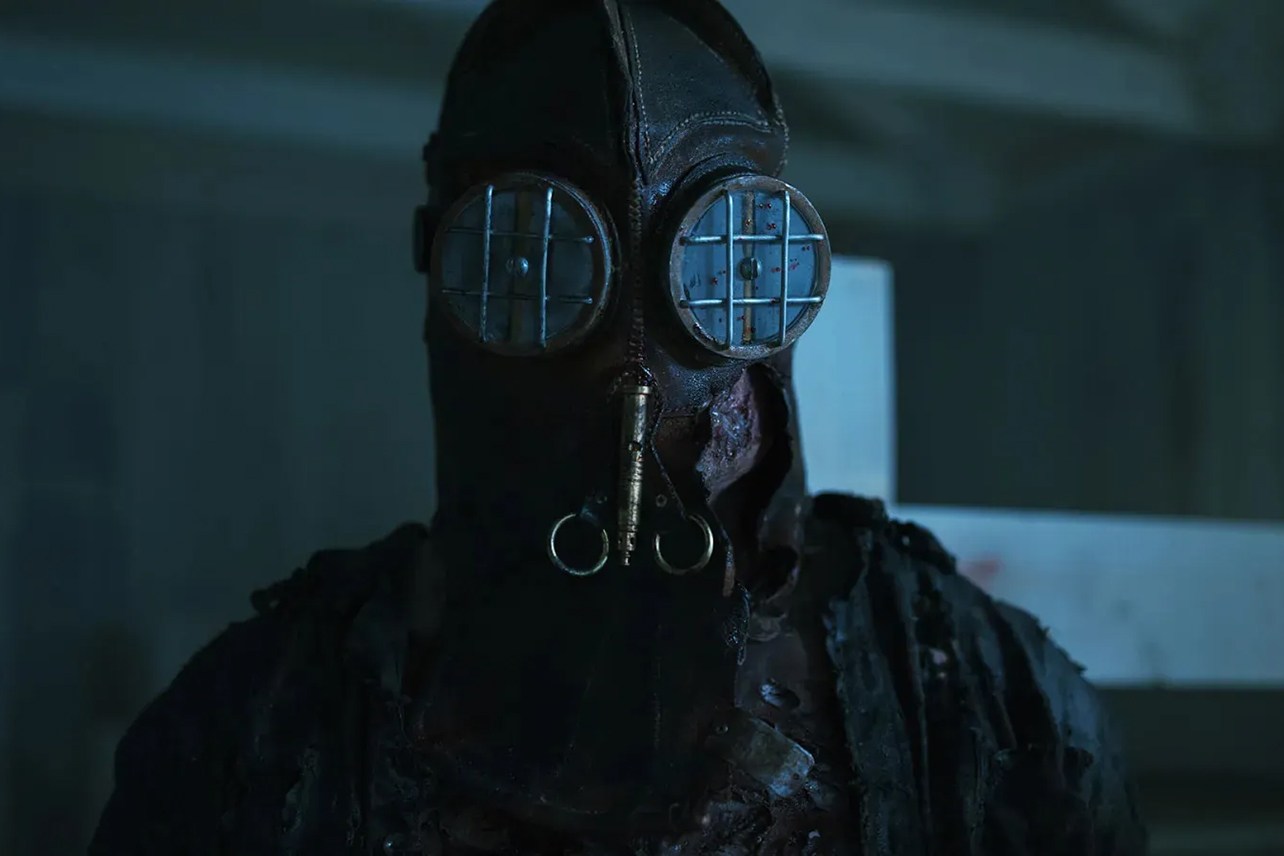
Byeong-gu (Shin Ha-kyun) is Jang’s antihero, a conspiracy theorist convinced that pharmaceutical executive Kang Man-shik (Baek Yoon-sik) covertly sends intel to his alien cohorts and their lord, the Andromedan prince, and that Kang means to contact the prince at the next lunar eclipse. Tracy leaves these bits intact, as well as Byeong-gu’s methods for corralling Kang: shaving his head to cut off his communications with the prince, crippling him to keep him from escaping.
The personal tragedy at the story’s center is there, too. Byeong-gu’s mother took part in a drug trial run by Kang’s company, which left her comatose; Teddy, Plemons’ character in Bugonia, shares that origin in common, and considers Michelle, Stone’s character, responsible. And SPOILER ALERT, the ending, the bleak note on which Save the Green Planet! concludes, is more or less the same in Bugonia, though Tracy opts for a gentler, quieter end for all mankind than the massive planetary explosion Jang uses as his film’s climax. That right there is emblematic of the difference between these films: Lanthimos, counter to his character as a director, goes with a kinder extinction event than Jang does. You’d think the guy who made Dogtooth and The Killing of a Sacred Deer wouldn’t shy away from a bit of awestruck terror in a movie where the world gets blown to smithereens.
You might also think Lanthimos would seize the chance to get as gooey and unpleasant as possible once Michelle ends up in Teddy’s custody. Tracy’s script excludes the worst of what Byeong-gu inflicts on Kang: there’s that literally steamy sex toy, yes, but there’s also crucifixion, complemented by hobbling and an aggressive use of an exfoliating mitt. Contextualized with early 2000s American horror cinema, Save the Green Planet! feels an awful lot like kin to “torture porn” films from that era, like Saw and Hostel. But those films play in different sandboxes from Save the Green Planet! and Bugonia, which, for that matter, occupies a sandbox distinct from Jang’s; Bugonia shoots for respectability, while the Saws and Hostels wallow in faux-edgy exploitation, no brains required for admission. Save the Green Planet! is, like so much Korean cinema, nigh-indefinable.
If the movies of South Korea are known for anything, it’s their malleability. Parasite, the Korean film everyone knows who hasn’t seen any other Korean film, turns from humor to heartbreak to cultural critique and even to horror, for a brief beat; the shift from one mode to the next is seamless, as if every thread is of a piece with one another. Save the Green Planet! relishes its malicious side and is genuinely uncomfortable to watch during its torture sequences, but there’s pathos in Byeong-gu’s abuse of Kang and his delusions, though these turn out to be valid in the end. We pity him. Some might even shed a tear for him, and the Earth — both because it’s a failed experiment and because it’s ultimately destroyed — and Kang, too, whose intentions were good but sadly futile. As much as Save the Green Planet! leans into displays of cruelty, it equally embraces humanity, tainted as it is by the barbaric impulses Byeong-gu acts on.
So why remake the film at all just to sand down its rougher, pricklier, tasteless edges? Grant that the optics of putting Michelle through the exact same torments as Kang are, put diplomatically, unflattering. A slick, well-funded production starring one of the most eminent actresses of the day probably can’t get away with the level of crazy Jang cranks Save the Green Planet! up to, because if Oscar voters are increasingly less incurious and fragile now than they were years back, the institution inclines toward propriety. Taste is a prevailing factor. But the refinement of Tracy’s screenplay deprives Bugonia of flavor. Even 23 years after its release, Save the Green Planet! is a heartier dish.
If you haven't already, consider supporting worker-owned media by subscribing to Pop Heist. We are ad-free and operating outside the algorithm, so all dollars go directly to paying the staff members and writers who make articles like this one possible.