
Backrooms
Writer: Will Soodik, Kane Parsons
Director: Kane Parsons
Cast: Chiwetel Ejiofor, Renate Reinsve, Mark Duplass, Finn Bennett, Lukita Maxwell
Tension shudders through Kane Parsons’ Backrooms, none of it dramatic. Instead, there’s a push-pull between what the film is and the digital campfire tale from which it was adapted. Parsons based the story on his own same-named web series from 2022; unsurprisingly, he likewise mined the series from a 2019 creepypasta sloshing around in the septic Hell of 4chan. If this suggests that Parsons lacks any original vision, at least what he achieved in his shorts — apart from viral stardom — demonstrates creative curiosity and instinct, not to mention drive: at the time of this writing, Parsons is in his early 20s, meaning he was just a kid when he made the Backrooms shorts.
The ambition of Backrooms, the series, is notably absent from Backrooms, the feature. With the backing of A24, the indie studio of choice for those who prefer horror cinema be leisurely, Parsons no longer has to rely on software like Blender to siphon ideas from his head and render them into images; he now has a whole production company at his disposal for the same purpose, with the vast resources that come with it. (“Vast” is, of course, relative, but if a $10 million budget looks quaint in the context of Hollywood’s financials, it must look like a fortune to a young blood accustomed to using open-source graphics suites as their toolbelt.) There’s nothing wrong with this, for clarity’s sake. No one should begrudge an underdog for scoring a win. What’s wrong ultimately lies in the project’s outcome — a two hour doldrums in search of meaning and a good old fashioned scare.
Nothing in this nigh-endless picture, wending as it will through a likewise nigh-endless labyrinth wallpapered with the same shade of piss-yellow that’s intrinsic to the brand’s aesthetic, succeeds in getting under the skin as the web series did so effortlessly. Maybe the problem is familiarity. Backrooms by now is a known quantity; fan obsession over “lore,” the odious buzzphrase favored by podcasters and self-made YouTube stars when “backstory” would suffice, has solved the riddle of “what even is it” sufficiently enough over the last four years to deny the film any mystery. Only viewers completely unversed in the Backrooms as an existential plane and narrative setting will engage Parsons’ story as a proper head-scratcher, and of those viewers, we should all be seethingly jealous; in commercialized form, Backrooms is stale right out of the bag.
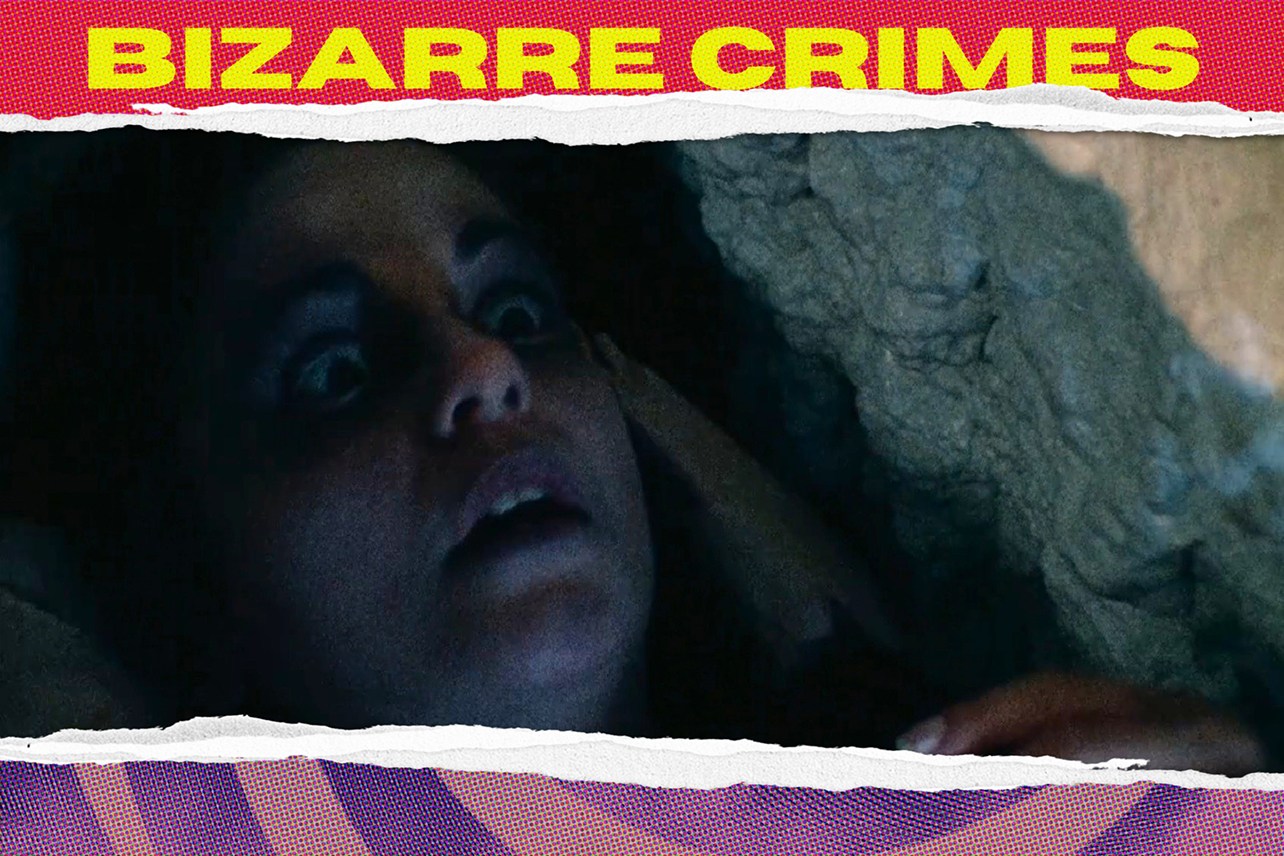
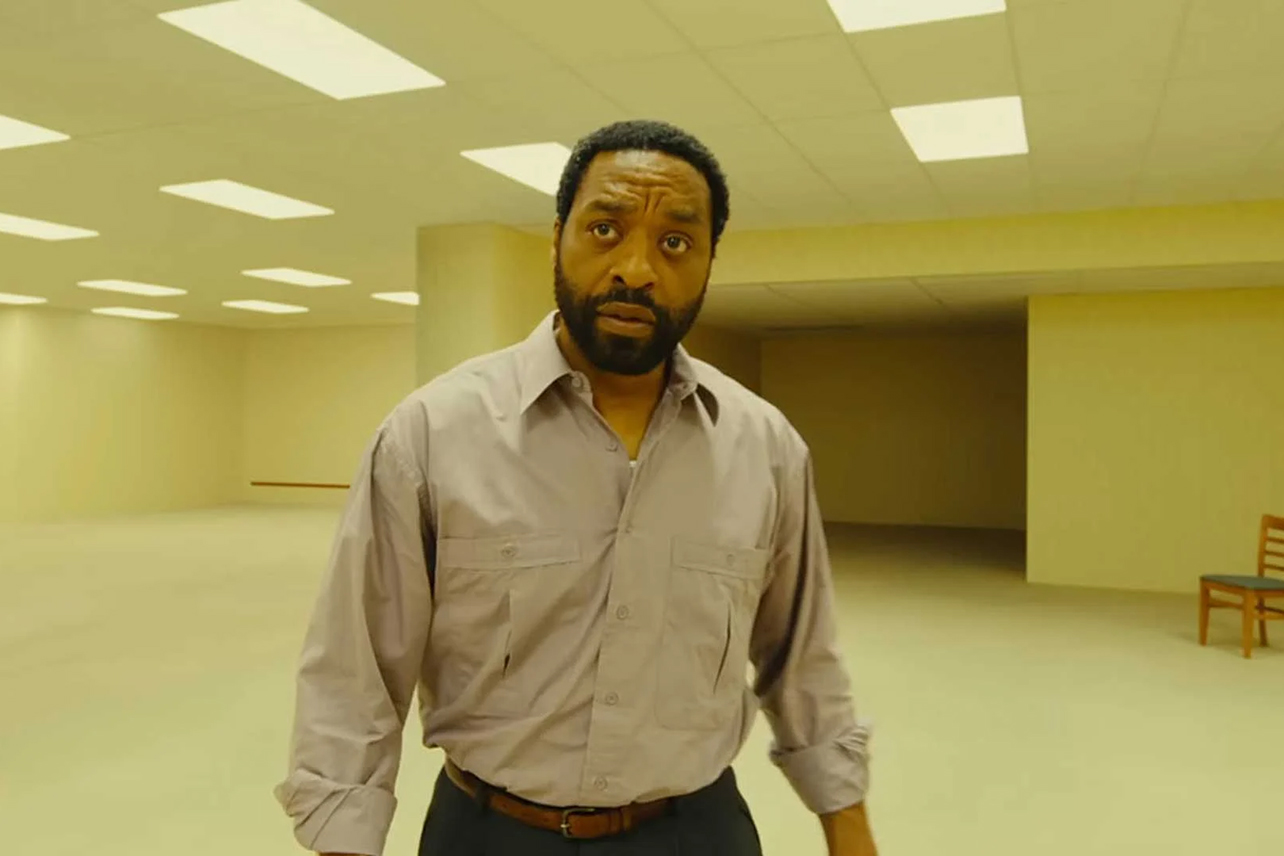
The film opens in its chief location with a premonition of hazards to come, then shifts lanes to focus on Clark (Chiwetel Ejiofor), an alcoholic as well as the most divorced man alive, bunking down in the furniture store he owns and manages in between visits with his therapist, Mary (Renate Reinsve). Where Clark’s trauma is fresh, hers is steeped in her childhood. Between the two of them, Mary copes better, though that’s not to say she copes “well”; she tends to stare off ruefully into space in her free time, recalling her grim childhood with her schizophrenic mother instead of trading trite pleasantries at parties. Then, Clark makes a discovery: a false wall that leads him to the Backrooms, that matted magnolia maze of infinite wrongness sparsely populated by grotesque reproductions of the surface world.
No worse circumstances could befall a man who, having hit rock bottom, stumbles upon a trapdoor leading to an even rockier bottom, so Clark’s discovery lends itself in theory to meaty horror storytelling and character development. But Backrooms can’t imagine a human being behind Clark, his foibles, and his failings — just a jittery bug-eyed mess, who frankly would read more as a man on the edge if the film didn’t insist on him as its chief POV figure. Making Mary a secondary protagonist (who graduates to “lead” around the third act) feels like a catastrophic mistake, depriving Backrooms of anything like dread. We in the audience know what he knows, and have seen what he’s seen, so expecting us to invest in Mary’s reaction when Clark jabbers at her about the Backrooms and shows her the chicken scratch map he drew of the place is a big ask — especially since Parsons can’t convert her incredulity over Clark’s objective reality into suspense. In his calculus, Backrooms isn’t about belief, which undermines Mary’s participation in its plot.
So what is Backrooms about? Parsons references economic forces as the subtextual “stuff” of his story in interviews (though it’s generous to call Backrooms “his” insomuch as he neither wrote the film’s script nor spun the concept from whole cloth); given that the originating 4chan thread included a photo taken at a disused furniture store under renovations in the early 2000s, this interpretation gives the film grist. But it never takes hold through Parsons’ direction, which, while impressive in its self-assurance, seems to be constantly in search of a thread to follow. In a way, that feels appropriate, though not to the point of facilitating the experience: as Clark and Mary get lost in the Backrooms, so too does Parsons appear lost in his role as a feature filmmaker. The most salient motif to be found here is a perhaps unintended critique of AI, which will barf out a JPEG of a shot from a fashion editorial where the model has extra fingers.
This, too, is an economic matter, fitting nicely into Parsons’ summary of Backrooms as a horror film made as a response to industrial trends: AI, as we speak, threatens to put the working class out of a livelihood while glugging down their drinking water and, just for good measure, stealing candy from their babies. It’s as great a danger to economies all over the world as unhinged heads of state throwing around import taxes like frisbees. But Parsons offers minimal insight through this motif consequent to centering the story on Clark’s unraveling, which would be perfectly fine if the unraveling came with any insights of its own or if Backrooms could articulate them gracefully. Soovik’s writing, and Parsons’ direction, land right in the sweet spot of “too much and too little,” as far as pathos is concerned — and leaves Backrooms lumbering around in pursuit of a message.
If you haven't already, consider supporting worker-owned media by subscribing to Pop Heist. We are ad-free and operating outside the algorithm, so all dollars go directly to paying the staff members and writers who make articles like this one possible.