

Welcome to the table — the gaming table, that is. From a Halloween adventure inspired by classic horror icons to one of tabletop gaming's most influential settings, Ravenloft has spent more than four decades lurking in the dark shadows of Dungeons & Dragons and using its allure of haunted castles, howling beasts, and tortured terrors to showcase to players and storytellers alike that horror belongs at the table.
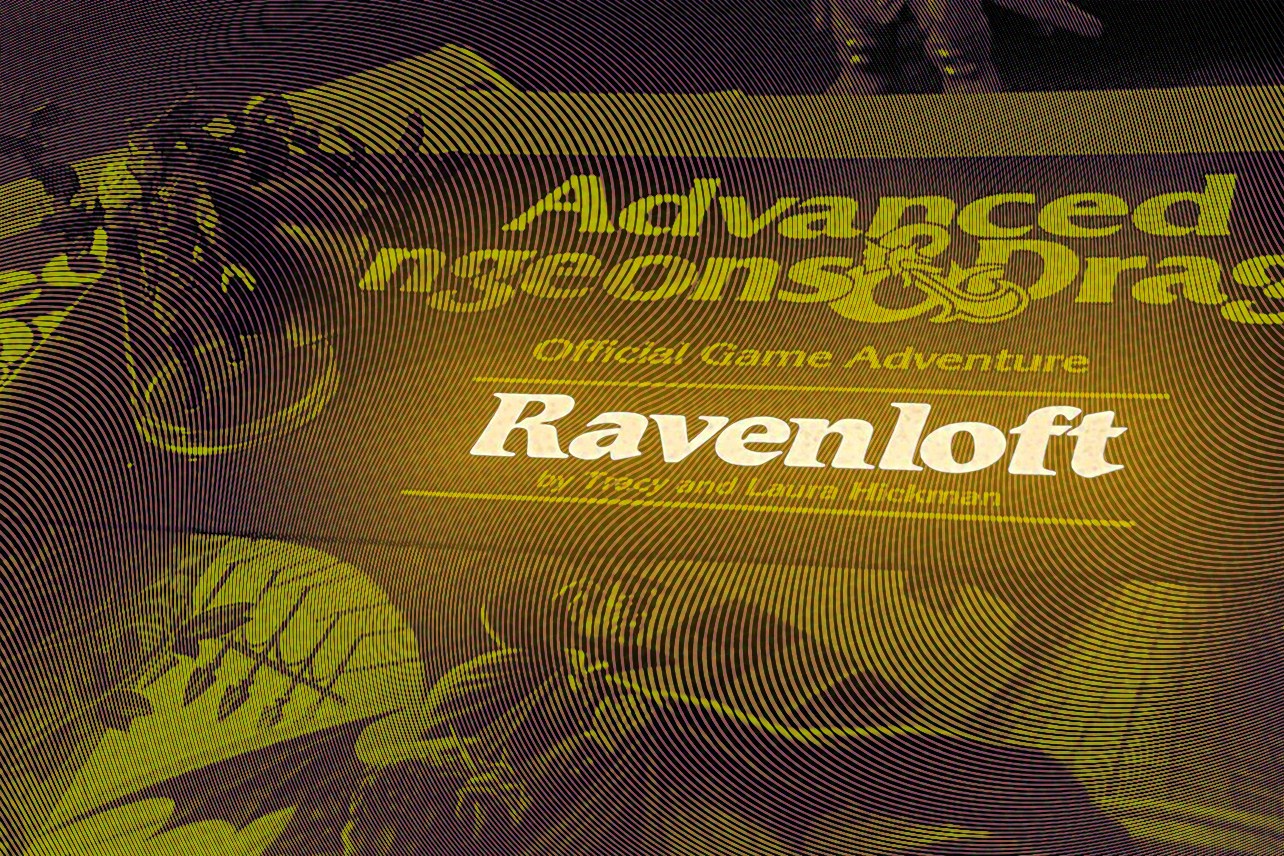
There are few locations in fantasy gaming as instantly recognizable as Castle Ravenloft, even if you have not wandered its haunted halls or clashed with various denizens in its dread-filled dungeons, the iconic castle on the hill proves that dragons are not the only danger faced by players looking to escape their day-to-day. If you mention its name to veteran D&D players, many will recall memorable moments playing games of Advanced Dungeons & Dragons, exploring the mist-shrouded grounds around its towering battlements as a pale nobleman watches from a high castle window. New players who may have only experienced Dungeons & Dragons 5th edition are just as likely to know the owner of Castle Ravenloft, Count Strahd von Zarovich, by name and reputation, as he is featured in Curse of Strahd, one of the most acclaimed adventures from the modern era of D&D.
What was at one point just a fun Halloween party adventure created to amuse and delight a small collection of friends has evolved into an entire multiverse of gothic nightmares that have helped redefine adventure modules, setting books, and the villains that we face at the gaming table. Ravenloft has done this all the while surviving the collapse of TSR, resurrection with the help of White Wolf, the trials and tribulations of Dungeons & Dragons 4th edition, and eventually returning to center stage in D&D 5th.
Like its immortal dark lords, Ravenloft has died more than once, and somehow, no matter how deep the stake was driven or how hard the party of fickle fates at play tried to kill it, it has returned stronger, wiser, and hungrier for new players to bring into the fold.
A Faustian Bargain
To understand why Ravenloft mattered in the early 1980s, it’s important to understand what the gaming landscape looked like at the time. Dungeons & Dragons was in the early years of Advanced Dungeons & Dragons, or D&D 2nd edition, and the vast majority of its adventures were focused on massive dungeon crawls inspired by the high fantasy works of JRR Tolkien, Robert E. Howard, and Fritz Leiber. These adventures were fun to be sure, but were for the most part progressive room exploration that challenged players to overcome monsters, traps, and puzzles. There were often villains who would serve as a kind of final boss in some cases, but these entities were memorable because they were powerful with a deep bag of tricks to pull from, and not because they were necessarily emotionally complex or compelling.
Even with centuries of literary representation, vampires would often be showcased as little more than impressive stat blocks with some nice opportunities for new items if the players could best them. This struck game designers Tracy and Laura Hickman as an opportunity for improvement, as they were well-read authors and understood that vampires were not scary because it could break down a door or toss a grown human about like a rag doll; there were manuals of monsters who could do all that. What the Hickmans understood was that vampires were monsters of a social nature, using fear, dread, and manipulation to harrow their victims, dealing just as much psychological damage as physical.
This led the Hickmans to a simple question that set the stage for late nights around gaming tables for generations to come: What if D&D treated a vampire as a protagonist rather than just another final obstacle?
If we look at it through a modern lens, many of Raveloft’s innovations seem standard to the gaming table. However, in the early 1980s, they were a revelation. Castle Ravenloft wasn’t simply a dungeon filled with rooms waiting to be checked off a grid paper map; it was a place that felt inhabited, even if it only existed in the theater of the mind.
Strahd was not waiting politely in the final chamber as the adventuring party moved from room to room, dispatching his minions and disarming his traps. He was actively stalking the party. Observing their progress and ambushing them when they were vulnerable just to sow chaos and deplete their resources to keep them in a constant state of unease.
Moreover, the adventure included a set of fortune card readings that would determine the locations of important artifacts, allies, and even Strahd himself, adding to the agency of the adventure and the role group storytelling played at the gaming table. This particular element gave the adventure a feeling of fluidity that, at least for me as a young teenager experiencing it, I had not had before in a D&D 2nd edition game.
This made it so that most campaigns did not unfold the same way, so if you returned to the table with new characters, you were more than likely going to have a different experience, even if the players rolling the dice were the same. Instead of power-gamers (the elder nerds who taught me to roll dice and paint minis) being able to remember each room number, what was inside, and where the loot was hidden, they were just as unprepared as I was as we checked our character sheets and set out to explore the haunted castle on the hill.
Ravenloft was elevated from the status of just being another D&D adventure to being an actual experience, complete with twists and turns none of us could see coming.
The Castle Ravenlofts' complex nature was not the only multifaceted entity at the table. Strahd himself was different from countless dragons, ogre overlords, and diabolical demons due to his relatability. His story was one rooted in pain and human emotions. He was a conqueror who had spent his youth fighting wars, and when the battles had finally concluded, he found himself a bit broken, while his younger sibling reaped the fruitful life grown in the blood Strahd had spilt. Where he was troubled by past trials and a body that had seen countless battles, his younger brother was full of hope and had found the love of a woman Strahd had hoped would be his. That complex self-loathing and jealousy pushed Strahd to take biblical action and murder his brother, but rather than appeal to some higher lawful power and be cast out of paradise, he appealed to a darker, more chaotic force and was drawn into a land of mist and horror, along with his castle and the woman he loved.
She, however, not wishing to live without her now-dead love, cast herself from the upper floors of Castle Ravenloft and shuffled herself off the mortal coil. This left Strahd not only alone, immortal, and guilt-ridden, but trapped in a domain of dread he would never escape.
The entity with which he made his Faustian bargain continued to reincarnate the object of his affection as a reminder that while he rules over the landscape of his own world, his conquests mean nothing and his victories are hollow. This torture pushed Strahd to commit more and more depraved acts.
This complexity really resonated with gaming audiences who were used to undead liches wishing to draw in adventuring parties just to watch them crushed in his traps or spider-demigods who delight in pain and torture. Having a villain who was a reflection of the human experience and laden with sorrow and loss transported the tabletop experience from just another dungeon crawl to something so much more.
Punk Rock Renaissance
With gamers falling in love with Ravenloft, TRS, the publishing company of Dungeons & Dragons at the time, had a curious problem. They wanted to give gamers more, but setting a countless string of adventures within the halls and grounds of Castle Ravenloft risked dulling what made the original adventure so memorable.
Their solution arrived in the early 1990s with the boxed campaign setting, Ravenloft: Realm of Terror. The new offering expanded the mythology of Ravenloft by a staggering degree. Where there was one cursed landscape, there were now many to explore.
In addition, the forces that Strahd had made his diabolical deal with had begun to gather other tortured entities who had committed horrors in the pursuit of selfish ambitions, and imprisoned them within the strange, multifractal interdimensional realm that we now know as the Domains of Dread.
Each of these Domains of Dread served as both a prison and a reflection of its ruler’s personality. While the prisoners, like Strahd, ruled over these domains, they were also constantly reminded of their sins and losses. They gained everything they wanted in their deals with the Dark Powers, but being denied what they truly desired as a twist of elegant cruelty spurred them to acts of wrath against the unlucky inhabitants who called their lands home.
With the expansion of the Domains of Dread, Ravenloft was able to infuse a multitude of horrors into its folio of fiends as it embraced nearly every aspect of literary horror, folklore, and haunted fiction.
Werewolf-infested forests, ghost-haunted manor houses, dark fairytales, psychological nightmares, Lovecraftian fishfolk, ancient, cursed pyramids, and Frankenstein-inspired flesh golems slithered and slinked their way across the gaming table, transforming Ravenloft into a celebration of the horror genre for the masses with systems and mechanics to explore it firsthand.
This approach gave Storytellers and Dungeon Masters flexibility to craft their own narratives within these Domains of Dread, allowing for even more agency to be provided for players as they had more to explore. Ravenloft, in many ways, became one of the first interconnected anthology horror stories that could be enjoyed by reading the various supplements and setting books, or by exploring them firsthand at the gaming table with your friends.
Ravenloft flourished throughout the 1990s. The setting produced a steady stream of some of my favorite tabletop roleplay offerings, including adventures, sourcebooks, and novels that gave even more insight into the Domains of Dread.
Among my absolute favorites of all time are the Van Richten’s Guides. Presented as journals written by the troubled monster hunter Rudolph Von Richten, these books examined ghosts, liches, fiends, constructs, vampires, and more from an in-universe first-hand perspective.
The brilliance of these books was that, rather than function as mechanical guides, they blended the mechanics into Ravenloft-specific folklore, investigation notes, and journalistic storytelling.
These were like found objects from another dimension that could be returned to time and time again, with each new reading providing some new inspiration for ways to build games, talk about creatures, and capture the spirit of this expanding world that lived not only between the covers, but within the minds of players around the world.
Van Richten’s Guides provided a universal lexicon to discuss with players you may have only just met, a world you both were excited about. It served as an almost hidden history of a place you both had to know and have studied to be able to communicate about. In turn, it created this beautiful community within gaming circles that made you feel less alone when you found yourself far away from lands that you were familiar with or at a new lunch table with people you had never seen before.
Not only were gaming books helping to grow the Domains of Dread, but the prose novels served an equally influential part in knitting them into the pop-culture landscape. Books like I, Strahd: The Memoirs of a Vampire gave even more insight into the tortured lord, transforming Strahd from a compelling adventure villain into a tragic literary figure, giving even more depth to his fall to the Dark Powers. Told in large part from his own perspective, the story really reinforced Strahd's melancholy and self-loathing, further defining the character and his place in the dread realms.
Other novels, including Knight of the Black Rose, Mordenheim, Lord of the Necropolis, and Shadowborn, would go on to further expand the Ravenloft setting, telling tales of haunted knights and cursed kings as they provided even more insight into the Dread Realms and the entities who ruled over them.
The late 1990s would bring turbulent times to the tabletop gaming landscape. TSR was plagued with struggling sales, fumbling finances, and inventory issues that opened the door for them to be acquired by Wizards of the Coast. This acquisition put many of D&D's campaign settings, including Ravenloft, into an uncertain space and, much like the magical mists of the Domains of Dread, threatened to consume the setting and lock it into a hidden dimension where it would dwell for an eternity in obscurity.
Much like stories where unexpected farmers fish rings out of streams, an unexpected publisher came upon the scene to breathe un-life back into the setting.
In 2001, White Wolf Publishing, known primarily for the World of Darkness games like Vampire: The Masquerade and Mage: The Ascension, was (at least to a punk teenager like myself) the alternative goth horror role-playing system played by counterculture kids who were trying to find their own voice in the world.
While we still loved D&D, the high fantasy and turbulent times had caused us to seek out new games to play at the table. As angsty teens, we found our table now inhabited by street-smart vampires and dark modern fantasy stories. So when the systems we had been playing to set ourselves apart from those who came before us became the stewards of the D&D setting we had loved as young kids, it felt in many ways like coming home again.
White Wolf’s emphasis on mature horror storytelling aligned perfectly with Ravenloft’s themes. Rather than reinventing the setting, they expanded on it through detailed Gazetteers, regional sourcebooks, and revised rules taking mechanics for horror, fear, and corruption into consideration.
As someone who was growing up at the time, I consider this to be one of the most dynamic and rewarding eras of Ravenloft because it felt like the setting was growing with me, becoming more complex and mature while still maintaining its authenticity and emotional complexity. In the way that TSR had established Ravenloft as a landscape to explore, the White Wolf years gave us an opportunity to try new things with our characters, evolving our understanding of how we played and in turn how we interacted with each other and with the world around us, both at the table and beyond.
This punk rock renaissance would be short-lived, though. Strangely emulating that time in life when my gaming party and I were not quite kids but not quite adults, Ravenloft would leave the crash pad of White Wolf and return to the world of Wizards of the Coast, where it would largely slip into obscurity in favor of D&D 4th Edition's focus on other settings.
While Strahd did occasionally appear, Ravenloft was largely obscured from view. For almost a decade, if you were not home-brewing or using older settings books, the Domains of Dread felt absent at the gaming table.
The Horrors Within
In 2016, on the heels of the tabletop roleplaying wildfire set by streaming actual play games and shows like Stranger Things, Wizards of the Coast made what I think was one of their most intelligent decisions for D&D 5th Edition. Rather than relaunching the entire Ravenloft setting, they returned to the original iconic adventure that made it such a powerhouse in the first place. They did it, however, with their updated system mechanics, expanded lore, new monsters, and complex non-player characters to further deepen the emotional resonance of the setting.
Titled Curse of Strahd, this was not just a remake. It was a celebration of everything that had made Ravenloft resonate with players and storytellers for generations. Veteran players were able to sink into familiar swamps and make their way through rolling mists they had been exploring since their youth. Those new to the table were able to experience Ravenloft for the first time without needing to consume almost 30 years of lore and continuity to understand what they were diving into. Curse of Strahd quickly became one of D&D 5th Edition's most celebrated adventures.
In 2021, Van Richten’s Guide to Ravenloft expanded the setting once more. Emphasis was put on each of the Domains of Dread being its own pocket dimension that was independent of the others, allowing Storytellers to borrow what they wanted for their own games and leave the others to be explored at other tables and other times.
As the horror genre had expanded in pop culture over the decades, this new offering included more modern horror genres like body horror and slasher horror while still keeping the classic Gothic horror at its core.
It seemed that Ravenloft was once more settling into a space at the table where it was poised to reestablish itself as it had during its early years, but as months turned into years, the setting was left largely untouched by publishers. It is undeniably one of the game’s most beloved settings, but outside of Curse of Strahd and the broader Van Richten’s Guide to Ravenloft, it often felt like a world that players had to revisit through nostalgia rather than new stories. As a lifelong gamer and someone who has worked in the gaming space for over 20 years, I myself have been in conversations where this subject has come up time and time again.
Some have said they believe the hands-off approach is an indication that publishers want to focus on other settings rather than be caught up in a legacy property they would have to defend if it did not serve all fans. Others have stated that it could be a simple lack of manpower and resources, causing companies to put their money into other places, as the legacy of Ravenloft is long-enduring and can withstand the absence of new books on shelves.
Regardless of the cause, the silence felt haunting until the summer of this year, when we were treated to the introduction of Wizards of the Coast’s newest offering, Ravenloft: The Horrors Within.
With Ravenloft: The Horrors Within, Wizards of the Coast is not simply returning to the Domains of Dread; it’s the strongest commitment to the setting that a publisher has made since White Wolf took Ravenloft to its first punk show in my strange youth.
Rather than providing another adventure centered on Castle Ravenloft and the surrounding landscape of Barovia, the new sourcebook provides a complete toolkit that gives players, storytellers, and dungeon masters a library of resources to build their own campaigns across multiple styles of horror and play.
In many ways, The Horrors Within feels like permission to expand as much or as little on the setting's identity as the audience wants. It’s a return to agency in a way that feels meaningful and is presented in a way that feels both easy to navigate for veteran players and those new to the table.
The original Ravenloft adventure was about one castle. The Realm of Terror expanded that idea into a campaign world setting. The White Wolf era deepened the lore and emotional maturity of both the villains and the players. Van Richten’s Guide to Ravenloft broadened the horizons and allowed the setting to interface with new and ongoing campaigns. Now The Horror Within feels as if it’s attempting to pull all those threads together into a single volume, and for the most part, it is doing it very successfully.
It does this by revisiting sixteen Domains of Dread, including a new cosmic horror realm inspired by H.P. Lovecraft's Call of Cthulhu. Within its pages, it provides fully realized Darklords with dedicated stat blocks, dozens of monsters, themed subclasses, new species, backgrounds, dark gifts from the Dark Powers, and a one-shot mini adventure designed to kick off a Ravenloft campaign in a way that requires very little preparation to run. There are even game-ready versions of the Darklords so storytellers and dungeon masters can inject them directly into their game. While I don’t mind building mechanics from scratch, I’m a published game designer and I have heard from friends who want to take a turn behind the storyteller screen that they very much welcome having these stat blocks on hand.
In addition to the book itself, Wizards of the Coast is supporting the book with quickplay maps on their virtual platform D&D Beyond and player options that are integrated into their digital character builders. All of this is an effort to bring the Domains of Dread into the modern gaming ecosystem that lives between pen-and-paper and online play.
Wizards of the Coast has also introduced themed publishing seasons, with Ravenloft anchoring the company’s Season of Horror initiative. Alongside The Horrors Within, players can explore digital encounter packs, organized play adventures at their local gaming stores, themed accessories, maps, digital dice, and additional online content designed to support Ravenloft across the gaming landscape.
The strategy feels incredibly different from the isolated launches we have seen in past years and, for me, plays to the larger connected nature of the setting and the threads that knit it into the gaming landscape across generations. Much like in the 1990s, when fans had access to novels, sourcebooks, boxed sets, and adventures, this seasoned approach, while different in format, feels similar in philosophy.
It’s also a testament to Ravenloft that it is not returning merely because players remember it fondly, but because they never really left.
Fantasy has produced no shortage of memorable worlds, but Ravenloft did something different. It asked everyone at the table, “What happens when evil wins, and what do you do next?”
In a time where spotting “Good and Evil” was as simple as telling “Dark from Light,” and villains were little more than blocks of numbers, you were rolling dice in the hopes of overcoming Ravenloft. Ravenloft provided shades of grey that made it emotionally resonate with those who were looking for deeper, more emotionally impactful experiences. The complex villains became more than their treasure tables; they became iconic entities who have haunted the gaming space for generations.
This emotional core has allowed Ravenloft to survive through decades of changing game design, industry upheaval, and shifting audiences, allowing it to endure where so many other settings have faded into memory. Castle Ravenloft is not just one of fantasy gaming’s most celebrated adventures; it’s one of its greatest tragedies. And like every Goth story, it endures because it speaks to something profoundly human. The legacy of this setting is full of pain, love, regret, and corruption, and more than 40 years after adventurers first crossed the drawbridge into Castle Ravenloft, its dreaded battlements continue to cast shadows over the gaming landscape, proving that the stories we remember most are not the ones we conquer, but the ones that haunt us long after the adventure has ended.