

In PRESTIGE PREHISTORY, Pop Heist critic Sean T. Collins takes a look at classic TV shows that paved the way for the New Golden Age of Television — challenging, self-contained series from writers and filmmakers determined to push the medium forward by telling stories their own way.
Twin Peaks Season 2, Episode 9
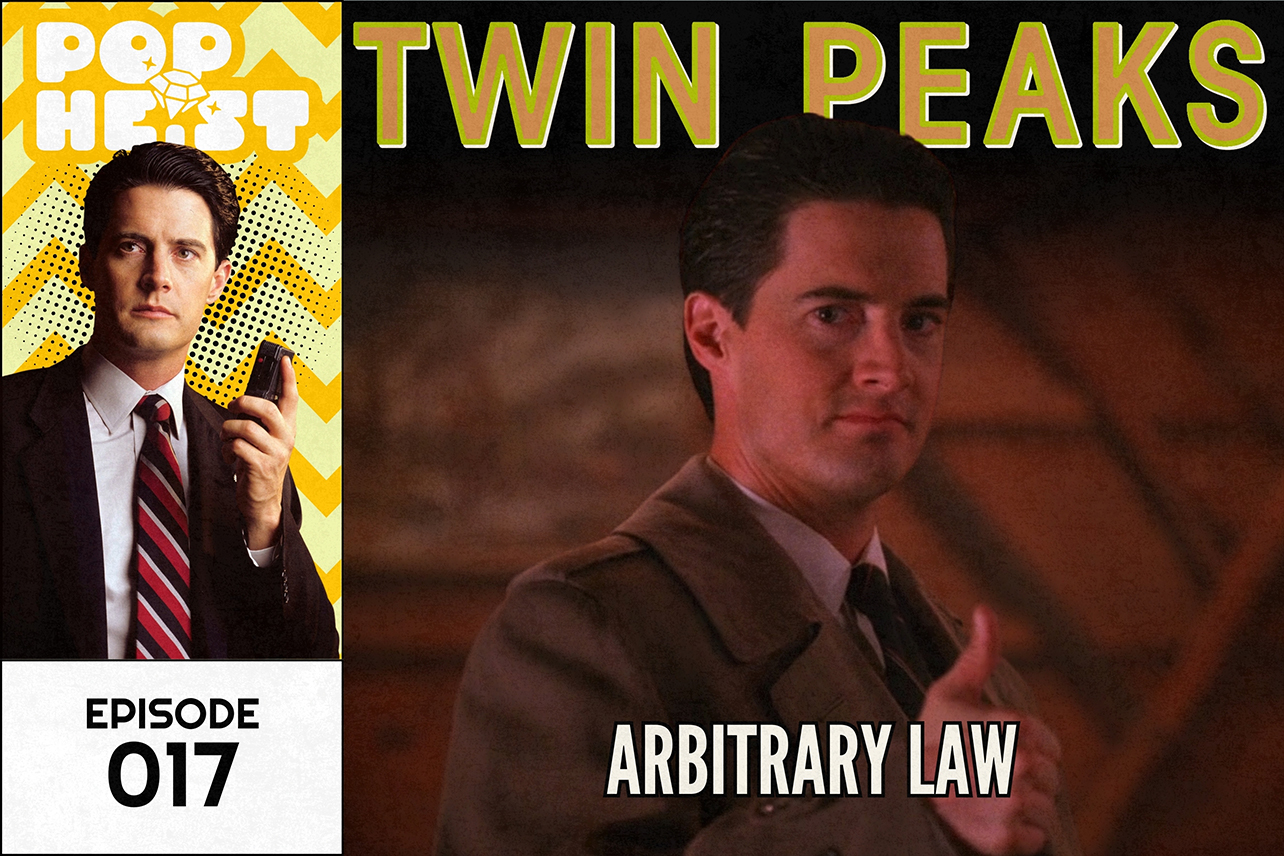
“Episode 16” aka “Arbitrary Law”
[NOTE: The pilot episode of Twin Peaks is not numbered; this, the seventeenth episode overall, is officially designated “Episode 16.”]
Original Airdate: December 1, 1990
Writer: Mark Frost, Harley Peyton, and Robert Engels
Director: Tim Hunter
Cast: Kyle MacLachlan, Michael Ontkean, Mädchen Amick, Dana Ashbrook, Richard Beymer, Lara Flynn Boyle, Sherilyn Fenn, Warren Frost, Peggy Lipton, James Marshall, Everett McGill, Jack Nance, Kimmy Robertson, Ray Wise, Joan Chen, Piper Laurie, Eric Da Re, Harry Goaz, Michael Horse, Sheryl Lee, Miguel Ferrer, Ian Buchanan, Jane Greer, Don Davis, Al Strobel, Michael J. Anderson, Frank Silva, Carel Stryucken, Mae Williams, Hank Worden
“In pursuit of Laura’s killer, I have employed Bureau guidelines, deductive technique, Tibetan method, instinct, and luck. But now I find myself in need of something new, which, for lack of a better word, we shall call magic.”
It’s magic, alright.
—
The resolution of the “Who killed Laura Palmer?” mystery wouldn’t have gone down like this today. In an era of short seasons and multi-year plans, the question would not have been resolved by executive diktat a mere handful of episodes into a 22-episode second season. The killer would not have been caught and killed just two episodes later. The writers would not have been left standing around figuring out what the show is about if it’s no longer about that.
Even the most meddlesome network or streamer exec would likely be content with revealing the killer as a Season 2 cliffhanger finale, then spending a third and final season taking him down. If you’ve watched enough prestige TV you can probably picture how that would have worked for Twin Peaks with startling clarity.
But this is where we find ourselves by the end of Twin Peaks Season 2, Episode 9: Kneeling on the floor of an interrogation room as water pours down from the fire sprinklers, cradling a dying Leland Palmer in our arms, as he begs forgiveness for crimes he does not remember and was forced to commit by a malevolent spirit that has been within him since childhood. Guided to the light by the words of Agent Cooper, who strokes his bloodied hair like a mother caring for a sick child, he sees Laura waiting to greet him, and dies.
With Leland’s confession and death, Twin Peaks as we know it comes to an end. The mystery that at varying times tied together the lives of (deep breath) Agent Cooper, Sheriff Truman, Deputy Hawk, Deputy Andy, Albert Rosenfield, Gordon Cole, Donna Hayward, Doc Hayward, James Hurley, Ronette Pulaski, Ben Horne, Audrey Horne, Leo Johnson, Bobby Briggs, Dr. Jacoby, the late Blackie O’Reilly, the late Emory Battis, the late Jacques Renault, the late Maddy Ferguson, Mike/Philip Gerard, the Giant, the Man from Another Place, Sarah Palmer, and Leland Palmer has been solved. The Gordian knot that is life in Twin Peaks has been cut. It’s hard to overstate the storytelling challenge this presents.
But for the time being, my god, what a storytelling opportunity, particularly for actor Ray Wise. He’s so riveting as the two sides of Leland Palmer — the screaming, wise-cracking, poetic demonic entity called Bob, and the broken man Bob used as his “vehicle” — that you forget this is his swan song on the show. Or maybe it’s that you simply prefer not to think about the show without a performer this talented still on it.
Wise’s Leland/Bob is brought justice in a scene that’s among the most mythic in the show’s run to date, and one of the clearest instances of the dream logic of the supernatural world taking over our own. Since the discovery of Maddy’s body, Coop’s investigation has been picking up mystical steam. Coop himself tells Harry, Hawk, and Albert he needs 24 hours “to finish this”; Hawk and Albert, different as they are, both encourage him to wander off the beaten path and follow his own to the killer.
Donna Hayward leads him to his next destination. Overhearing Deputy Andy recite Harold Smith’s suicide note - J’ai une âme solitaire — at the Double R, where James Hurley has just proposed to her (!!!), she realizes where she’s heard the phrase before. When she briefly took over Laura’s Meals on Wheels route, the strange young grandson of an old woman named Mrs. Tremond said the exact same thing, the same day Mrs. Tremond pointed Donna in Harold’s direction. Assuming she must know something, Donna runs to alert Agent Cooper.
But when she and Coop show up at the house, it’s a totally different place inside, home to a totally different Mrs. Tremond (Mae Williams). Though she’s never met Donna, she recognizes her name, and hands her an envelope Harold left for her before he died. It contains a missing page from Laura’s secret diary, which reveals that Laura had the exact same dream of a small dancing man in a red room that Cooper had. She recalls telling the aged agent the name of her killer — the information Cooper knew he’d somehow learned but forgotten before he woke up, way back near the start of Season One.
“Tonight is the night I die,” her entry concludes. “I know I have to. It’s the only way to keep Bob away. Bob wants me. I can feel his fire. But if I die, he can’t hurt me anymore.” The diary says that Bob is only afraid of one man: Mike.
So Cooper has one last audience with the One-Armed Man. He and Bob, Mike says, were once a perfectly matched set of killers, an unbroken circle — hinting that Cooper’s missing ring will be involved in the resolution of the case. Mike says the Giant, who’s now in possession of the ring, can help Cooper find Bob if he only asks him to. “You have all the clues you need,” Mike tells him, insisting that the answer can be found not in Cooper’s head, but in his heart.
It can’t be a coincidence when Cooper once again bumps into the elderly waiter who brought him warm milk the night he was shot and offered seemingly psychic condolences the night of Maddy’s murder. Clearly, the old man is connected to all this too, and he hints that Cooper is getting warmer.
It’s now, apparently, that Cooper and Harry agree to round up the unusual suspects, all of whom convene at the all-important Roadhouse. Ben Horne, is there, eating nuts and looking miserable; he’s just received a visit from Tojamura/Catherine, whose ingenuity he applauds but who got his signature on the deed to the sawmill and Ghostwood Estates without actually providing him the alibi she promised. (He recognized Catherine in full Tojamura drag just from the sight of one bare foot and its red-painted toenails. Real ones know.)
Along with Ben are a pair of lower-level members of his criminal empire, both former suspects in Laura’s killing, Bobby Briggs and the comatose Leo Johnson. Big Ed Hurley is there, perhaps as Bookhouse Boys representation. His nephew, James Hurley, is not, having fled town after learning of Maddy’s murder and losing faith in humanity as a result. “It doesn’t matter if we’re happy and the rest of the world goes to hell,” he says bitterly, as he drives away from a sobbing Donna. That’s a struggle alright.
In addition to Cooper, Deputy Hawk is also there. So is Harry, who’s brought Leland Palmer with him — saving Donna from almost certain death at Bob’s hands when he shows up at the Palmer house to pick him up.
But there’s a missing ingredient that only falls into place when an unexpected guest arrives. Major Briggs, Bobby’s good-hearted but mystery-shrouded father, arrives with none other than the old waiter from the Great Northern, whom he found hitchhiking in an attempt to get to the Roadhouse. Again, this man is connected, somehow.
Smiling as he usually does, the waiter offers Cooper a stick of gum. Leland, who popped a piece into his mouth conspicuously after “learning” from Maddy’s mother that his niece had gone missing earlier in the episode, smiles. He used to chew that gum as a kid, and it’s his favorite gum in the world.
“That gum you like is going to come back in style,” says the waiter.
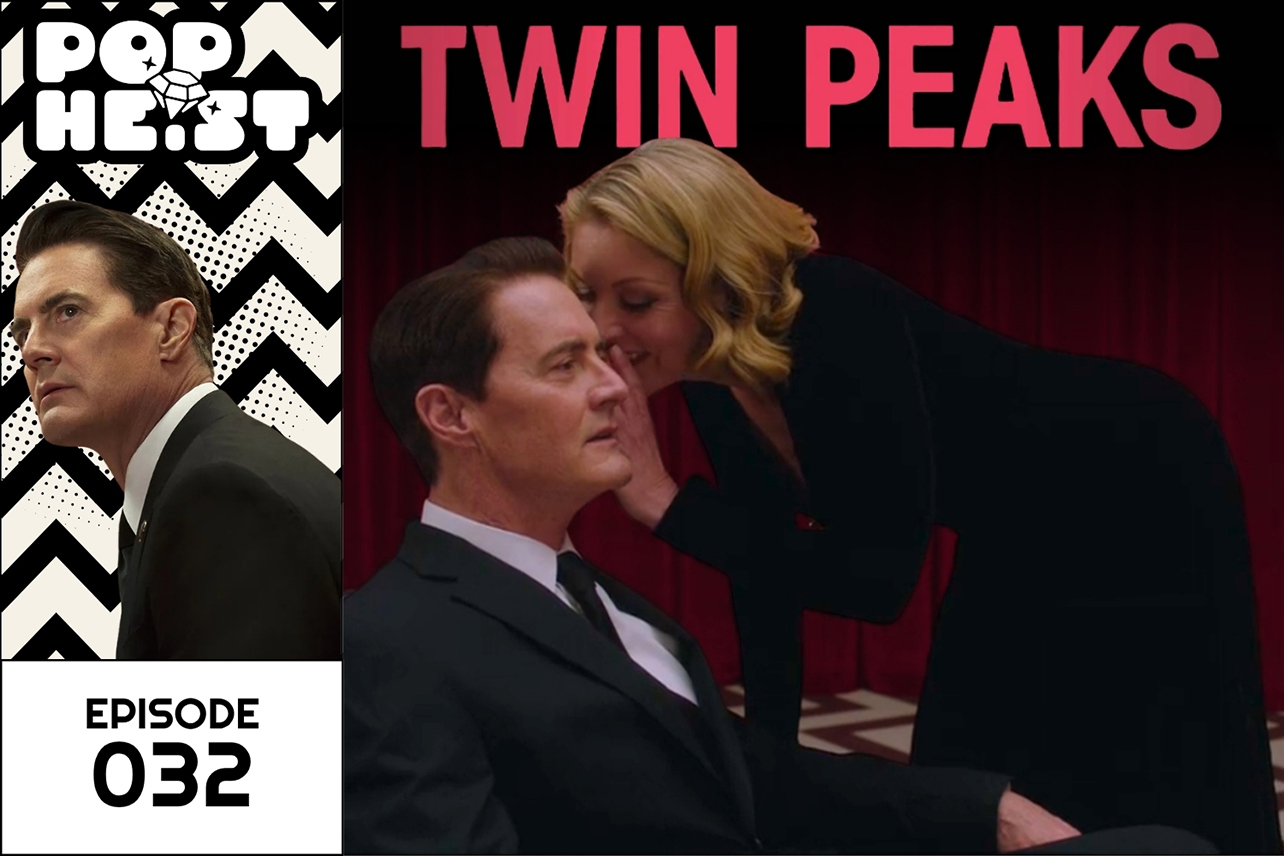
The world freezes. Cooper is back in the Red Room, old once again. The Man from Another Place dances. Laura Palmer leans over and whispers into his ear.
“My father killed me,” she says.
Coop returns to our world. The Giant appears before him, and drops his ring on the floor before disappearing. The circle is now complete.
It’s all over then but the screaming. Luring Leland to the Sheriff’s Department under the guise of serving as Ben’s attorney — no one seems to be thinking clearly enough to recognize that you probably can’t represent your own daughter’s killer in his murder case — Cooper and Truman shove the possessed man into an interrogation room and lock him inside. Instantly, the mask is off. He shouts, he howls, he huffs, he puffs, he laughs, he mocks, he bellows. He is Bob, and yes, he killed Laura and Maddy, and yes, he will kill again.
No one realizes Bob intends his next victim to be Leland himself.
When the Department’s newly souped-up fire detection system is triggered by the cigarette smoke of Lucy’s obnoxious suitor Dick Tremayne, torrential downpours erupt from sprinklers throughout the station. Leland/Bob reacts like a rabid dog, standing and screaming and finally ramming his head into the room’s reinforced door over and over. By the time Harry can regain his footing on the slippery hallway floor and get his dropped keys in the lock, the damage has been done.
But the knowledge of who he has been and what he’s been made to do is what truly pains the dying Leland. As Harry and Albert watch, Leland talks to Cooper, whose perfect hair now dangles wetly down his forehead beneath the rain of the sprinklers as he cradles Leland’s head in his lap.
Everything he says is agonizing. He describes the process by which he was first possessed by Bob: “I was just a boy. I saw him in my dreams. He said he wanted to play. He opened me, and I invited him, and he came inside me....When he was inside, I didn’t know. And when he was gone, I couldn’t remember. He made me do things. Terrible things.” The similarity to sexual abuse, and to the way abusers turn their victims into accomplices, is so clear it can hardly be looked at directly.
Leland explains that Bob, and a mysterious “they,” wanted to possess other people “that they could use like they used me,” Laura foremost among them. When she resisted, they forced Leland to kill her. This knowledge seems more fatal to Leland than the blows to the head.
“What have I done?” he cries. “Oh God, I love her.” Present tense. “I loved her with all my heart.” Past tense.
Knowing Leland is dying, Cooper talks him through the process, describing the unification of the boundless self with the limitless light behind reality. Inside that light, Leland sees Laura, and dies.
When the dark and stormy night passes, Cooper, Harry, and Albert walk down a trail in the woods, where they encounter Major Briggs, standing there as if he’d been waiting for them. The men debate the nature of what they’ve just experienced — whether Leland was merely insane or truly possessed, whether it’s more or less comforting to believe in demons than in men who would rape and murder their own children. What matters, Coop says, is that it’s their job to stop the horror in whatever form it takes.
“Maybe that’s all Bob is,” Albert speculates. “The evil that men do. Maybe it doesn’t matter what we call it.”
Harry, who I can’t help but note with some pleasure now seems cool with his former nemesis Albert, concedes the possibility. “Maybe not. But if he was real, if he was here, and we had him trapped and he got away…where’s Bob now?”
Then some weird demon’s-eye-view camera whisks us to a glowing cave in the woods, out of which soars a spectral owl. It is not what it seems.
How do we process the enormity of Leland Palmer’s crimes? What we learn about them here is exculpatory, after all: Both Bob and Leland attest that Leland was unaware of what happened when Bob was in control. He seems to have regained those hidden memories only after Bob mortally injures him and then disappears, becoming that owl in the woods.
To be sure, there’s a cycle-of-abuse element to the murders, as Leland reveals when he describes the way Bob “came inside me” when he was first possessed as a child. But former abuse victims who abuse others generally don’t completely black out every time, as though under the control of an external force, when they commit their own crimes. None of this means that the Bob/Leland/Laura sexual assault and abuse storyline doesn’t resonate with survivors; it does, including with me. It just means that if we want to unpack the metaphor we may have to go wider.
Leland’s possession by Bob and Bob’s destruction of Laura and Leland alike represents a primal fear of betrayal — a fear experienced differently by both sides. Starting with Leland, the devil made me do it is an old saw for a reason; in Bob, we see the drives and desires at work within ourselves that we feel we can barely control. You don’t need to be an outright monster to hurt the people you love by pursuing things you find irresistible in the moment. Sometimes you have no idea you’re hurting someone until it’s far too late.
What about Laura? Her point of view is always paramount for David Lynch and Mark Frost; it has been from the start, even when she was a dead body wrapped in plastic. Since she never identifies Bob as Leland in her secret diary it’s hard to say if or when she learned the demon’s secret human identity, but let’s say she found out years earlier. To borrow Cooper’s frame, which discovery would she find more traumatic: the existence of predatory supernatural entities, or the fact that her rapist is her own father?
For the pursuers, like Cooper and his friends, the nature of the threat they face is all-important. But as Major Briggs puts it, the cause of “an evil that great in this beautiful world” doesn’t truly matter, certainly not from the perspective of the victim. The transgression is so total, the pain so unbearable, the evil is so evil — a Red Room of the mind, from which one can escape into either great light or great darkness.
NEXT: "Dispute Between Brothers"
If you haven't already, consider supporting worker-owned media by subscribing to Pop Heist. We are ad-free and operating outside the algorithm, so all dollars go directly to paying the staff members and writers who make articles like this one possible.