
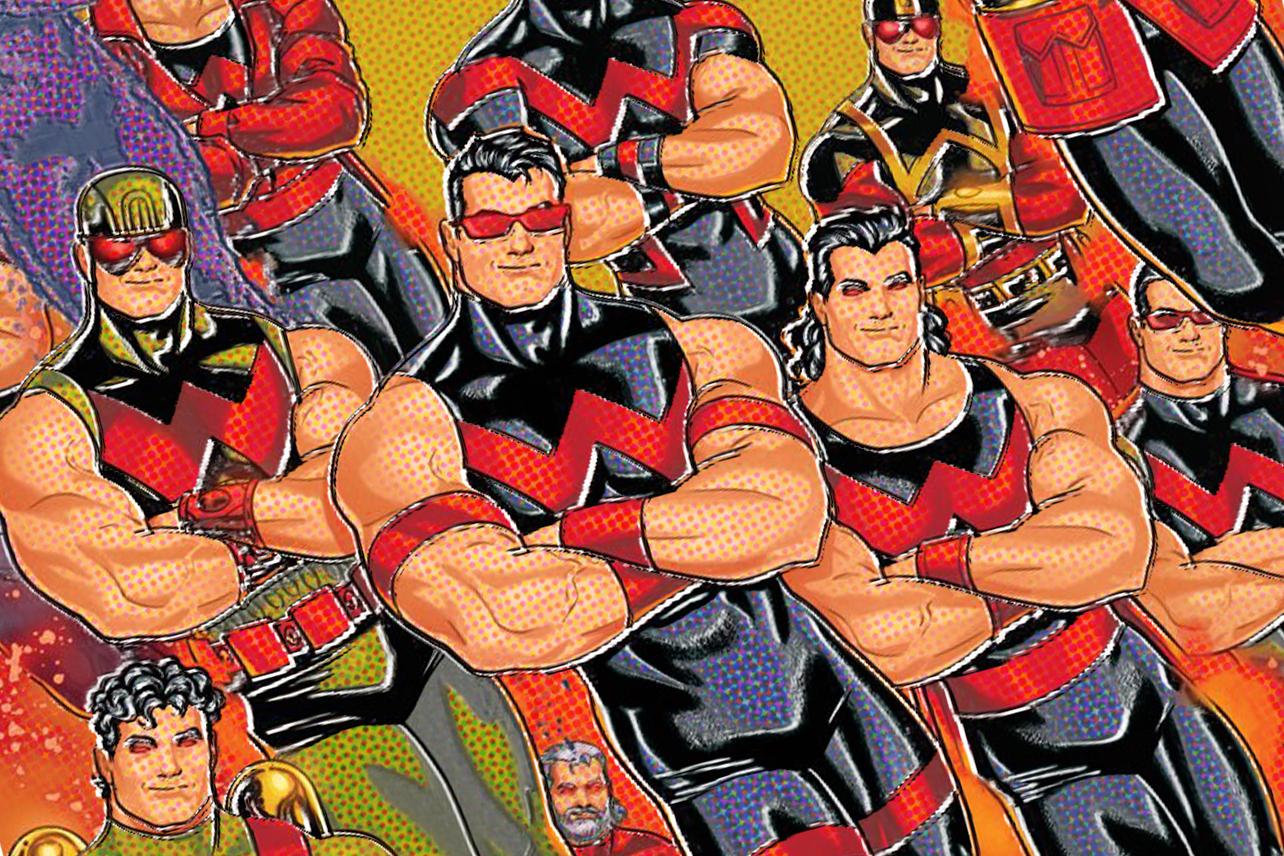
If you were to rank all the characters who have been an Avenger in the history of the franchise, Wonder Man would land definitively in the B-tier (if not lower). He's not a stalwart Avenger like the "Big Three" (Captain America, Thor, Iron Man), but he's a character who never seems to stray far from the team for very long (like Hawkeye or Vision). Wonder Man is someone whose origins date to the Avengers' earliest days in the 1960s Silver Age of comics, and he's a character with a number of notable — even familial — connections to a bunch of other Avengers, which means that, despite his B-list status, he has a long and occasionally complicated comic book history.
He's also a member of the ever-growing, but still somewhat exclusive, subgroup of characters to receive a dedicated live-action adaptation, thanks to the recent release of the Wonder Man streaming series on Disney+ (starring Yahya Abdul-Mateen II and Ben Kingsley), which makes it the perfect time to unveil the Wonder Man Heist Guide!
So who is Wonder Man?
In short, Simon Williams, an industrialist turned super-villain turned zombie turned Avenger and actor turned being of pure energy turned voice inside Rogue's head turned pacifist. Oh — yes, that Rogue.
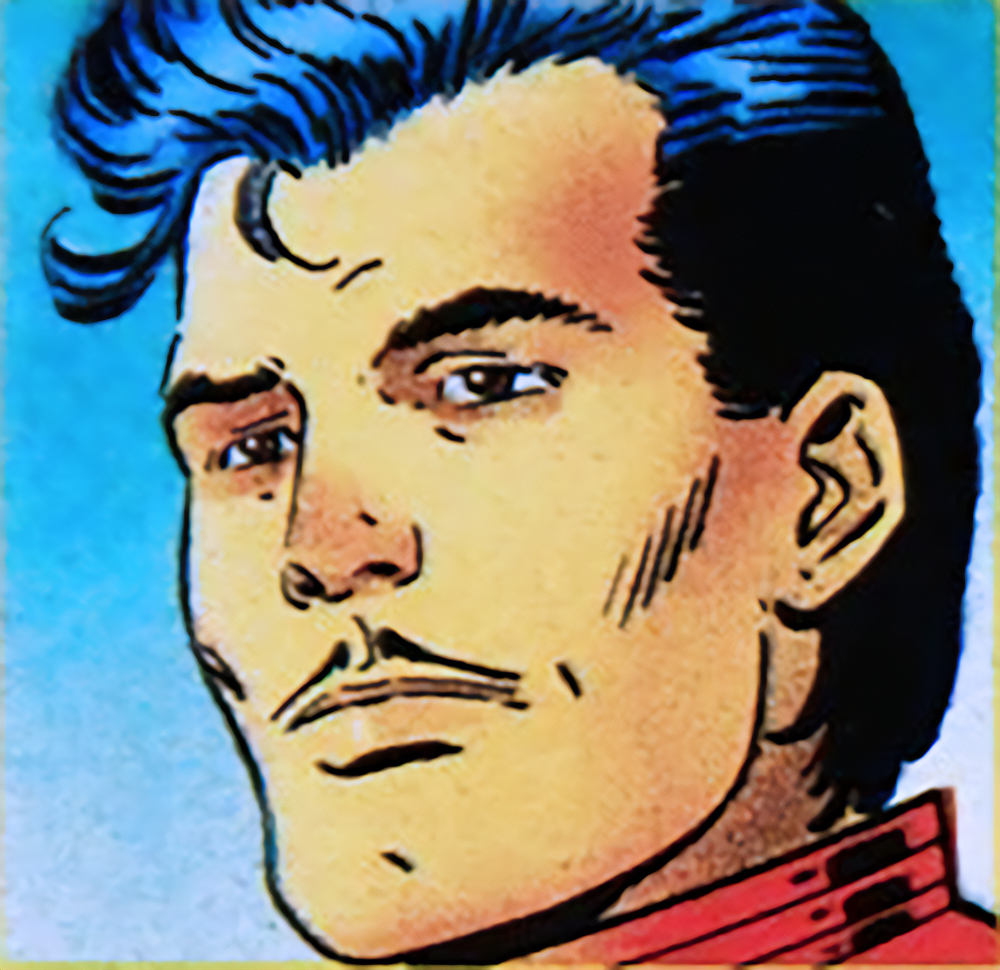
Wonder Man first appears in Avengers #9 (October 1964) by Stan Lee and Don Heck (with Jack Kirby having designed Wonder Man's initial look).
A failed industrialist arrested for embezzlement who publicly blames Tony Stark for all his woes, Simon is approached by the villainous Masters of Evil who are looking to get a leg up in their ongoing battle with the Avengers. They offer Simon tremendous power to allow him to get his revenge on Tony Stark and his heroic bodyguard, Iron Man (for a long time, Iron Man's cover story was that he was a totally separate person from Tony Stark, hired by Tony as his bodyguard/personal superhero).
Baron Zemo, leader of the Masters of Evil, bombards Simon Williams with a variety of chemical and energy treatments which grant him tremendous strength. The treatments also poison Simon, requiring that he take a specific antidote possessed only by Zemo at regular intervals to stay alive. With the newly-empowered Wonder Man thoroughly under their thumb, the Masters stage a battle with the Avengers to allow Wonder Man to save the day, ingratiating him to the heroes. He reveals his life-threatening condition to them to further earn their trust, but Wonder Man ultimately betrays them to the Masters. However, he's ultimately so overcome by the Avengers efforts to save him — a man they barely know — that he turns face and betrays the Masters of Evil, at the cost of his own life.
So that's it for Wonder Man? One comic book appearance?
Nah, this is comics, where dead rarely means dead. Wonder Man was a done-in-one character for a good chunk of years, though. A common urban legend surrounding the character is that Stan Lee killed him off because rival DC Comics threatened litigation due to the similarities between Wonder Man and their character, Wonder Woman. While that's not true — Wonder Man dies in the same issue he is introduced, meaning DC would have no way to know he was coming until after he was dead — Lee did admit to a fanzine that he didn't revisit the character in order to avoid any issues with DC Comics after finding out DC had used a character named Wonder Man in a Superman story about a year earlier, and Lee's successors chronicling the adventures of the Avengers followed suit.
Despite being dead, the character continued to make his presence known in his absence in various ways. Avengers #52 introduces the Grim Reaper, a super-villain who is actually Wonder Man's brother, Eric, who wants revenge on the Avengers, whom he considers responsible for his brother's death. Avengers #57 introduces the synthezoid Vision (a "synthezoid" is like a robot, but more comic book-y), and an issue later, it's revealed that in creating Vision, the villainous robot Ultron based Vision's robotic mind on recordings of Wonder Man's memories and brain patterns stolen from the Avengers. This would later prompt the Grim Reaper to try and transfer Vision's mind into the (seemingly dead) body of Wonder Man (and when Wonder Man eventually returns, he and Vision would come to consider themselves brothers).
But then in 1976, DC Comics introduced a character named Power Girl (an alternate Earth version of Supergirl). They did this despite the fact that just a year earlier, Marvel had given their character Luke Cage the moniker "Power Man" and retitled his series as such. So Marvel editor Jim Shooter figured if DC was going to trot out a "Power Girl," they couldn't say anything about Marvel having a "Wonder Man." And so with Avengers #151 (September 1976), Wonder Man was brought back to life.
How was Wonder Man brought back?
Grim Reaper would eventually succeed in resurrecting his brother, albeit inadvertently, when he had the houngan priest Black Talon resurrect Wonder Man as a mindless zombie (or "zuvembie," in the Comics Code Authority-friendly language of the time) and set him against the Avengers.
The act of ambling about seemed to jumpstart Wonder Man's consciousness, and he soon shook off the control of Black Talon. It was revealed that he didn't actually die, but rather entered a death-like coma as his body transformed from regular flesh-and-blood to one sustained by ionic energy as a result of Baron Zemo's treatment.
Despite having not technically been dead, Wonder Man's death-like state left him with a unique-to-superheroes fear of death. Having experienced something akin to it once, Wonder Man found it difficult to put himself in situations which risked a return to that state — even though he was now functionally invulnerable and exceedingly strong. The shorthand indicator of his strength, following on from a line in his first appearance, is that his fists hit with the strength of Thor's hammer — something he would never shut up about for a long time after his return, despite the way it functionally defines him as a character in relation to someone else instead of as a character in his own right.
Over time, and thanks in part to a friendship with fellow Avenger and former member of the X-Men Beast, Wonder Man overcame this anxiety, becoming a member in good standing. It was around this time that Wonder Man also started acting as a means to develop a life outside the Avengers. Despite his introduction as a Tony Stark-esque inventor/businessman, he was drawn to acting, feeling he'd spent so much time acting like a superhero while grappling with his anxieties surrounding death. By Avengers #211 in 1981, he left the Avengers and went west, to California, getting work as a stuntman.
So was that it for Wonder Man then?
Not by a longshot! Living on the West Coast proved advantageous when Marvel launched a second Avengers title based in California, titledWest Coast Avengers (first as a four issue limited series in 1984, then as an ongoing book in 1985). Wonder Man joined as a founding member of that branch, alongside Hawkeye, Mockingbird, Tigra and Iron Man (with Rhodey inside the armor at the time instead of Tony Stark).
This set the stage for Wonder Man's longest and arguably most successful sustained run in comics. He remained a steadfast member of the West Coast Avengers (eventually, the series was retitled Avengers West Coast as Marvel leaned into the Avengers' branding) through most of the team's existence, serving as the de facto "strong guy" as the comic underwent a number of roster and creative changes.
He was a central player in one of the series' biggest (but not necessarily best…) story arcs, as writer/artist John Byrne came in and blew up Vision, reducing him to an emotionless state with no attachment to his wife Scarlet Witch. This marked the beginning of a long arc which saw Byrne uncomfortably push Scarlet Witch to the point of villainy for a time. Wonder Man landed at the center of the drama when he refused to let a new copy of his brain patterns be used to restore his "brother" because Wonder Man had realized he was in love with Scarlet Witch, too. Nu-Vision ultimately let him off the hook, saying he would refuse the brain patterns even if they were offered.
Additionally, as part of the comics boom of the late '80s and early '90s, Marvel attempted to flood the market with as many titles as possible. This led to Wonder Man getting his own ongoing series for the first time in 1991, one which specifically tapped into his role as an LA-based superhero with ties to Hollywood. One of his recurring villains: a guy named Splice. Get it? Like splicing film…? As became custom at the time, the book would participate in large crossover events like "Operation: Galactic Storm" and "Infinity War."
Wonder Man ultimately lasted over two years, drawing to a close with issue #29 in December 1993.
Its end came as part of a reshuffling of the Avengers books, which saw Avengers West Coast conclude with issue #102 and be replaced by a new series, Force Works. It took the majority of the Avengers West Coast roster and reassembled them as a gritty, in-your-face team for the '90s, at least on paper (because force…works…). Steadfast West Coast Avenger he was, Wonder Man dutifully signed up, only to bring the first issue of the new series to a close by dying again.
Oh, so he's dead NOW.
Not so fast! While Wonder Man's death in Force Works #1 meant he missed out on the rest of that book's run (which also meant he missed out on "The Crossing" and "Onslaught," so there's some silver linings there), you can't keep a good ionic being down. When Kurt Busiek and George Perez were tapped to relaunch the Avengers in late 1997 with a neoclassical focus, shedding many of the '90s trappings that had been foisted on the team, it wasn't long (specifically the second issue of their run) before they brought Wonder Man back as a being of pure energy.
In a fun footnote, Perez got to design his post-resurrection look in 1997 — and, in his run as Avengers artist in the '70s, Perez also designed Wonder Man's first post-resurrection look back in '76.
Eventually, Wonder Man figured out how to pull himself back to some form of flesh-and-blood, and even got to romance Scarlet Witch for a time. From there, he bounced around the Marvel Universe in the manner of many comic characters in the 21st century with a long narrative history but a short solo publication history. He reunited with his buddy the Beast, helped overthrow a world-dominating Kang in Busiek's Avengers swansong, joined Iron Man's pro-registration team after Civil War, and even reverted to villainy when he went a little crazy for a time and believed the Avengers were responsible for more harm than good. He even formed a team called the "Revengers" to stop them.
The whole "dying and coming back to life" thing became even more of a running gag over time as well. When Wonder Man served on the Avengers Unity squad alongside some X-Men in Uncanny Avengers, he allowed himself, along with the rest of the team, to have his power absorbed by Rogue (one of the X-Men serving on the squad) in order to defeat an evil cosmic Celestial. But when Scarlet Witch cast a spell to restore everyone's power, it turned out Wonder Man had allowed his entire self to be absorbed by Rogue. He was now trapped inside her mind, with no body of his own. This would be his status quo for almost three years, effectively dead and off the board until Rogue kissed Deadpool and Deadpool's healing factor restored Wonder Man's body (comics!).
The other notable Wonder Man development to come out of Uncanny Avengers was his decision to become a pacifist, announcing he would no longer use his powers in acts of violence — a philosophy the character espouses to this day. Given the default solution to problems in superhero comics is "punching things," this has led to some awkward storytelling in which uncreative writers turn Wonder Man into a human shield too often or make him just stand there and take punches, but it does help give the character a unique hook beyond "dies a lot" and "is an actor," one that, in the right hands, can result in some entertaining stories.
All right, so after all that, what's the "tl;dr" gist of Wonder Man?
The important things to know about Wonder Man are:
- He dates back to the '60s, and started out as a villain.
- Has a tendency to die/disappear for long stretches of time — and then come back.
- Outside the realm of superheroing, he started out as a Tony Stark wannabe, but really found his footing as an actor
- Vision is sort of his brother, and his birth brother is a super-villain named Grim Reaper.
- He was a signature member of the West Coast Avengers.
- Is currently a pacifist.
- His fists hit with the strength of Thor's hammer.
What are some good Wonder Man comics I can read?
One of the downsides of Wonder Man's spotty publication history is that there aren't a ton of really good solo Wonder Man stories out there. This is especially true because the writer of his solo series in the '90s was convicted of possession of child pornography and sentenced to prison, so Marvel rightly has little desire to make those issues available online or in reprints.
But one of the upsides is that Wonder Man's long history means he was present for a bunch of really great Avengers stories, so even if he's not the focus of them, they're still good reads.
A great example of this is Avengers #164-166, when Wonder Man hasn't even joined the team but is just hanging around with them as Count Nefaria attacks, having essentially gained all the powers of Superman. What follows is a great bit of superhero action as all the Avengers — and Wonder Man — struggle to overcome a supremely powerful foe.
Similarly, the "Korvac Saga" (Avengers #167-177) is one of the most well-regarded Avengers stories of all-time, in which a massive roster of Avengers face off against a cosmic being with the powers of a god, and Wonder Man is in the thick of it once again; it's the story in which he come to terms with his fear of death following his (first) resurrection.
There's a lot of Avengers West Coast stories featuring Wonder Man, and give or take one's feelings about John Byrne's run, most of them are pretty solid. It's not heavily Wonder Man-centric, but I'm a sucker for "Lost in Space-Time" from West Coast Avengers #17-24 which is a fun romp through Marvel history. It also features Wonder Man wearing one of the most awesomely-bad costumes ever.
Similarly, the Busiek/Perez late '90s Avengers run is solid chunk of superhero comics end-to-end; the first omnibus collection of which contains most of the best Wonder Man material.
Finally, the first volume of Uncanny Avengers shows the birth of the Unity Squad, the beginning of Wonder Man's pacifism, and ends with his sacrifice to help Rogue save the day. Again, Wonder Man isn't the focal character, but it's an entertaining story in which he plays a role, with some great art from John Cassaday and Daniel Acuna.
If you haven't already, consider supporting worker-owned media by subscribing to Pop Heist. We are ad-free and operating outside the algorithm, so all dollars go directly to paying the staff members and writers who make articles like this one possible.