
The average horror movie protagonist tends to respond to supernatural circumstances with helpless flailing. Even from our guarded vantage as viewers, we can appreciate the behavior; who among us has hands-on experience repelling the genre’s rogue’s gallery of monsters, murderers, and malefactors? Would you keep a cool head if Freddy Krueger interrupted your “Pedro Pascal hangout” dream? Are you better equipped to break the lethal curse you brought home with you from your visit to Japan than countless folks who’ve failed? Can you outrun the shambling zombies standing between you and your 7 a.m. hot yoga class — or, at the very least, outrun the jerk who keeps stealing your spot?
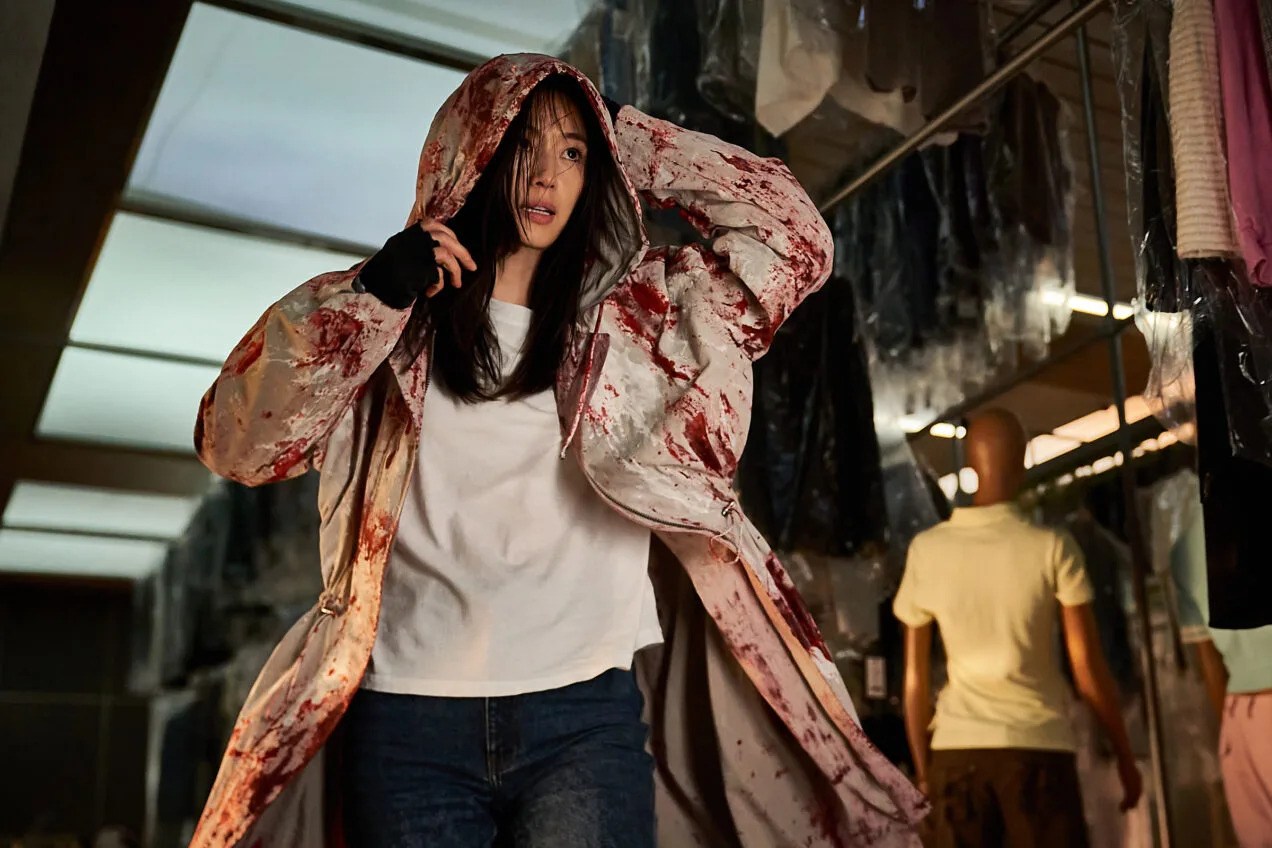
We all like to think we have the juice to survive the night, so to speak, in a horror film, especially the faithful who’ve lived with the genre since youth. The truth is that most of us would amount to fodder for James A. Janisse’s Kill Counts (and as long as he marks our demises with a pithy one-liner, that’s just fine). On the other hand, there’s Hana (Midori Francis), the beleaguered lead of Natalie Erika James’ new movie, Saccharine, where a diet craze leads to a haunting from the contemporary ghost horror playbook: a creaking sound here, an unexpected reflection in a teapot there, an inexplicable mess around the refrigerator there, each piling one on top of the other in a stack of unnerving phenomena that strain Hana’s sanity.
Saccharine’s average audience member would snap from the tension. Breaking from one of horror’s greatest traditions, though, Hana reaches for pen and paper. She doesn’t look away from the bizarre goings-on seeping into her life. She observes. James makes a smart choice in building Hana’s character by establishing her as a med student from the film’s outset; it’s how she copes with her situation, as well as creates her own supply and promptly gets high off of it. Hana’s bought a ticket to board the weight loss drug train, joining about a hundred million GLP-1 users worldwide, except the pill recommended to her by a friend happens to be made from the cremated ashes of the dead. (Think of Steve Coogan damning L’Enclume’s mallow leaf and whiskey appetizer with revolting praise in The Trip: “The consistency is a bit like snot, but it tastes great!”)
The trick of the drug is that it works, and when cultural norms pressure conformity to arbitrary standards of not simply beauty, but physical health in total, convincing a person to surrender what works is a losing battle. Hana knows that ingesting the dead is conceptually abominable, not to mention unethical, the latter eventually outweighing the former when she begins to sneak parts off of a cadaver she’s assigned to dissect in class — her name is Grace — to manufacture pills herself. It’s this particular decision that compels Hana’s haunting: consuming this miracle pill invites the spirit of the deceased, each increasing in strength as the user keeps up with their drug regimen. For Hana, that means Grace functions first as a cameo, then as a nuisance, and finally as an authentic existential threat, no longer content with standard issue poltergeist antics.
Saccharine isn’t a ghost story alone: it’s also a story of possession. Grace pilots Hana around her apartment at night, indulging in spectral force-feeding sessions that Hana eventually captures on camera. These make up some of the most disturbing scenes in the film, at least for those of us who have a difficult time telling ourselves “no” when it comes to unhealthy nutritional choices. (If it’s true that what you eat is a greater priority than when you eat, it’s nonetheless also true that one should not gorge themselves in the wee hours.) On the other hand, Hana makes a healthier choice by preempting Grace’s nighttime appropriation of her body with a video recording setup. It’s the kind of choice people make in other horror movies, too, though typically that’s in service to plot rather than to characters; if the Featherstones didn’t film themselves sleeping in Paranormal Activity, there’d be no story.
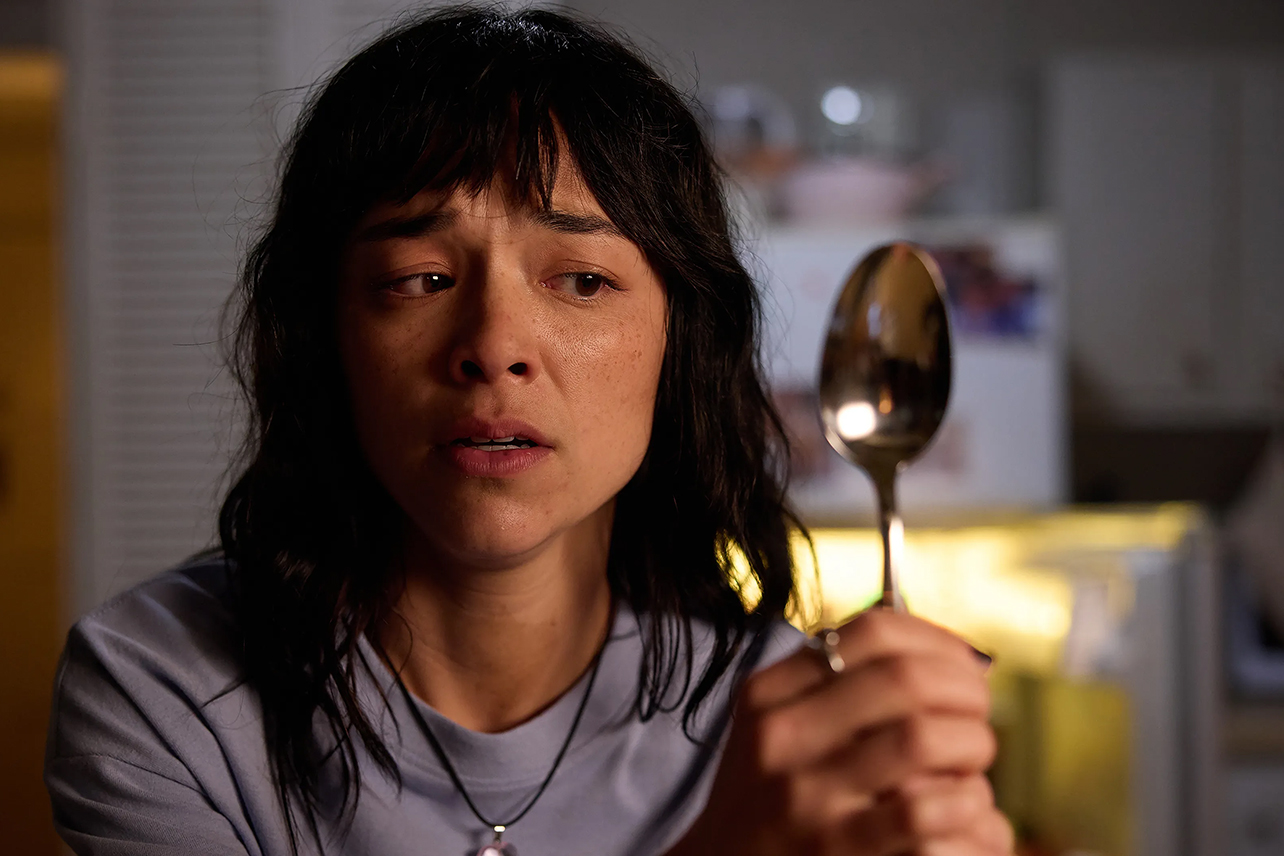
What makes Hana so special as a horror protagonist is that her actions are informed by her background. James provides herself ample legroom for character study with Hana’s work; it’s not only relevant but essential that she’s in medical school, and therefore thinks like a healthcare professional. Consider that Hana discovers the secret ingredient in the pills her old friend gives her by quite literally doing her own research: it’s calcium phosphate! Try slapping that on a bottle’s packaging. (“Made with real human bones!”) Consider as well that she deduces how to track Grace’s presence using spoons as mirrors; Grace likes to hover by Hana’s shoulder, which makes a great, eerie visual cue. Especially consider how quick Hana is to open her notebooks and jot down everything she encounters as her haunting progresses, leading to the realization that she can predict Grace’s visitations by monitoring her glucose levels.
Logic and horror make uncommon bedfellows, because what scares us as individuals is wildly varied and often irrational. Fair enough: you’re scared of the hulking brute who’s swinging a machete at your face, because he’s giving you a reason to be scared. But our phobias tend not to accompany such immediate stressors. I, for instance, struggled with arachnophobia for ages, and still find spiders creepy as the dickens — though now I enjoy watching them weave their webs, and will pluck on radial lines to tease them. (Fun fact: they hate that!) Hana is likewise faced with unmistakable peril as Grace’s manifestations grow harder to ignore, so she has as much reason to be afraid as the counselors at Camp Crystal Lake — but a serial killer isn’t as easily placated as a ghost, so Hana’s capacity for maintaining a scientific, evidence driven mindset quickly proves an enviable trait among horror movie leads.
Not every character in Hana’s position needs to be like her, of course. The fight or flight response we see in countless horror films is relatable, after all; it is instinctual to run or to grab a baseball bat when something goes “bump” in the night, a two-pronged decision tree programmed into humans’ DNA. But Saccharine’s emphasis on levelheadedness is a wonderful alternative to stark fear. We should all aspire to Hana’s sensibility when we’re confronted by our own ghosts — though let’s all show better judgment in taking diet pills from friends.
If you haven't already, consider supporting worker-owned media by subscribing to Pop Heist. We are ad-free and operating outside the algorithm, so all dollars go directly to paying the staff members and writers who make articles like this one possible.