

Welcome to 2026's 31 Days of Heistoween, a daily dose of spooky icons, spine-tingling oddities, and — most harrowing of all — memes. Check back every day from now through October 31 for each daily entry!
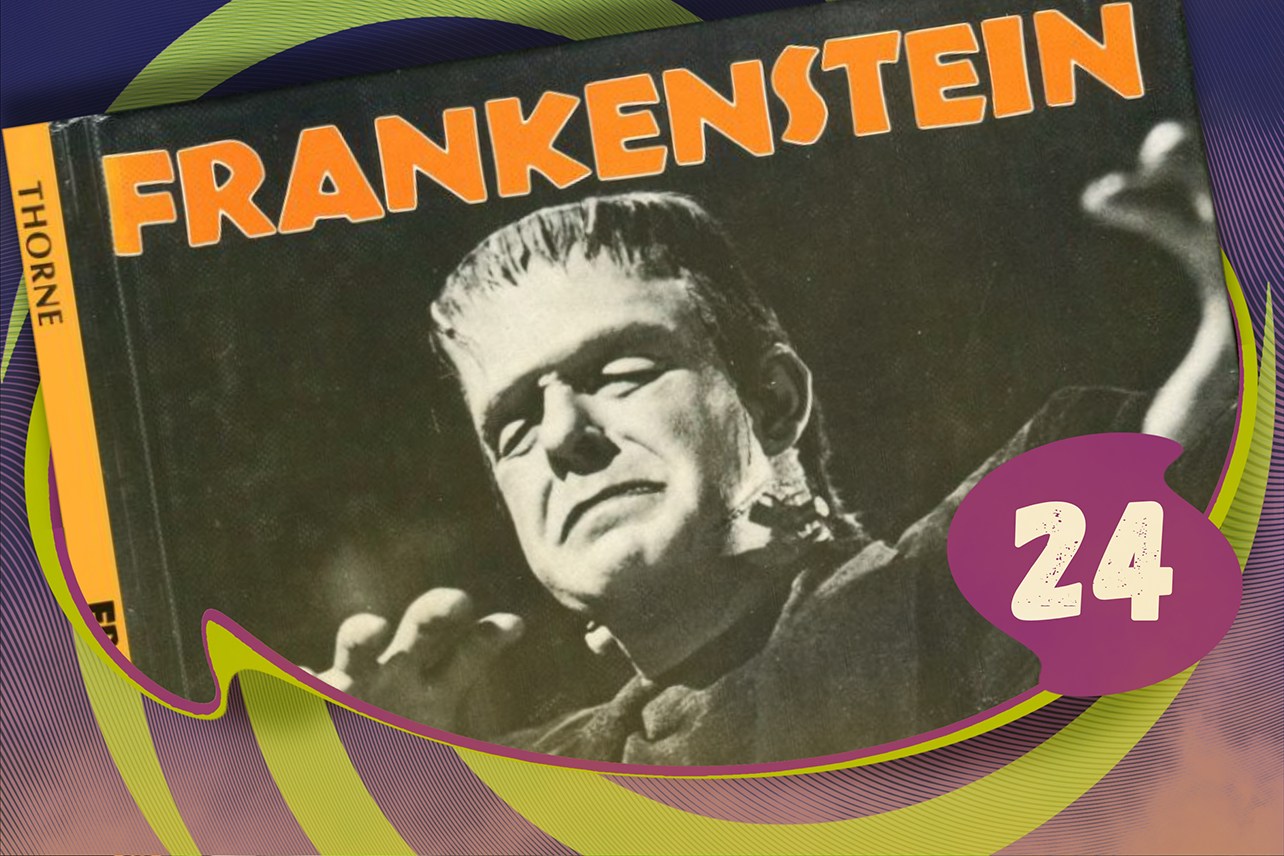
For nearly as long as I can remember, I've had a mild obsession with the old Universal horror movies of the 1930s and 1940s, particularly the ones featuring the marquee monster characters like Dracula, Frankenstein, and the Wolf Man. Yet my introduction to those films and those versions of the characters came not via the movies themselves, but a series of slim illustrated hardcover books geared towards kids, which I discovered in my elementary school library: the Crestwood House Monster Series.
Comprising 15 books released in three waves (with additional subsets of books coming later), these books are notable for their bright orange back covers and titles. Published exclusively for the libary market, each one of these ~47 page hardcover marvels is dedicated to a specific movie monster of the black-and-white era, most of which are culled from the Universal films (some of the later volumes branch out into broader and more sci-fi characters; the Crestwood House Godzilla resulted in my abiding love of the King of Monsters, and their King Kong was the first place I encountered the great ape). Written by Julian May under the pseudonym Ian Thorne (with work from authors William R. Sanford and Carl R. Green later in the series), every book is packed full of stills taken from each character's various movie appearances, along with text offering extensive in-universe and behind-the-scenes details about the monsters and the making of their films.
I have vivid memories of checking these books out from my elementary school library in suburban Milwaukee, circa 1988-1990 (the original run of titles were released between 1977 and 1987). The general concept of the various classic monsters like Dracula and Frankenstein were known to me, because zeitgeist, but the books became my first encounters not only with the specific Universal versions of the monsters, but classic cinema in general.
As result, the Crestwood House books both imprinted those versions of the characters on me as the definitive takes on the classic monsters, and sparked an interest in old Hollywood. Stills from the books (like the shot of Bela Lugosi as Dracula descending the stars of his mansion) were seared into my memory. The copious text in each volume not only approximated the experience of watching the movie, but via the behind-the-scenes info, also taught me to understand movies as collaborative works of art that are the result of very specific decisions made by a host of creators.
They also taught me that the stories of those decisions and how they impact the finished product could be as compelling as the movie itself. Despite being intended for an audience of 8-12 year-olds, the Crestwood House monster books are stunningly thorough works of film theory and analysis. I am almost certain that the first black-and-white movies I saw (outside of the opening of Wizard of Oz) were the Universal monster movies, entirely because of the Crestwood House books.
The books themselves are long out of print and hard to find (affordably) on the secondary market, thanks to their smaller print runs born of the fact that weren't intended for the mass market, but many can at least be read online via the Internet Archive. For many years, I assumed my childhood experience with the books was relatively unique, until learning via the internet that, like most niche interests, there is a small but fervent group of people out there with a similar experience to mine, who continue to hold these vibrant orange portals into the worlds of monsters and Old Hollywood in high esteem and with fond memories.
Come knock on our door tomorrow for even more 31 Days of Heistoween treats.
If you haven't already, consider supporting worker-owned media by subscribing to Pop Heist's newsletter or leaving a tip. We are ad-free and operating outside the algorithm, so all dollars go directly to paying the staff members and writers who make articles like this one possible.