

If Halloween is the season of nostalgia, then the toy aisle is its haunted graveyard—filled with echoes of childhood frights, late-night specials, and spooky reruns. In this third installment of The Boo Box, we turn our ghoulish gaze to the small screen. Specifically, to the spooky cartoons and Halloween-themed TV episodes that transformed into some of the weirdest, coolest, and most collectible toy lines of the '80s, '90s, and 2000s.
We’re talking monstrous mystery machines, cursed donuts, unmaskable villains, and bio-exorcists with spinning heads. These are the Cartoon Creeps & TV Treats that made Halloween last all year–on screen and on your toy shelf.
Scooby-Doo: Saturday Morning's Eternal Spirit of Halloween
Since 1969, Scooby-Doo, Where Are You! has been the ultimate introduction to horror for generations of kids. While the show wasn’t made just for Halloween, it may as well have been: every episode plays like a miniature haunted house tour. Creepy castles, foggy graveyards, glowing ghosts–all wrapped in a cozy, laugh-track-laced mystery.
From Screens to Shelves
It took a while for Scooby-Doo to get serious toy treatment. Early appearances in the '70s and '80s were mostly plush dolls and vinyl figures, but it wasn’t until the late '90s and early 2000s that seasonal Scooby toys became a consistent thing. That’s when companies like Character Options, JAKKS Pacific, and later Playmates started leaning into the show’s monstrous roots.
Fans began to see full-on Halloween-themed Scooby lines—figures of the gang decked out in costumes, monster villain multipacks, glow-in-the-dark variants, and playsets that looked like graveyards or haunted amusement parks.
Highlights included:
- Color-change monster figures (reveal the “real” villain underneath with warm water!)
- Unmasking action features
- Scooby in costume variants (pirate, vampire, ghost, etc.)
- And seasonal packaging in orange and purple with cobweb motifs
A Mystery Machine Built for Monsters
What made these toys Halloween essentials wasn’t just their monstrous aesthetic—it was their formulaic comfort. You always knew what you were getting: a spooky mystery, a fake ghost, and a big reveal. It was Halloween logic at its best. Like trick-or-treating, the joy was in the ritual.
Today, many of those early 2000s monster packs have become annual rediscoveries–tucked in storage bins next to animatronic skeletons and faux tombstones, only to re-emerge each October to haunt shelves once more.
For new collectors, Jada Toys is doing the Mystery, Inc gang one killer toy at a time. First came Shaggy, and now Daphne will be the next in line–as was revealed at NYCC last week.
Treehouse of Horror: The Simpsons Get Scarily Collectible
If Scooby-Doo is cozy-spooky, The Simpsons bring the parody, satire, and utter absurdity. Their "Treehouse of Horror" episodes—airing annually since 1990—have become as much a Halloween tradition as carving pumpkins or watching Hocus Pocus. These anthologies give Springfield’s finest a horror-tinged makeover: turning Homer into a killer clone, Marge into a witch, or Bart into a mutant fly.
So naturally, a toy line had to follow. And it did beautifully.
Playmates' Glorious Gore
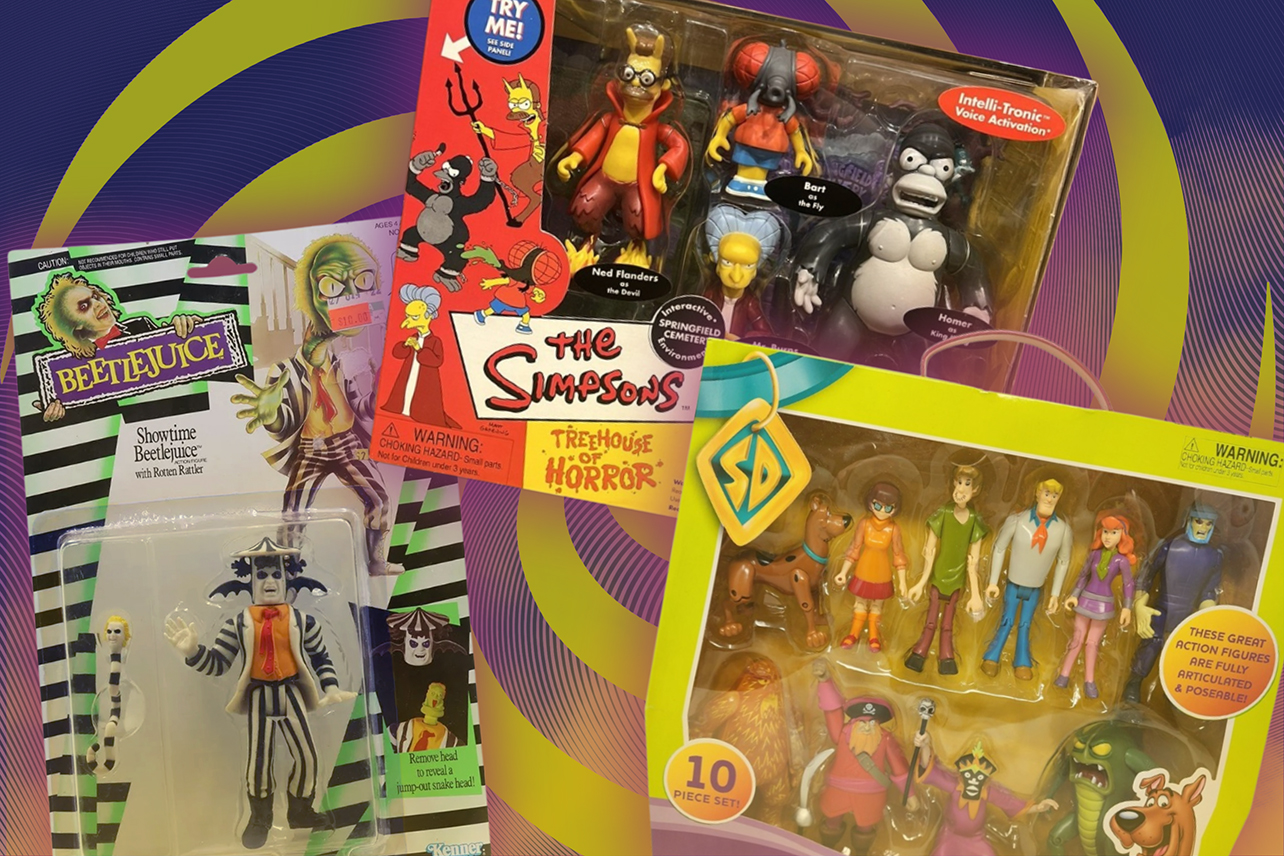
During the early 2000s, Playmates Toys—who already had a hit with the World of Springfield line—unleashed several "Treehouse of Horror"-themed box sets and exclusives. These weren't just repaint jobs or lazy tie-ins. They were deep-cut, episode-specific figures crafted for the fans who stayed up late watching these specials every October.
Memorable sets included:
- Evil Willie, Hugo, Witch Marge, and Donuthead Homer
- Mutant Fly Bart, Dracula Burns, Devil Flanders, and King Homer
- Collector's Lair: Collector, Lucy Lawless as Xena, Stretchdude, and Clobber Girl
- Alien duo Kang and Kodos and Alien ship Homer
They were usually sold as limited-edition sets around Halloween, often exclusive to retailers like Toys “R” Us or Target. Each package was dripping with Halloween imagery–bats, jack-o’-lanterns, slime-dripping fonts–instantly catching the eye of both kids and collectors.
NECA's Blind-Box Resurrection
In the 2010s, NECA stepped in with a different approach: stylized mini-figures, released in blind boxes. These figures were 2-inch PVC sculpts in dynamic, cartoonish poses and showcased even deeper cuts from Treehouse of Horror episodes. Think:
- Witch Marge
- King Homer holding mini-Marge
- The Collector (Comic Book Guy as a pop-culture villain)
- Robot Scratchy
- Zombie Bart and Lisa
What made NECA’s line so addictive was its mystery element—the trick-or-treat energy of blind boxes—and the diversity of characters across decades of episodes. Though smaller and less articulated than the Playmates line, NECA’s minis were full of personality and quickly became must-haves for Halloween displays.
Scary, Funny, and Smart
More than just toys, these figures captured the "Treehouse" episodes’ genius: they were love letters to horror cinema, twisted sci-fi, and Halloween itself. Collecting them felt like reliving every Simpsons Halloween special, without having to dig through your DVDs.
This year, JAKKS made a "Treehouse of Horror" advent calendar for October, featuring small toys and props like Kang and Kudos' cookbook and snail Lisa.
Kenner’s Beetlejuice: Gross-Out Gothic Gold
Back in 1989, Tim Burton’s Beetlejuice wasn’t an obvious choice for a kids' toyline. It was dark, weird, and full of death jokes. But then came the animated series–a surreal, slapstick reimagining of the movie’s chaos–and with it, a toyline from Kenner that felt like Halloween exploded in a toy factory.
And somehow, it worked in spite of all the ghoulish and adult nature of the ghost with the most.
Dead Funny and Disgusting
Even though it only lasted a year, Kenner’s Beetlejuice toys were loud, gross, and full of play gimmicks. Beetlejuice himself came in multiple variants–each more grotesque than the last–with spinning heads, bug-bursting torsos, or projectile ghost accessories.
Standout figures included:
- Shish Kebab Beetlejuice – skewer him with translucent kabob rods
- Spinhead Beetlejuice – head rotates like a maniac jack-in-the-box
- Creepy Cruiser – a vehicle loaded with slime and monster features
There were also transforming “bio-exorcist” figures, haunted vehicles, and even small ghosts that popped apart or screamed when launched. The packaging leaned hard into slime green, purple, and black–with art direction that screamed ‘80s Halloween excess.
More Than Just a Gimmick
What made Kenner’s line unforgettable wasn’t just the play features—it was the complete aesthetic commitment. These toys felt like a fever dream from the other side. They didn’t just fit into Halloween season–they defined it for a generation of monster-loving kids, alongside The Real Ghostbusters.
Even today, their strange, vibrant designs hold up as collectibles, especially during spooky season. For many, these weren’t just toys. They were an introduction to weird, a gateway to goth, and proof that gross could also be great. Though, I'm still personally bummed we never got a Lydia or at least a Barbara.
Why These Toys Still Matter at Halloween
When you line them up—Scooby-Doo’s masked monsters, Simpsons horror homages, and Beetlejuice’s plastic chaos—you start to see the common thread: Halloween wasn’t just a backdrop. It was a blueprint. Whether you were reenacting episodes or setting up a haunted house with action figures, these toys turned your bedroom into a year-round Halloween celebration.
Final Boo: The Plastic That Haunts Us
It’s no coincidence that these toys still find their way into seasonal displays, collectors’ shelves, and eBay watch lists every October. They weren’t just merchandise–they were Halloween artifacts.
In a world where horror can be grim and gritty, these cartoon creeps remind us of a time when being spooky was fun. When monsters told jokes, ghosts were corrupt real estate agents, and horror came with a wink–or at least some kind of chest-exploding action.