

Once again, our podcast Eurovangelists was granted press accreditation to cover the Eurovision Song Contest. So, in the beginning of May, I found myself in Vienna, the City of Music. A year ago, my fellow co-host and friend Jeremy Bent mentioned how thrilled we were to be on the ground in Basel as official media, but I will confess I was much less excited this time when my plane landed at Vienna International. For one thing, my two co-hosts elected not to join me this time, albeit for understandable reasons.
Over the last six months, the European Broadcasting Union (EBU), the organization that runs Eurovision, has doubled down on a series of terrible decisions that have soured millions against the Song Contest brand. Right here on Pop Heist, I wrote about how the EBU’s unconditional support for the Israeli public broadcaster KAN led the broadcasters of Spain, Ireland, the Netherlands, Slovenia, and Iceland, to withdraw from the contest this year in protest of Israel’s participation and the EBU’s cowardly organizational malfeasance. And those were just the major offenses.
In addition to the larger grievances, the EBU has made a litany of humiliating unforced errors and own goals that have whittled away the morale of legions of Eurovision fans. Case in point, take a look at the reaction to the new logo and typeface the EBU unveiled for Eurovision’s 70th anniversary. I legitimately believe that whoever approved the updated visual identity hates Eurovision and made it their mission to destroy it from the inside.
Suffice to say, there was a noticeable decline in affection for the Contest in the first quarter of 2026, even among its most ardent fans.
Despite all this, Eurovision is much more than the competitive element. One of the best parts of being a fan is getting to know the host city each year. After Liverpool dazzled the world as the host of Eurovision 2023 on behalf of Ukraine, it inadvertently kicked off a hospitality arms race; each nation that has won and hosted since has raised the bar, in largely successful bids to out-perform every host that has come before. After our unforgettable experience in Basel, the prospect of what Vienna had in store for us intrigued me no end.
Vienna is a strange place, in that the city itself goes well out of its way to accommodate its visitors, but its residents are cautious, even hostile to the idea of engaging with a stranger. Launching into a casual conversation with a local you don’t know is an unforgivable sin. I am from New England; when some stranger says good morning to me, I fight the impulse to respond with, “How dare you?” Yet even I had to recalibrate my social settings every time I encountered a Viennese local, so as not to scare or annoy them. Fortunately for my rarely-seen extroverted side, fans from 75 countries were in town for Eurovision, so chances are if I was talking with someone, they were not from Vienna and we had one big thing in common that we could discuss for hours. United by Music, indeed.
I was able to explore Vienna’s most famous attractions and some unorthodox locations with ease when I wasn’t on Eurovision media duty. The Vienna Tourist Board did a fantastic job developing websites and apps designed to get visitors around the city with ease via their multitude of affordable, reliable public transit options.
My first stop was Schönbrunn Palace, the centuries-old summer home of the Habsburg royal dynasty. One could spend days admiring the grounds, the gardens, and the exterior architecture, and I certainly will every time I come back to Vienna. However, I spent most of my time at the palatial estate inside, where I was blessed to hear the works of Johann Strauss II performed by the Schönbrunn Palace Orchestra. Sadly, it was just the top hits, no deeper cuts. Perhaps some day I will experience Mephistos Höllenrufe in person, the way it was meant to be heard. The concert was held inside the Orangery, a room built at the behest of the Holy Roman Emperor Francis I to protect his orange trees from the harsh winter cold. Throughout the performance, I heeded a piece of advice from an Austrian friend, “Whenever you’re inside a castle in Vienna, look up.” I must have looked like quite the snob, listening to Der Zigeunerbaron with my nose tilted to the sky, but you can’t beat that view.
No trip to Vienna is complete without eating the city’s trademark dish, that magical combination of a thin piece of meat, flour, eggs, and breadcrumbs: schnitzel. I'd have to check the local ordinances, but I'm pretty sure it's illegal to leave the city if you haven't had some. I didn’t just eat schnitzel though. I made it myself. I was fortunate enough to take a schnitzel-making class at Lugeck, a tavern and restaurant housed in a building that was originally built in the 14th century.
Lugeck offers a four-hour version of this course that costs just north of $220 per person, so I was thrilled to get the truncated edition that cost me nothing. Within 20 minutes, my classmates and I were hammering the hell out of our meat cutlets, breading them, and frying them to perfection under the watchful eye of a master chef.
I now know how to make the most delicious schnitzel in the world, and I have the diploma from Figlmüller’s Wiener Schnitzel Academy to prove it (seen here, covering my master’s degree).
In addition to all the museums, castles, and concert halls, I was eager to visit some locations off the beaten path, and I found exactly what I was looking for at Gugumuck Snail Farm. Yes, you read that correctly. It’s an Austrian farm dedicated to cultivating snails for food. It seemed bizarre to me as well, but after two hours with owner Andreas Gugumuck, I will never again associate escargot with France.
Back in the mid-aughts, Andreas was working in IT, comfortable but unfulfilled. He found his new calling after experimenting with recipes he found in old Viennese cookbooks, including many that called for snails. Reinvigorated, Andreas left the computers behind, took over his family’s farm, and populated it with hundreds of thousands of snails. Now he supplies some of the finest restaurants in Vienna with snails and serves them in a number of elevated dishes at the farm’s on-site bistro.
My tour of the farm started with a comprehensive lecture of the importance of snails to Austria. Andreas regaled me with stories about how snails factored into political, religious, socioeconomic, and scientific inflection points in Austrian and European history. I was already hooked because I am a dork, but after I tried some sautéed snails, I offered to give up my life in America and join Andreas on the farm. He wisely turned me down. If you’re visiting Vienna, a tour at Gugumuck is an absolute must. Snails are delicious, they use far less ecological resources than beef and have four times the protein, and we should all be eating them. And if that doesn’t sell you on them, good. More for me.
Of course, I was primarily in Vienna to cover Eurovision for the podcast, and despite my initial reservations, I am glad I was there. I was present for several press conferences, including the very first one, which occurred mere hours after the New York Times dropped an eye-opening, jaw-dropping report that detailed the full extent of the Israeli government’s seven-figure promotional effort to whip votes for their Eurovision songs since 2018. I took great pleasure in watching EBU officials, drenched in flop sweat, try to give us the ol’ flim-flam flummox when asked about the article all week. I even got a question about a viable reform to Eurovision voting that received a promising answer. Credit to the EBU for actually taking that one seriously.
I can say that as far as the atmosphere of the host city was concerned, most fans, officials, and national delegations were pretty upbeat all week. Anger and dissatisfaction about the December 4th meeting was ever-present, and the absence of Ireland, the Netherlands, Spain, Slovenia, and Iceland cast a shadow over the proceedings. However, there was an undeniable feeling in the air that something good was going to happen by the end of the Grand Final. No one could tell what it was, but for the most part, the people I talked to, whether they were superfans, delegation members, casual observers, and yes, even the Viennese locals, had high hopes for Saturday night. We got a hint during one of the media-only preview shows. After Bulgaria’s Dara kicked things off with her revamped version of "Bangaranga." there was a palpable shift among the audience in her favor. She was excellent…but there was no way she could win…right?
I elected to conduct an economic boycott of Eurovision, pledging not to let one dime of my money go to the EBU. Since I didn’t buy tickets, I watched the semi-finals in the media center with the journalists, national broadcasters, and independent media/content creators. Any concern that I had about these professionals watching Eurovision in a stoic silence was dispelled the moment Moldova’s Satoshi got Semi-Final One started and the media center erupted into a party. If anything, the viewers in the media center were rowdier than the audience in the arena. My Grand Final viewing experience was similarly positive, though it didn’t start that way. I wanted to experience the show among fans in one of the many public viewing venues Vienna made available for the occasion. My original plan was to watch it in the Eurovision Village, the outdoor fanzone in Rathausplatz, the city hall square. However, the weather turned foul and the prospect of being trapped in a European version of Burning Man 2023 compelled me to seek a different option.
I eventually found myself in a tavern, sandwiched between two extremes. On one side sat a group of rowdy Germans who loved all the same songs I did and sang along to all the ethnobops with me. On the other sat Rebecca, a world-class musician employed by one of Vienna’s most selective cultural institutions, who hated 23 of the 25 songs competing in the Final. I met Rebecca earlier in the week at an exquisite cocktail bar and while we were chatting — she’s not Viennese, obviously — she made the mistake of asking me what Eurovision is. Several hours later, I finished answering just in time for last call and invited Rebecca to watch the Grand Final with me that Saturday. Though she graciously sat through the entire event and was thoroughly entertained, most of the actual Eurovision music did not move her. It’s understandable. Rebecca is one of the best in the world at what she does, and perhaps playing Schubert across Europe doesn’t prepare a person for a Romanian self-love anthem called “Choke Me.” Still, she knew a winner when she saw it; the moment Dara hit the stage with Bangaranga, Rebecca declared Dara as both her favorite and the inevitable victor. She is a master of her musical craft, but Rebecca’s true gift might just be foresight.
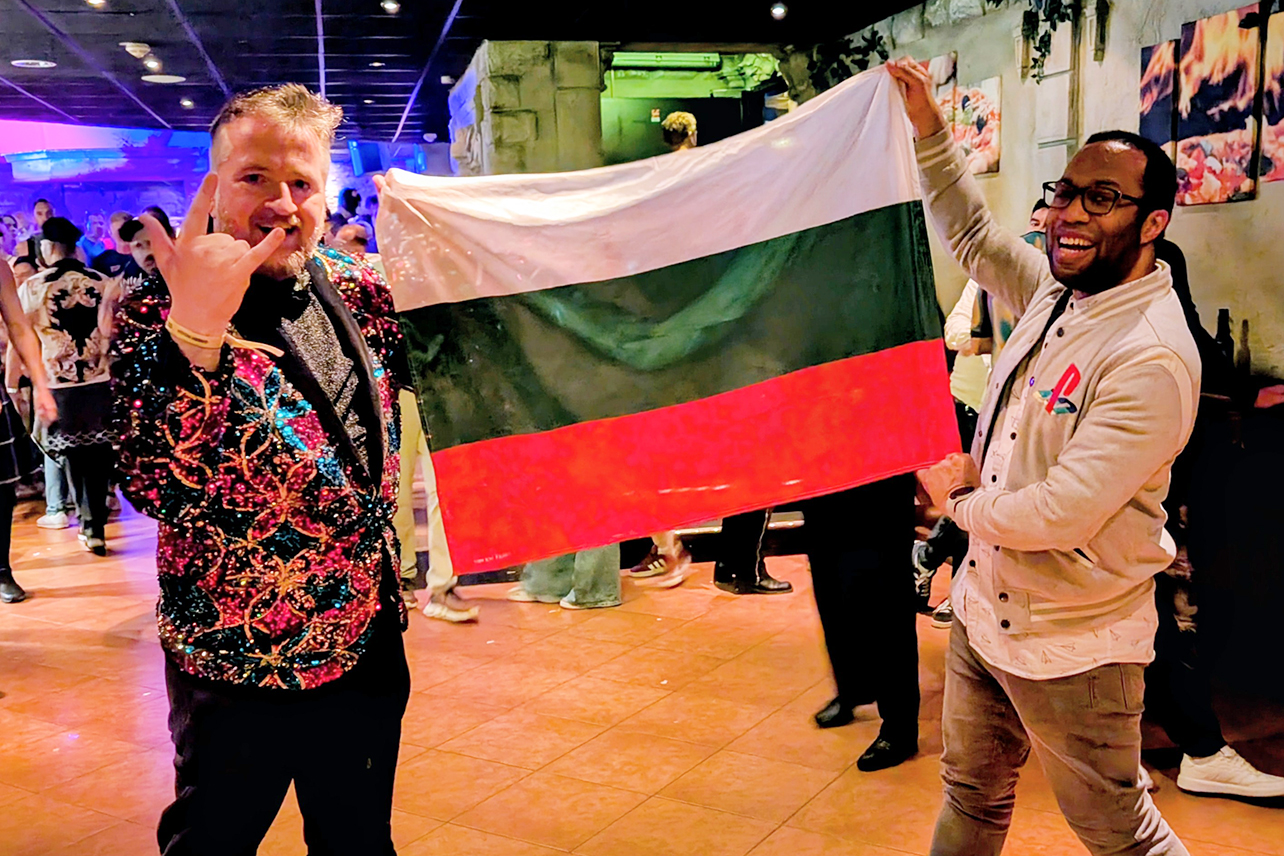
We’re just about a week and half removed from the end of Eurovision 2026 and while the confetti has likely been cleaned out of Wiener Stadhalle, the party is still going strong. There is still so much left for the EBU to do if it is going to restore faith in Eurovision among its fans, and our podcast will be among the many voices demanding action. However, we have plenty to celebrate. Bulgaria won, the first time a new nation has won since 2017, when Portugal scored their first (and to date, only) Eurovision victory. The win was decisive — the largest gap between first place and second place in Eurovision history. The affable Dara, our new champion, will be the perfect standard bearer for the Song Contest over the next 12 months. The Balkans, accustomed to disappointment in Eurovision, were well represented in the Top 10, with Bulgaria taking first, Romania coming in third, and Greece rounding things out in tenth. For the first time in a long time, my Eurovision optimism is outweighing my pessimism. Kudos to the city of Vienna and the nation of Bulgaria for making the 70th edition of the Eurovision Song Contest one of the best of all time. See you in Sofia.
If you haven't already, consider supporting worker-owned media by subscribing to Pop Heist. We are ad-free and operating outside the algorithm, so all dollars go directly to paying the staff members and writers who make articles like this one possible.