

Sometime during the first year of dating the woman who would become my wife, I discovered something about myself and the way I consume fiction. My soon-to-be wife and I were both Game of Thrones fans, and our first year of dating happened to coincide with that show's much-hyped final season.
The good news there was that we could watch the show together, bond over it, grow closer through the weekly gauntlet of gore and dragonfire the show put us through. The problem was that pretty much every week, my future wife would ask me some version of the same question: "Who do you think is gonna die?"
The question hit several variations along the way of course, whether we were talking about the siege of Winterfell or the razing of King's Landing or that final, massive episode where the future of the kingdom was decided. But every time a version of the question came up, I'd get agitated, dismissive, even bored. When I finally figured out what was wrong, I had to explain to the future mother of my children why I was being such a grump:
I hate predicting what will happen in a story.
I like thinking about what will happen, sure, and I like analyzing how each piece of the story contributes to the greater whole when all is said and done, but if you ask me "Who's gonna be the new King of Westeros?" or "Who's the killer in this season of True Detective?" or even "Will Captain America say 'Avengers Assemble'?" I am simply, deeply, almost obsessively uninterested. I just want to let the story tell me what it's gonna be.
This view, unfortunately, is incompatible with vast swaths of modern fandom, whether we're talking about Star Wars, The White Lotus, or the reason we're here today: The Pitt. Fandom — and I'm using the term very generally here, so if this doesn't describe you, please assume you can go about your business — is obsessed not just with what will happen, but with what should happen, and while there's nothing wrong with playing detective while watching your favorite shows, at a certain point it all gets a bit poisonous.
Poisonous for who? Well, I hate to sound like your high-and-mighty Nerd Dad here but A) I kinda am, and B) for you. It's poisonous for you, the person out there trying to get the most out of stories you enjoy in a world that keeps paring movies, TV, books, comics, and more down to the barest algorithmic essentials in favor of ratings and ticket sales rather than narrative. In an age when social media fandom has demonstrably tipped the scales for various creative decisions ranging from Sonic's teeth to the Snyder Cut, we risk losing whatever substance mass-produced media has left because we're too obsessed with plot and not obsessed enough with story. The Pitt is not the first case of this happening, but it is the latest and the loudest, so allow me to make this as simple as I can:
The Story Owes You Nothing.
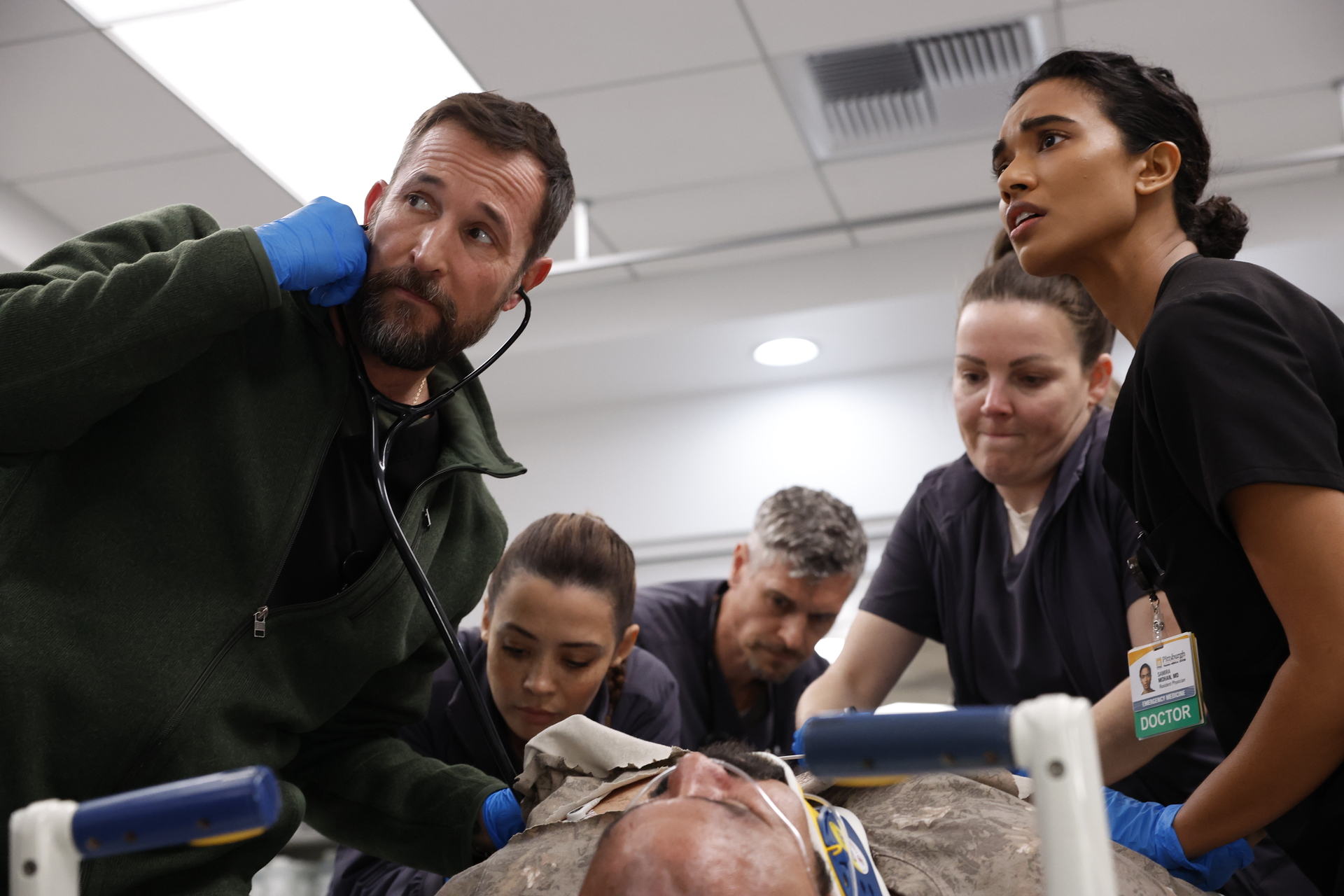
I've written before about how The Pitt is a deceptively straightforward show, a series that uses the trappings of a medical drama to explore character in unexpected ways. The real-time depiction of events in the series, with each episode comprising one hour of an emergency room shift, allows it to settle into certain rhythms, then turn on a dime to disrupt them before settling into a new rhythm, then disrupting that, and so on. We come to expect certain things — patients are either stabilized or they die, doctors either succeed or they fail — and then the show upends those expectations. It's one of the oldest tricks in the book, but this show is very good at it.
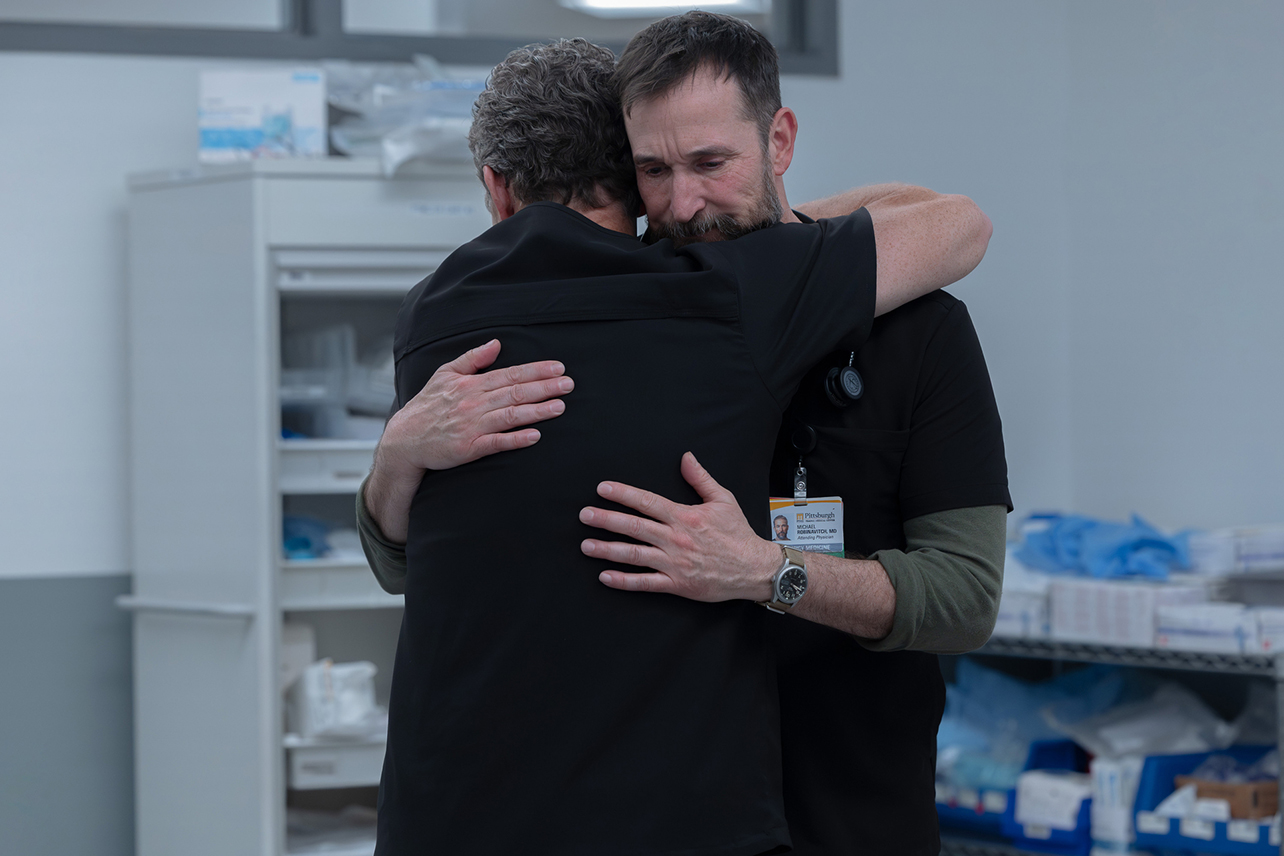
Which makes it that much more satisfying when things like the Season 2 finale happen. Medical dramas never really definitively "end" because hospitals never close, but even by that standard The Pitt Season 2 was especially bold in its delivery of a non-ending. Characters whose careers are in upheaval don't have it all sorted by the end of the shift, patients don't all go home, personal conflicts are not automatically settled, and even the season's chief question — What's gonna happen to Noah Wyle's Dr. Robby? — isn't entirely resolved. It's a great way to subvert the expectation of neat resolutions while also keeping tension in the narrative. The shift is over but the work, the hard work, goes on.
So, naturally, people were pissed.
I'm not going to link to any number of social media screeds posted about the Season 2 finale everywhere from Twitter to Threads to Neopets (I may have made that one up?), but they're out there, and many of them are already aggregated elsewhere for your perusal. I saw complaints that a main character's newly disclosed medical condition was the "wrong" thing to happen to her. I saw people angry that Robby apologized to one character but didn't apologize to another. I saw people happy that Robby did apologize but angry that he didn't specifically say the words "I'm sorry" during the conversation. I saw people angry that some characters might leave before Season 3, and some angry that others wouldn't leave.
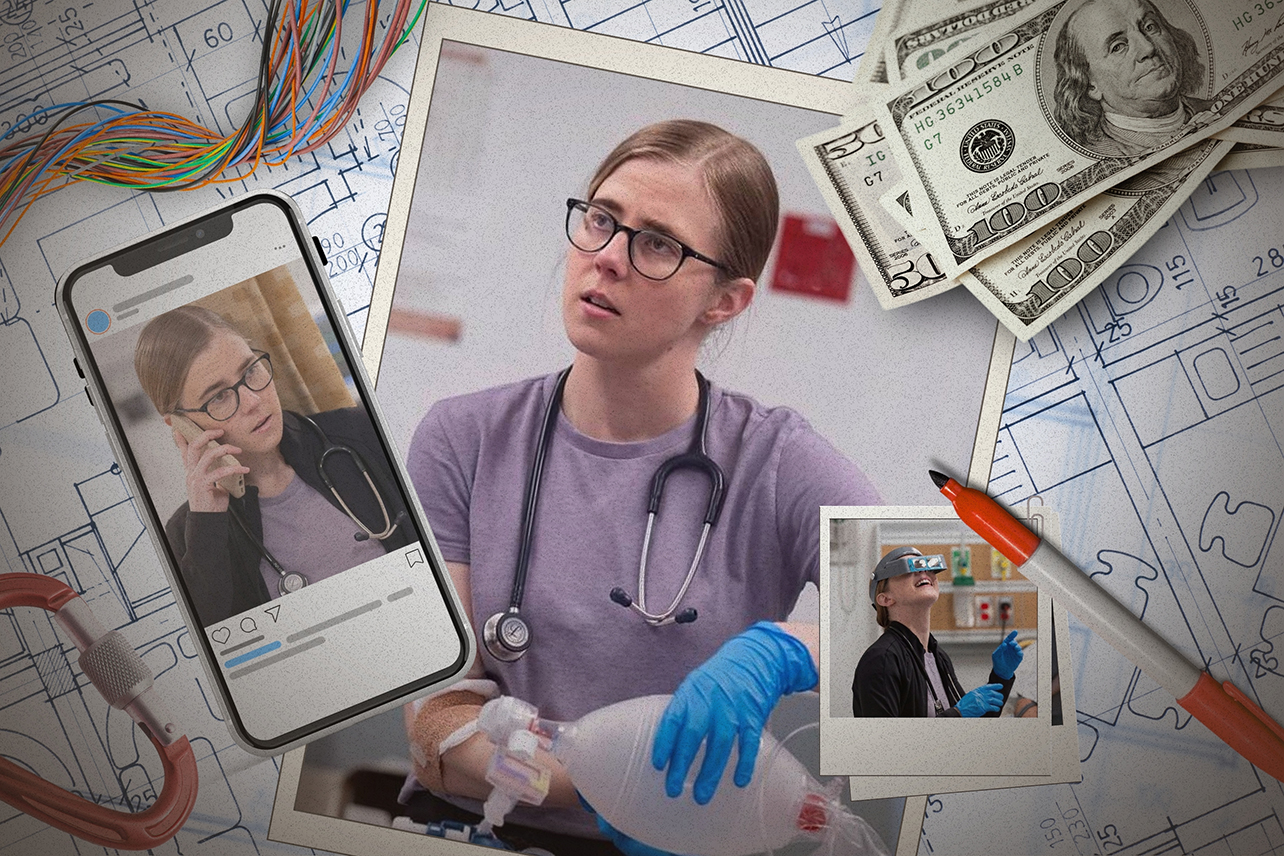
Now, there's nothing wrong with finding a creative choice upsetting or even mildly irritating. It happens to me all the time, and being a professional critic, I tend to say so. I'd be lying if I said I came through Season 2 of The Pitt without criticisms of my own (Dr. Cassie McKay should be in every scene, damn it.). The problem is what happens next. In these same posts, I saw these criticisms followed by calls to cancel the show, or fire a writer, or for fans to stop watching altogether, not because anything offensive or even mildly transgressive happened and not because of something dark behind the scenes of the show, but because someone just ... didn't like a plot point. And here again, I must tell you:
The Story Owes You Nothing.
I don't care if it's Star Wars: The Last Jedi, Avengers: Endgame, or the Season 19 finale of Young Sheldon. The story does not owe you, as a viewer or a reader or a listener or a, ugh, consumer, a single piece of individualized satisfaction. You're allowed to feel however you want to feel about a piece of media when it comes across your plate. Hell, you're even allowed to say all of those things I was just complaining people said, because this is America and I'm not the boss of you. If you reduce stories to a list of empty plot demands, though, you are robbing yourself of what stories actually can do beyond owing you basic narrative satisfaction.
So, what can stories do?
Stories can do anything, of course, thanks to The Power of Imagination woooooo, but I'm thinking specifically about what stories can do for you, for your mind and your heart and, yes, your soul. To understand that, we have to talk about the difference between plot and story.
The plot is what happens. It's the easiest part of any story to grasp because it's right there unfolding in front of you, moment by moment, narrative beat by narrative beat. You can write all the events down in a timeline if you want, rearrange the movie or the book or the show into strict chronological order just to get a near-forensic sense of how events are unfolding. Iron Man steals the Infinity Stones from Thanos. Darth Vader is Luke Skywalker's father. Billy and Stu are the original Ghostface killers. Hans Gruber is a thief, not a terrorist. Jesus Christ rises from the dead after three days. Y'know, Plot.
As a culture we are obsessed, pathologically so, with Plot. We build Wikis and we write timelines and we recap and we analyze and we examine on a microscopic level every frame of every Marvel Studios production all in the service of getting the plot. We bury the internet in spoiler warnings and comments sections and subreddits to protect ourselves from plot, then unleash it at exactly the right moment. We have built cottage industries — cottage industries which I have personally profited from, because there are no clean hands under Capitalism, amirite? — around plot. And yet, in the grand scheme of a narrative, it's often the least important thing.
Plot is scaffolding. It's structure. It's a series of hand-and-footholds on the way up the mountain, keeping you moving. But plot itself doesn't make you leap up from your seat and cheer, or break down crying, or burst out laughing. Plot moves the story, but it doesn't move you. For that, we turn to everything else.
And that everything else is Story. It's the light leaving Luke Skywalker's eyes when his world is shattering by Vader's revelation. It's the grit on Iron Man's face when he makes the decision to save the universe. It's Sidney Prescott breaking under the weight of understanding that even her boyfriend has betrayed her, and the only way out is to save herself. It's character and performance and language and photography and sound design and a thousand other things which give us the context to care about the plot in the first place, and it works every time. You know how I know? Because you wouldn't be calling for the writers' heads on The Pitt if you didn't already care about these characters.
So, what does all of this mean? What are you meant to do the next time a story makes you uncomfortable, makes you angry, makes you feel like grumbling all over the internet? Well, again, you can do whatever you want and I can't and won't stop you, but let me tell you a quick story as we wrap up here.
A while back I stopped watching movie trailers. Not militantly or anything. I'll still watch a trailer if it comes on TV while I'm watching a show, or plays before the movie I'm about to see, but unless I need some piece of information that only that trailer can provide, I just avoid them. Some of this is burnout from all the years I spent writing frame-by-frame breakdowns of Marvel trailers, but over time it's also become a way of removing myself from being overly concerned about plot. If I already know I want to see the movie, I just go and see it, and suddenly the plot doesn't seem so important. The playing field is level. Every little piece of the puzzle could be the most important because I simply don't know which direction the film is trying to point me until I'm already inside it, letting it unfold at its own pace before my eyes. You learn a lot about storytelling watching a movie like that, or reading a book without so much as a jacket description. You get more patient, more thoughtful, and what happens becomes less important than how it all happens, and why, and to whom.
Fiction really is a form of magic. Every book you've ever read, every film you've ever seen, every comic book you've ever slipped from a spinner rack is an exercise in concentrated will imposed by its creators on a creative medium and then, finally, on to you as a reader or viewer. It's not there to be second-guessed. It's there to take you places, draw out emotions, and leave you with a head full of ideas that weren't there before. Like Hunter S. Thompson said: Buy the ticket, take the ride. Let a story happen to you rather than second-guessing every plot point in favor of some imagined version you'd rather have and will never get to see (unless you write fanfic, which is an entirely different can of worms beyond the scope of this essay). Allow yourself the luxury of putting down your accounts book and your checklist and expecting something, and simply be open to anything. Do that, and not only will the stories get better, but you'll understand them better and feel them more.
The story owes you nothing, but if you let it, it will give you everything.